At IndiaVerve, we go beyond the noise to bring you meaningful stories of change, resilience and progress—from India to the world stage. Our mission is to bring readers credible, wide-ranging coverage across politics, business, sports, culture, society and more.

PM Modi hails India’s World Cup-winning women cricketers for resilience

New Delhi: Prime Minister Narendra Modi on Wednesday congratulated the Indian women’s cricket team at his residence in New Delhi, praising them for their historic World Cup triumph and their “remarkable resilience” in bouncing back from early setbacks.

The team, led by Harmanpreet Kaur, arrived in the capital two days after defeating South Africa by 52 runs in the final at Navi Mumbai’s DY Patil Stadium — a win that secured India’s first-ever Women’s ODI World Cup title.

Modi commended the players for staying strong despite facing criticism after three consecutive losses early in the tournament. “Your journey shows the power of belief and teamwork,” he said, adding that the victory would inspire young girls across India.

Captain Harmanpreet recalled meeting Modi after the 2017 World Cup when the team had finished runners-up. “That time, we came without a trophy. This time, we’ve brought it home,” she said. Vice-captain Smriti Mandhana said the Prime Minister’s words were “deeply motivating.”

Player of the Tournament Deepti Sharma, who scored 58 and took five wickets in the final, told Modi she had been waiting since 2017 to meet him again. When he mentioned her “Jai Shri Ram” bio and Hanuman tattoo, she smiled, saying they gave her strength.

Before wrapping up, the Prime Minister invited the players to visit their schools and motivate the next generation. The cricketers will now head to their hometowns, while opener Shafali Verma travels to Nagaland to lead the North Zone side in the Inter-Zonal T20 meet.

Rahul Gandhi alleges Haryana polls manipulated, Election Commission denies charge

New Delhi: Congress leader Rahul Gandhi on Wednesday accused the Election Commission of India (ECI) and the ruling Bharatiya Janata Party (BJP) of manipulating the 2024 Haryana Assembly elections, claiming that the polls were “stolen” through large-scale irregularities in the voter lists.

Addressing a press conference here, Gandhi alleged that more than 25 lakh fake voter entries were added to the Haryana rolls as part of what he described as a “centralised operation” involving electoral fraud. “This was not an election; it was a theft,” he said, alleging that the BJP, supported by the Election Commission, turned a likely Congress victory into defeat.

The Congress leader presented what he called “The H-Files” — a data-backed report that, according to him, showed evidence of duplicate voters, invalid addresses, and fake photographs in the electoral list. He claimed that one photograph, allegedly of a Brazilian model, was used multiple times across polling booths under different names.

“The Election Commission colluded with the BJP to carry out ‘Operation Sarkar Chori’ (Government Theft),” Gandhi said, adding that Chief Election Commissioner Gyanesh Kumar and other officials “destroyed democratic foundations.” He claimed that about one in eight voter entries in Haryana were fake, with the Congress losing eight seats by narrow margins totaling just over 22,000 votes.

The Election Commission dismissed Gandhi’s allegations as baseless, saying that no official complaints or appeals were filed against the voter rolls in Haryana. BJP leaders also rejected the charge, calling it a “desperate attempt” to undermine democratic institutions. Union Minister Kiren Rijiju said Gandhi should have approached the EC or the courts if he had evidence, “but he never does.”

Gandhi also claimed that the alleged manipulation was not limited to Haryana, warning that a similar system was being replicated in Bihar ahead of its elections. “This is not just about one state — it’s an industrialised system of vote theft,” he said.

Calling on young voters to “peacefully resist” what he described as an attack on democracy, Gandhi said, “This is about restoring India’s democratic soul through truth and non-violence. The youth have the power to bring back real democracy.”

The Congress leader’s remarks come amid rising political tensions ahead of the Bihar elections, where opposition parties have vowed to raise concerns over electoral transparency.

Global leaders pledge renewed push for social justice at Doha Summit

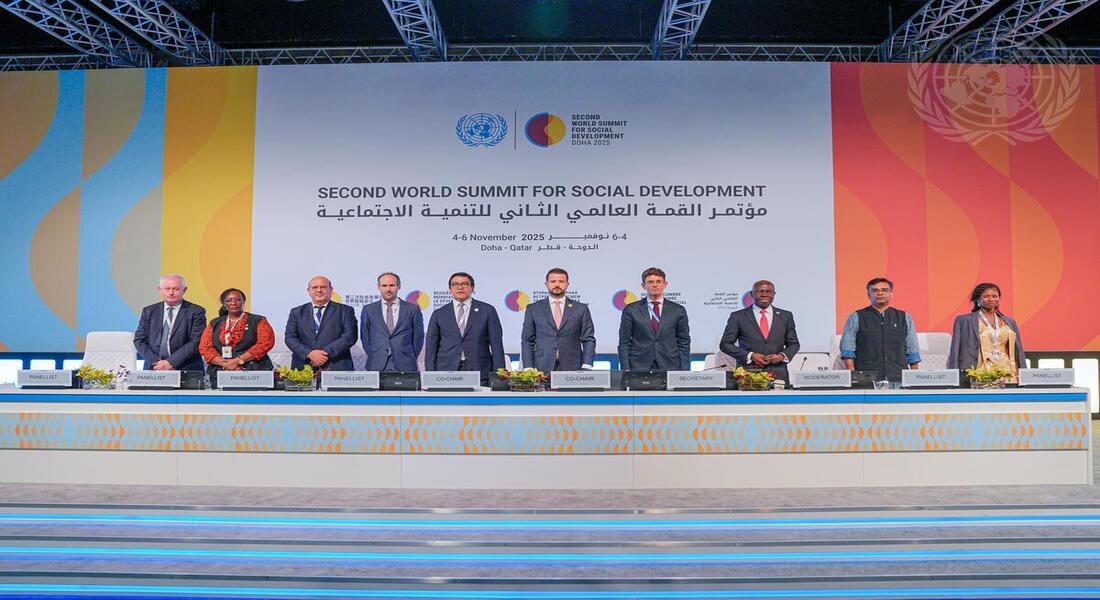
Doha: The Second World Summit for Social Development opened here on Tuesday with world leaders adopting the Doha Political Declaration, a renewed global commitment to fight poverty, promote decent work, and strengthen social inclusion to help get the Sustainable Development Goals (SDGs) back on track.

Three decades after the landmark 1995 Copenhagen Summit, the gathering in the Qatari capital struck an urgent tone, warning that widening inequality, intensifying climate shocks, and the absence of social protection for nearly two billion people have derailed progress toward the 2030 Agenda.

The Doha Declaration calls for treating poverty eradication, decent work, and social inclusion as interconnected goals. It urges countries to expand universal, gender-responsive social protection systems and ensure equitable access to education and healthcare. The declaration also emphasizes safe and inclusive digital transformation, countering online disinformation and hate speech, and empowering marginalized groups — including youth, older persons, persons with disabilities, and Indigenous Peoples — to actively shape decisions that affect their lives.

UN Secretary-General António Guterres described the declaration as a “booster shot for development,” urging governments to unite behind a “people’s plan” to reduce inequality and reform global finance. “This summit is about hope through collective action,” he said. “Let’s deliver the bold people’s plan humanity needs and deserves.”

President of the UN General Assembly Annalena Baerbock called on leaders to “go the last mile,” warning that economic growth alone has not ended poverty. She identified climate change as the “single largest obstacle” to social progress and called for fairer trade, debt relief, and greater access to technology and finance, with women at the center of decision-making.

Qatar’s Amir Sheikh Tamim bin Hamad Al Thani said social development was an “existential necessity,” highlighting his country’s efforts to create opportunities at home and extend support to poverty reduction abroad. He also stressed that peace and stability — including support for Palestine and an end to the Sudan crisis — are essential to sustainable social progress.

Lok Bahadur Thapa, President of the UN Economic and Social Council (ECOSOC), reminded delegates that more than 800 million people still live in extreme poverty, noting how minor shocks such as illness or job loss can push millions deeper into hardship.

The opening panel, titled “Strengthening the Three Pillars of Social Development,” focused on translating commitments into concrete action. Chaired by leaders from Montenegro and Kyrgyzstan and moderated by International Labour Organization chief Gilbert Houngbo, the session spotlighted the need for accountability and financing.

Juan Somavia, who chaired the 1995 Copenhagen summit, welcomed the new declaration but cautioned against inaction: “We are very good at being ambitious, less so at how to implement.” Other speakers echoed the call for fair taxation, decent jobs, inclusive growth, and meaningful youth participation.

Amitabh Behar, Executive Director of Oxfam International, highlighted the widening gap between the rich and the poor.  He said that in the last 10 years, the world’s top billionaires have doubled their wealth while hundreds of millions of people worldwide live in extreme poverty and it cannot be eradicated without addressing its structural causes, including unjust tax systems, privatization of public services, and wage inequality.  “We must look at taxing the super-rich,” he urged, calling for Governments to reinvest in public goods and services and ensure living wages for all workers.

Representing the voice of youth and persons with disabilities, Esther Nagtey, Youth Fellow of the International Disability Alliance, reminded participants that 16 per cent of the world’s population continues to be among the most marginalized.

The summit’s message was clear: global consensus now needs to translate into coordinated implementation and financing that reaches people on the ground. As the meeting continues, leaders will deliberate on next steps through plenary discussions, civil society forums, and a special session on “United for Social Justice.”