At IndiaVerve, we go beyond the noise to bring you meaningful stories of change, resilience and progress—from India to the world stage. Our mission is to bring readers credible, wide-ranging coverage across politics, business, sports, culture, society and more.

Ancient fossil foot reveals hidden human cousin who lived alongside Lucy

Scientists have identified a mysterious 3.4-million-year-old fossil foot found in Ethiopia as belonging to a previously known early human species that lived at the same time and in the same region as “Lucy,” revealing that more than one human ancestor shared the East African landscape and walked upright in different ways.

According to new findings published in the journal Nature and reported by ScienceDaily, researchers have confirmed that the fossil, first discovered in 2009 in Ethiopia’s Woranso-Mille area, matches Australopithecus deyiremeda, a species formally announced in 2015. This establishes that Lucy’s species (Australopithecus afarensis) was not the only hominin thriving in the region about 3.4 million years ago. Scientists say this discovery reshapes our understanding of early human evolution, showing that multiple species were experimenting with different lifestyles rather than following a single evolutionary path.

The fossil, often referred to as the Burtele foot, stood out because its big toe was opposable — more suitable for climbing than the fully aligned big toe seen in Lucy’s species. Researchers say the species likely walked on two legs on the ground but retained a strong ability to grasp branches, suggesting a dual life between forests and open terrain.

Further laboratory analysis of tooth enamel from the region revealed clear dietary differences. While Lucy’s species consumed a mix of woodland and grassland foods, A. deyiremeda relied more heavily on tree-based resources such as fruits and leaves. Scientists believe these unique dietary habits helped the species coexist without competing directly for food.

The team also used CT-scanning to examine a juvenile jaw and developing teeth from the same area, strengthening the connection between the fossils and offering insight into the growth patterns of the species. The presence of multiple hominin species living side by side suggests that natural selection was testing several evolutionary routes at once, each adapting differently to a changing environment.

Researchers say these discoveries from Ethiopia’s Afar Rift are not just about filling gaps in the human family tree — they may also reveal how ancient species survived shifts in climate and habitat. Understanding those patterns, they add, could help scientists today as the modern world faces rapid environmental change.

The study, led by a multinational team from the United States and other institutions, highlights that our origins are far more complex than once believed. Even millions of years ago, our ancestors were exploring different ways to walk, eat, move and survive — long before modern humans evolved.

India is witnessing a remarkable cultural renaissance: PM Modi at Goa’s Partagali Math

India is witnessing a remarkable cultural renaissance, Prime Minister Narendra Modi said on Friday as he addressed the 550th anniversary celebrations of the historic Shree Samsthan Gokarn Partagali Jeevottam Math in Goa. He said India is reviving its spiritual identity with renewed confidence, pointing to landmark developments such as the Ram Temple in Ayodhya, the rejuvenation of Kashi Vishwanath Dham and the expansion of Mahakal Mahalok in Ujjain as major symbols of this cultural resurgence.

The Prime Minister said the Math, which has stood strong through changing eras over the last 550 years, exemplifies how spiritual institutions rooted in truth and service become guiding forces for society. He praised its role in connecting tradition with public welfare and said its values continue to inspire new generations. Modi also unveiled a 77-foot bronze statue of Lord Ram and inaugurated a Ramayana-themed park constructed at the Math, noting that such initiatives will serve as permanent centres of knowledge and devotion for years to come.

Modi highlighted the Math’s legacy in protecting culture and communities during difficult times, particularly in Goa’s past when local traditions and identities came under severe pressure. He said institutions like the Partagali Math helped preserve the essence of Goan culture while enabling society to evolve with the times.

“Today’s India is advancing its cultural identity with new resolve,” he said, stressing that the revival of heritage sites and pilgrimage circuits is deepening spiritual consciousness across the country, according to a PIB India release.

The Prime Minister also commended the Math’s longstanding commitment to social welfare — from education and hostels to elderly care and community assistance — describing it as a model where spirituality walks hand-in-hand with service. He urged the institution to continue inspiring citizens, placing nine national appeals before devotees including water conservation, cleanliness, planting trees, adopting local products, promoting tourism within India, natural farming, healthy living centred around millets, embracing yoga and sports, and contributing to the welfare of the poor.

Modi said these collective resolutions could strengthen India’s path toward becoming a developed nation by 2047. He added that the Math’s influence extends far beyond Goa, with historic connections to Varanasi and coastal regions, and plays a key role in uniting tradition and modernity.

The Prime Minister praised Goa for balancing spiritual richness with progress, noting improvements in its infrastructure, tourism, education and health sectors. With tourism set to be a major driver of India’s development vision, he said Goa stands as one of the finest examples of a modern yet deeply cultural society.

He concluded by expressing confidence that the sacred land of Goa and institutions like the Partagali Math will continue to energise the nation’s journey toward unity, prosperity and cultural pride.

Governor of Goa Pusapati Ashok Gajapathi Raju, Chief Minister Pramod Sawant and Union Minister Shripad Naik were among the dignitaries present at the celebration.

Hong Kong fire tragedy: Death toll rises to 128, major safety lapses under probe

The death toll in Hong Kong’s devastating public housing fire has climbed to at least 128, with authorities still unable to identify nearly 90 victims and the fate of over 200 residents yet to be confirmed. Rescue efforts continue at Wang Fuk Court in Tai Po, where residents remain displaced and dozens are still hospitalized.

According to the South China Morning Post, Hong Kong’s Independent Commission Against Corruption (ICAC) has arrested six more individuals in connection with the disaster, including two directors of Will Power Architects Company — the consultancy overseeing renovation works at the housing block. The number of arrests now stands at eight, as officials probe what has become the deadliest fire in the city in more than 70 years.

Authorities have found alarming safety failures during inspections. Investigators discovered lift windows on every floor sealed with flammable styrofoam, which is believed to have caused heated glass panes to burst and allowed the flames to race into residential units. Construction mesh and plastic sheeting surrounding the buildings also failed to meet required fire safety standards.

According to media reports, firefighters later found that alarms across all eight residential buildings were “not functional” when checked after the blaze. It remains unclear if the system ever triggered during the emergency — residents earlier told reporters they did not hear any alarm go off. Fire Services Director Andy Yeung said non-compliance would face strict enforcement action.

Officials believe the fire ignited on the lower floors of Wang Cheong House — one of eight closely built towers in the complex that housed over 4,000 people, many elderly. The flames spread simultaneously to multiple towers, turning the densely packed estate into a rapidly expanding inferno.

Survivors are spending nights in temporary shelters, while emotional relatives wait for updates on missing loved ones as authorities work to confirm identities amid severe burn damage to bodies.

Hong Kong Chief Executive John Lee has ordered safety inspections at all public housing estates undergoing large-scale renovation. A criminal investigation into how substandard materials were approved and installed is underway, with police saying the probe could take several weeks.

The unprecedented tragedy has shaken public trust in the city’s construction oversight and fire safety standards — widely considered among the most robust in the world — and raised urgent questions about accountability in public housing upgrades meant to protect, not endanger, residents.

Speaker Om Birla underscores transparent tax system

New Delhi: Lok Sabha Speaker Shri Om Birla on Thursday stated that recent direct and indirect tax reforms, together with the “One Nation, One Tax” GST system, have helped create a simpler and more transparent tax framework, supporting India’s development and economic progress. He further highlighted that revenue service officers have an important duty to uphold and strengthen this transparent system.

He shared these remarks while speaking to Officer Trainees of the 76th batch of the Indian Revenue Service, who are currently participating in an Appreciation Course on Parliamentary Processes and Procedures conducted by the Parliamentary Research and Training Institute for Democracies inside the Parliament House Complex, according to a PIB release.

Birla expressed happiness at the growing representation of women across Central and All India Services and said that this trend reflects the nation’s advancement and ambition.

He also commended the technological capabilities of today’s youth, noting that they are leading the way in innovation, research, and modern technology for national development. He remarked that the confidence, new ideas, and bold approach of young trainees will help India move closer to global leadership. He added that their work will play a significant role in realising the vision of Viksit Bharat put forward by Prime Minister Narendra Modi.

During the address, the speaker reiterated that the Parliament is the core of democratic functioning and national policy formation. He pointed out that IRS officers will evolve into major contributors to India’s economic framework in the future.

Birla also stressed that the role of IRS officers extends far beyond tax collection. According to him, they also uphold respect for compliant taxpayers, enable smooth business operations, curb illegal trade and money laundering, and ensure financial discipline.

Sultan Azlan Shah Cup 2025: India beat New Zealand

Ipoh: Selvam Karthi struck the decisive goal in the final quarter as India edged past New Zealand 3–2 in their Sultan Azlan Shah Cup clash in Ipoh on Thursday.

After their nail-biting 4–3 victory over Malaysia a day earlier, India carried forward the momentum with goals from Amit Rohidas in the 4th minute and Sanjay early in the second half (32′). New Zealand’s George Baker kept his team in contention with a quick brace in the 42nd and 48th minutes, but Selvam’s late strike in the 54th minute sealed the win for India.

India will now face Canada in their upcoming fixture on Saturday.

Odisha Wins Best Pavilion Award at IITF 2025, Showcasing State’s Creativity and Commercial Strength

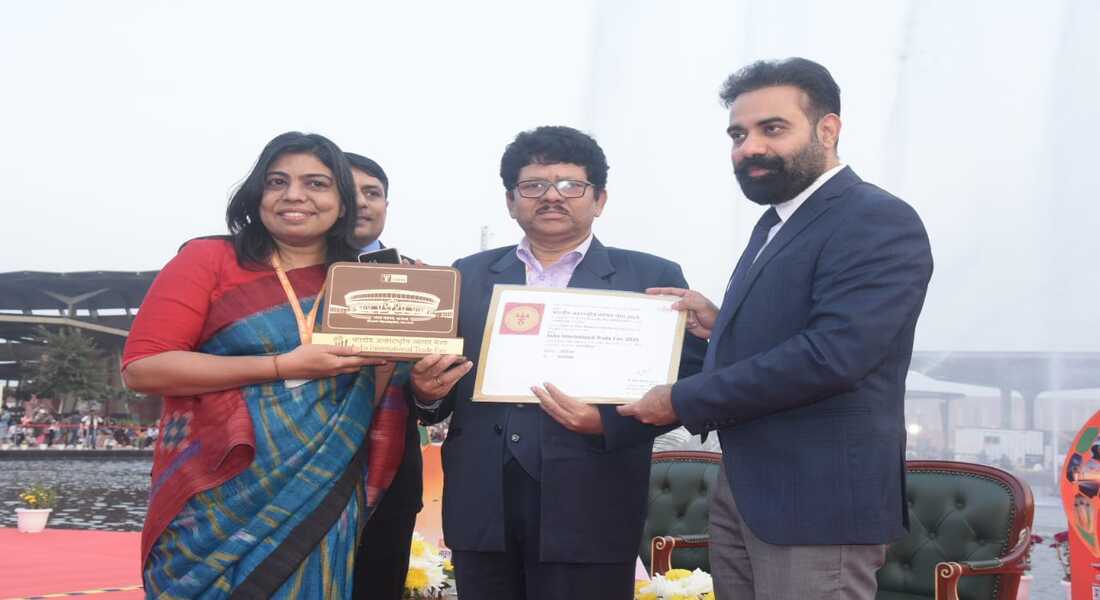
New Delhi: Odisha’s vibrant presence at the 44th India International Trade Fair (IITF) 2025 earned top honours on Thursday as the state bagged the prestigious Best Pavilion Award at the Bharat Mandapam complex in New Delhi. The accolade marks Odisha’s fourth consecutive win at the mega trade event, reinforcing its growing profile as a hub of culture-driven enterprise and innovative economic development.

The award was presented to Odisha officials Smt. Sucharita Shadangi, Assistant Resident Commissioner, and Shri Ashwini Kumar Bhoi, Director of the Odisha Pavilion, by ITPO Managing Director Dr. Neeraj Kharwal during a colourful ceremony near the Musical Fountain at the fair venue.

Chief Minister Mohan Charan Majhi congratulated the team and hailed the victory as a proud moment for Odisha. “Our display at the India International Trade Fair stands as a strong example of the creative brilliance of Odisha. This gold medal belongs to the entire state — especially to our artisans and self-help groups, who carried the true Odia spirit to Delhi and shone through,” he said in a message.

Additional Chief Secretary Hemant Sharma also lauded the collaborative effort of all officials and urged them to carry the same spirit forward.

Designed under the theme ‘Ek Bharat, Shreshtha Bharat,’ the Odisha Pavilion stood out for its unique blend of heritage, innovation and development. The structure reflected ancient Odia sculptural traditions while highlighting Vision Document 36 for 36 — a blueprint for Odisha’s role in shaping a self-reliant, developed India by 2047.

The pavilion featured 26 stalls representing nine government departments and associated organizations — including Boyanika, Resham Odisha, ORMAS, Mission Shakti, TDCCOL, MSME initiatives, Odisha Tourism, OMFED and tribal crafts from SCSTRTI. From Koraput coffee and paddy crafts to silver filigree, dokra metal art, sabai and coconut fibre handicrafts, the exhibits showcased both Odisha’s traditional skills and its emerging business potential. Authentic Odia delicacies served at the food court also drew crowds, expanding the cultural appeal of the pavilion.

According to officials, the fair brought major commercial gains as well. Businesses such as Gaumaya Paints (Bargarh), Odisha State Talgur Samabaya Sangha Ltd., and Elate Crunchies (Brahmapur) concluded trade talks with government bodies and enterprises. Several major national and international delegates have also visited the pavilion to explore partnerships in manufacturing, supply and distribution.

The pavilion, inaugurated on November 14 by Deputy Chief Minister Prabhati Parida, continued to attract distinguished guests throughout the fair — including Deputy CM Kanak Vardhan Singh Deo, ministers, MPs, officials from Tripura and Manipur, and representatives from global business organizations. Chief Minister Majhi also attended the Odisha State Day celebration on November 22 as the Chief Guest.

More than 2.5 lakh visitors explored the pavilion over 14 days, generating over ₹50 lakh in sales — with countless selfies taken across the visually striking installation that turned every corner into a photo hotspot, the officials said.

The Information & Public Relations Department manages Odisha’s participation at IITF. With this year’s Gold Award, Odisha has now dominated the trade fair for four consecutive years — winning Special Jury (2022), Gold (2023), Silver (2024) and once again Gold in 2025, ahead of Madhya Pradesh and Puducherry.