At IndiaVerve, we go beyond the noise to bring you meaningful stories of change, resilience and progress—from India to the world stage. Our mission is to bring readers credible, wide-ranging coverage across politics, business, sports, culture, society and more.

Students and professor booked for sexual harassment after student’s death in Himachal

Dharamshala: Police in Himachal Pradesh have registered a case of sexual harassment against a college professor and booked four female students for alleged ragging after the death of a 19-year-old BA student who had been under medical treatment for several months.

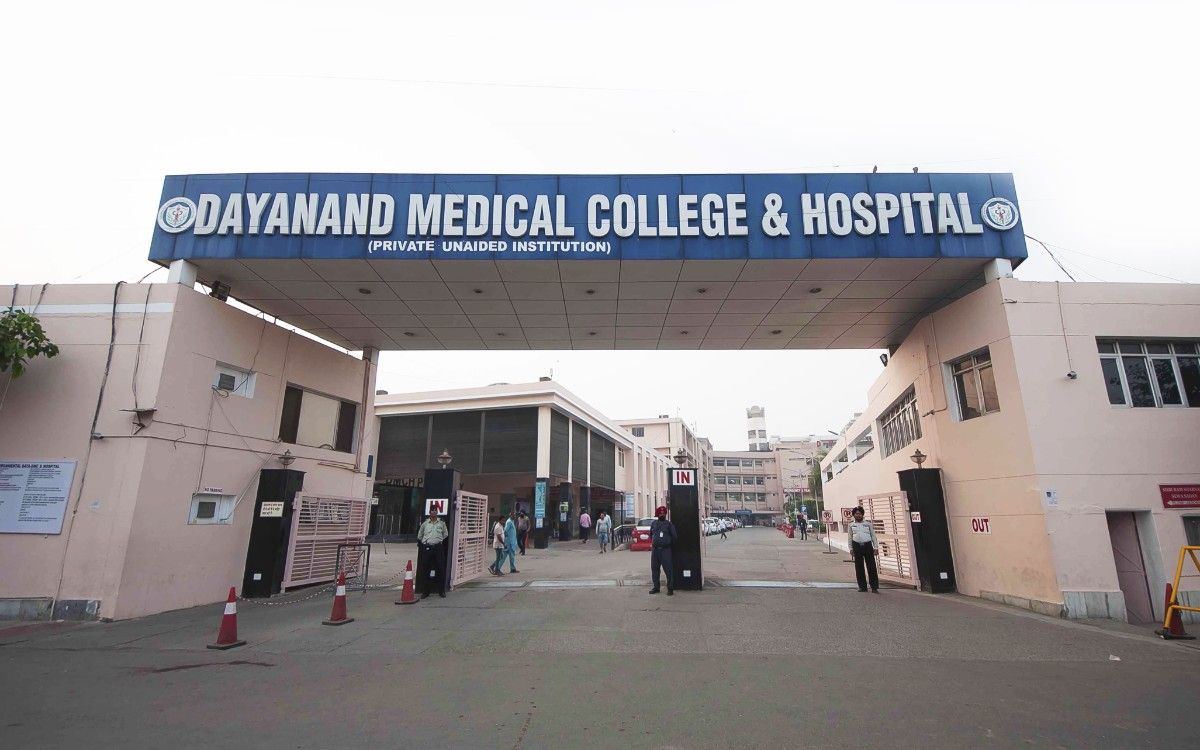
The student, a Dharamshala resident belonging to a Scheduled Caste community, was reportedly died at Dayanand Medical College and Hospital in Ludhiana on December 26, 2025. The FIR was filed on Thursday following a complaint from her father, who alleged that his daughter was assaulted by senior students on September 18 last year and subjected to sexual harassment by a professor, triggering severe psychological distress and deteriorating health.

Police said the complainant approached authorities through the Chief Minister’s helpline after his daughter’s death. He also alleged that earlier complaints to the college administration over ragging went unanswered.

The accused professor has reportedly denied the allegations. He said the student had failed multiple subjects in her first-year BA examination and had briefly sought admission into the second year pending re-evaluation.

Kangra Superintendent of Police Ashok Rattan said the FIR was lodged immediately after receiving the formal complaint. He stated that it would be “premature” to reach conclusions before a detailed investigation. The police were not informed about the student’s death or cremation, he added.

Police have begun examining medical records and two videos reportedly recorded by the student before her death, in which she accused the professor of mental harassment and intimidation. These were submitted to the police by her family.

Preliminary inquiry has indicated that the student enrolled in 2024, faced alleged ragging on campus, failed her first-year exams, and stopped attending classes before attempting to re-join the course months later.

The case has been registered under provisions of the Bharatiya Nyaya Sanhita for sexual harassment and voluntarily causing hurt, along with the Himachal Pradesh law prohibiting ragging in educational institutions.

Investigators said statements of witnesses and hospital staff will be recorded as part of the inquiry.

The professor maintains that he met the student only once after her exam results and insists that all interactions followed college rules.

Govt clears 22 new electronics component projects under ECMS

New Delhi: Driven by the ambition to position India as a global centre for electronics production, the government has taken another major step to expand domestic manufacturing capacity under the Electronics Component Manufacturing Scheme (ECMS).

The Ministry of Electronics and Information Technology (MeitY) on Friday approved 22 new proposals under the scheme, adding to the 24 applications cleared earlier. The newly approved projects involve an estimated investment of Rs41,863 crore, with projected production worth Rs2,58,152 crore, and are expected to create 33,791 direct employment opportunities, according to an official statement.

The approvals cover 11 critical component segments that support a wide range of industries, including mobile phones, telecommunications, consumer electronics, strategic and defence electronics, automotive systems, and IT hardware. This broad coverage is aimed at strengthening India’s electronics value chain and reducing reliance on imports.

The approved units are spread across Andhra Pradesh, Haryana, Karnataka, Madhya Pradesh, Maharashtra, Tamil Nadu, Uttar Pradesh and Rajasthan, supporting geographically balanced industrial growth. With this latest round, a total of 46 proposals across 11 states have been approved under ECMS, involving Rs54,567 crore in investments and generating direct employment for approximately 51,000 people.

Union Minister for Electronics and Information Technology Ashwini Vaishnaw said the scheme has strengthened India’s electronics manufacturing ecosystem and enabled a larger share of domestic demand to be met locally. He noted that India’s young demographic profile would continue to drive growth for decades, making it essential to build strong structural foundations now.

Minister of State for Electronics and Information Technology Jitin Prasada said India is increasingly being recognised as a dependable electronics manufacturing destination and a trusted partner amid global geopolitical uncertainty.

Government issues notice to X over Grok-linked sexual content targeting women

New Delhi: The Ministry of Electronics and Information Technology has issued a formal notice to X Corp (formerly Twitter) India Operations, accusing the platform of failing to prevent the misuse of its AI chatbot “Grok” to create and circulate obscene, sexually explicit and degrading content targeting women.

In the notice, circulated to multiple ministries and regulatory bodies, the ministry said the company must submit an action-taken report within 72 hours, detailing the steps taken to remove such content and prevent further abuse.

The ministry said it had received disturbing reports that users were prompting Grok to digitally alter photographs of women, producing synthetic sexual images and videos. Such content, it warned, amounts to harassment and an assault on dignity, and risks normalising abuse online.

“Such conduct reflects a serious failure of platform-level safeguards and enforcement mechanisms, and amounts to gross misuse of artificial intelligence technologies in violation of applicable laws,” the ministry said, instructing the social media platform to overhaul Grok’s technical and governance safeguards, suspend or terminate users violating platform rules, and ensure the immediate removal of unlawful material while preserving digital evidence.

The ministry also warned that failure to comply may result in the loss of safe-harbour immunity and expose the company to prosecution under Indian criminal and cyber laws.

The development follows a letter by Shiv Sena (UBT) MP Priyanka Chaturvedi, who sought urgent intervention, alleging that women’s photos were being digitally altered and sexualised using Grok. Her letter called the trend deeply disturbing and urged the government to ensure AI safeguards to protect women online.

Following the Meity notice to X, Chartuvedi thanked the ministry in a post on X for taking prompt action on her request.

The controversy has also drawn global attention, with European officials raising similar concerns. X owner Elon Musk, however, appeared to mock the criticism in social-media posts reacting to AI-edited images.

Rare 1954 Tamil classic ‘Ratha Kanneer’ added to NFAI archive

Pune: A rare and culturally significant Tamil film from the early years of Indian cinema, Ratha Kanneer (1954), has been formally added to the collection of the National Film Archive of India (NFAI), marking an important step in preserving the country’s cinematic heritage.

Directed by the Krishnan–Panju duo and written by Thiruvarur Thangarasu, the film emerged in the 1950s as a strong voice of progressive social thinking. A valuable copy of the film material was donated by Aparna Subramaniam, Film Research Officer at the Film and Television Institute of India, to Prakash Magdum, Managing Director of the National Film Development Corporation, at Pune. The donation includes eight jumbo reels in 35mm format from her personal collection, according to an official statement.

Starring theatre icon M.R. Radha in the lead role, Ratha Kanneer was considered revolutionary for its time. The film boldly examined entrenched social issues such as caste discrimination, blind religious practices, ritualism, and social hypocrisy. It also addressed the stigma surrounding leprosy, portraying the journey of a wealthy, westernised man whose life collapses after he contracts the disease and is abandoned by society. The narrative offered a deeply human portrayal of a condition that was widely feared and misunderstood in 1950s India.

M.R. Radha’s performance is widely regarded as one of the finest in Indian cinema. In the first half, he plays a sharp-tongued, privileged man with dark humour and unsettling arrogance. In the latter half, his physical and emotional transformation into a leprosy patient was marked by remarkable detail – from his stooped posture and uneven movements to his altered voice and speech – elements that later became hallmarks of his acting legacy.

The film also presented a forward-looking stance on widow remarriage, a sensitive subject at the time. In its climax, the dying protagonist urges his wife to consider marrying his close friend, challenging prevailing social norms and reinforcing the film’s reformist outlook.

Speaking on the occasion, Magdum said that despite the film’s immense historical and cultural value, no known archive in India or abroad currently holds an original print or negative of Ratha Kanneer. Until now, the film has only survived through poor-quality digital versions circulating online. He emphasised that acquiring this material is vital for its preservation, restoration, and future public access, and urged collectors and cinema lovers to contribute rare films and memorabilia to the NFAI.

Subramaniam expressed pleasure in placing the film in the care of the NFAI, stating that it rightfully belongs in a national archive dedicated to conservation and research. She added that the print came from long-standing contacts among film collectors and distributors in South India. She expressed hope that it would now be properly preserved for future generations.

Iran warns US against interference as protests turn violent

Tehran: Iranian officials have issued strong warnings against any US involvement in the country’s internal affairs, cautioning that such actions would have far-reaching consequences for regional stability and American interests.

Ali Larijani, Iran’s national security chief, on Friday warned the US not to interfere in Tehran’s internal matters. Writing on X, he said American interference would trigger “disruption across the entire region and the destruction of American interests.”

Larijani’s remarks came after US President Donald Trump threatened intervention following violent protests in Iran. In a post on Truth Social, Trump said: “If Iran shots (sic) and violently kills peaceful protesters, which is their custom, the United States of America will come to their rescue. We are locked and loaded and ready to go. Thank you for your attention to this matter! President DONALD J.TRUMP.”

Echoing the warning, Ali Shamkhani, a close adviser to Supreme Leader Ayatollah Ali Khamenei, said Iran’s national security was a “red line,” underscoring Tehran’s firm stance against external intervention.

In a post on X, he said: “Iran’s national security is a red line, not a subject for adventurist tweets.”

Meanwhile, protests have spread across several Iranian provinces this week, with dozens of demonstrators taking to the streets. Some of the protests turned deadly on Wednesday following clashes between protesters and police.

Chelsea part ways with Head Coach Enzo Maresca

London: Chelsea Football Club have confirmed that Head Coach Enzo Maresca has departed the club, bringing his spell at Stamford Bridge to an end.

Maresca took charge of Chelsea in the summer of 2024, arriving with a reputation as one of Europe’s emerging coaches following an impressive period in English football. Tasked with guiding a young and evolving squad, he was handed a long-term project aimed at restoring stability and success.

During his time in charge, the Italian delivered silverware, the club said in a statement. Chelsea lifted the UEFA Conference League under his leadership and later went on to secure the FIFA Club World Cup, achievements that stand out as major highlights in the club’s recent history.

However, performances in the ongoing season failed to meet expectations. With crucial objectives still within reach across four competitions, including the push for Champions League qualification, both the club and Maresca agreed that a change at this stage would offer the best opportunity to reset the campaign and regain momentum.

Chelsea thanked Maresca for his professionalism and commitment throughout his tenure and acknowledged his role in delivering important trophies. The club also extended its best wishes to him for the future.