At IndiaVerve, we go beyond the noise to bring you meaningful stories of change, resilience and progress—from India to the world stage. Our mission is to bring readers credible, wide-ranging coverage across politics, business, sports, culture, society and more.

Govt launches ‘Nari Adalat’ pilot project

Bhubaneswar: Deputy Chief Minister Pravati Parida on Saturday formally launched several schemes, campaigns, and projects of the Department of Women and Child Development at the Department’s Conference Hall, in the presence of Minister for Law, Works, and Excise Prithviraj Harichandan.

Parida, along with Harichandan, launched the Nari Adalat pilot project across 10 panchayats in 10 districts, according to a media release. The deputy DM described this initiative as a cornerstone of a “Bikashita Odisha”. She emphasised that the success of this welfare model depends on seamless implementation at the local level to ensure a discrimination-free society.

The law minister highlighted that by utilising the Mediation Act, Nari Adalat will amicably resolve civil, family, and dowry disputes, significantly reducing pending litigation. Under a specialised jury system, women will be vested with the authority to ensure transparency and accessible justice. This noble endeavour, supported by the Taluka Legal Services Cell Authorities, aims to provide a swift and effective legal framework for women at the village level.

The Nari Adalat initiative aims to raise awareness of women’s rights and provide speedy, amicable dispute resolution through dialogue and mediation at the grassroots. Issues related to domestic violence, dowry, child protection, and property rights will be addressed through this platform, ensuring timely and accessible justice at the panchayat level.

The deputy CM also launched the week-long statewide celebrations of National Girl Child Day 2026 under the Beti Bachao Beti Padhao scheme, to be observed from January 17 to January 24. Awareness rallies, college competitions, felicitation of meritorious students, and coordination meetings with allied departments will be organised across all 30 districts. The campaign aims to curb gender-based sex selection, promote gender equality, and foster a positive shift in societal attitudes towards the girl child.

As part of the programme, operational guidelines of the centrally sponsored PALNA (Anganwadi-cum-Crèche) scheme were unveiled. Implemented in a 60:40 cost-sharing ratio between the Centre and the State, the scheme aims to provide a safe, nurturing, and child-friendly environment for children aged six months to three years, ensuring nutrition, health, safety, and cognitive development. The initiative is also expected to significantly enhance the participation of working mothers in the workforce.

In the first phase, 168 Anganwadi Centres across 25 districts have been identified and operationalised as PALNA Centres. These centres will provide services including child protection and supplementary nutrition, safe sleeping facilities, early childhood stimulation activities, growth monitoring, health check-ups, and immunisation support.

Additionally, Parida virtually inaugurated a new 100-bed Utkal Balashram building in Jajpur, constructed at Rs2.49 crore from the State Budget. Modern kitchen facilities were also inaugurated at the Utkal Balashrams in Puri and Jajpur to ensure hygienic, nutritious, and safe food for resident children. The government plans to extend this modern kitchen facility to other districts in a phased manner.

India boosts Blue Economy push in Andaman

Port Blair: Union Minister of State (Independent Charge) for Science and Technology, Dr Jitendra Singh, on Saturday, underlined the government’s push to unlock the economic potential of India’s seas, stressing that ocean-based industries will drive future growth.

Speaking during a visit to the Atal Centre for Ocean Science and Technology for Islands (ACOSTI) in Port Blair, the minister said the next phase of economic expansion will come from marine resources and island regions, not just the mainland.

Singh launched and reviewed a series of ocean technology initiatives designed to create livelihoods, boost scientific capability, and expand marine production in the Andaman & Nicobar Islands. He said the Centre’s sustained emphasis on the Blue Economy reflects the prime minister’s belief that national development must include remote coastal and island communities.

The programme, held at ACOSTI under the National Institute of Ocean Technology, was attended by Andaman & Nicobar MP Bishnu Pada Ray, Ministry of Earth Sciences Secretary Dr M Ravichandran, senior administrators, research scientists, and representatives from local departments and self-help groups.

The minister said Parliamentary advocacy has ensured continuous national attention on the islands, noting that since 2014, island territories and the Northeast have seen increased policy support, institutional funding, and ministerial engagement.

Highlighting India’s Deep Ocean Mission, Singh said the initiative received rare prominence with announcements from the Red Fort on two consecutive Independence Days, marking a national commitment to ocean-based development. He further said marine wealth is likely to become a major pillar of growth as conventional resources reach their limits, adding that Blue Economy-linked industries promise jobs, exports, and environmental sustainability.

During the visit, the minister reviewed technology demonstrations, including pilot open sea cage farming and seaweed cultivation projects, according to an official statement. He said the transfer of these technologies to local communities reflects a collaborative development approach and that the islands offer ideal conditions for such projects due to region-specific species and coastal characteristics.

Singh also emphasised the growing convergence between biotechnology and ocean science. He noted that India’s BioE3 policy seeks to harness bio-resources for economic growth and environmental gains and said marine ecosystems could yield biodegradable plastics substitutes, pharmaceutical compounds, and other high-value products.

He highlighted emerging focus areas such as non-animal nutrition, export-oriented seafood production, waste-to-wealth systems and niche food categories with rising demand in Europe. Women’s participation and Self-Help Groups, he said, must be central to scaling these initiatives to promote “Vocal for Local” and “Local for Global”.

Fadnavis, US envoy discuss cooperation

Mumbai: Maharashtra Chief Minister Devendra Fadnavis on Saturday hosted US Ambassador to India Sergio Gor at his official residence in Mumbai, with Consul General Michael Schreuder also present for the meeting.

Fadnavis said the discussions were centred on scaling cooperation between Maharashtra and the US, with a particular focus on expanding bilateral investment and strengthening state-level economic engagement. He shared details of flagship state projects, including the planned Navi Mumbai International Edu City, noting that Maharashtra is positioning itself as a major destination for global investment.

According to Fadnavis, both sides explored ways to encourage US companies to deepen their footprint in the State, while also supporting Maharashtra-based firms expanding into the American market.

Gor, who later praised the interaction on X, said the meeting covered shared priorities across multiple sectors, including trade and investment, technology, entertainment, manufacturing, energy, and healthcare. He described Maharashtra as a key partner for the US and underlined the potential for significantly broader cooperation.

Both Fadnavis and Gor agreed to continue close engagement to further strengthen the US–Maharashtra partnership in the coming months.

PM launches India’s first Vande Bharat sleeper from Malda

Malda: Prime Minister Narendra Modi on Saturday unveiled a series of railway projects in Malda, marking what he described as a major boost to connectivity and infrastructure in West Bengal. Addressing a public gathering, the prime minister said that the region is witnessing transformative development, with new train services, modern facilities, and expanded maintenance capacity.

The PM formally flagged off India’s first Vande Bharat sleeper train, calling it a milestone in the country’s railway modernisation journey. The long-distance train, connecting West Bengal and Assam, is equipped to offer a more comfortable overnight travel experience. In a post on X, Modi said the new train reflects India’s aspiration for a developed transport network and represents a technological leap led by domestic manufacturing.

“Today, we are seeing a dream come true – a made-in-India sleeper train that matches global standards,” Modi said, adding that passengers he met at Malda station described the service as a unique experience.

The PM also launched four new Amrit Bharat Express trains linking North Bengal with southern and western India. The routes include new Jalpaiguri–Nagercoil, new Jalpaiguri–Tiruchirappalli, Alipurduar–Bengaluru, and Alipurduar–Mumbai, according to an official statement. He noted that these services will benefit pilgrims, tourists, and workers, reduce travel time, and improve access between states.

Modi underlined that more than 150 Vande Bharat trains are currently operational across the country, and said railway electrification, modern stations, and new high-speed corridors are driving an unprecedented transformation. He emphasized that the ongoing upgrades are particularly beneficial to poor and middle-class households.

The PM also highlighted India’s growing self-reliance in railway manufacturing, pointing out that the country now produces more locomotives than the US and Europe and exports passenger and metro coaches to multiple countries. He said this industrial expansion has strengthened the economy and created jobs for young workers.

Modi concluded by reiterating that enhancing national connectivity remains a core priority for the government. “Joining India, reducing distances – this is our mission,” he said, before departing for a second event in the region.

Odisha adopts IIT-Madras road safety dashboard

Bhubaneswar: Odisha has become the first state in the country to operationalise the Integrated Road Safety Dashboard developed at IIT Madras, marking a major step toward data-led management of road accidents.

The digital platform, built by the RBGlabs team at the institute, compiles information from multiple departments into a single environment where policymakers can track incidents, identify accident hotspots, and monitor the impact of interventions. It was formally rolled out in the State during Road Safety Month 2026 and has since begun supporting enforcement and planning decisions.

Unlike conventional systems that rely on scattered reports, the dashboard enables real-time analytics, inter-agency coordination, and the assignment of responsibility for follow-up actions. Officials say this shift will help convert raw numbers into targeted responses, reducing delays in implementing corrective measures.

While Odisha is the first to deploy the system at scale, the design is modular and portable, allowing other states and Union Territories to configure it to their needs while maintaining alignment with a national framework.

The platform rests on India’s central accident database eDAR, and includes dedicated access points both for administrators and for the public, aiming to boost transparency and citizen involvement in road safety.

IIT Madras said in a post on X that the initiative highlights how academic research can directly support governance and help address a pressing national challenge – preventable loss of life on India’s roads.

India, Japan reaffirm strategic ties at 18th bilateral dialogue

New Delhi: India and Japan underlined the strength of their comprehensive strategic partnership during the 18th India-Japan Strategic Dialogue held in New Delhi on Friday. External Affairs Minister Dr. S. Jaishankar emphasized that the relationship has evolved from primarily economic cooperation to a broad-based partnership covering security, technology, and global governance.

Japan was represented by Foreign Minister Toshimitsu Motegi at the dialogue.

In his opening remarks, Jaishankar highlighted India’s priority in working with Japan in international forums, including the Quad, the UN, G4 membership, and the G20. He noted that both countries, as leading democracies and major economies, have a duty to shape the global order, particularly in the current uncertain international environment.

Economic security and resilience were central to the dialogue, with discussions set to focus on supply chain security, critical minerals, energy, health, and maritime security. The minister also highlighted the upcoming 75th anniversary of diplomatic ties, noting the continuous upward trajectory of the Special Strategic and Global Partnership.

Reflecting on Indo-Pacific cooperation, he said India’s MAHASAGAR vision aligns closely with Japan’s Free and Open Indo-Pacific outlook. The minister also pointed to shared interests in the Middle East and West Asia, referencing the Japanese minister’s recent visits to Qatar, Israel, and Palestine.

On a lighter note, he remarked on the Japanese minister’s passion for cricket, noting his own interest in joining a match in Japan one day, according to the External Affairs Ministry.

The dialogue reaffirmed the commitment of both nations to strengthen bilateral cooperation across economic, strategic, and global issues, signaling continued close coordination in the Indo-Pacific and beyond.

Government rolls out new curriculum

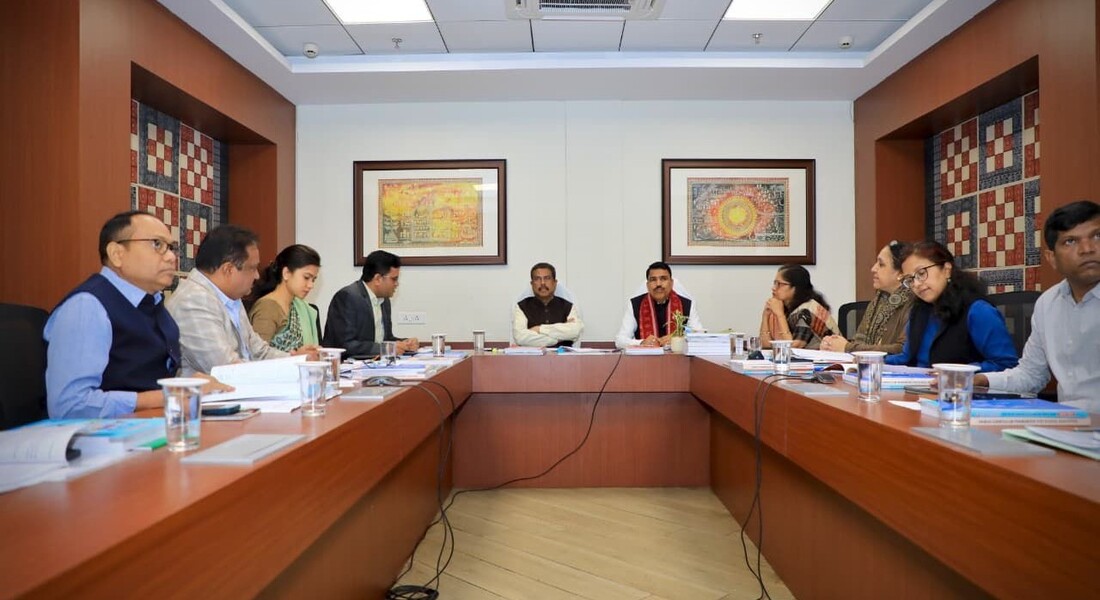
Bhubaneswar: A video conference was held in Bhubaneswar on Friday in the presence of Union Education Minister Dharmendra Pradhan and State School and Mass Education Minister Nityananda Gond, during which an important discussion session took place. On this occasion, both ministers discussed the new curriculum and teacher training with master trainers and educational leaders from all 30 districts of the state.

Pradhan stated that from the 2026–27 academic year, new textbooks will be introduced from Class I to VIII. These textbooks will be based on the Odisha State Curriculum Framework, according to an official statement. Around 1.67 lakh teachers in the State will receive extensive training to become proficient in the new curriculum. Emphasis will also be placed on the continuous professional development of teachers using modern technology. Education in the mother tongue will be strengthened up to Class V, ensuring that children acquire strong foundational learning skills.

At the primary level, discussions focused on enhancing children’s abilities in reading, writing, and numeracy, with a special emphasis on achieving the Odisha Learning Goals. For students from Class VI to X, a 10-day bag-free learning program will be organized to help them gain practical knowledge and develop critical thinking skills. Additionally, attention will be given to children’s nutrition and health from birth through Class XII.

Through this visionary education policy of the prime minister, the State government aims to bring transformative changes in Odisha’s education sector and work toward building a “Developed Odisha,” the education minister noted.

The program was attended by senior officials from NCERT, the Ministry of Education, the State Education Department, as well as representatives from Kendriya Vidyalaya Sangathan, Navodaya Vidyalaya Samiti, Odisha Adarsha Vidyalaya, District Education Officers, Block Education Officers, and District Institutes of Education and Training.

India Open: Sen’s valiant run ends in quarters

New Delhi: India’s run at the Yonex-Sunrise India Open Super 750 came to a close on Friday as the last remaining home contender exited the tournament. Lakshya Sen, the last Indian remaining in singles, fought courageously but was defeated in the quarterfinals, bringing India’s participation at the tournament to an end.

In the men’s singles quarterfinal, Sen pushed his opponent all the way but was beaten in a hard-fought contest. The final scoreline read 21–19, 18–21, 19–21, with Sen taking the opening game before his opponent surged back to win the next two. Sen’s aggressive play and willingness to engage in long rallies kept the crowd captivated, but a few crucial errors at key moments proved decisive as he narrowly missed out on a semifinal berth.

Meanwhile, former world champion Loh Kean Yew drew attention to problems at the India Open, posting images online that intensified concerns about the Super 750 event. The Badminton Association of India faced renewed criticism from foreign players over the venue’s condition.

HS Prannoy’s Round of 16 match against Loh was interrupted twice due to droppings on the court, contradicting earlier claims that the arena was pigeon-free.

A monkey was also reportedly seen in the stands, adding to questions about stadium management. Meanwhile, Mia Blichfeldt voiced repeated complaints about playing conditions, and World No. 3 Anders Antonsen skipped the tournament, citing poor air quality in New Delhi.

Nobel Center clarifies Trump medal row

Oslo: The Nobel Peace Center on Friday clarified that a Nobel Peace Prize laureate receives two core symbols – a gold medal and a diploma – while the prize money is awarded separately. In a media release, it emphasized that regardless of what happens to the medal, diploma, or monetary award, the original laureate remains the official recipient in the historical record.

The clarification came after former US President Donald Trump received a Nobel Peace Prize medal from Venezuelan opposition leader María Corina Machado, who won the 2025 Peace Prize and handed over her medal during a private meeting. This symbolic gesture sparked questions over ownership and attribution.

“A laureate cannot share the prize with others, nor transfer it once it has been announced. A Nobel Peace Prize can also never be revoked. The decision is final and applies for all time. The Norwegian Nobel Committee does not see it as their role to engage in day-to-day commentary on Peace Prize laureates or the political processes that they are engaged in. The prize is awarded on the basis of the laureate’ contributions by the time that the committee’s decision is taken,” the Center noted.

It further said: “The Committee does not comment on laureates’ subsequent statements, decisions, or actions. Any ongoing assessments or choices made by laureates must be understood as their own responsibility. There are no restrictions in the statutes of the Nobel Foundation on what a laureate may do with the medal, the diploma, or the prize money. This means that a laureate is free to keep, give away, sell, or donate these items.”

BMC election 2026: BJP-led alliance wins control of Mumbai’s civic body

Mumbai: The results of the Brihanmumbai Municipal Corporation (BMC) elections were officially declared late last night, delivering one of the most significant political outcomes in the city’s recent history. The BJP-led alliance secured a clear majority in the 227-member civic body, ending decades of near-continuous dominance by rival local parties.

In a tightly contested poll held on January 15, the BJP emerged as the single largest party within the alliance, winning 89 wards, according to the Maharashtra State Election Commission. Its ally, the Shiv Sena (Shinde faction), added 29 seats, taking the combined tally of the alliance to 118 seats – comfortably above the 114-seat majority mark needed to control the corporation.

The Shiv Sena (Uddhav Balasaheb Thackeray faction), which contested separately, finished with 65 seats, reflecting continued support in many areas but falling short of its target. Other parties also won seats: the Congress secured 24 wards, the All India Majlis-e-Ittehadul Muslimeen won eight, and the Maharashtra Navnirman Sena won six. Smaller parties such as the Nationalist Congress Party and the Samajwadi Party won a handful of wards between them.

The outcome marks a historic shift in Mumbai’s civic politics, breaking the long electoral hold that local parties rooted in regional identity had maintained over the richest municipal corporation in India. The BMC budget – exceeding seventy-four thousand crore rupees for 2025–26 – gives the winning alliance significant influence over urban planning, infrastructure, public health, sanitation, housing, and other critical services for the city’s millions of residents.

Voter turnout was reported to be in the low to mid-50% range, with counting completing late on the night of declaration. The race was marked by intense competition ward by ward, with several close contests and final tallies shifting in the last rounds of counting.

Party leaders from the BJP hailed the result as a “historic mandate” and pointed to the electorate’s endorsement of their development agenda and governance priorities. Leaders of the opposing alliance acknowledged a spirited contest and indicated they would continue to serve their constituencies and regroup ahead of future elections.

With the majority secured, the BJP-led alliance is poised to elect the next mayor of Mumbai and shape the civic agenda for the coming term, focusing on issues such as urban services, housing, transportation, and economic growth.

In a post on X, Prime Minister Narendra Modi expressed delight over the outcome, saying, “This is a vote to add momentum to progress and celebrate the glorious culture the state is associated with.”