At IndiaVerve, we go beyond the noise to bring you meaningful stories of change, resilience and progress—from India to the world stage. Our mission is to bring readers credible, wide-ranging coverage across politics, business, sports, culture, society and more.

Odisha partners with Sarvam AI to build sovereign AI capacity hub

Bhubaneswar: Odisha has signed a Memorandum of Understanding (MoU) with Sarvam AI to establish a sovereign AI capacity hub, marking a major step towards India’s self-reliant AI ambitions. The project aims to position Odisha as a leading provider of AI infrastructure in the country.

The State is shifting from a mineral-driven economy to a technology-led digital economy, Dr. Mukesh Mahaling, Minister of Health & Family Welfare, Parliamentary Affairs, Electronics & IT, said.

The planned facility will have a 50 MW AI-optimised setup with an estimated investment of around Rs20,000 crore. Odisha will also provide significant capital investment incentives to support the development.

The AI hub is expected to host nearly 25,000 Nvidia Blackwell GPUs and generate thousands of high-skilled direct and indirect jobs. In a post on X, Mahaling said the facility will strengthen Odisha’s role in India’s sovereign AI and compute ecosystem and accelerate the vision of “Viksit Odisha, Viksit Bharat.”

Vishal Kumar Dev, Additional Chief Secretary of the government, stated that the partnership with Sarvam AI reflects the State’s focus on building a technology-driven digital economy. He added that Odisha is expected to become a key contributor to India’s sovereign AI capabilities.

India, UK sign social security pact for short-term employees

New Delhi: India and the UK signed a Social Security Agreement in New Delhi on Tuesday. The agreement aims to avoid double social security contributions for employees working temporarily in either country.

Foreign Secretary Vikram Misri signed the pact for India, while British High Commissioner Lindy Cameron signed on behalf of the UK, the External Affairs Ministry said in a release.

The agreement will benefit Indian professionals and skilled workers on short-term overseas assignments, ensuring continued social security coverage for up to 36 months. It also supports the mobility of employees and strengthens partnerships between India and the UK in high-skill and innovative service sectors.

This pact follows the Comprehensive Economic and Trade Agreement (CETA) signed between India and the UK in July 2025, where both countries had committed to finalising a Social Security Agreement. The new agreement will come into effect along with CETA in the first half of 2026.

Stakeholders can access the signed agreement on the Ministry of External Affairs and Employees’ Provident Fund Organisation websites. Employees can obtain Certificates of Coverage to ensure they do not pay double social security contributions.

The agreement forms part of India’s ongoing efforts to safeguard the rights of professionals working abroad and to enhance the global competitiveness of Indian companies.

T20 WC: De Leede shines, NZ cruise, Pakistan dominate on busy 4th day

New Delhi: Three matches across Delhi, Chennai and Colombo on Tuesday produced contrasting contests in the T20 World Cup, with Netherlands registering a composed chase, New Zealand delivering a ruthless opening stand, and Pakistan asserting control through spin-heavy tactics to stay unbeaten in the group stage.

Netherlands vs Namibia, Group A, Delhi

Netherlands bounced back strongly from their previous defeat with a convincing seven-wicket win over Namibia at the Arun Jaitley Stadium, powered by an outstanding all-round performance from Bas de Leede. After opting to bowl, Netherlands applied early pressure and never allowed Namibia to fully capitalise on brief surges.

Namibia showed promise through Jan Nicol Loftie-Eaton and Jan Frylinck, who added quick runs during the middle phase, but regular wickets halted their momentum. De Leede struck at crucial moments, while disciplined bowling at the death restricted Namibia to a sub-par total despite a decent platform. Chasing 157, Netherlands lost an early wicket but quickly settled through Michael Levitt’s aggressive cameo before de Leede and Colin Ackermann stitched together the match-defining partnership. De Leede’s unbeaten half-century ensured the chase remained uncomplicated as Netherlands crossed the line with two overs to spare.

Brief Scores: Namibia 156/8 in 20 overs (Jan Nicol Loftie-Eaton 42, JJ Smit 22; Logan van Beek 2/13, Bas de Leede 2/20); Netherlands 159/3 in 18 overs (Bas de Leede 72*, Colin Ackermann 32). Netherlands won by 7 wickets.

New Zealand vs UAE, Group D, Chennai

New Zealand tightened their grip on Group D with a dominant unbeaten chase against UAE at the MA Chidambaram Stadium. UAE, coming in with questions over their batting depth, delivered a far more resilient performance than expected, led by skipper Muhammad Waseem.

Waseem and Alishan Sharafu stitched together a century partnership, absorbing pressure and finding boundaries against a disciplined New Zealand attack. Their stand lifted UAE to a competitive 173, offering signs of growth despite the eventual outcome. In response, New Zealand’s openers Tim Seifert and Finn Allen were relentless from the outset. The duo dismantled the bowling with clean striking and smart placement, ensuring the chase never drifted into uncertainty. Their unbroken partnership sealed the result inside 16 overs, underlining New Zealand’s growing confidence following tough pre-tournament outings and further strengthening their tournament momentum.

Brief Scores: UAE 173/6 in 20 overs (Muhammad Waseem 66*, Alishan Sharafu 55; Matt Henry 2/37); New Zealand 175/0 in 15.2 overs (Tim Seifert 89*, Finn Allen 84*); New Zealand won by 10 wickets

Pakistan vs USA, Group A, Colombo

Pakistan continued their steady progress in the tournament with a comprehensive 32-run victory over USA at the Sinhalese Sports Club, registering their second win on the trot. Asked to bat, Pakistan capitalised on a solid surface through Sahibzada Farhan’s aggressive approach in the PowerPlay, even as wickets fell at regular intervals.

Farhan’s brisk fifty set the tone, while Babar Azam anchored the middle overs before accelerating to push Pakistan beyond 180. A late flourish from Shadab Khan ensured Pakistan reached a challenging 190 despite USA’s Shadley van Schalkwyk impressing with four wickets. In reply, USA began brightly through Shayan Jahangir but struggled once Pakistan turned to spin. The spinners choked the scoring rate through the middle overs, forcing risky shots and regular dismissals. Shubham Ranjane fought hard with a half-century, but the mounting required rate proved insurmountable as Pakistan closed out a controlled win.

Brief Scores: Pakistan 190/9 in 20 overs (Sahibzada Farhan 73, Babar Azam 46; Shadley van Schalkwyk 4/25); USA 158/8 in 20 overs (Shubham Ranjane 51, Shayan Jahangir 49; Usman Tariq 3/27, Shadab Khan 2/26); Pakistan won by 32 runs

India hosts first BRICS Sherpas meeting of 2026

New Delhi: India hosted the first BRICS Sherpas and Sous Sherpas meeting of 2026 in New Delhi on Tuesday, marking the official start of preparations for the 18th BRICS Summit. Participants discussed key events for the year and India’s priorities as the chair country.

Sudhakar Dalela, India’s BRICS Sherpa and Secretary (Economic Relations) at the Ministry of External Affairs, highlighted the main priorities of India’s chairship. In a post on X, he noted that India’s approach follows a “people-centric” and “humanity-first” vision, with the overall theme “Building for Resilience, Innovation, Cooperation and Sustainability.”

External Affairs Minister S. Jaishankar met with BRICS Sherpas and country representatives, welcoming their suggestions and perspectives. He observed that as BRICS completes 20 years, it has become an important platform for global consultation, coordination, and cooperation.

In a post on X, he said: “Value the suggestions and perspectives brought in by different delegations to advance #BRICS2026 priorities of resilience, innovation, cooperation and sustainability.”

BRICS currently brings together 11 emerging economies – Brazil, China, Egypt, Ethiopia, India, Indonesia, Iran, Russia, Saudi Arabia, South Africa, and the UAE. The bloc serves as a platform for dialogue on global political and economic governance.

On the sidelines of the Sherpas meeting, Foreign Secretary Vikram Misri held the India-China Strategic Dialogue with China’s Executive Vice Foreign Minister Ma Zhaoxu. The two sides discussed a wide range of bilateral, regional, and international issues, the ministry said in a release.

Both countries emphasised the importance of maintaining peace and tranquility along the border. They reaffirmed their commitment to follow guidance from their leaders and to address trade and strategic issues through political dialogue and mutual engagement.

The meeting reinforced India’s role in promoting cooperation, stability, and people-focused initiatives within BRICS, while strengthening bilateral ties with key partners like China.

Government clears Rs4,111 crore industrial proposals

Bhubaneswar: The government on Tuesday cleared fresh industrial investments worth Rs4,111.80 crore, giving a strong push to the State’s growth plans. The 144th State Level Single Window Clearance Authority approved 23 new projects at a meeting chaired by Chief Secretary Anu Garg.

Officials said these projects are likely to create 9,924 jobs across the State. The move is expected to boost both industrial output and local employment.

The approved proposals cover a wide range of sectors. These include mechanical and electrical capital goods, apparel and textiles, and aerospace and defence manufacturing. Shipbuilding and ship repair projects have also received the green signal.

The list further includes pharmaceuticals, chemicals, and refractory units. Aluminium and metal downstream industries form a key part of the investment plan. Projects in mineral beneficiation, plastics, and glass manufacturing have also been cleared.

The State has also approved proposals in logistics and warehousing, infrastructure, and tourism and hospitality. Officials believe this diversified investment will strengthen Odisha’s industrial base.

The projects will come up in 11 districts. These are Balasore, Bhadrak, Cuttack, Deogarh, Ganjam, Jajpur, Khordha, Koraput, Puri, Sambalpur, and Sundargarh.

With this round of approvals, the State aims to speed up industrial expansion and generate employment across regions.

Odisha emerges as key pillar in Eastern Coastal science roadmap

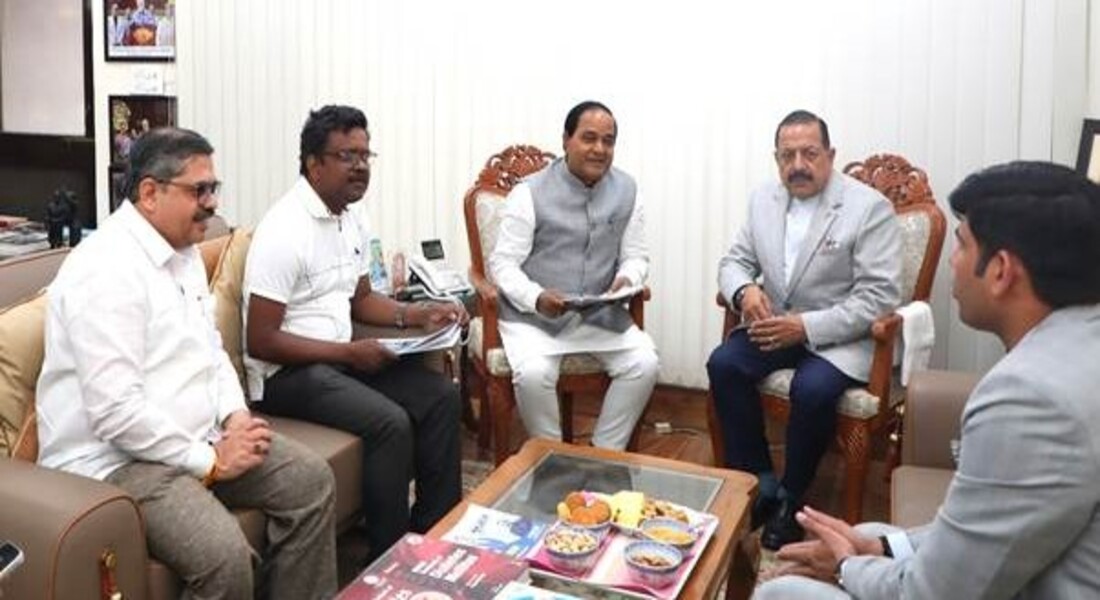
New Delhi: Odisha has secured a major role in the Union Budget’s Eastern coastal and science-led development plan. Union Minister of State (Independent Charge) for Science and Technology, Dr. Jitendra Singh, shared this on Tuesday during a meeting with State Science and Technology Minister, Krushna Chandra Patra.

The State will host one of India’s four proposed Rare Earth Corridors and benefit from new deep-sea fishing reforms, the Union minister said.

Dr. Singh outlined a focused roadmap for the eastern coastal region. It links ocean resources, rare earth minerals, nuclear expansion, fisheries reforms, and life sciences research.

He stated that Odisha will be at the core of the eastern coastal strategy, according to an official statement. The plan brings together marine assets, mineral corridors, nuclear and space infrastructure, and biotechnology under one framework.

For the first time, India is using a coordinated approach to tap ocean resources. Central research institutes will work closely with the Odisha government on ocean-related programmes.

The talks also covered the Deep Ocean Mission and policy support for deep-sea fishing within India’s Exclusive Economic Zone. These steps aim to create fresh income opportunities for coastal communities.

Both sides reviewed fisheries reforms and regulatory changes needed to support long-term marine growth.

On critical minerals, the discussion focused on setting up a rare earth corridor in eastern India. The move will reduce dependence on southern states for nuclear mineral exploration and open new prospects for Odisha.

Dr. Singh said Odisha will gain strongly from the current budget allocations. The State already hosts a space centre and several life sciences institutions. Stronger Centre-State coordination can speed up research and innovation.

The meeting also examined a proposal to set up a Bio-E3 Cell in Odisha. Plans for a new Department of Biotechnology centre were discussed. The State government has agreed to provide land support.

Both leaders agreed to maintain close coordination. The goal is the timely execution of projects across ocean science, atomic minerals, space research, and biotechnology.