At IndiaVerve, we go beyond the noise to bring you meaningful stories of change, resilience and progress—from India to the world stage. Our mission is to bring readers credible, wide-ranging coverage across politics, business, sports, culture, society and more.

West Bengal votes in final phase of Assembly elections

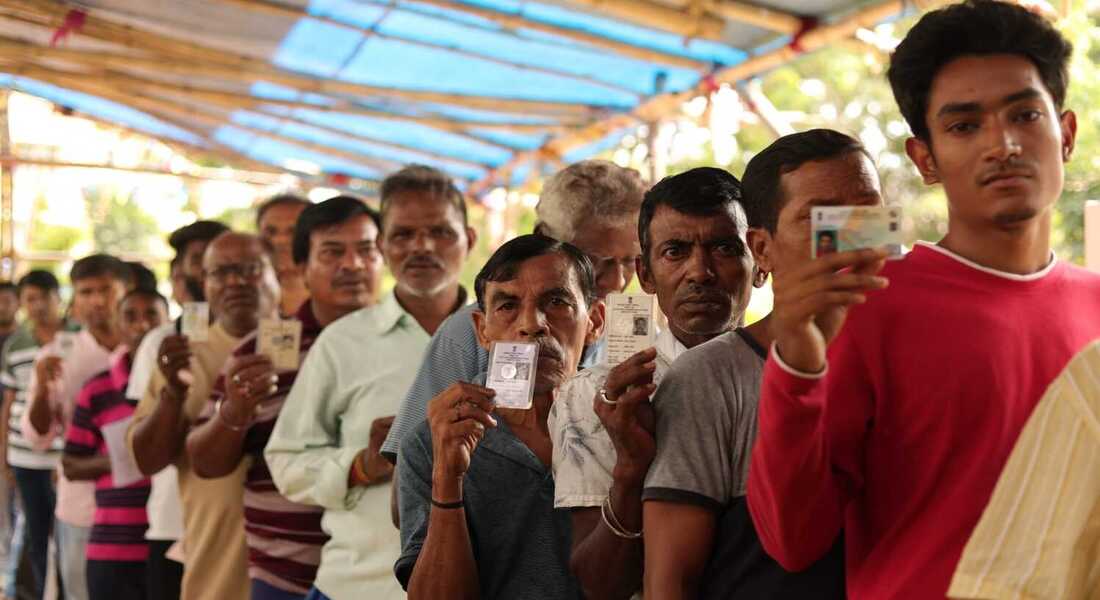
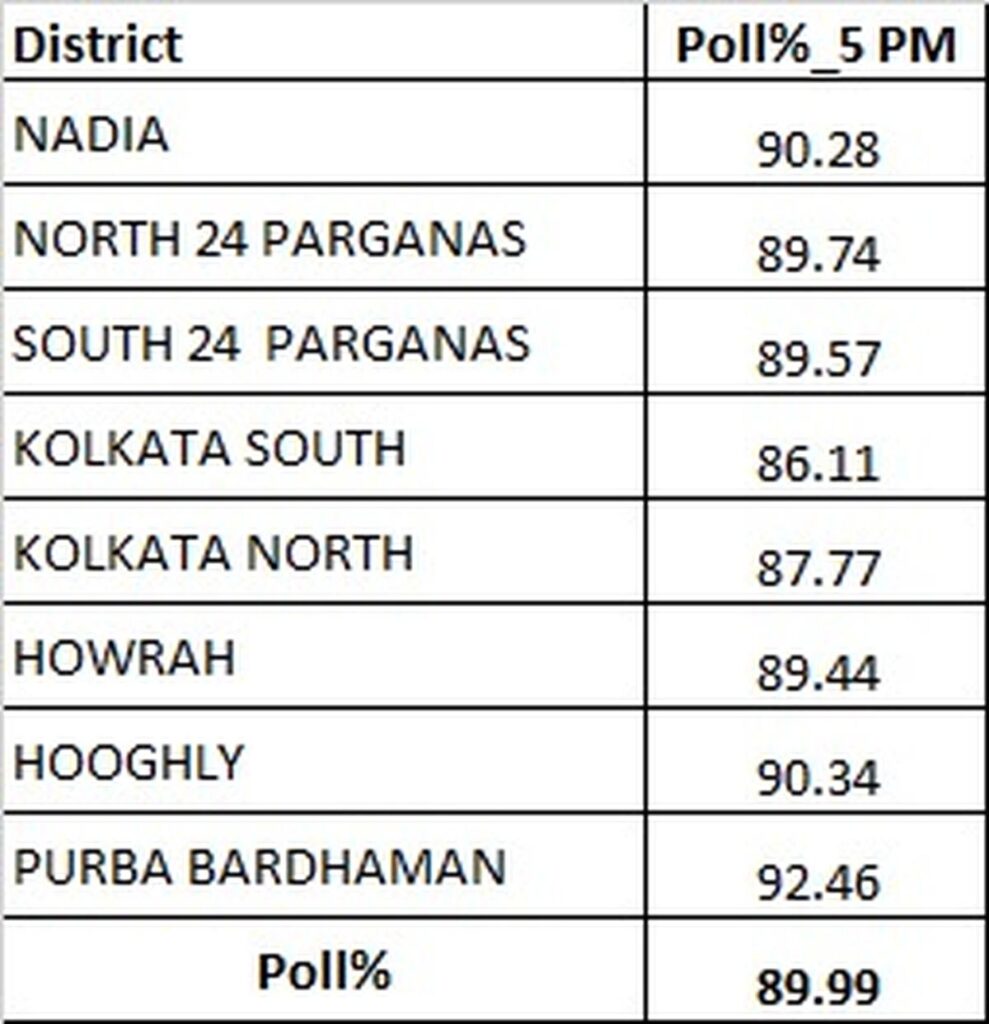
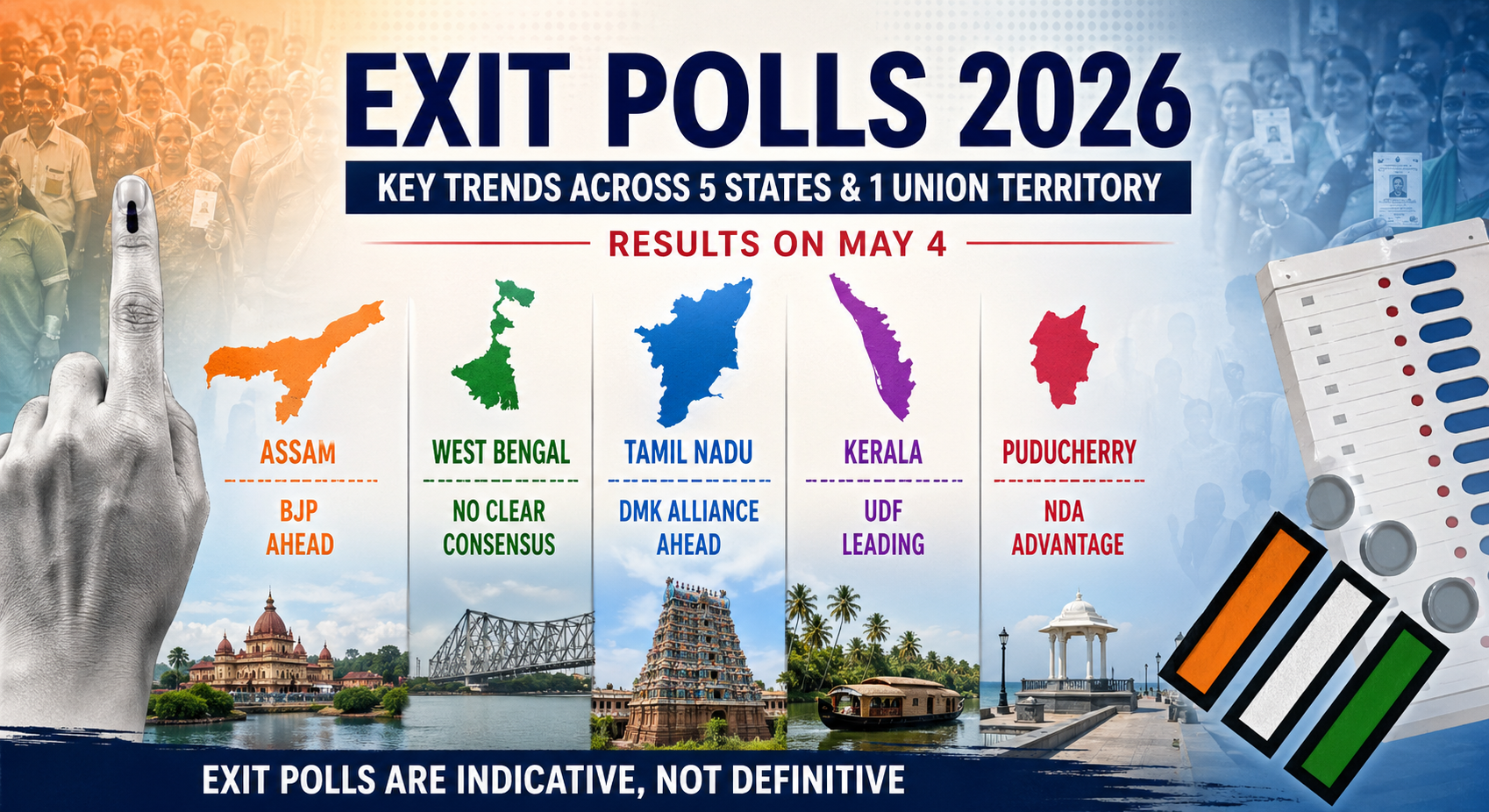
New Delhi: West Bengal is voting in the second and final phase of its Assembly elections on Wednesday, with polling underway across 142 constituencies spread over the state’s politically significant southern region. Voting began in the morning and will continue till 6:30 pm, with provisions allowing electors already in the queue at closing time to exercise their franchise.

This phase includes major districts such as Kolkata, Howrah, North and South 24 Parganas, Nadia, Hooghly, and Purba Bardhaman, which together form the core electoral base of the Trinamool Congress, according to the reports.

In the 2021 Assembly elections, the party had secured 123 of these 142 seats, while the BJP won 18 and the Indian Secular Front secured one.

The key focus in this round is whether the BJP can make inroads into the ruling party’s stronghold in southern Bengal, after gaining ground in parts of the northern region, or whether the Trinamool Congress under Chief Minister Mamata Banerjee retains its dominance and moves closer to a fourth consecutive term.

The first phase saw strong voter participation, and similar turnout trends are expected in the concluding phase as campaigning issues such as governance, welfare schemes, and corruption give way to voting.

Amid polling, political exchanges intensified. Uttar Pradesh Deputy Chief Minister Keshav Prasad Maurya claimed there was a strong pro-BJP wave in West Bengal, asserting that the party’s influence was expanding across states. He also referred to political developments in other states while projecting momentum for the BJP in Bengal.

BJP leader and candidate Suvendu Adhikari, who is contesting from Bhabanipur and Nandigram, interacted with voters during polling and made a remark suggesting defeat for Chief Minister Mamata Banerjee in Bhabanipur.

On the other hand, Banerjee levelled allegations against central forces and election observers, claiming they were acting under political influence and interfering in the electoral process. She alleged that voters were being intimidated and questioned the conduct of polling in certain areas, while also stating that party symbols and presence had been removed in some locations before voting.

Murali Sreeshankar wins long jump title in Pretoria with 8.12m leap

New Delhi: Asian Games silver medallist Murali Sreeshankar opened his international season on a winning note by clinching the men’s long jump title at the Simbine Classic 2026 athletics meet in Pretoria, South Africa, on Tuesday.

Competing at the Pilditch Stadium, the 27-year-old Indian athlete registered a best jump of 8.12 metres to secure the top position. He finished ahead of South Africa’s Divan Manuel, who managed 8.07 metres, while Rio 2016 silver medallist Luvo Manyonga took third place with a jump of 7.86 metres, according to olympics.com.

The Simbine Classic 2026 is a World Athletics Continental Tour Silver category event. Sreeshankar’s personal best stands at 8.41 metres, which he achieved at the Indian Championships three years ago. The national record in men’s long jump is 8.42 metres, held by Jeswin Aldrin.

This was Sreeshankar’s second competition of the season. Earlier this month, he won the Indian Athletics Series in Bengaluru with a jump of 8.15 metres. With his latest performance, he has also surpassed the Athletics Federation of India’s Asian Games qualifying standard of 7.91 metres.

However, meeting the qualifying mark alone does not ensure selection for the national team. As per the AFI selection policy, athletes are required to participate in at least three domestic competitions, including mandatory participation in state championships, to be considered for selection.

Odisha government notifies urban treated wastewater reuse policy

Bhubaneswar: The Odisha government has notified the Odisha Urban Treated Wastewater Reuse Policy, 2026, marking a significant step towards water sustainability and the promotion of a circular economy in urban development.

The policy aims to treat wastewater not as waste but as a valuable resource, while also addressing rising urban water stress across the state.

Under the policy framework, the state has set a clear timeline for achieving comprehensive wastewater management. By 2030, Odisha plans to ensure 100% collection, conveyance, and treatment of wastewater across all urban local bodies, along with the reuse of at least 20% of treated wastewater. By 2036, the state aims to increase the reuse level to at least 50% of treated wastewater.

At present, Odisha generates around 1,104 Million Litres per Day (MLD) of wastewater, while only about 190 MLD is treated, indicating a large treatment gap. The new policy seeks to bridge this gap through mandatory treatment infrastructure and structured reuse systems, along with safe utilisation norms for non-potable applications.

The treated wastewater will be utilised across multiple sectors. It will be used in municipal and institutional services such as street cleaning, firefighting, sanitation, gardening, and HVAC systems. It will also support industrial operations, including power plants, boiler feed systems, cooling processes, and construction activities. In addition, it will be used for irrigation, wetland management, and the restoration of urban water bodies, thereby strengthening environmental sustainability.

To improve adoption and economic viability, the policy introduces a treated wastewater tariff model, under which treated water will be priced lower than potable water. Farmers using this water will receive water credits, while industries will be offered tariff concessions along with viability gap funding support. Residential societies using treated water for flushing and gardening purposes will also be eligible for incentives, encouraging wider community participation.

The policy also establishes a multi-tier governance structure for implementation. A State High-Level Committee will provide overall supervision, while a State Technical Committee and a dedicated Treated Wastewater Cell will support technical planning and execution. At the district level, District Coordination Committees will be responsible for the coordination and monitoring of implementation activities.

The Urban Development Department will function as the regulatory authority for the policy, while infrastructure development and operational responsibilities will be handled by OWSSB, WATCO, and PHEO. The Odisha Urban Academy will play a key role in capacity building, training, and research support to strengthen implementation.

The policy is aligned with the government of India’s National Framework on Safe Reuse of Treated Water (2023) and AMRUT 2.0 mission, reinforcing convergence with national urban water management goals. With this initiative, Odisha aims to emerge as a leading state in sustainable urban water management, wastewater reuse, and environmental conservation.