At IndiaVerve, we go beyond the noise to bring you meaningful stories of change, resilience and progress—from India to the world stage. Our mission is to bring readers credible, wide-ranging coverage across politics, business, sports, culture, society and more.

Union Cabinet approves Supreme Court judge expansion, semiconductor push

New Delhi: The Union Cabinet, chaired by Prime Minister Narendra Modi, on Tuesday approved a proposal to introduce the Supreme Court (Number of Judges) Amendment Bill, 2026, in Parliament.

The bill seeks to amend the Supreme Court (Number of Judges) Act, 1956, to increase the sanctioned strength of judges in the Supreme Court of India by four, raising it from 33 to 37, excluding the Chief Justice of India.

The decision aims to enhance the efficiency and effectiveness of the apex court and ensure faster delivery of justice. The government stated that the increased strength will help the Supreme Court manage its workload more effectively.

The expenditure related to salaries of judges, supporting staff, and other facilities will be met from the Consolidated Fund of India, according to an official statement.

The background of the amendment traces back to Article 124(1) of the Constitution of India, which provides for the establishment of the Supreme Court consisting of a Chief Justice of India and a prescribed number of judges determined by Parliament. The Supreme Court (Number of Judges) Act, 1956, originally fixed the maximum number of judges (excluding the CJI) at 10.

Over the years, the strength has been progressively increased through amendments. It was raised to 13 in 1960, to 17 in 1977, to 25 in 1986, to 30 in 2008, and to 33 in 2019.

The Union Cabinet also approved two semiconductor-related projects under the India Semiconductor Mission, marking a significant expansion of India’s chip manufacturing ecosystem. These include the country’s first commercial Mini/Micro-LED display facility based on GaN technology and a semiconductor packaging facility.

The first project by Crystal Matrix Limited will establish an integrated compound semiconductor fabrication and ATMP facility in Dholera, Gujarat. It will manufacture Mini/Micro-LED display modules and provide GaN foundry services, including epitaxy on 6-inch wafers.

The facility will produce 72,000 square meters of Mini/Micro-LED display panels annually and 24,000 sets of RGB wafers. These products will be used in televisions, signage displays, tablets, smartphones, in-car displays, XR glasses, and smartwatches.

The second project by Suchi Semicon Private Limited will set up an OSAT facility in Surat, Gujarat, for manufacturing discrete semiconductors. The facility will have a production capacity of 1033.20 million chips per annum and will cater to power electronics, analog ICs, and industrial systems used in automotive, industrial automation, and consumer electronics sectors.

The Cabinet further approved the Emergency Credit Line Guarantee Scheme 5.0 to provide liquidity support amid West Asia-related economic pressures. The scheme offers 100% credit guarantee coverage for MSMEs and 90% for non-MSMEs and the airline sector on additional credit facilities extended by lending institutions.

Under the scheme, eligible borrowers include MSMEs, non-MSMEs, and scheduled passenger airlines with standard accounts as of March 31, 2026. The additional credit support can be up to 20% of peak working capital utilised in Q4 FY26, capped at Rs 100 crore, while airlines can receive up to 100% additional credit, capped at Rs 1,500 crore per borrower.

The loan tenure will be five years for MSMEs and non-MSMEs with a one-year moratorium, and seven years for the airline sector with a two-year moratorium. The scheme will be applicable for loans sanctioned until March 31, 2027, with guarantee cover co-terminus with the loan tenure.

The Cabinet Committee on Economic Affairs also approved three railway projects with a total investment of approximately Rs 23,437 crore. The projects include Nagda–Mathura third and fourth line, Guntakal–Wadi third and fourth line, and Burhwal–Sitapur third and fourth line.

These projects will add around 901 kilometres to the railway network across Madhya Pradesh, Rajasthan, Uttar Pradesh, Karnataka, Andhra Pradesh, and Telangana, covering 19 districts and benefiting approximately 4,161 villages with a population of about 83 lakh people.

The government stated that the multi-tracking projects will enhance mobility, reduce congestion, and improve operational efficiency and service reliability under the PM-Gati Shakti National Master Plan.

In the agriculture sector, the Cabinet approved the Fair and Remunerative Price of sugarcane for the 2026-27 sugar season at Rs 365 per quintal for a basic recovery rate of 10.25%. A premium of Rs 3.56 per quintal will be provided for every 0.1 percent increase in recovery above the base rate, while the same deduction applies for lower recovery.

The government also ensured that no deduction would be made where recovery falls below 9.5%, guaranteeing a minimum price of Rs 338.3 per quintal for farmers in such cases.
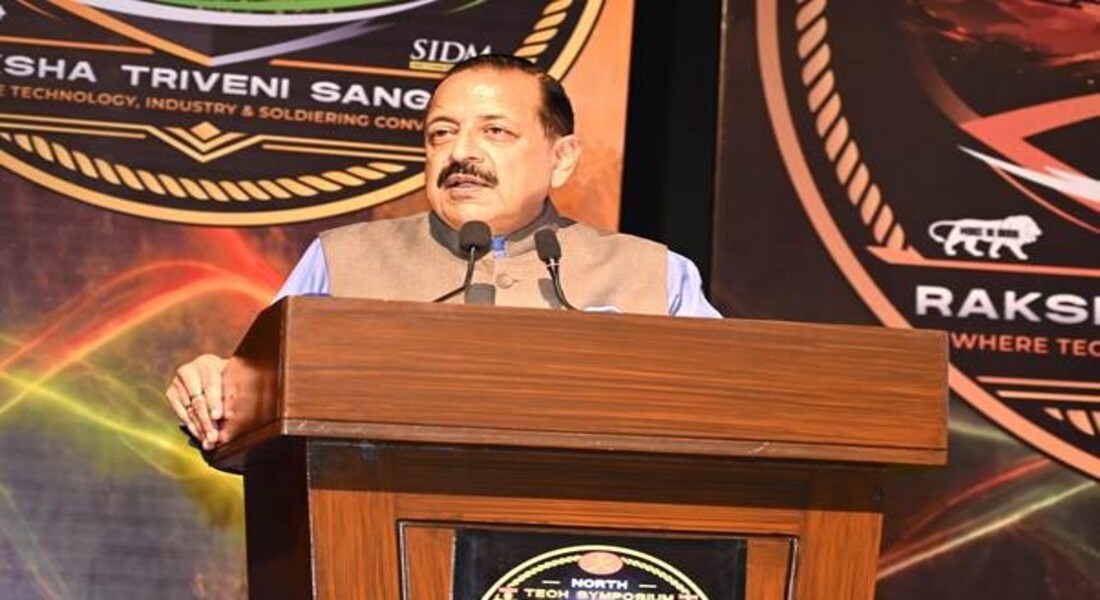
India in decisive phase of defence transformation, says Minister Dr. Jitendra Singh

New Delhi: Union Minister of State (Independent Charge) for Science & Technology and Earth Sciences, Dr. Jitendra Singh, on Tuesday, said India has entered a decisive phase in its defence journey, where technology, indigenous innovation, and private sector participation are collectively shaping a new global identity for the country.

Addressing the North Tech Symposium 2026 in Prayagraj, the minister stated that warfare is no longer defined solely by physical strength, but is increasingly driven by advanced technologies, real-time data systems, and automated platforms.

He said this transition has significantly strengthened India’s operational capabilities and enhanced its global standing.

Dr. Singh highlighted that over the past decade, India has moved from being a major importer of defence equipment to an emerging exporter, according to an official release. He noted that defence production has reached Rs 1.54 lakh crore, marking a 174% rise in 10 years, while exports have surged to Rs 23,622 crore, reflecting a 34-fold increase during the same period.

He added that the private sector has contributed around Rs 15,000 crore to total exports, signalling a major shift towards collaborative defence manufacturing.

Referring to increased government support, the minister pointed out that the Union Budget 2026-27 has earmarked Rs 6,81,000 crore for defence, which is 9.5% higher than the previous year.

He also underlined that sectors such as space, atomic energy, artificial intelligence, and quantum technologies are now integral to India’s defence preparedness. Dr. Singh noted that India has made rapid progress in quantum-secure communication systems, which he said will play a crucial role in future warfare scenarios.

The minister said ongoing reforms in key sectors have created new opportunities for industry participation, enabling faster innovation cycles and greater scalability of indigenous technologies. He added that government funding mechanisms and policy initiatives are building a strong ecosystem for research, development, and deployment.

Deputy CM Singh Deo reviews power preparedness ahead of summer

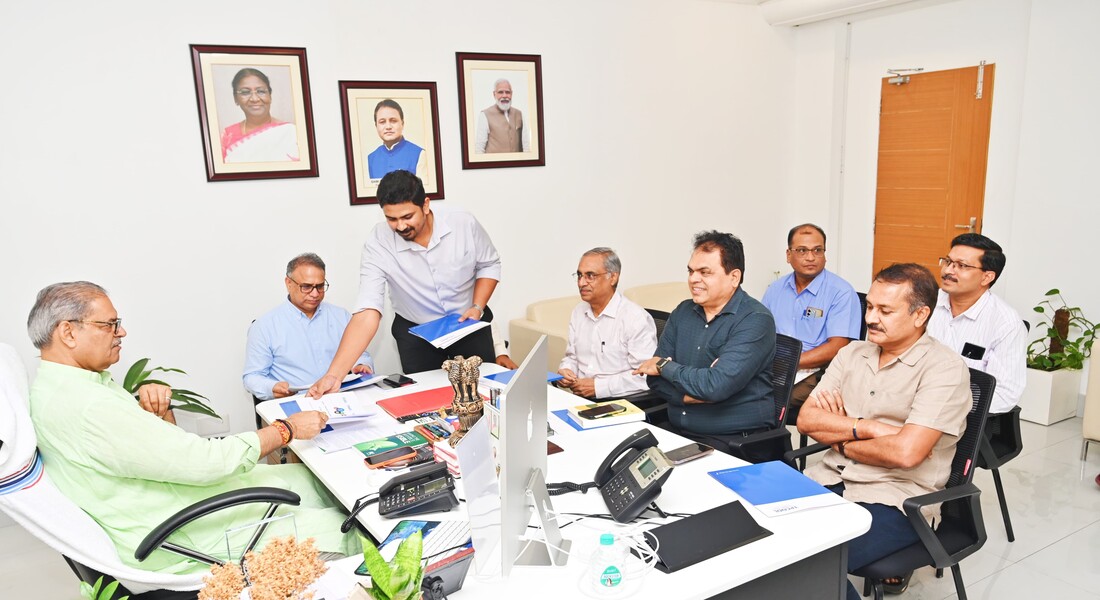
Bhubaneswar: Deputy Chief Minister, Agriculture & Farmers’ Empowerment and Energy, Kanak Vardhan Singh Deo, on Tuesday, chaired a high-level review meeting of the Energy Department at Lok Seva Bhawan, focusing on the state’s power preparedness ahead of the upcoming summer season and anticipated Kalbaisakhi storms.

The meeting was attended by the Additional Chief Secretary, Energy, Vishal Kumar Dev, CMD of OPTCL Bhaskar Jyoti Sarma, and CEOs of all DISCOMs operating in Odisha. The discussions centred on ensuring a stable and uninterrupted power supply across the state during the peak demand period and adverse weather conditions.

Reviewing the preparedness measures, Singh Deo directed all DISCOMs to maintain an uninterrupted and quality power supply throughout Odisha. He stressed that consumer complaints must be treated with urgency and resolved within the stipulated timelines without delay.

He also instructed that only qualitative accessories and materials should be used in maintenance and restoration works to avoid recurring technical faults and to improve overall system reliability.

Emphasising consumer-centric service delivery, the minister underlined that employees at all levels of the power distribution system must remain polite, responsive, and proactive while dealing with public grievances.

He further directed an increase in the number of dedicated teams for addressing consumer complaints to ensure quicker resolution and improved service efficiency.

He also reviewed safety aspects related to electrical infrastructure, particularly in urban and semi-urban areas. He issued clear instructions regarding the installation of hoardings and billboards near power lines and electrical installations. DISCOMs, in coordination with urban local bodies, have been asked to ensure strict compliance with structural safety norms for all such installations to prevent accidents during high winds and Kalbaisakhi storm conditions.

Reiterating the government’s commitment to providing 24×7 reliable power supply to the people of Odisha, Singh Deo directed all officials to remain on high alert during the summer months. He also instructed the Energy Department and DISCOMs to submit weekly compliance reports on the action points discussed during the review meeting.

Mamata Banerjee rejects resignation, calls Bengal poll defeat a ‘conspiracy’

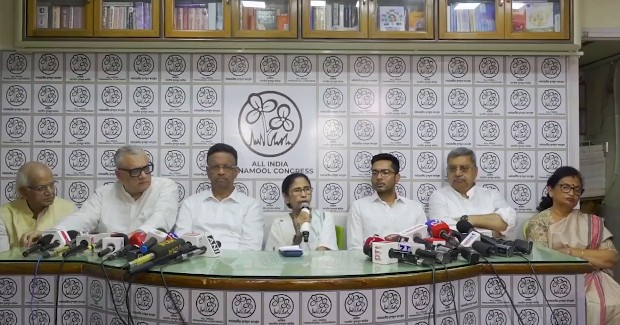
Kolkata: Mamata Banerjee on Tuesday refused to step down following her party’s defeat in the West Bengal Assembly elections, alleging that the outcome was not a reflection of public mandate but the result of a “conspiracy”.

Addressing a press conference, the Trinamool Congress (TMC) chief claimed the electoral process was compromised, accusing the Bharatiya Janata Party of interference and misuse of central forces during polling. “No question of me resigning, we were defeated not by public mandate but by conspiracy,” she said.

Alleging “direct interference” by the Central government, she said, “This is how they stole elections from Maharashtra, Haryana, Bihar and now Bengal.”

She questioned the integrity of the democratic process, stating, “This is not how democracy works. When the judiciary is not there, when Election Commission is biased and the government wants one-party rule, a wrong message is going to the world.”

The 71-year-old leader also claimed she was physically assaulted at a polling station, which she said prevented her from addressing the media earlier. “I was kicked in the belly and back. The CCTV was off. I was pushed out of the counting station. As a woman I was misbehaved with,” she alleged.

Expressing concern over the conduct of security forces, she added, “If Central forces can behave like this. I have nothing to say. I have seen former BJP governments at the Centre. But nothing like this.”

Banerjee asserted that her party would continue its political fight despite the setback. “We fought like tigers and will bounce back, but this government’s direct interference is deeply concerning,” she added, indicating that the TMC would challenge the outcome through appropriate channels.

She also signalled possible action against the Election Commission of India, alleging bias in the conduct of the elections.

“We are taking action, we will fight back. But the strategy is confidential,” she said, without disclosing specific steps.

Raising concerns over the safety of her party workers, Banerjee claimed that some members were joining the BJP under pressure. “I don’t mind if, for their safety, my party’s workers join the BJP,” she remarked.

The TMC leader thanked leaders of the INDIA bloc, including Sonia Gandhi, Rahul Gandhi, Akhilesh Yadav and others, for their support following the results, and indicated that she would continue coordination with opposition parties.

Warning the BJP against complacency, Banerjee said political power is not permanent and expressed confidence that her party would recover from the defeat.

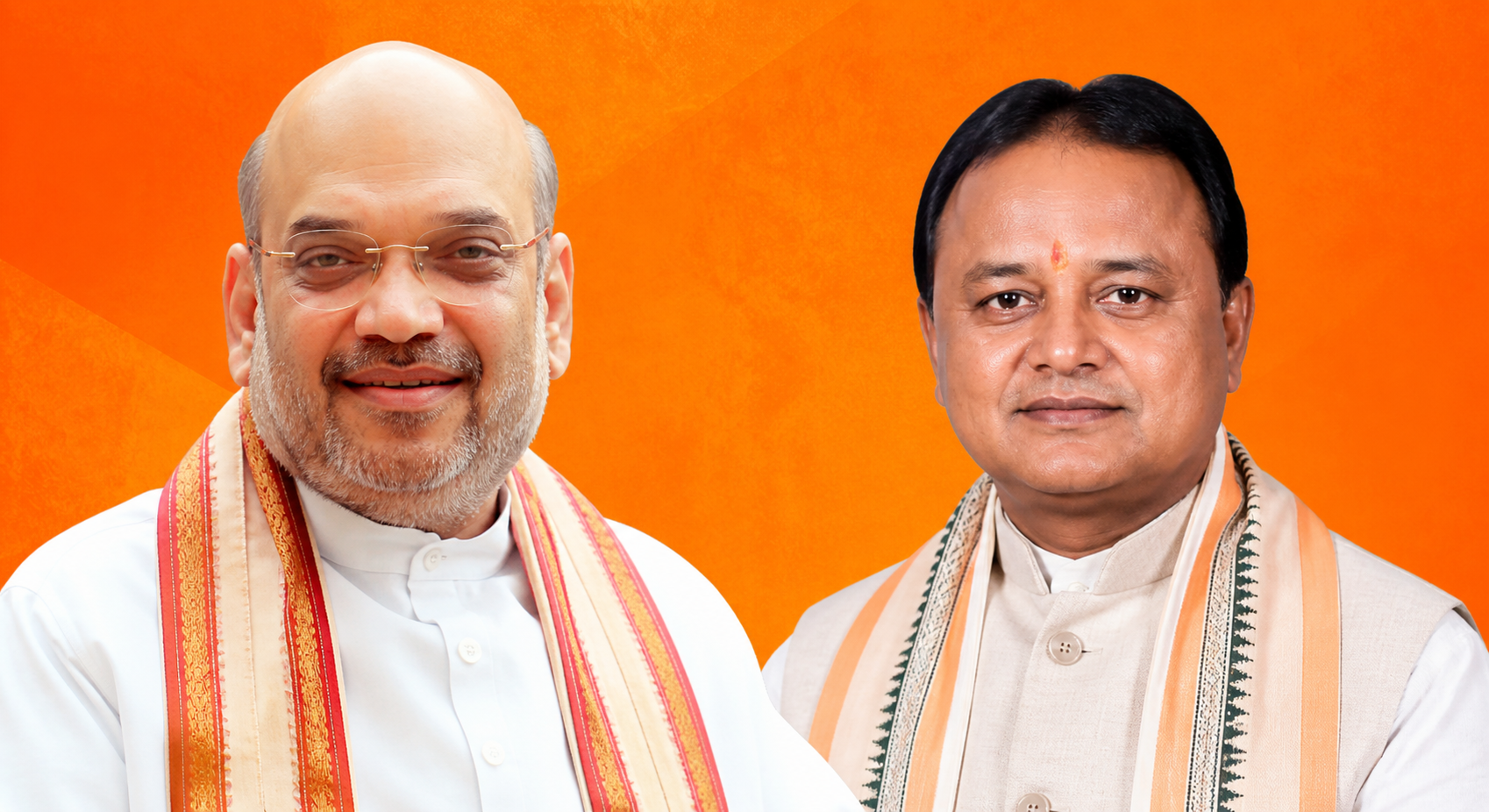
Amit Shah, Mohan Majhi named observers for Bengal BJP legislature leader election

Bhubaneswar: Odisha Chief Minister Mohan Charan Majhi has been entrusted with a key organisational responsibility by the Bharatiya Janata Party, which has appointed him as co-observer alongside Union Home Minister Amit Shah for the crucial process of electing the party’s legislature leader in West Bengal

The decision was taken by the party’s Parliamentary Board and formally communicated by National General Secretary Arun Singh. The move comes at a crucial stage as the BJP prepares to select its legislative leader following its strong electoral performance in the state.

According to party sources, the observers will oversee the internal process of electing the legislature party leader, ensuring that the procedure is conducted smoothly and in line with organisational protocols. The selection is significant, as the chosen leader is expected to be a key contender for the chief minister’s post.

The appointment of Shah, a senior strategist within the party, signals the importance the BJP is placing on the transition phase in West Bengal. The inclusion of Majhi as co-observer further reflects the party’s intent to maintain close supervision over the leadership decision-making process.

The legislature party meeting is expected to take place soon, following which the BJP is likely to move ahead with formal steps towards government formation in the state.

While the chief ministerial choice is yet to be finalised, Leader of Opposition Suvendu Adhikari—a prominent face of the campaign—is seen as a leading contender. Other names reportedly under consideration include state BJP president Samik Bhattacharya, former state president Dilip Ghosh, former Union minister Nisith Pramanik, MLA Agnimitra Paul, former Rajya Sabha MP Roopa Ganguly and MLA Shankar Ghosh.

India hold top spot in ICC T20I rankings as global shifts shake-up tables

New Delhi: India have maintained their position at the top of the ICC Men’s T20I Team rankings following the latest annual update released on Tuesday, reaffirming their consistency in the shortest format of the game.

According to the updated system, matches played since May 2025 are rated at full value, while performances from the previous two years are weighted at 50%. India, which recently retained their ICC Men’s T20 World Cup title held across India and Sri Lanka, continues to lead the men’s rankings with 275 points. England remain second with 262 points, while Australia sit close behind in third with 258 points, the ICC said in a press release.

The gap at the top has narrowed slightly, with India’s lead over England reduced from 14 to 13 points. However, the top seven positions remain unchanged, reflecting stability among the leading cricketing nations. New Zealand (247), South Africa (244), Pakistan (240), and the West Indies (233) continue to hold their places in the top 10.

There has been movement just outside the top tier, with Sri Lanka slipping to ninth after losing six rating points, dropping below Bangladesh. Sri Lanka now sits just one point ahead of Afghanistan. Further down, the USA has climbed to 13th position, overtaking both the Netherlands and Scotland. Nepal, Oman, Italy, Spain, Cyprus, and Eswatini are among the teams making upward strides, reflecting increasing competitiveness in associate cricket.

On the other hand, Mozambique suffered the biggest decline, falling 15 places to 87th in a reshuffled rankings table that now features 98 teams instead of 102. Fiji, Gambia, Greece, and Israel have dropped out due to inactivity over the required period.

In the ICC Women’s T20I Team Rankings, Australia continue to dominate with 287 points, holding the No.1 position. England remain second with 275 points, while India are third with 264 points, maintaining their strong presence among the top three sides.

The top six positions remain unchanged, with New Zealand, South Africa, and the West Indies following in fourth to sixth place, respectively. Sri Lanka stay seventh, narrowly trailing the West Indies by just one point, while Bangladesh remain close behind in the mid-table battle.

Singh Deo meets UN official, explores ties in agriculture, tourism and renewable energy

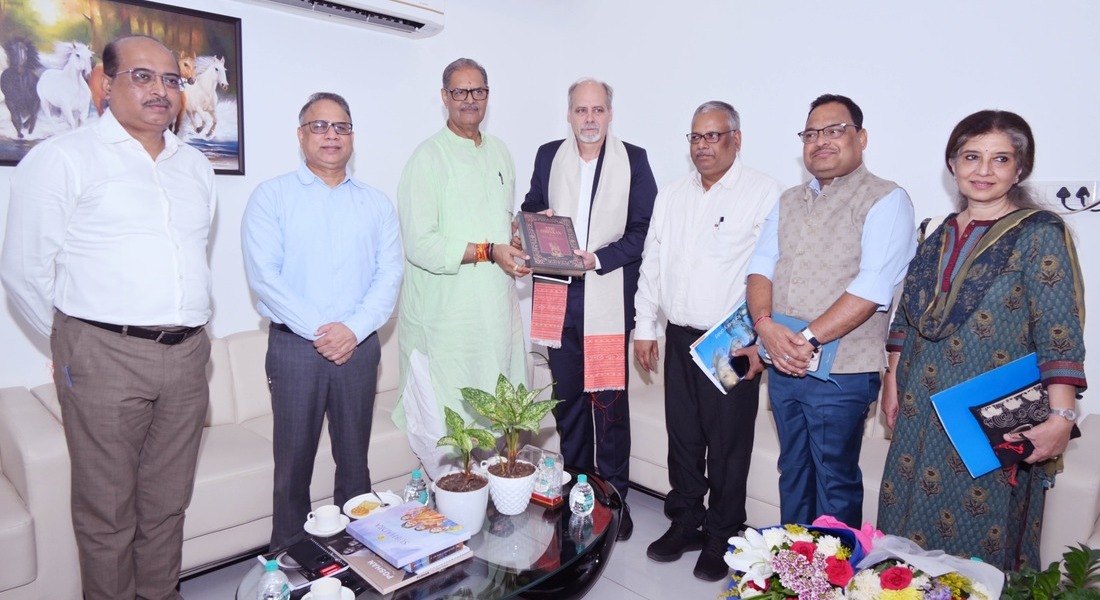
Bhubaneswar: Odisha Deputy Chief Minister Kanak Vardhan Singh Deo on Tuesday held a meeting with Stefan Priesner, United Nations Resident Coordinator in India, to explore collaboration across key sectors including agriculture, tourism and renewable energy.

The meeting, held at Lok Seva Bhawan in the capital, was attended by senior officials including Additional Chief Secretary (Energy) Vishal Kumar Dev and Commissioner-cum-Secretary of the Agriculture & Farmers’ Empowerment Department Sachin Ramchandra Jadhav.

During the discussions, Singh Deo highlighted Odisha’s role in contributing to India’s vision of self-reliance, noting the state’s progress in agriculture, industry and clean energy. He emphasised that agriculture remains a priority sector, with efforts focused on enhancing farmers’ income, promoting climate-resilient practices and strengthening value chains, according to an official release.

Tourism development also featured prominently, with both sides discussing the state’s cultural and heritage potential, including UNESCO-recognised sites and emerging destinations such as Ranipur-Jharial and Harishankar. The Deputy Chief Minister stressed the need to balance global tourism ambitions with preservation of Odisha’s tribal and cultural identity.

The interaction also explored opportunities for deeper engagement with the United Nations in areas such as renewable energy, rural livelihoods and achieving Sustainable Development Goals (SDGs). Priesner appreciated Odisha’s progress in agriculture and energy transition, and expressed the UN’s willingness to support the state through technology transfer, capacity building and inclusive development initiatives.

Both sides agreed to strengthen cooperation to position Odisha as a model for sustainable and self-reliant growth.

Badminton: Unnati Hooda breaks into world top 20

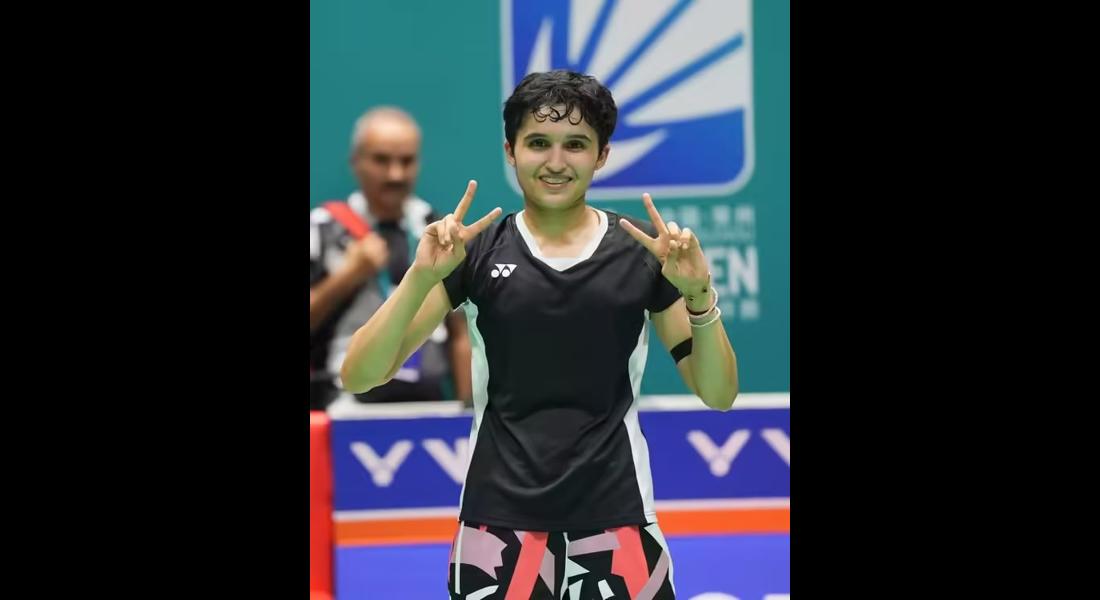
New Delhi: Indian badminton received a significant boost as rising star Unnati Hooda surged into the top 20 of the latest Badminton World Federation rankings, achieving a career-best World No. 19 position.

With this milestone, Hooda becomes only the third Indian women’s singles player to enter the elite bracket after Saina Nehwal and P. V. Sindhu, underlining her rapid rise on the global stage and reinforcing India’s growing depth in women’s singles badminton.

While Hooda’s breakthrough has grabbed headlines, Sindhu continues to remain India’s highest-ranked women’s singles player, currently placed 12th with 55,671 ranking points. At the top of the women’s rankings sits An Se-young of South Korea, leading the chart with a commanding 117,787 points, according to reports.

In the men’s singles category, India’s Lakshya Sen is positioned just outside the top 10 at World No. 11 with 68,223 points, maintaining his status as the country’s top-ranked male shuttler. Close behind, Ayush Shetty has climbed to World No. 18 with 54,729 points, signalling promising depth in the men’s circuit as well.

Leading the men’s rankings globally is China’s Shi Yuqi, who occupies the top spot with 106,805 points.

Hooda’s entry into the top 20 is being seen as a defining moment, not just for her career but also for Indian badminton’s next generation, as the sport continues to build on the legacy of established names while ushering in fresh talent ready to compete at the highest level.

India condemns Iran attack on UAE port, urges restraint amid rising Gulf tensions

New Delhi: India has strongly condemned the attack on a key oil facility in the United Arab Emirates that left three Indian nationals injured, as tensions escalate between Iran and the United States in the strategically vital Strait of Hormuz.

The Ministry of External Affairs termed the incident “unacceptable”, calling for an immediate halt to hostilities. “The attack on Fujairah that resulted in injury to three Indian nationals is unacceptable. We call for immediate cessation of these hostilities and the targeting of civilian infrastructure and innocent civilians,” spokesperson Randhir Jaiswal said in a post on X. The ministry added that India continues to advocate dialogue and diplomacy to restore peace and stability in the region.

Prime Minister Narendra Modi also condemned the attack, stating, “Strongly condemn the attacks on the UAE that resulted in injuries to three Indian nationals. Targeting civilians and infrastructure is unacceptable.”

He added that India stands in “firm solidarity with the UAE” and reiterated support for resolving issues through dialogue. Modi further emphasised the importance of “safe and unimpeded navigation through the Strait of Hormuz” for global energy security. (Source: PM Modi’s post on X)

According to authorities in the UAE, air defence systems intercepted multiple missiles and drones, though a drone strike triggered a fire at an oil facility in Fujairah, injuring the Indian workers. The incident marks a significant escalation, coming weeks after a fragile ceasefire between the US and Iran.

Tehran has not directly confirmed responsibility. However, Iranian Foreign Minister Abbas Araghchi warned that both the US and UAE should avoid being drawn deeper into conflict. Iranian state media also quoted a military official suggesting the incident was linked to US actions in the region rather than a deliberate Iranian strike.

Meanwhile, the crisis has been further intensified by conflicting claims over recent incidents in the Strait of Hormuz.

Iran has accused US forces of attacking civilian passenger boats and killing five people, disputing Washington’s claim that it targeted vessels linked to the Islamic Revolutionary Guard Corps. There has been no immediate response from the US military to these allegations.

Meanwhile, Iran has warned that any attempt by US forces to enter or escort ships through the Strait of Hormuz would be treated as a violation of the ceasefire. The warning follows US President Donald Trump’s announcement that American forces would assist in navigating vessels through the blocked waterway.

The Strait of Hormuz, a critical maritime corridor through which nearly one-fifth of global energy supplies pass, remains at the centre of the standoff. Continued disruption has already pushed up global oil and fertiliser prices, raising concerns over broader economic fallout.

With both sides exchanging accusations and military posturing intensifying, the fragile ceasefire in the region appears increasingly uncertain, heightening fears of a wider conflict in the Middle East.

Union Minister Dharmendra Pradhan slams Rahul Gandhi over ECI integrity remarks

New Delhi: Union Education Minister Dharmendra Pradhan on Tuesday criticised Leader of Opposition Rahul Gandhi for publicly questioning the integrity of the Election Commission of India (ECI).

In a detailed post on X, Pradhan stated that the ECI is a constitutional authority whose functioning should not be questioned. He also urged the Congress to introspect following repeated electoral setbacks.

He remarked that when the Congress wins in Kerala, the ECI is described as credible and independent, but when results go against it, the same institution is labelled compromised and the outcome described as stolen. He added that such a convenience-driven approach reflects inconsistency in the Congress party’s interpretation of democracy.

The Union minister further said that the Congress appears to believe that democracy is valid only when it wins.

In his post on X, Pradhan stated: “The ECI remains a constitutional authority that has conducted elections across states and decades, with outcomes favouring different parties at different points in time-BJP, Congress, and regional parties alike. Institutional integrity cannot be switched on and off depending on who wins.”

He added that selectively framing results – from West Bengal to Assam – through suspicion rather than acceptance reduces complex voter decisions to political accusations.

Pradhan stated that Rahul and the Congress must recognise that mandates are decided by voters and not shaped through post-result narratives. He said that a mandate remains valid irrespective of political convenience, adding that democracy depends on acceptance of electoral verdicts and accountability to the people rather than attempts to delegitimise outcomes.

On Monday, Rahul had alleged in a post on X that the results in Assam and West Bengal indicated that the election was influenced in favour of the BJP with the support of the Election Commission.