At IndiaVerve, we go beyond the noise to bring you meaningful stories of change, resilience and progress—from India to the world stage. Our mission is to bring readers credible, wide-ranging coverage across politics, business, sports, culture, society and more.

Operation Sindoor showcased India’s deep-strike capability: Rajnath Singh

New Delhi: Defence Minister Rajnath Singh on Friday described Operation Sindoor as a “swift, precise and joint response” by the Indian Armed Forces to safeguard national interests.

He urged military commanders to remain prepared for future security challenges by drawing lessons from the operation and evolving global threats.

Addressing the second edition of the Joint Commanders’ Conference in Jaipur, Rajasthan, the minister said Operation Sindoor was a short-duration, deep-penetration, high-intensity, and high-impact operation that demonstrated India’s capability to force its adversary into submission.

He stated that the operation reflected India’s growing military strength and symbolised the nation’s collective resolve and evolving military ethos.

Singh emphasised the need to strengthen capabilities in artificial intelligence, autonomous systems, data analytics, and secure communication networks in view of the rapidly changing geopolitical and security environment. He said future conflicts would increasingly involve hybrid threats, information dominance, and simultaneous operations across cyber, space, electromagnetic, and cognitive domains.

Highlighting the growing influence of emerging technologies in warfare, Rajnath stressed the importance of integrated national preparedness across all spectrums of conflict.

He also appreciated the progress made in enhancing jointness, integration, and technological adoption among the three Services, stating that synergy among the armed forces had become a critical element in the transformation of the global defence sector. Singh noted that future wars would not be won solely through weapons, but also through innovative thinking and stronger coordination.

The minister further called upon commanders to cultivate the “element of surprise” in military operations to maintain unpredictability against adversaries and secure a strategic advantage. At the same time, he cautioned them to remain alert to potential surprise actions by enemies and stay ahead in preparedness.

Reiterating the Narendra Modi government’s commitment to strengthening the armed forces, Singh said efforts were being made to equip the military with state-of-the-art weapons and platforms, with special emphasis on research in niche domains.

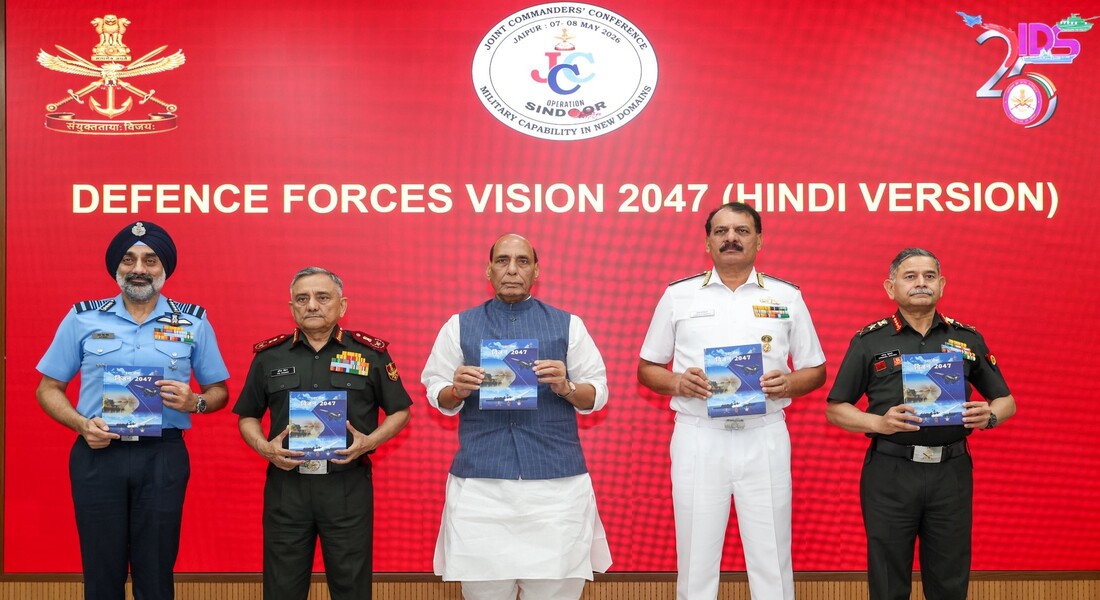
During the conference, the minister released a documentary film on Operation Sindoor, which highlighted the nation’s operational preparedness and decisive response capabilities. He also unveiled the Hindi version of Vision 2047 and the Joint Doctrine for Integrated Communication Architecture aimed at improving doctrinal clarity, interoperability, and integrated communication across the armed forces in future multidomain operations.

The conference, themed “Military Capability in New Domains”, brought together senior officials of the Ministry of Defence and top leadership of the Indian Armed Forces to deliberate on emerging security challenges and future military preparedness.

Discussions during the conference focused on future warfare, multidomain operations, technological transformation, cognitive warfare, cyber resilience against quantum and AI-enabled threats, indigenous innovation, and AI-driven warfighting concepts.
Deputy CM Pravati Parida asks MLAs to support Anganwadi development works

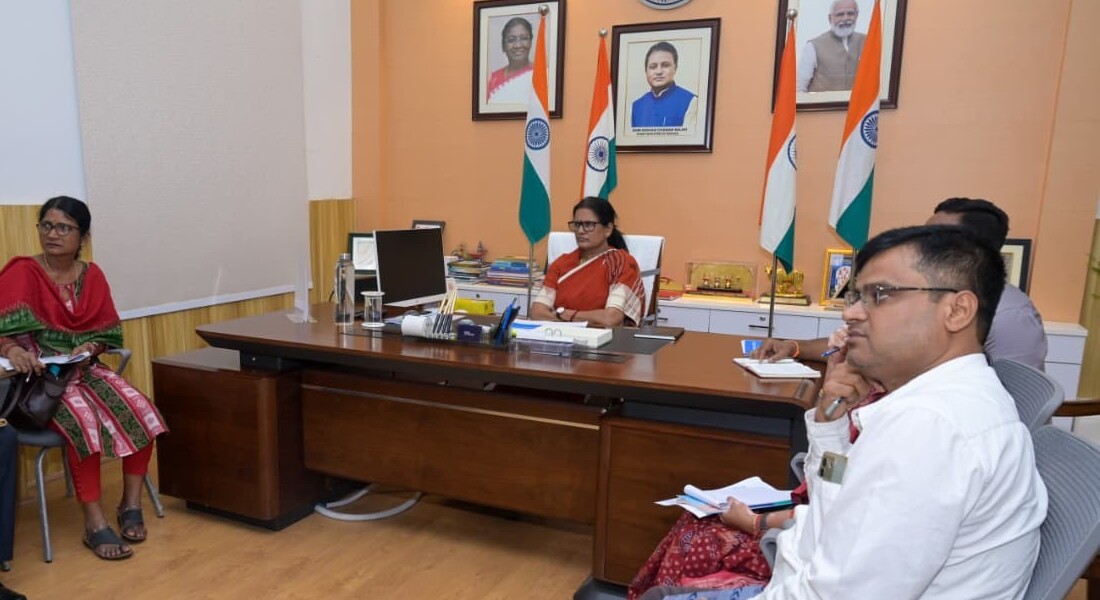
Bhubaneswar: Deputy Chief Minister Pravati Parida has written to all MLAs in the state, urging them to actively support the construction and development of Anganwadi centres in their respective constituencies as part of efforts to strengthen women and child development initiatives in Odisha.

In her capacity as Women and Child Development Minister, Parida called upon public representatives to ensure greater participation of women in the ongoing developmental works linked to Anganwadi infrastructure projects.

The deputy CM stressed the need for regular monitoring of construction and development activities to ensure that Anganwadi projects are completed within the stipulated timeline and maintain quality standards.

She said legislators should personally oversee the progress of the works in their constituencies so that the infrastructure expansion programme is implemented effectively.

According to official information, a total of 3,293 new Anganwadi centre buildings were inaugurated and handed over under the Anganwadi Centre infrastructure strengthening initiative during the financial years 2024-25 and 2025-26.

The state government has also converted 12,140 Anganwadi centres across Odisha into Saksham Anganwadis under the Integrated Child Development Services scheme, aimed at improving early childhood care and nutrition services in the state.

Singh Deo inaugurates new TPNODL substation in Mayurbhanj

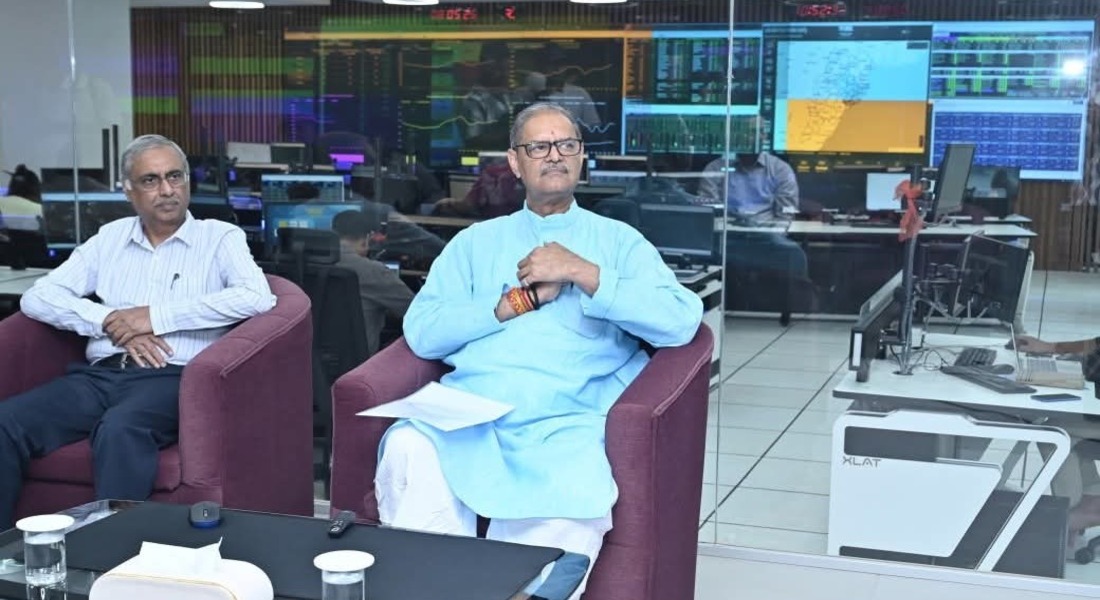
Bhubaneswar: Deputy Chief Minister Kanak Vardhan Singh Deo on Friday virtually inaugurated a new 33/11 KV 10 MVA primary substation at Deuli in Mayurbhanj aimed at strengthening rural power infrastructure and improving electricity supply in the region.

The substation has been commissioned by TP Northern Odisha Distribution Limited (TPNODL), a joint venture between Tata Power and the Government of Odisha. The new facility is expected to benefit more than 15,000 families across six gram panchayats — Chuhata, Kanimahuli, Nuagaon, Jhaliamara, Alakuda and Deuli.

The project is expected to improve voltage quality, ensure more stable power supply for domestic and agricultural use, reduce power interruptions and support essential services such as education, healthcare and local livelihoods.

Speaking during the virtual inauguration ceremony, Singh Deo said the project would help strengthen the local power network while encouraging the adoption of sustainable energy solutions.

“This substation does more than strengthen the local grid; it empowers households to embrace sustainable solutions,” the Deputy Chief Minister said.

He also urged consumers to take advantage of the PM Surya Ghar Muft Bijli Yojana to reduce electricity costs and promote clean energy adoption.

Housing and Urban Development Minister Krushna Chandra Mohapatra said reliable electricity infrastructure plays a critical role in rural development and improving the quality of life in Mayurbhanj.

TPNODL CEO Gajanan Kale said the Deuli substation project is an important step towards addressing the growing energy needs of the region and improving consumer services.

Senior TPNODL officials, including Chief Projects officer Pradeep Kumar Mohanty and Superintending Engineer Debadatta Panda, supervised the implementation of the project.

Over 15,000 adolescents participate in Odisha Police outreach programme ‘Juventica’

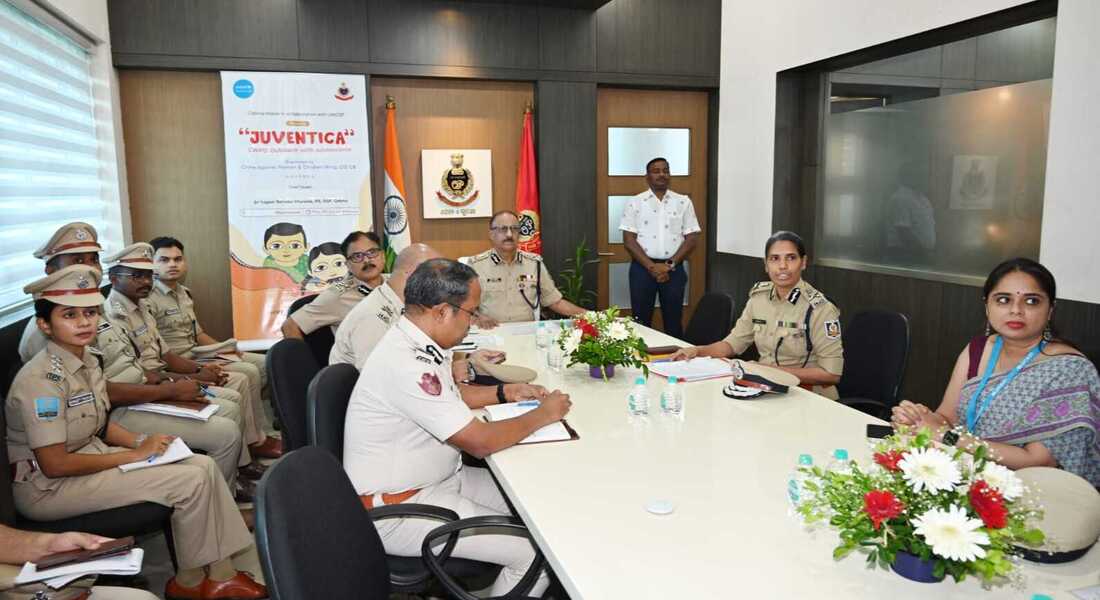
Bhubaneswar: More than 15,000 adolescents from across Odisha participated in “Juventica”, a statewide awareness and outreach programme organised jointly by Odisha Police and UNICEF to strengthen engagement between police and young people.

The programme, titled “Juventica – Police Awareness and Outreach Programme with Adolescents”, was organised at Police Seva Bhavan in Bhubaneswar by the Women and Child Crime Prevention Wing of Odisha Police in collaboration with UNICEF.

Director General of Police Yogesh Bahadur Khurania inaugurated the programme and said the initiative aims to make the policing system more accessible, safe and adolescent-friendly for children and teenagers in the state.

According to Odisha Police, more than 15,000 adolescents from nearly 555 police stations across the state took part in the initiative. Members of Advika Clubs, Anganwadi workers and para-legal volunteers also participated in the programme.

Addressing the gathering, the DGP expressed concern over the growing exposure of adolescents to negative content on social media and advised them to use digital platforms for educational and constructive purposes.

Khurania also noted that many adolescents are increasingly becoming victims of cybercrime and other social challenges, often leading to mental stress and emotional difficulties. Parents, teachers, police personnel and society at large have a responsibility to listen to young people carefully, guide them properly and provide emotional and moral support, he added.

Describing the initiative as an important step towards building trust and cooperation between the younger generation and the police administration, the DGP urged adolescents to approach the police without fear and share their concerns whenever needed. He also appealed to police officials across the state to strengthen their engagement with adolescents and remain more sensitive towards their safety and wellbeing.

During the event, the DGP also interacted virtually with adolescents from different districts of the state.

Senior police officials present at the programme included Crime Branch DGP Binaytosh Mishra, Additional DGP (Modernisation) Soumendra Priyadarshi, Additional DGP (Railways and Coastal Security) Arun Kumar Bothra and Additional DGP of the Women and Child Crime Prevention Wing S. Saini.

Suvendu Adhikari to be new chief minister of West Bengal

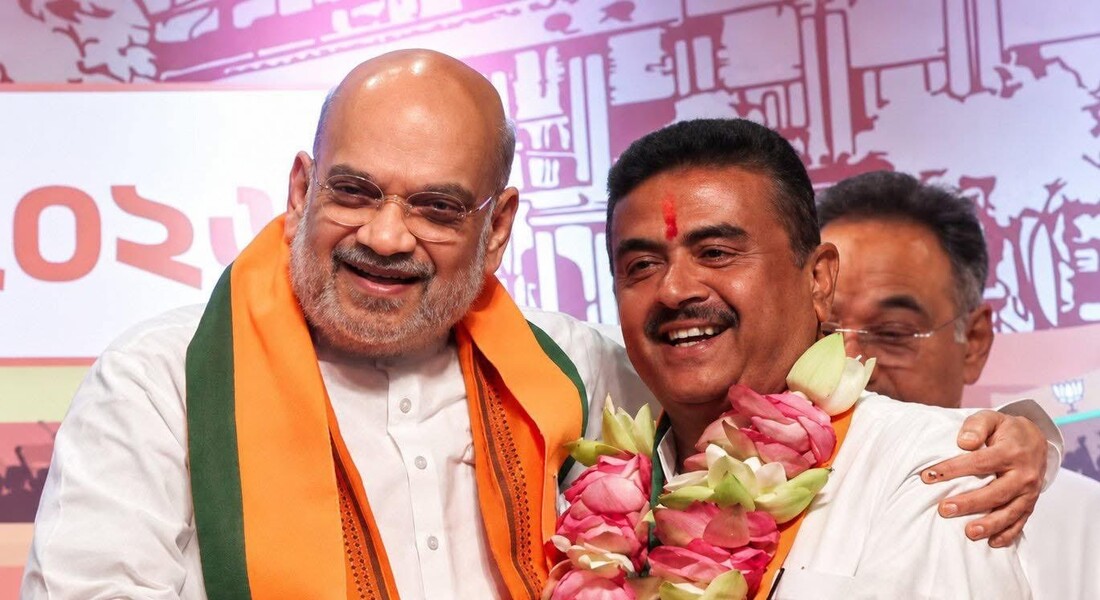
New Delhi: Suvendu Adhikari, who emerged as the BJP’s star candidate by defeating Trinamool Congress chief Mamata Banerjee in her traditional stronghold of Bhabanipur, is poised to become the party’s new chief minister in West Bengal.

The announcement was made by Union Home Minister Amit Shah, who has been designated as the BJP’s Central Observer for the state.

According to reports, Adhikari is scheduled to be sworn in as Chief Minister at 11 a.m. on Saturday at the Brigade Parade Ground.

Speaking after a meeting with newly elected party legislators, Shah declared Adhikari the unanimous choice for the top post, noting that multiple proposals had come in from within the party endorsing his candidature.

Shah expressed gratitude to the people of Bengal for the trust and mandate they had placed in the BJP, pledging that the party would not betray that confidence. He also reflected on what he described as a long-standing political atmosphere – traced back to the Communist era and allegedly reinforced under Banerjee’s rule – which had made free and fair voting nearly impossible.

He credited the massive victory to the people of Bengal and their faith in both the BJP and Prime Minister Narendra Modi, calling it a historic moment and describing the incoming administration as the spiritual legacy of Shyama Prasad Mukherjee.

Prime Minister Narendra Modi is expected to attend Saturday’s ceremony, having hinted at his likely presence during his final campaign rally in Barrackpore, where he expressed confidence that he would return to witness the BJP’s oath-taking after the May 4 results.

In the 2026 Assembly elections, the BJP secured a commanding 207 seats, while the All India Trinamool Congress – which had governed the state for 15 years – was reduced to just 80 seats.

Despite the outcome, outgoing Chief Minister Banerjee declined to step down, reportedly stating that those who wanted her out could formally remove her and characterising any such move as a dark moment for the state.

In response, West Bengal Governor R.N. Ravi dissolved the Legislative Assembly, paving the way for the new BJP government to take charge.

Adhikari, who had defected from the Trinamool Congress in December 2020 after years as one of Banerjee’s trusted lieutenants, has been at the centre of Bengal’s political drama.

He first defeated Banerjee in Nandigram in 2021, and then consolidated his position by winning Bhabanipur – her own bastion – by a margin exceeding 15,000 votes, making him the undisputed face of the BJP’s Bengal triumph.

Two Indians aboard ship at centre of deadly hantavirus outbreak as global monitoring intensifies

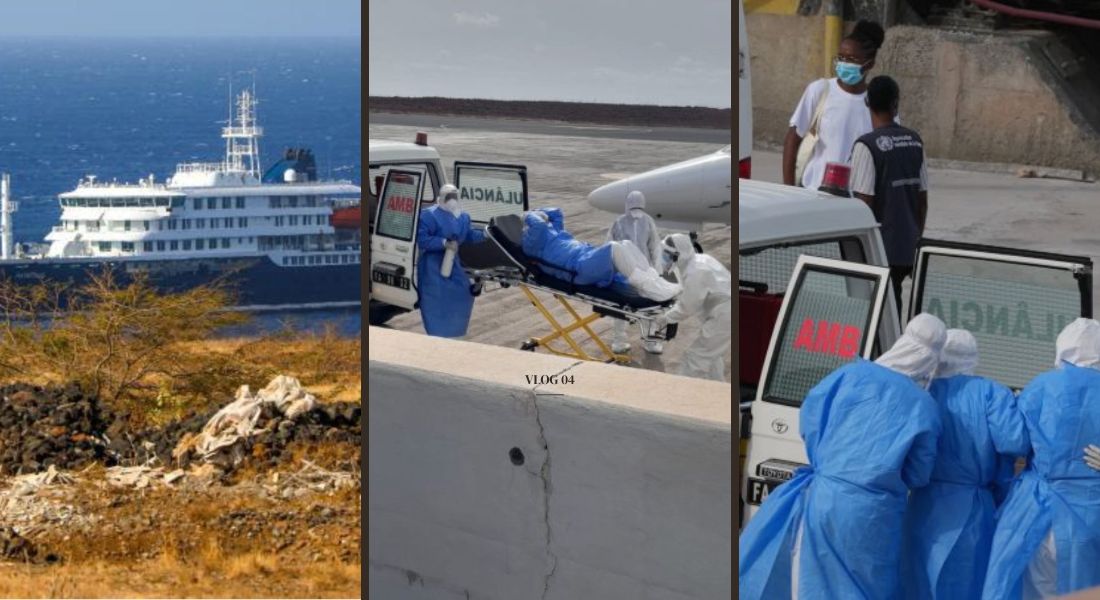
New Delhi: Two Indian crew members are among those aboard a luxury expedition cruise ship at the centre of a rare hantavirus outbreak that has already claimed three lives and triggered international contact tracing efforts across multiple countries.

The Dutch-operated expedition vessel MV Hondius, carrying passengers and crew from 23 countries, remains under strict health precautions in the Atlantic Ocean following confirmation of infections linked to the Andes strain of hantavirus — one of the few variants known to spread between humans through close contact.

According to The BBC, Dutch polar travel company Oceanwide Expeditions confirmed that two Indian nationals are part of the crew aboard the vessel. However, the company has not disclosed their health condition, duties on the ship or whether they had contact with infected passengers.

The outbreak has drawn global attention due to the virus’s high fatality rate and the movement of passengers across countries before the infections were fully understood.

The World Health Organization (WHO) said five confirmed hantavirus infections linked to the vessel have so far been identified, while three passengers — a Dutch couple and a German national — have died.

International health agencies are now monitoring passengers and contacts across Europe, North America, Asia and Africa as authorities attempt to contain any further spread.

According to CNN, the first suspected patient, a 70-year-old Dutch passenger, developed fever, abdominal pain and gastrointestinal symptoms aboard the ship before dying on April 11. Several others later fell ill during the voyage.

The ship, which departed from Ushuaia in Argentina on April 1, had travelled through parts of South America before the outbreak emerged. WHO officials believe the initial infections may have occurred before boarding, possibly during visits to areas in Argentina and Chile where rodent species known to carry hantavirus are found.

The Andes strain of hantavirus differs from most other hantavirus variants because it can spread between humans through prolonged close contact, including caregiving and shared living spaces. However, WHO has stressed there is currently no evidence of large-scale community transmission comparable to Covid-19.

Speaking to CNN from onboard the vessel, US physician Stephen Kornfeld, who was travelling as a passenger, said he stepped in to assist after the ship’s doctor also became ill.

“Over 12 to 24 hours, it became clear that there were a number of people sick and that they were getting sicker,” Kornfeld told the network.

Authorities in several countries, including the United States, the United Kingdom, Switzerland, Singapore, Canada and France, are currently monitoring passengers and close contacts linked to the ship.

Oceanwide Expeditions said it is reconstructing the travel and embarkation details of all passengers and crew members since March 20 to support international contact tracing efforts.

The WHO has said more cases may emerge in the coming days because hantavirus symptoms can take between one and six weeks to appear after exposure.

The ship is expected to arrive in Tenerife in Spain’s Canary Islands, where remaining passengers are likely to be flown back to their home countries under medical supervision.

Meanwhile, Argentina has launched an investigation into the travel route of the deceased Dutch couple, including visits to regions where hantavirus is known to be endemic. Argentine health authorities are also conducting rodent testing in areas linked to the couple’s travel history.

Despite growing concern, WHO Director-General Tedros Adhanom Ghebreyesus said the organisation does not currently anticipate a global epidemic linked to the outbreak.

DRDO, IAF successfully test indigenous TARA glide weapon off odisha coast

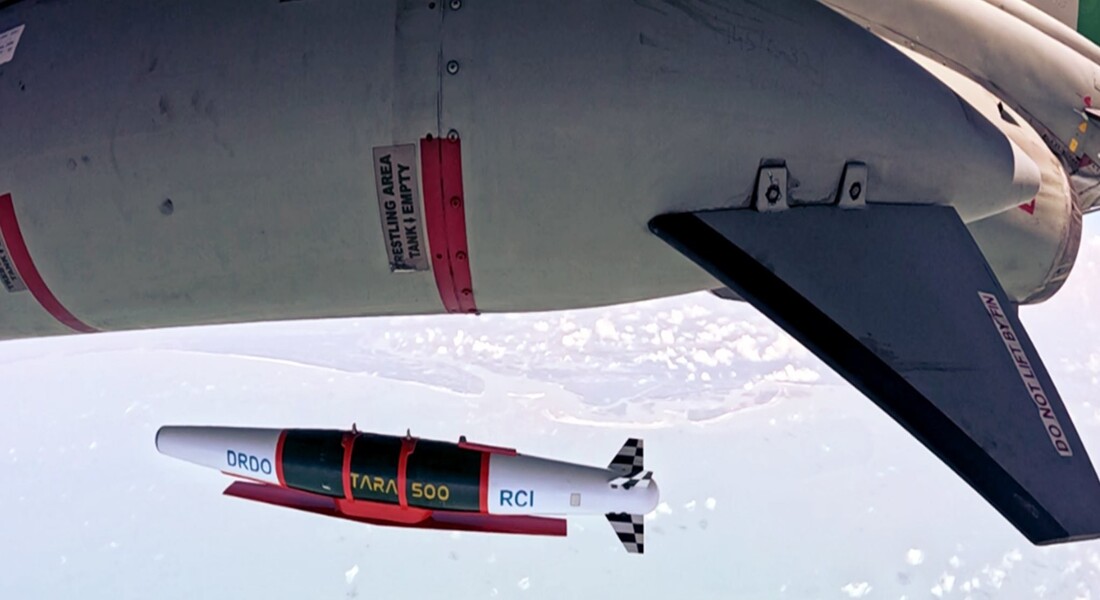
Bhubaneswar: India marked a major milestone in indigenous defence technology after the Defence Research and Development Organisation (DRDO) and the Indian Air Force (IAF) successfully carried out the maiden flight-trial of the Tactical Advanced Range Augmentation (TARA) weapon system off the Odisha coast on Thursday.

TARA is a modular range extension kit designed to transform conventional unguided warheads into precision-guided glide weapons, significantly improving strike accuracy and operational effectiveness. Developed indigenously, the system is being seen as an important boost to India’s growing self-reliance in advanced defence technologies, according to an official statement.

The weapon system has been developed by the DRDO through its Research Centre Imarat in collaboration with other DRDO laboratories. Officials said the system has been designed to enhance the lethality and precision of low-cost weapons for engaging ground-based targets.

According to DRDO, TARA is India’s first indigenous glide weapon system capable of using advanced low-cost technologies to improve the operational range and targeting capability of existing aerial warheads. The system is also expected to provide greater flexibility to the armed forces during tactical missions.

The development programme has been executed with the support of Development-cum-Production Partners and several Indian industries, which have already initiated production-related activities. The move is expected to strengthen domestic defence manufacturing and reduce dependence on imported systems.

Defence Minister Rajnath Singh congratulated DRDO, the IAF, industry partners, and associated teams for the successful maiden trial. He described the achievement as a significant step towards advancing India’s indigenous defence capabilities.

Secretary, Department of Defence R&D and DRDO Chairman Samir V Kamat also congratulated scientists, engineers, and all teams involved in the successful flight-trial, calling it an important achievement for the country’s defence research ecosystem.

Mob lynching near Bhubaneswar: Odisha government orders detailed probe

BHUBANESWAR: The Odisha government has ordered a detailed investigation into the mob lynching of a Government Railway Police (GRP) constable in Balianta on the outskirts of Bhubaneswar, as political outrage intensified over the incident that allegedly unfolded in the presence of police personnel.

Chief Minister Mohan Charan Majhi directed the police administration to conduct a comprehensive probe and ensure strict action against those involved in the killing. He also instructed officials to remain vigilant to prevent recurrence of such incidents and stressed the need to uphold the rule of law.

According to the Chief Minister’s Office, four persons have so far been arrested in connection with the case, while further investigation is underway.

According to reports, the deceased was identified as Soumya Ranjan Swain, a resident of Adaspur and reportedly employed with the GRP. Family members said he also operated a gym near his residence.

Police said the incident began after the motorcycle carrying Swain and another man allegedly collided with the scooter of two women in the Balianta area. An argument reportedly followed, drawing the attention of local residents. As tensions escalated, a mob allegedly assaulted the two men, tying their hands and legs before brutally attacking them.

Videos purportedly showing the assault later surfaced on social media, triggering widespread shock and criticism.

Both injured men were later taken to Capital Hospital by police personnel. Swain was declared dead on arrival, while the second individual remains under treatment in critical condition.

Authorities are also examining allegations that the mob attack was triggered by accusations of misbehaviour and an attempted sexual assault involving the two women. Officials said all angles are being verified as part of the ongoing investigation.

Meanwhile, the leader of the Opposition, Naveen Patnaik, described the killing as barbaric and questioned how such an incident could occur near the state capital in full public view.

In a post on X, he also raised concerns over the effectiveness of policing, asking whom citizens could rely on for protection if violence of this nature unfolded despite the presence of law enforcement personnel.

Dramatic twists keep Tamil Nadu government formation battle wide open

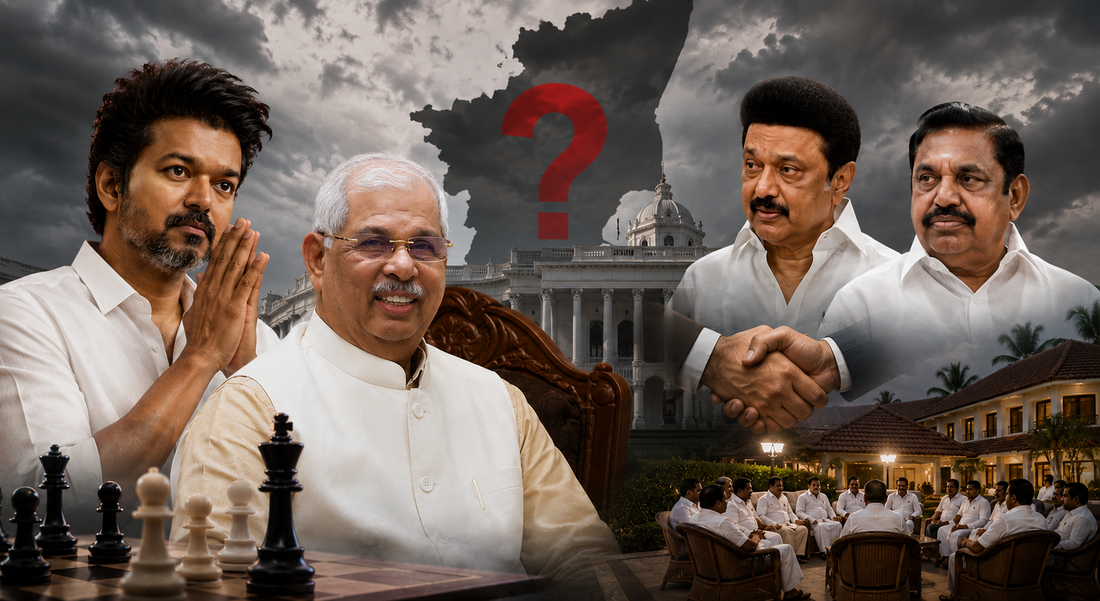
New Delhi: Tamil Nadu is witnessing intense political uncertainty days after actor-turned-politician Vijay led Tamilaga Vettri Kazhagam (TVK) to a stunning electoral debut, as rival parties explore possible realignments that could dramatically reshape the state’s political landscape.

Despite emerging as the single-largest party with 108 seats in the 234-member Assembly, TVK remains short of the majority mark of 118. While the Indian National Congress has extended support to the party, the combined numbers still fall short of forming a stable government.

The uncertainty deepened after Governor Rajendra Vishwanath Arlekar reportedly sought greater clarity on TVK’s support base before allowing the party to stake claim to form the government. Vijay met the Governor for the second time in three days on Thursday amid ongoing efforts to secure backing from smaller parties and independents.

According to reports, TVK has approached parties such as the Viduthalai Chiruthaigal Katchi (VCK), CPI and CPI(M) seeking support, but negotiations are still underway.

The delay in government formation has triggered speculation about possible political realignments, including a potential understanding between long-time Dravidian rivals—the Dravida Munnetra Kazhagam (DMK) and the All India Anna Dravida Munnetra Kazhagam (AIADMK).

According to NDTV, sections within both parties are exploring options to prevent Vijay’s rapid rise from translating into political power. The report, citing sources, claimed that some leaders within the DMK fear Vijay could recreate the kind of mass political appeal once enjoyed by former Chief Minister M. G. Ramachandran, who dominated Tamil Nadu politics for years.

The AIADMK, meanwhile, is also facing pressure after a series of electoral setbacks since the death of former Chief Minister J. Jayalalithaa. Reports suggest some within the party may be open to tactical arrangements to retain political relevance.

Amid the fast-changing developments, more than 40 AIADMK MLAs are currently staying at a private resort in Puducherry, where party general secretary Edappadi K. Palaniswami held discussions with newly elected legislators.

The Tamil Nadu Congress Committee has accused the Governor and the Bharatiya Janata Party of attempting to deny TVK a “rightful democratic opportunity” to form the government. In a post on X, the party stated: “Don’t betray the mandate. Don’t manipulate.”

The developments also drew sharp reactions from Left parties, which questioned the Governor’s handling of the government formation process.

D. Raja, national secretary of the Communist Party of India, accused the Governor of playing a “dubious role” and argued that the issue of majority should be settled on the Assembly floor rather than at Raj Bhavan.

“The question of majority must be tested on the floor of the House and not in the halls of Raj Bhavan,” Raja said in a post on X.

He also cautioned against what he described as a “selective interpretation of constitutional norms”, adding, “The BJP should not be allowed to spread its tentacles in Tamil Nadu through the misuse of the office of the governor.”

M. A. Baby, general secretary of the Communist Party of India (Marxist), referred to the 1996 precedent when former Prime Minister Atal Bihari Vajpayee was invited to form the government despite lacking a post-poll majority.

“In such a situation, the established convention has been that the leader of the single largest party should be invited to form the government, take oath, and be given a reasonable period to prove majority on the floor of the House,” Baby told media, asserting that the Governor was both “duty-bound and convention-bound” to follow the same principle in Tamil Nadu.

Senior lawyer and former Solicitor General Harish Salve, however, told NDTV that the Governor was within his constitutional discretion to seek evidence of majority support before inviting a party to form the government.

Meanwhile, reports suggest TVK has warned that all its 108 MLAs could resign if rival parties attempt to form a government through post-poll arrangements without respecting the mandate received by the party.

The evolving political situation has created one of Tamil Nadu’s most unpredictable post-election scenarios in decades. What initially appeared to be a historic breakthrough for Vijay and TVK has now turned into a high-stakes contest involving constitutional procedures, coalition arithmetic and shifting political equations.

With negotiations continuing behind closed doors, the coming days are expected to determine whether Tamil Nadu witnesses a new political era under TVK or an unexpected realignment among established Dravidian forces.

India’s recurve women stun South Korea to reach Archery World Cup Stage 2 final

New Delhi: India’s recurve women’s team pulled off a major upset at the Archery World Cup Stage 2 on Thursday, brushing aside a formidable South Korea 5-1 to secure a place in the final.

Deepika Kumari, Ankita Bhakat, and young gun Kumkum Mohod were rock solid throughout, outclassing a Korean lineup that boasted reigning world champion Kang Chaeyoung, alongside Lee Yunji and Oh Yejin.

According to reports, India seized control early, taking the first set before the Koreans levelled things up in the second, both sides finishing at 56 apiece. Despite the brief pushback, India retained their 3-1 cushion heading into the final set.

When it mattered most, the Indian trio delivered. Two 9s to open were followed by an outstanding finish of three 10s and an X, enough to wrap up the semifinal in style and guarantee India a medal at the tournament. They now meet second-seeded China in Sunday’s gold medal clash.

The day was not without its lows, however. India’s men’s recurve side of Dhiraj Bommadevara, Tarundeep Rai, and Yashdeep Sanjay Bhoge made an early exit, beaten 2-6 by Bangladesh at the first hurdle.

The mixed recurve pair of Ankita Bhakat and Dhiraj Bommadevara were edged out 4-5 by Brazil’s Ana Luiza Sliachticas Caetano and Marcus D’Almeida in a nervy encounter that could have gone either way.

In the compound discipline, Aditi Gopichand Swami and Ojas Pravin Deotale narrowly fell short in the quarterfinals, losing by the finest of margins – 156-157 – to the American pair of Alexis Ruiz and James Lutz.