At IndiaVerve, we go beyond the noise to bring you meaningful stories of change, resilience and progress—from India to the world stage. Our mission is to bring readers credible, wide-ranging coverage across politics, business, sports, culture, society and more.

Odisha Vigilance arrests junior engineer in Rs 1.36 lakh bribery case in Nayagarh

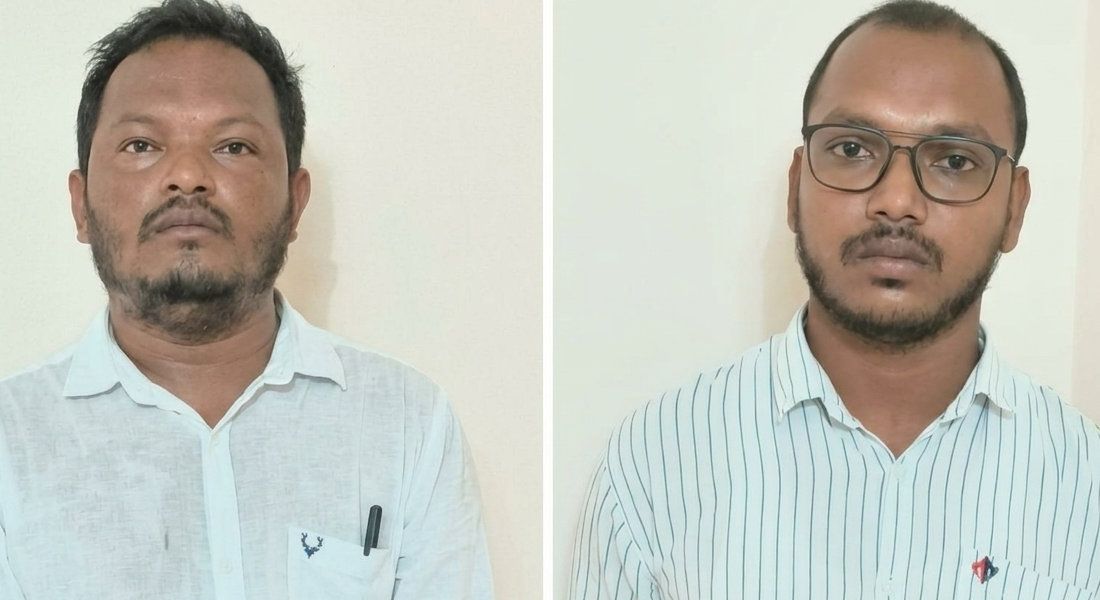
Bhubaneswar: Odisha Vigilance on Sunday arrested a junior engineer and his associate for allegedly accepting a bribe of Rs 1.36 lakh from a contractor in Nayagarh district.

The accused have been identified as Keshab Subudhi and his associate Ashutosh Baliarsingh. According to Vigilance officials, the duo was caught while allegedly demanding and accepting the bribe for clearing pending bills and facilitating the refund of security deposits linked to road construction and maintenance work carried out under the Mukhyamantri Sadak Yojana during 2021-22 in the Khandapara area of Nayagarh.

Officials said contractors are entitled to receive the Initial Security Deposit and the security deposit after completion of the maintenance period and related measurements. The deposits can be forfeited if measurements are not conducted within the stipulated process.

As per the Vigilance investigation, the contractor had repeatedly approached the junior engineer over the past several months to complete the measurement process and release the pending security amount. However, the engineer allegedly demanded Rs 1.36 lakh in exchange for processing the matter.

After receiving the complaint, Odisha Vigilance laid a trap on Sunday. Investigators said the contractor was called to the government residential quarters of the junior engineer at Khandapara, where he was allegedly instructed to hand over the bribe money to Baliarsingh, who was present there.

The Vigilance team then apprehended both accused persons and recovered the entire bribe amount in the presence of witnesses. During subsequent searches at multiple locations, including the government quarters at Khandapara, a flat at Metro Apartment in Hanspal, Bhubaneswar, and the office room of the engineer, officials also seized 17 old Rs 2,000 currency notes.

Both accused have been arrested and are set to be produced before the court.

India, Netherlands elevate ties to strategic partnership during Modi visit

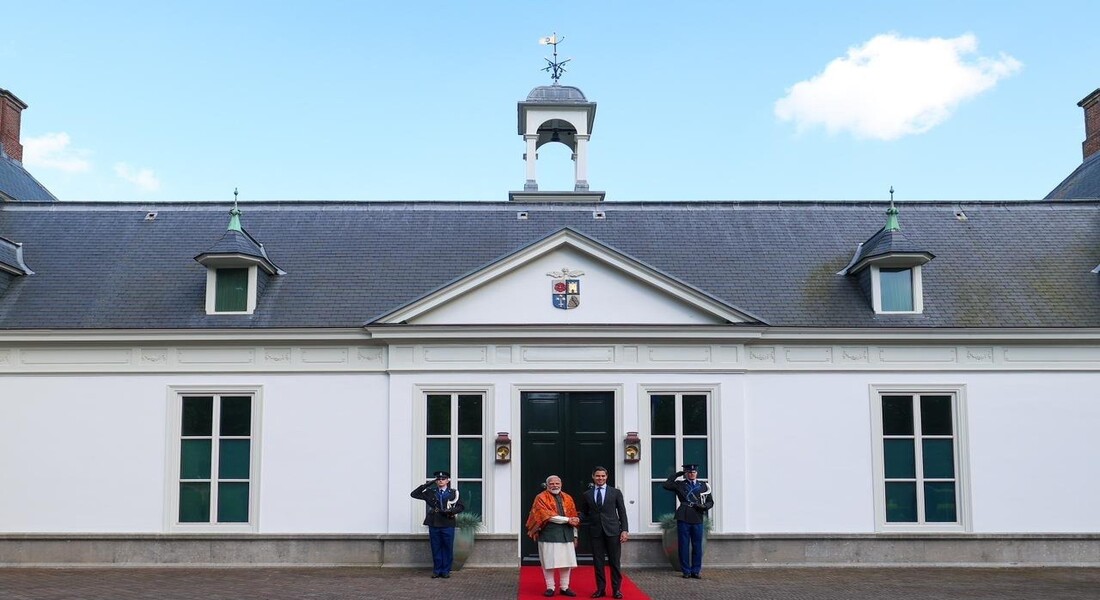
New Delhi: India and the Netherlands on Sunday decided to elevate their bilateral relationship to a Strategic Partnership during Prime Minister Narendra Modi’s visit to The Hague, signalling a major push to expand cooperation in technology, defence, trade, clean energy, and global security.

The decision was announced after delegation-level talks between Modi and Dutch Prime Minister Rob Jetten during Modi’s two-day visit to the Netherlands on May 16 and 17.

The two leaders adopted a Strategic Partnership Roadmap aimed at deepening cooperation across a wide range of sectors, according to an official statement.

These include semiconductors, artificial intelligence, cyber security, defence, maritime development, renewable energy, space, healthcare, agriculture, education, and climate action.

During the visit, Modi also met King Willem-Alexander and Queen Máxima at the Royal Palace Huis ten Bosch in The Hague.

A key highlight of the visit was the growing focus on advanced technologies and semiconductor collaboration. Both countries signed an agreement on semiconductors and emerging technologies, while institutions from both sides also announced partnerships involving research, talent exchange, and innovation.

Indian institutes, including IIT Delhi, IIT Bombay, and IISc Bengaluru, will collaborate with Dutch universities and companies such as ASML, NXP Semiconductors, and Tata Group.

The two countries also agreed to strengthen defence and security cooperation. A Letter of Intent on Defence Cooperation was signed to boost collaboration in defence manufacturing, technology transfer, training, and industrial partnerships. The leaders also discussed maritime security, cyber threats, and counter-terrorism cooperation.

Jetten strongly condemned the terror attack in Pahalgam, Jammu and Kashmir, and expressed support for India’s fight against terrorism. Both sides called for zero tolerance against terrorism and urged stronger international action against terror financing and safe havens.

India and the Netherlands also expanded cooperation in clean energy and sustainability. The Netherlands joined the Global Biofuel Alliance launched during India’s G20 Presidency, while both countries unveiled a roadmap for Green Hydrogen cooperation.

They also discussed circular economy initiatives, sustainable transport, and renewable energy investments.

Water management remained another important area of cooperation. The two sides reviewed progress under the India-Netherlands Strategic Partnership on Water, including projects linked to the Namami Gange mission, urban water resilience, and river management.

A Centre of Excellence on Water at the Indian Institute of Technology Delhi was also welcomed.

Trade and investment featured prominently during the talks. Both leaders welcomed the growth in bilateral trade and noted that the Netherlands continues to be one of India’s major investment partners in Europe. They also backed stronger startup collaboration and innovation exchanges between companies from both countries.

The leaders welcomed the conclusion of the India-European Union Free Trade Agreement negotiations earlier this year, saying it would strengthen economic ties and support rules-based global trade.

The visit also saw progress in cultural cooperation. The leaders also supported greater collaboration in museums, heritage preservation, and maritime history projects linked to Lothal in Gujarat.

On global issues, the two leaders discussed the wars in Ukraine and West Asia. They stressed the need for dialogue, diplomacy, and respect for international law. Both sides also reiterated support for a free, open, and secure Indo-Pacific region.

Prime Minister Modi invited Prime Minister Jetten to visit India, while both leaders expressed confidence that the newly announced Strategic Partnership would open a broader phase of cooperation between the two countries.

Women entrepreneurs oriented on ORTPS Act, Ama Sathi platform

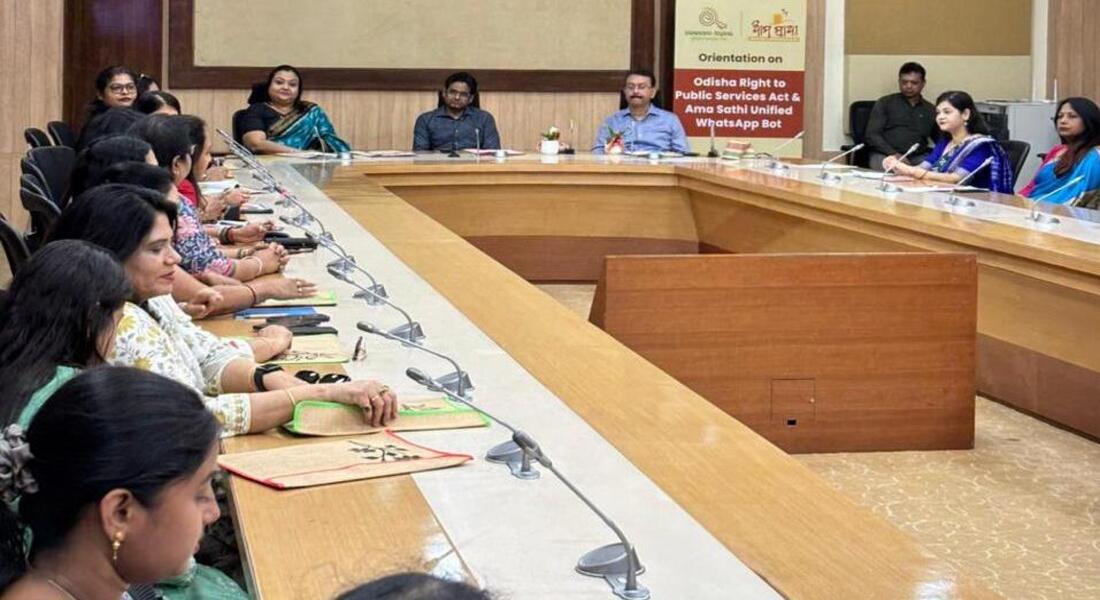
Bhubaneswar: The Centre for Modernising Government Initiative (CMGI) organised an orientation programme for members of the ICC Women Entrepreneurship Council (INWEC) on the Odisha Right to Public Services Act (ORTPSA) and the Ama Sathi Unified WhatsApp Bot, aimed at improving awareness of digital governance and citizen services in the State.

The programme, held at the Convention Centre in Lok Seva Bhawan on May 15, focused on enhancing understanding of citizens’ rights under the Odisha Right to Public Services Act and the use of technology-driven systems to access government services.

Addressing the participants, CMGI Executive Director Surendra Kumar Meena highlighted the State government’s efforts to involve civil society organisations in spreading awareness about welfare initiatives and public service delivery systems.

He informed the gathering that the Odisha Cabinet has approved the Auto Appeal System under ORTPSA, a mechanism intended to reduce delays in grievance redressal and service delivery.

Under the system, if a designated official fails to deliver a service within the stipulated timeline, the request will be automatically escalated to a higher authority, thereby improving accountability and efficiency in governance.

A technical session led by ORTPSA Project Coordinator Pinaki Mohanty provided participants with an overview of public service delivery mechanisms, the need for the Right to Public Services Act and its provisions.

Mohanty also explained the architecture of the Auto Appeal System, stating that digital integration would eliminate the need for citizens to manually file appeals when deadlines are missed, making public services more transparent and accessible.

Participants were also briefed on the Ama Sathi Unified WhatsApp Bot, a digital platform developed to simplify access to government services and improve user experience. A live demonstration of the platform was conducted with support from Meta India.

Speaking on the occasion, INWEC Convenor Swati Kejriwal appreciated the Odisha government and CMGI for organising what she described as an informative and citizen-focused programme.

“The session enriched our understanding of digital governance initiatives, citizens’ rights under ORTPSA, and the ease of accessing services through the Ama Sathi WhatsApp platform,” she said.

INWEC member and entrepreneur Nivediata Narula said the programme highlighted Odisha’s efforts to strengthen citizen-centric digital governance and improve transparency in service delivery.

Samidha Sathpathy, Director of Magnum Group of Companies and an INWEC member, described the session on Ama Sathi as “an eye-opener”, saying such initiatives could help build a more informed and digitally connected society.

The programme concluded with a vote of thanks proposed by Deputy Project Coordinator Sarita Kanungo.

Thailand Open: Satwik-Chirag suffer defeat in final

New Delhi: India’s celebrated men’s doubles pair of Satwiksairaj Rankireddy and Chirag Shetty fell short in the final of the Thailand Open after suffering a straight-games loss to Indonesia’s Leo Rolly Carnando and Daniel Marthin on Sunday.

The Indian duo went down 12-21, 23-25 in a contest where the Indonesians looked sharper for most of the evening in Bangkok. It was the first time Carnando and Marthin managed to beat Satwik and Chirag after losing their previous four meetings.

Satwik and Chirag struggled to find their usual attacking rhythm in the opening game as the Indonesian pair dominated the rallies and controlled the pace early on. The Indians fought back strongly in the second game and came close to forcing a decider, but Carnando and Marthin held their nerve during crucial points to seal the match in straight games, according to reports.

The defeat also extended Satwik and Chirag’s wait for a title, with the pair still searching for their first championship win in nearly two years despite another impressive run to the final.

Even in defeat, the Indian combination once again showed why they remain among the world’s top doubles teams, producing moments of aggressive net play and powerful smashes during the closely-fought second game.

The pair will now shift focus to the upcoming Singapore Open, scheduled to be held from May 26 to 31, where they will look to bounce back and continue their push for a long-awaited title.

Indian scientist Kuljeet Kaur Marhas elected Fellow of Meteoritical Society

New Delhi: Indian planetary scientist Kuljeet Kaur Marhas has achieved a major milestone in the field of space science by becoming the first Indian woman to be elected Fellow of The Meteoritical Society, a globally recognised body dedicated to the study of meteorites and planetary materials.

The honour places Prof. Marhas among an elite group of international researchers whose work has significantly contributed to understanding the formation and evolution of the Solar System, according to reports.

Established in 1933, The Meteoritical Society is regarded as one of the world’s leading scientific organisations in meteoritics and planetary science. The society recognises scientists whose research has advanced knowledge of meteorites, asteroids, and other extraterrestrial materials.

With her election, Prof. Marhas becomes only the third Indian scientist to receive the distinction after renowned researchers Devendra Lal and JN Goswami.

Prof. Marhas currently serves as a professor in the Planetary Science Division at Physical Research Laboratory. Her research over the years has focused on decoding clues preserved in ancient extraterrestrial materials dating back billions of years, helping scientists better understand the early stages of planetary formation.

Her work is particularly noted for studies involving short-lived radionuclides and stable isotopes found in meteorites and other space materials. She has also contributed to research on pre-solar grains, Calcium-Aluminum-rich Inclusions, chondrules, and organic compounds preserved in meteorites.

Apart from laboratory-based studies, Prof. Marhas has examined samples brought back through several landmark international space missions, including Stardust, Hayabusa, and the Apollo lunar programme.

The recognition is being viewed as a significant achievement for India’s scientific community and a moment of pride for women researchers working in advanced space and planetary sciences.

World’s rivers are quietly running out of oxygen, scientists warn

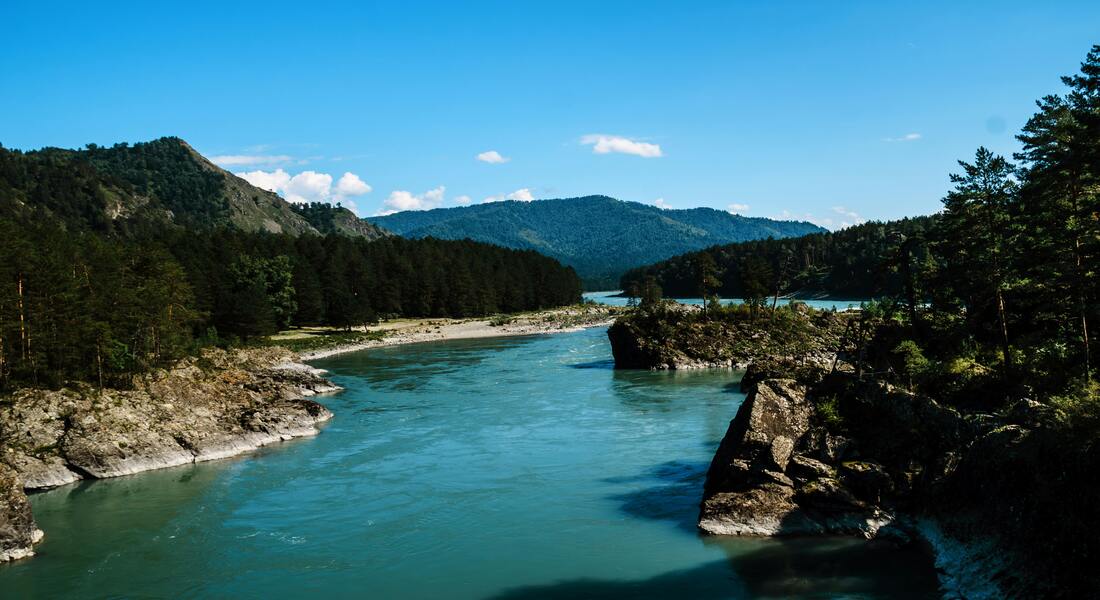
From the Amazon to rivers flowing through India, an invisible crisis may already be unfolding beneath the surface. According to new research, rivers around the world are slowly being starved of oxygen — a change scientists say could disrupt aquatic life, weaken biodiversity and alter the health of freshwater ecosystems in the decades ahead.

A study published in Science Advances found that nearly 80 per cent of the world’s rivers have experienced declining oxygen levels over the last four decades, with climate change emerging as the biggest driver of the trend.

The research, led by Prof. Kun Shi of the Nanjing Institute of Geography and Limnology (NIGLAS) at the Chinese Academy of Sciences, analysed data from more than 21,000 river stretches across the globe collected between 1985 and 2023.

The findings paint a troubling picture: river oxygen levels declined at an average rate of 0.045 milligrams per litre per decade, while nearly 79 per cent of rivers studied showed signs of deoxygenation. For rivers, oxygen is not just important — it is essential for survival, ScienceDaily reported.

Dissolved oxygen helps sustain fish, aquatic organisms and biodiversity while supporting the natural biological processes that keep rivers healthy. When oxygen levels drop too far, rivers can struggle to support life, sometimes triggering conditions known as hypoxia, where aquatic species begin to suffocate.

But perhaps the biggest surprise in the study was where the damage appears to be worst. Scientists expected colder regions closer to the poles — where temperatures are rising rapidly — to face the steepest oxygen losses. Instead, tropical rivers between 20° North and 20° South latitude, including rivers in India, emerged as the most vulnerable.

Researchers believe tropical rivers are at greater risk because they naturally carry lower oxygen concentrations, leaving them with less room to cope as warming intensifies.

The study also found that heatwaves are accelerating the problem.Extreme heat events accounted for nearly 23 per cent of global river oxygen loss, while warming-driven reductions in oxygen solubility — the ability of water to hold oxygen — explained nearly 63 per cent of the overall decline.

In simple terms: warmer rivers hold less oxygen. “Climate warming is increasingly reshaping freshwater ecosystems,” the researchers noted, adding that tropical rivers should become a priority for conservation and climate adaptation measures.

The team also explored whether dams and river flow influence oxygen loss. Interestingly, shallow reservoirs created by dams appeared to worsen oxygen decline, while deeper reservoirs sometimes slowed the process. Both unusually low and high river flow conditions showed slightly lower oxygen losses compared to normal flow conditions.

Although the changes are happening gradually, scientists say the consequences could become increasingly visible — from declining fish populations to disruptions in freshwater systems that communities rely on for food, farming and drinking water.

For now, the warning from researchers is clear: the climate crisis may not only be warming rivers — it may also be quietly taking their breath away.

Netherlands returns Chola-era copper plates to India during Modi’s visit to The Hague

New Delhi: The Netherlands has returned a rare set of 11th-century Chola-era copper plates to India during Prime Minister Narendra Modi’s visit to The Hague, marking a significant cultural repatriation linked to India’s medieval history.

Known as the Anaimangalam Plates, the collection consists of 21 large and three small copper sheets carrying inscriptions in Tamil and Sanskrit. The inscriptions document land grants made by Chola rulers to a monastery in present-day Tamil Nadu and provide insights into the administration, maritime influence, and trade connections of the Chola empire with Southeast Asia, according to reports.

The copper plates had been preserved at Leiden University since 1862 and were returned after years of diplomatic engagement between India and the Netherlands.

Sharing the development in a post on X, Prime Minister Narendra Modi described the return of the artifacts as “a moment of joy for all Indians”. He said he had joined Dutch Prime Minister Mark Rutte at the event marking the handover ceremony.

Modi said the inscriptions on the plates were largely written in Tamil and reflected the cultural and historical legacy of the Chola dynasty. He noted that the copper plates formalised a promise received by Emperor Rajendra Chola I from his father, Rajaraja Chola I, and also highlighted the achievements and naval strength of the Cholas.

“They also showcase the greatness of the Cholas. We in India are immensely proud of the Cholas, their culture, and their maritime prowess. I thank the government of the Netherlands and Leiden University in particular, where the Copper Plates were kept since the mid-19th century,” Modi said.

Supreme Court judge strength raised to 37 through ordinance

New Delhi: The sanctioned strength of judges in the Supreme Court of India has been increased from 33 to 37, excluding the Chief Justice of India, following the promulgation of the Supreme Court (Number of Judges) Amendment Ordinance, 2026, by President Droupadi Murmu.

The ordinance was published in The Gazette of India Extraordinary on May 16 by the Ministry of Law and Justice’s Legislative Department. It amends Section 2 of the Supreme Court (Number of Judges) Act, 1956 by replacing the word “thirty-three” with “thirty-seven”.

According to the notification, the ordinance came into force immediately after its promulgation. The document stated that Parliament was not in session and immediate action was considered necessary under Article 123(1) of the Constitution, which empowers the President to promulgate ordinances.

The move raises the total sanctioned strength of the apex court to 38 judges, including the Chief Justice of India.

Union Minister of State (Independent Charge) for Law and Justice Arjun Ram Meghwal also confirmed the development in a post on X. He said the president had approved the increase in the number of Supreme Court judges through the promulgation of the ordinance, further amending the Supreme Court (Number of Judges) Act, 1956.

The increase is expected to help address the growing pendency of cases and strengthen the functioning of the country’s highest judicial institution.

The hidden science behind why exercise builds your strength

Have you ever finished a workout and felt unusually sharp, lighter in mood or somehow more “awake”? Scientists may finally be closer to explaining why. A new study suggests that exercise does far more than tone muscles or burn calories — it may quietly be rewiring the brain in ways that help the body become stronger, faster and more resilient over time.

According to a new study published in the journal Neuron and reported by Cell Press, certain brain cells remain unusually active long after exercise ends, helping the body gradually build endurance. The findings suggest that the real gains from exercise may begin after the workout is over.

“A lot of people say they feel sharper and their minds are clearer after exercise,” said J. Nicholas Betley, corresponding author of the study from the University of Pennsylvania. “So we wanted to understand what happens in the brain after exercise and how those changes influence the effects of exercise.”

In experiments involving mice, researchers observed a surge in activity in a part of the brain called the ventromedial hypothalamus (VMH), an area associated with regulating energy use, body weight and blood sugar levels. A specific set of nerve cells — known as steroidogenic factor-1 (SF1) neurons — became active while the mice exercised and, surprisingly, continued firing for at least an hour after the workout had ended.

After undergoing daily treadmill sessions for two weeks, the mice showed noticeable improvements in stamina. They ran longer distances, maintained faster speeds and took more time to reach exhaustion. Brain scans also revealed increased activity and greater involvement of the SF1 neurons after repeated exercise.

But what surprised researchers most was what happened when these neurons were blocked.

Mice whose SF1 neurons were prevented from communicating with the rest of the brain failed to develop better endurance, even though they continued exercising normally. More strikingly, blocking these neurons only after exercise — not during it — was enough to stop the endurance gains.

The finding hints that the body’s adaptation to exercise may depend heavily on what happens in the brain during recovery rather than only during physical activity itself.

“When we lift weights, we think we are just building muscle,” Betley said. “It turns out we might be building up our brain when we exercise.”

Researchers believe the continued activity of these neurons after exercise may help the body recover more efficiently by improving the use of stored glucose, potentially helping muscles, lungs and the heart adapt faster to increasing physical demands.

While the study was conducted on mice and more research is needed to confirm whether the same process works similarly in humans, scientists believe the findings could eventually help older adults remain active longer, support rehabilitation after strokes or injuries and even improve athletic recovery.

“This study opens the door for understanding how we can get more out of exercise,” Betley said. “If we can shorten the timeline and help people see benefits sooner, it may encourage them to keep exercising.”

For anyone struggling to stay motivated at the gym, the message may be simple: your body is not the only thing improving — your brain may be training quietly in the background too.