At IndiaVerve, we go beyond the noise to bring you meaningful stories of change, resilience and progress—from India to the world stage. Our mission is to bring readers credible, wide-ranging coverage across politics, business, sports, culture, society and more.

Sarnath inscribed as India’s 45th UNESCO World Heritage Site

New Delhi: India’s Ancient Buddhist Site of Sarnath has been inscribed on the UNESCO World Heritage List, becoming the country’s 45th property to receive the recognition. The decision was taken at the 48th Session of the World Heritage Committee, held at Busan, South Korea.

Sarnath was India’s official nomination for the 2025-26 cycle. The inscription celebrates India’s cultural legacy and its traditions of architectural brilliance, regional identity and historical continuity, according to an official statement.

Prime Minister Narendra Modi called it a proud moment for every Indian and said he was delighted that Sarnath in Uttar Pradesh had been inscribed on the list.

In a post on X, he said Sarnath’s close association with Lord Buddha, whose message of wisdom, compassion and harmony inspires the world, made the recognition significant. Modi added that it celebrates India’s civilisational and spiritual heritage and would inspire more people worldwide to visit Sarnath.

Union Minister of Culture Gajendra Singh Shekhawat termed it a defining moment for India’s cultural heritage, saying Sarnath reflects the profound spiritual and philosophical contributions of Indian civilisation to humanity and reaffirms India’s role as a cradle of ideas across generations.

Uttar Pradesh Chief Minister Yogi Adityanath said the inscription was a proud moment for every Indian and a reflection of Uttar Pradesh’s spiritual and cultural legacy under the leadership of PM Modi.

In a post on X, he said Uttar Pradesh welcomes the world to experience this heritage.

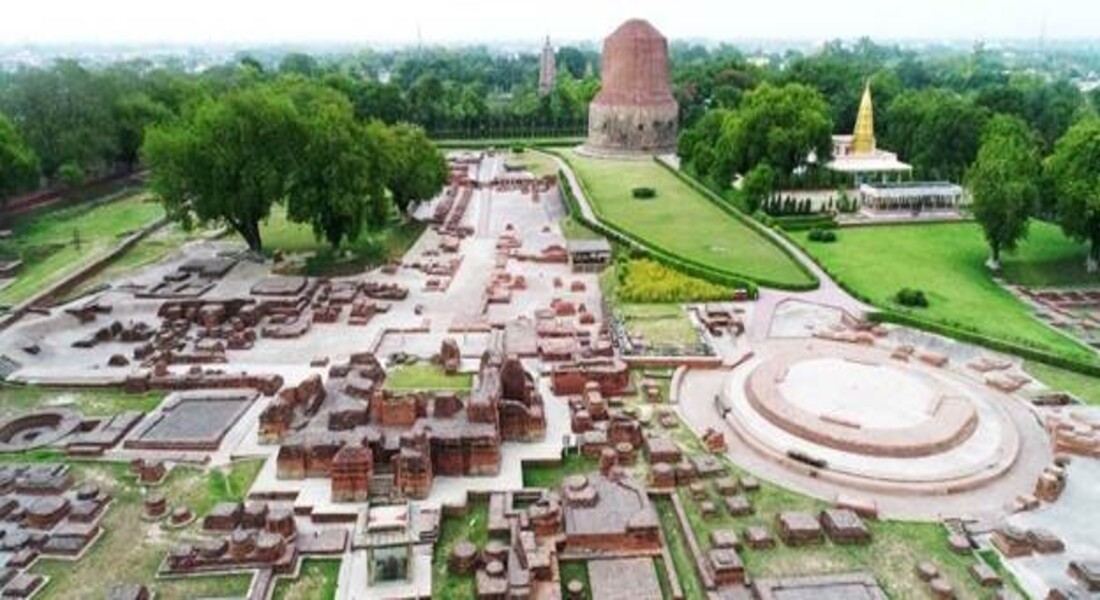
The inscribed serial property comprises two parts – the Chaukhandi Stupa and the Archaeological Remains of Sarnath, which include the Dhamekh Stupa, Dharmrajika Stupa, Mulagandhakuti Vihara and the Ashokan Pillar – located within Varanasi in Uttar Pradesh.

Together, the two components preserve the architectural and archaeological remains of ancient Sarnath, known in Buddhist tradition by names including Rishipatana, Ishipatana and Mrigadava. The Buddha visited the site in the 6th century BCE and delivered his first sermon, known as the “Turning of the Wheel of the Law” (Dharmachakra pravartana), marking the inception of the Buddhist sangha and the establishment of the Noble Eightfold Path.

Sarnath is regarded as one of the four key sites of Buddhist pilgrimage, indicated by the Buddha himself. The site developed over centuries through royal, monastic and lay patronage, with numerous stupas, temples and viharas built around the believed location of the first sermon and the Buddha’s meeting with his first disciples. Sarnath declined in the 12th century CE and fell into obscurity until its rediscovery in the 18th century.

The monuments at the site date from the pre-Mauryan period (5th-4th centuries BCE) up to the 3rd century BCE, continuing until the destruction of Sarnath in the 12th century CE, with some later additions. Sarnath has been one of the most extensively excavated sites by the Archaeological Survey of India, revealing a stratified settlement spread across 16 centuries.

Dharmendra Pradhan resigns as Education Minister after month-long CJP protests

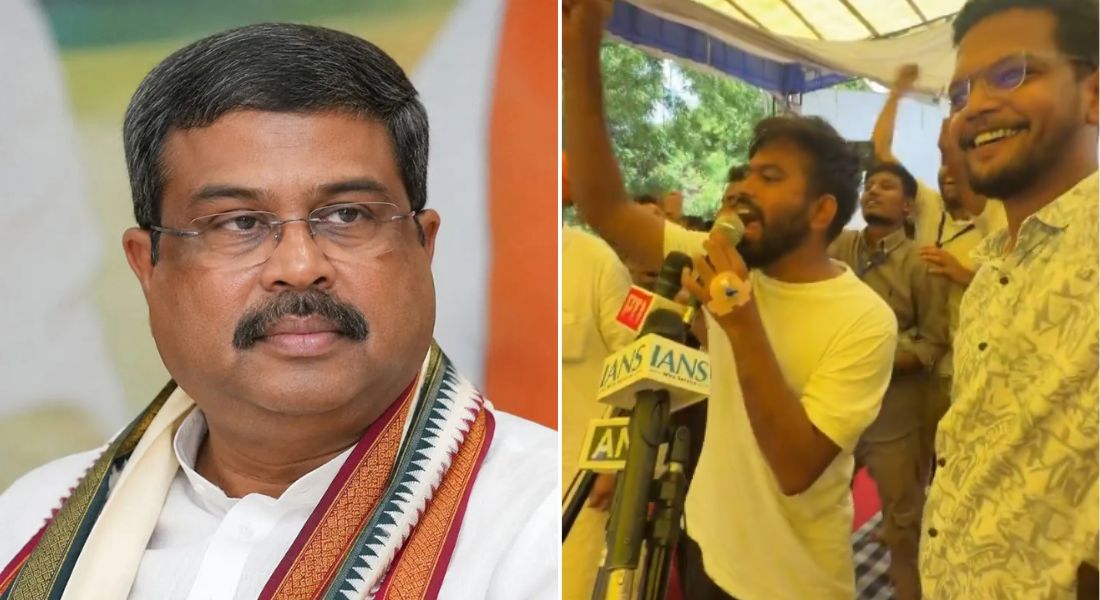
New Delhi: Union Education Minister Dharmendra Pradhan resigned from the Union Cabinet on Saturday, bringing a dramatic turn to the month-long nationwide agitation led by the Cockroach Janta Party (CJP) over alleged examination irregularities and the NEET paper leak controversy.

Pradhan announced his resignation through a post on X, hours before the scheduled third round of talks between representatives of the Centre and the CJP. His resignation had been the principal demand of students and youth protesters who have been camping at Delhi’s Jantar Mantar for over a month.

The negotiations between the government and the CJP had remained deadlocked over the demand for Pradhan’s removal. While the Centre had earlier agreed in principle to two of the protesters’ demands—assuring that no legal action would be taken against peaceful protesters and stating that it was positively considering compensation for families of students who died by suicide following the alleged NEET paper leak—it had not taken a position on Pradhan’s resignation until Saturday.

In his statement, Pradhan said he held “deep respect for the aspirations, sentiments and rightful expectations of the youth of this country” and thanked Prime Minister Narendra Modi for giving him the opportunity to serve as Education Minister. He said his decision was guided by the larger interests of students and the nation.

“Keeping in mind that anti-national forces should not take advantage of the situation that has arisen at Jantar Mantar and across the country, that the unity of the nation remains intact, that the future of even a single student of India does not get entangled in legal complications, and that our children devote their time to studies and focus on building their careers, I have submitted my resignation to the Hon’ble Prime Minister,” Pradhan wrote.

He further said that it remained his resolve that the country’s youth should not be trapped in confusion and uncertainty.

News of the resignation sparked celebrations at the protest site at Jantar Mantar, where thousands of students and supporters have been demonstrating since late June. Protesters raised slogans, waved flags and hailed the development as a major victory for the movement.

CJP founder Abhijeet Dipke announced the resignation from the protest stage, declaring that the students’ movement had achieved what many believed was impossible.

“They used to say that no one resigns in this government. But we have done it,” Dipke said. In a post on X, the CJP described the development as a triumph of student power, writing: “Long Live Student Power.”

However, Dipke clarified that the agitation would not end with Pradhan’s resignation. He said the organisation would continue its protest until its remaining demands are fulfilled.

According to Dipke, the CJP is seeking compensation of ₹1 crore for each family of students who allegedly died by suicide following the NEET paper leak controversy. The organisation has also demanded action against police personnel over the crackdown on protesters during the march towards Parliament on July 20.

“We have two more demands. We won’t go like this,” Dipke said, reiterating that accountability for the police action and compensation for affected families remain central to the movement.

Activist Sonam Wangchuk, who had ended his 26-day hunger strike after receiving written assurances from the Centre earlier this week, also welcomed the resignation.

Calling it “a victory of democracy”, Wangchuk said the outcome reflected the strength of peaceful and democratic public participation. “It’s a victory of peace, patience and perseverance. Congratulations CJP, Gen Z of the nation and thank you to all citizens for shedding fear and rising up from every corner of the country,” he wrote on X.

Wangchuk added that the movement should now focus on achieving systemic reforms in the country’s examination and education system.

The student agitation, which began over alleged irregularities in competitive examinations and the NEET paper leak controversy, has spread to several cities across the country over the past month. It also drew support from Opposition parties, which repeatedly demanded Pradhan’s resignation and sought accountability from the government.

With the resignation of the Education Minister, attention is now expected to shift to the Centre’s response to the remaining demands of the protesters, including compensation for affected families, action over the alleged police excesses during the Parliament march, and broader reforms aimed at preventing future examination irregularities.

Commerce Ministry clarifies impact of US 10% tariff

New Delhi: The Ministry of Commerce and Industry on Saturday said the US has imposed an additional 10% tariff on imports from India under Section 301 of the US Trade Act, 1974, lower than the 12.5% duty proposed earlier, while nearly 45% of India’s exports to the US will remain outside its scope.

The clarification followed the United States Trade Representative’s (USTR) recent announcement of the final measures under Section 301, following an investigation into the acts, policies, and practices of 60 economies, including India, relating to the prohibition on imports of goods produced with forced labour.

The ministry said India remained closely engaged with the USTR throughout the investigation through detailed written submissions, in-person consultations and participation in public hearings.

It said these sustained efforts resulted in India being placed in the lower tier of additional tariffs under the final measures, giving Indian exports a relative advantage in key sectors compared with many other economies covered by the investigation.

According to the government, several major export categories, including generic pharmaceuticals, smartphones and certain other specified products, will continue to attract no additional duty.

Products already covered under Section 232 measures, including steel, aluminium and auto parts, are also excluded from the new 10% Section 301 duty, as Section 232 tariffs apply broadly to all countries with limited exceptions, according to an official statement.

The ministry said these exemptions mean that around 45% of India’s exports to the US remain outside the purview of the additional Section 301 tariff. The remaining 55% of exports will attract the additional 10% duty, although India’s overall tariff incidence remains lower than that of most other economies covered by the USTR investigation.

It added that the textile-specific mechanism referred to in the final measures has not yet been established or operationalised. India continues to engage with the United States on the issue as part of the ongoing negotiations for the proposed India-US Bilateral Trade Agreement.

The government reiterated its commitment to working with the US for the early conclusion of the India-US Bilateral Trade Agreement, as announced on February 2, 2026, and in accordance with the Joint Statement issued on February 7, 2026.

Petroleum minister marks start of Mahanadi offshore drilling for energy security

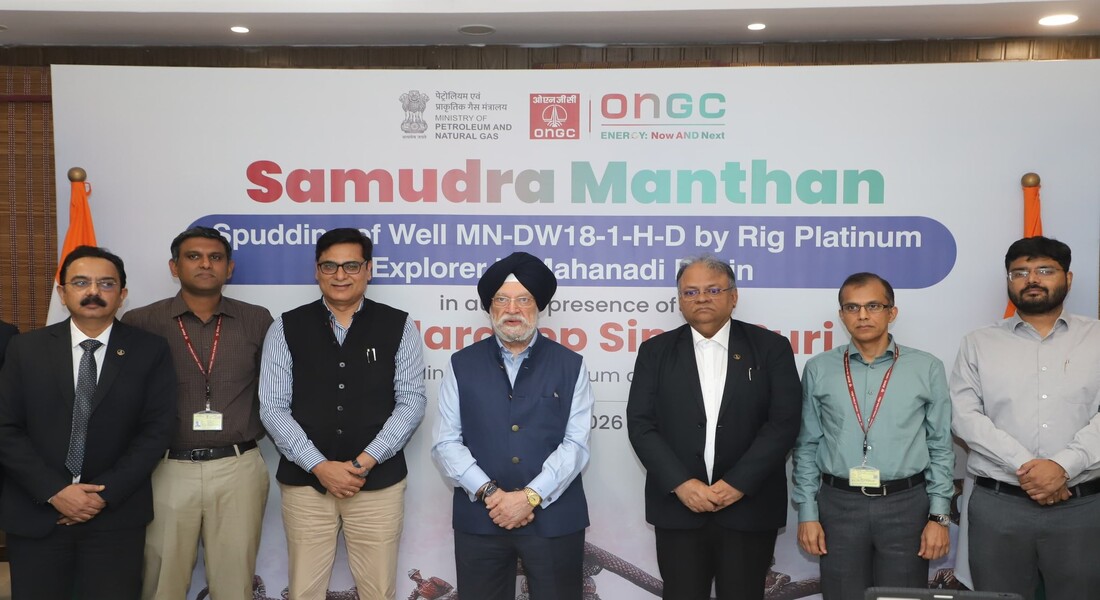
Bhubaneswar: Union Minister for Petroleum and Natural Gas Hardeep Singh Puri on Saturday marked the commencement of drilling of the first appraisal well, MN-DWN18-1-HD, in the Mahanadi Offshore Basin.

Puri described the occasion as the beginning of a new chapter in India’s journey towards energy security. He said the commencement of drilling reflects a decade of reforms that have transformed India’s exploration and production landscape.

The MN-DWN18-1-HD well is the first of four planned deepwater wells that will evaluate one of India’s most prospective offshore basins. The drilling programme will use deepwater technology to unlock new hydrocarbon resources and strengthen domestic production capability, according to an official statement.

Puri said the government has transformed the exploration and production ecosystem through key policy reforms over the past decade. He cited the Hydrocarbon Exploration and Licensing Policy, the Open Acreage Licensing Programme replacing the earlier nomination-based approach, a transparent Revenue Sharing framework, and the opening of nearly 99% of former offshore “No-Go” areas for exploration.

He added that nearly 81% of India’s active exploration acreage has been awarded after 2014, reflecting investor confidence in the reforms.

The minister also highlighted government investments in geoscientific data generation through Mission Anveshan, the National Seismic Programme, the Extended Continental Shelf Survey, the National Data Repository and the Hydrocarbon Resource Assessment Study.

Puri said 172 exploration blocks covering nearly 3.8 lakh square kilometres have been awarded under OALP, with committed investments exceeding USD 4.3 billion. He noted that around 674 wells were drilled in FY 2025-26, with five new discoveries made and seven discoveries monetised during the year.

He said the government’s strategy is two-fold: discovering new hydrocarbon resources while maximising recovery from existing national assets, including revitalising mature fields with advanced technologies.

Puri said India’s energy future depends not on a single discovery but on sustained reforms, technology and the efforts of geologists, engineers and offshore professionals. He said every metre drilled brings India closer to reducing import dependence and strengthening self-reliance.

The minister congratulated ONGC, Oil India Limited, the Directorate General of Hydrocarbons and technical partners, and expressed confidence that the drilling would strengthen India’s offshore exploration efforts and long-term energy security.

IDCO reviews industrial growth, reforms in stakeholder meet

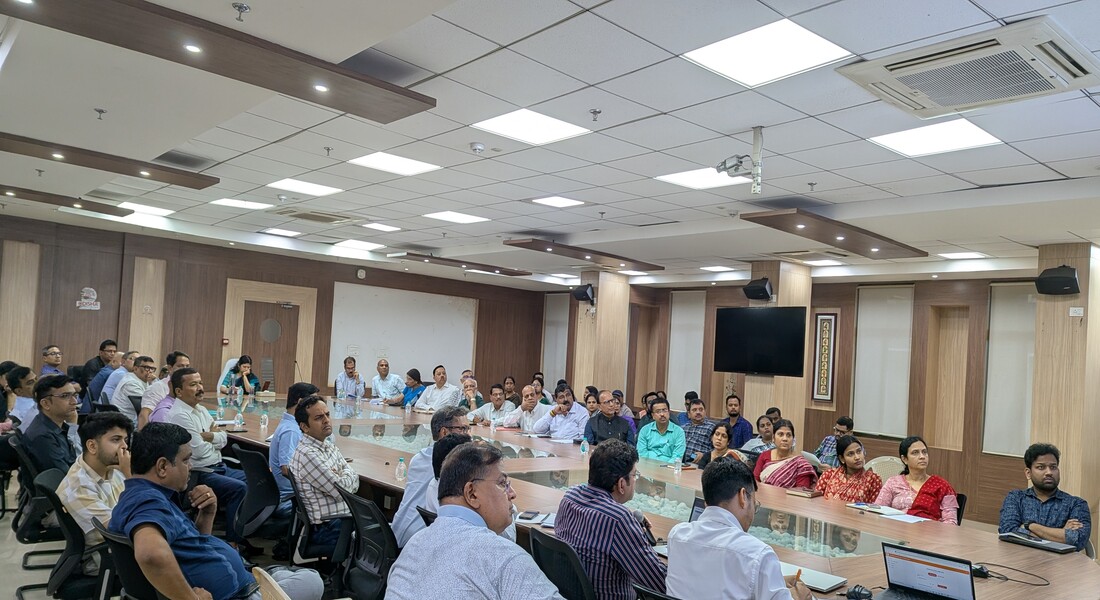
Bhubaneswar: The Odisha Industrial Infrastructure Development Corporation (IDCO) held a high-level stakeholders’ meeting to review industrial infrastructure, land allotment and regulatory reforms in the state.

The meeting was chaired by Additional Chief Secretary, Housing & Urban Development Department, and IDCO Chairperson, Usha Padhee. Representatives of leading industry associations, MSME bodies, sectoral chambers and regional trade organisations took part, along with senior IDCO officials.

Industry representatives raised operational concerns and suggested measures to strengthen Odisha’s investment climate. Padhee reaffirmed IDCO’s commitment to continuous industry engagement and said stakeholder consultations and faster decision-making would remain central to building a competitive industrial ecosystem.

The meeting noted that IDCO has expanded the Industrial Land Bank by nearly 6,000 acres and handed over 6,027 acres to large and medium industries over the past two years. Land allotment was facilitated for 93 major industrial projects during this period.

For balanced regional development, IDCO has developed 30 Multi-Product MSME Parks across the state, along with dedicated parks for electronics, textiles, plastics, seafood processing and aluminium-based industries.

IDCO is currently implementing 147 industrial infrastructure projects worth over Rs 3,500 crore. Another 117 projects valued at more than Rs 1,870 crore have been proposed under the Industrial Infrastructure Development Fund and SASCI schemes. The Corporation now manages nearly 150 Industrial Estates, Industrial Areas and MSME Parks spread over more than 14,095 acres, supporting 6,661 industrial units.

The meeting reviewed governance reforms aimed at simplifying approvals. IDCO has allowed full utilisation of permissible Floor Area Ratio without requiring Transferable Development Rights certificates and has removed ground coverage restrictions for industrial buildings, flatted factories and IT/ITES establishments.

Padhee advised industry associations to jointly submit standardised industrial building designs for pre-approval to cut timelines further. IDCO said mortgage NOCs would now be automated by integrating them with allotment letters, while a public digital Industrial Land Bank platform is being developed to enhance transparency. The Corporation has also set a one-month target for completing land allotment, lease execution and physical possession after Land Allotment Committee approval.

Responding to concerns on water supply, drainage, power, traffic, parking and industrial safety, IDCO said water supply has been restored at Khordha Industrial Estate, drainage proposals for Jagatpur have been submitted for approval, and smart street lighting is being expanded across industrial estates.

IDCO is also pursuing a Multi-Level Car Parking project for Bhubaneswar’s Infocity, which employs nearly 30,000 professionals, and is identifying nearby land for additional parking. Infrastructure upgradation worth nearly Rs 500 crore is underway across seven major industrial estates, covering roads, drainage and utilities. Common fire-hydrant systems and stronger industrial security are also being planned.

The meeting saw participation from UCCI, CII, FICCI, ASSOCHAM, ICC, World Trade Centre Bhubaneswar, FIEO, OASME, OSSIA, NOCCI, RCCI, BCIC, TiE Bhubaneswar, NASSCOM and other sector-specific associations and women entrepreneurs’ networks.

IDCO and industry stakeholders concluded the meeting with a shared commitment to institutionalise regular consultations, accelerate infrastructure development and strengthen Odisha’s position as a preferred investment destination.

NBCC wins Rs 88.43 crore Odisha hostel contract

Bhubaneswar: State-owned NBCC (India) Ltd has secured fresh work orders worth about Rs108.85 crore, led by an ₹88.43 crore contract to construct boys’ and girls’ hostels at multiple locations in Odisha.

The company informed the stock exchanges that the Odisha project has been awarded by the Directorate of Technical Education and Training, Odisha, Cuttack.

The contract, valued at approximately Rs 88.43 crore (excluding GST), covers Project Management Consultancy (PMC) services for the construction of hostel facilities at various locations across the state.

NBCC has also secured a Rs 20.42 crore PMC contract from the National Horticulture Board for the construction of a Clean Plant Centre Laboratory and Office Building at ICAR-Central Institute of Temperate Horticulture, Srinagar, under the Clean Plant Programme.

The company said both contracts were awarded by domestic entities in the ordinary course of business. It also clarified that neither project involves any related-party transaction or promoter interest.

The two contracts together are expected to strengthen NBCC’s order book while expanding its presence in the education and horticulture infrastructure segments.

Jhandu Kumar wins India’s first medal at Commonwealth Games 2026

New Delhi: India opened its medal account at the Commonwealth Games 2026 after para powerlifter Jhandu Kumar secured a bronze medal in the men’s heavyweight event at the SEC Armadillo in Glasgow on Friday.

The podium finish gave India its first medal of the Games, highlighting the country’s campaign in para sports despite a challenging outing for the rest of the contingent, according to reports.

The 28-year-old competed in Group B and recorded a best lift of 190kg on his second attempt. Under the Commonwealth Games para powerlifting format, medals are awarded using a bodyweight coefficient system instead of the highest weight lifted. The formula combines an athlete’s bodyweight with the best successful lift to determine the final standings.

Jhandu began with a successful 181kg lift before improving to 190kg. He attempted 196kg in his final lift but failed to complete it. His performance earned 130.9 points, enough to finish third.

Nigeria’s Riluwan Idris won the gold medal after lifting 208kg to register 132.8 points. England’s Mathew Harding claimed silver with a 199kg lift and 131.0 points.

While Jhandu delivered India’s breakthrough medal, the remaining six Indian para powerlifters finished outside the podium places.

Sudhir, competing in the same heavyweight category, placed sixth with 114.1 points.

Earlier, Ashok Kumar Malik narrowly missed a medal in the men’s lightweight competition. The Paris 2024 Paralympian and 2023 Asian Para Games bronze medallist achieved a personal-best lift of 200kg and finished fourth with 143.8 points.

England’s Mark Swan secured the lightweight gold after lifting 222kg for 153.9 points. Nigeria’s Roland Ezuruike also finished on 153.9 points with a lift of 185kg but settled for silver under the competition’s ranking criteria. Malaysia’s Bonnie Bunyau Gustin took bronze with 220kg and 153.5 points.

At the end of the second day of competition, Australia led the Commonwealth Games 2026 medal standings with 12 medals, including five gold, two silver and five bronze.