At IndiaVerve, we go beyond the noise to bring you meaningful stories of change, resilience and progress—from India to the world stage. Our mission is to bring readers credible, wide-ranging coverage across politics, business, sports, culture, society and more.

Odisha pushes BKPPER project to create 40 lakh jobs

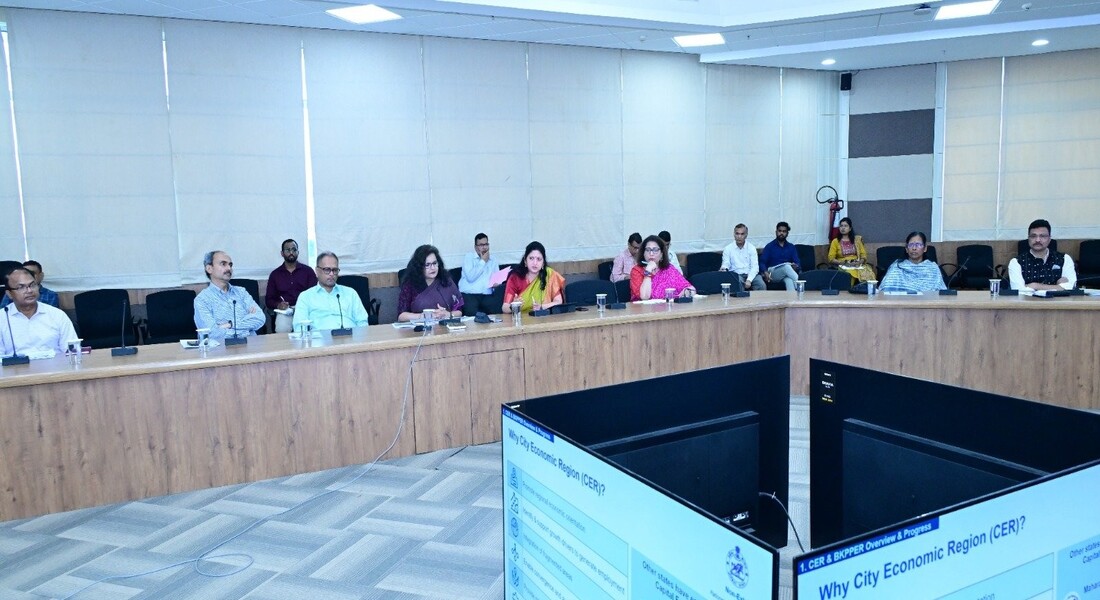
Bhubaneswar: Odisha has stepped up preparations for the Bhubaneswar, Cuttack, Puri and Paradeep Economic Region (BKPPER) project, with a focus on jobs, investment and integrated regional growth.

Chief Secretary Anu Garg chaired an important coordination meeting to review the project, which is being positioned as a major step towards fulfilling Vision Odisha 2036 and Viksit Bharat 2047.

The BKPPER project aims to create more than 40 lakh non-farm jobs and attract corporate investment of over USD 400 billion.

At the secretary-level meeting, officials discussed 269 projects across 19 departments identified by NITI Aayog in collaboration with various departments for the economic region.

The projects are aimed at bringing together the economic strengths of the region. These include Bhubaneswar’s IT and technology sector, traditional business activities, tourism and cultural assets, as well as port-based industries and logistics.

The proposed economic region will cover four districts – Khordha, Cuttack, Puri and Jagatsinghpur. It will also include 19 urban areas spread across these districts.

The government aims to develop BKPPER as an inclusive, liveable and sustainable economic zone. The coordinated approach is expected to bring together infrastructure, industry, services and other economic activities across the region.

The meeting reviewed coordination among the 19 departments involved in implementing the identified projects and advancing the broader economic development objectives of the BKPPER region.
Bhoodan land records to be digitised across Odisha

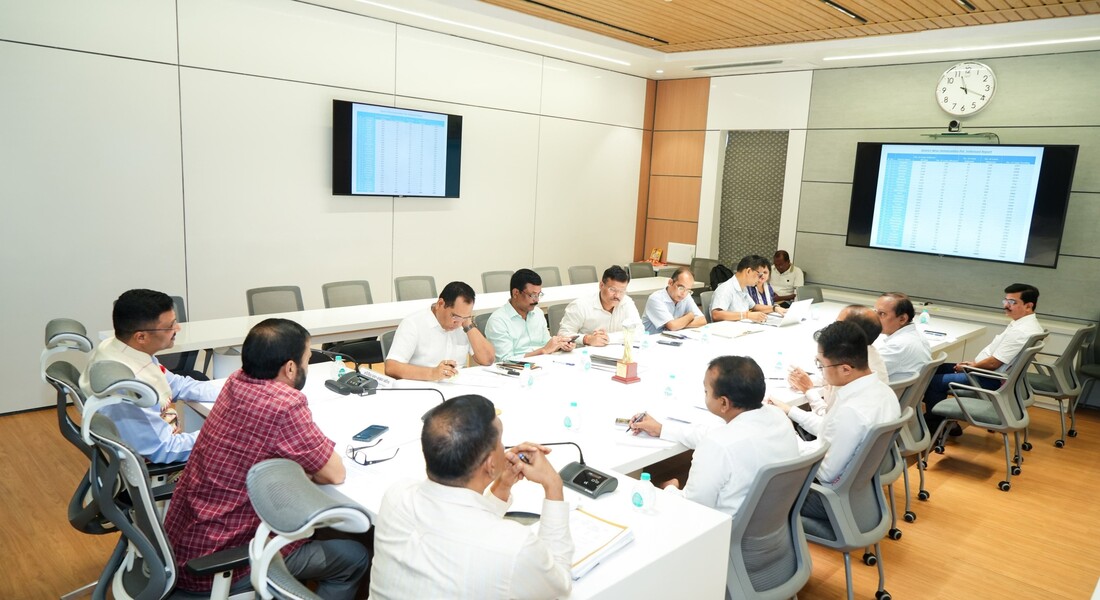
Bhubaneswar: The Odisha government has decided to scan and digitise old records of nearly all Bhoodan land in the state and link them with land records through the Bhoodan-LRMS Portal.

The decision was taken at a high-level review meeting chaired by Revenue and Disaster Management Minister Suresh Pujari to review the department’s key schemes and citizen-centric services.

As part of the process, old Bhoodan land records will be scanned and digitised. The digitised records will then be linked with existing land records through the Bhoodan-LRMS Portal.

The government will also impose restrictions on the illegal transfer and mutation of Bhoodan land until the digital records are fully completed.

The Revenue Department will conduct strict investigations into fraud involving Bhoodan land. Illegal encroachers will also be evicted as part of the measures to protect such land.

The government said Bhoodan land will be allotted only to genuinely homeless persons, keeping in view the objective of Acharya Vinoba Bhave behind the Bhoodan movement.

The minister also stressed the need to protect and restore all landed properties of Mahaprabhu Shri Jagannath located across different districts of Odisha and in other states.

The meeting also discussed computerisation of all Bhoodan land records in the state. The department reiterated that mutation and records relating to Bhoodan land should be made only in favour of homeless persons.

The measures are aimed at strengthening land records, preventing fraudulent transactions and ensuring that Bhoodan land is used for its intended purpose.

Odisha Cabinet approves 18 proposals in 47th meeting

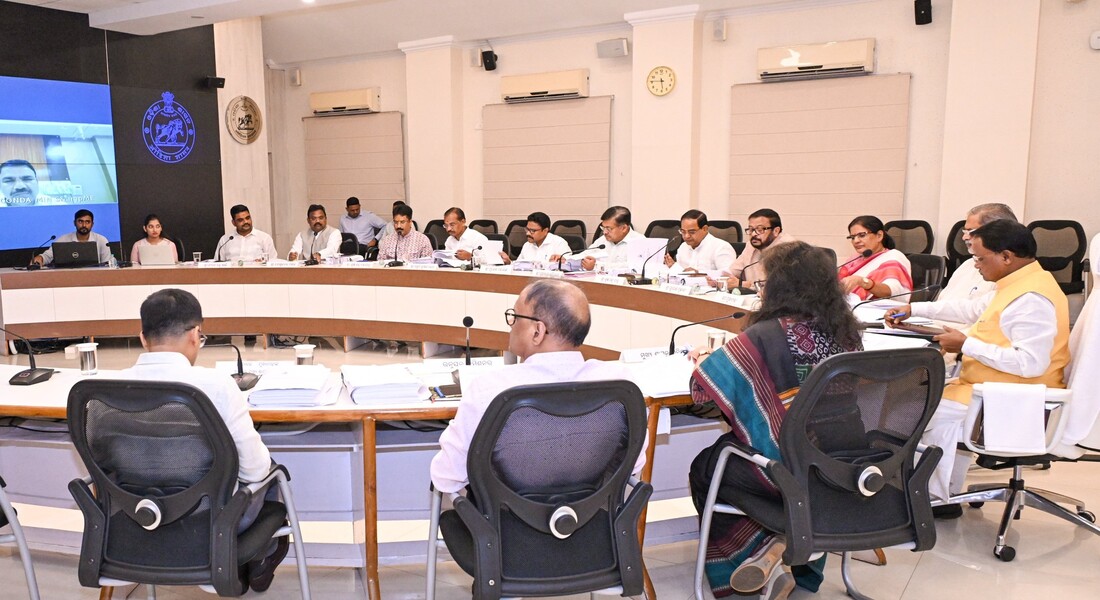
Bhubaneswar: The Odisha Cabinet’s 47th meeting was held on Monday at Lok Seva Bhawan under the chairmanship of Chief Minister Mohan Charan Majhi.

The meeting deliberated upon and approved a total of 18 proposals submitted by 12 departments, aimed at furthering the state’s development and public welfare.

The Cabinet approved the enactment of the ‘Shri Jagannath Temple Land Management Rules, 2026’, which will ensure transparent management, digital administration, and settlement of temple land.

It also cleared the restructuring of the Odisha Agricultural Services Cadre and the Odisha Soil Conservation Services Cadre. The Horticulture Services Cadre was similarly restructured, with the total number of posts being increased from 403 to 470.

The Cabinet granted approval to the ‘Odisha Public Trust Bill, 2026’, which comes along with amendments to 16 existing laws. An amendment to the Pension Rules, 1992 was also passed.

Additionally, the Cabinet approved the enactment of the Odisha Ministerial Services Rules, 2026, which will govern the recruitment, promotion, and service conditions of ministerial staff working at District Industries Centres.

The ‘BOITA’ scheme was approved for the conservation of historical irrigation projects and the development of associated tourism facilities. A plan to install 1.5 lakh deep tube wells over five years was also cleared, to create irrigation capacity across 7.5 lakh hectares in 256 blocks spanning 26 districts.

The revised ‘BASUDHA’ scheme, covering the period 2026-27 to 2028-29, was also approved to extend safe drinking water supply to rural habitations that had previously been left out.

Four road projects were approved for widening and improvement, covering the Komtalpeta-Muniguda-Tumudibandha stretch (SH-5), the Bhawanipatna-Muniguda stretch (SH-6), and the Rayagada-Kereda stretch (MDR-48B).

The Cabinet also approved the ‘Panchasakha Shiksha Setu Yojana’ for the period from December 20, 2024 to March 31, 2029, covering financial years 2024-25 to 2028-29.

Preparation of the ‘Odisha Uniform Services Staff Selection Commission (Amendment) Rules, 2026’ was also approved to enable the conduct of a Combined Recruitment Examination across uniform services.

In the power sector, the Cabinet approved the strengthening and modernization of the entire transmission infrastructure, including the state’s first-ever 765 kV network.