At IndiaVerve, we go beyond the noise to bring you meaningful stories of change, resilience and progress—from India to the world stage. Our mission is to bring readers credible, wide-ranging coverage across politics, business, sports, culture, society and more.

Global tourism growth slows in 2026 as Middle East conflict weighs on travel

New Delhi: International tourism continued to grow in the first half of 2026, but the pace remained fragile as geopolitical tensions, higher travel costs and disruptions to air connectivity affected demand across several regions.

According to the latest World Tourism Barometer from UN Tourism, an estimated 690 million tourists travelled internationally between January and June 2026, around 3 million more than during the corresponding period last year.

International arrivals increased by 2% in the first quarter of 2026 before declining by 1% in the second quarter, UN Tourism said in a press release.

Arrivals fell by 3% in April, with UN Tourism attributing the decline largely to the calendar effect of the Easter holiday period beginning in March and the impact of the conflict in the Middle East.

The slowdown continued in June, when global international arrivals declined by 3%. Western Europe recorded a 6% fall during the month, partly linked to a heatwave affecting some destinations.

South-East Asia also saw international arrivals decline by 5% in June. Weaker demand from Asian markets, geopolitical tensions, disruptions to air travel through the Middle East and higher travel costs contributed to the decline.

Some destinations in Oceania recorded a 6% drop in arrivals in June, with Typhoon Sinlaku also affecting tourism activity during the second quarter.

UN Tourism Secretary-General Shaikha Al Nuwais said the latest figures showed that the tourism sector was absorbing significant pressure while continuing to move forward.

She noted that tourism had not stopped growing, although the growth remained fragile, and stressed that the impact of the Middle East situation on destinations beyond the region demonstrated the need for resilience across the global tourism sector.

The regional performance during the first half of 2026 was mixed. Africa recorded 4% growth in international arrivals, while Europe posted a 3% increase. The Americas registered 2% growth, although results varied considerably between its sub-regions.

Asia and the Pacific recorded 1% growth compared with the first half of 2025 but remained 11% below 2019 levels. UN Tourism said disruptions to air connectivity, higher air fares and uncertainty continued to affect intra-regional demand.

North-East Asia recorded 3% growth during the six months. In contrast, South Asia registered a 5% decline and South-East Asia recorded a 1% decline compared with the same period in 2025.

The Middle East experienced the sharpest regional decline, with international arrivals falling by 22% in the first half of 2026 as the region was directly affected by the conflict.

According to UN Tourism, the conflict has negatively affected international tourism in the Middle East and other regions since early March. However, disruptions to air traffic gradually eased in May and June after the announcement of a ceasefire, allowing some air routes to reopen and contributing to an uneven recovery in consumer sentiment.

Against this backdrop, UN Tourism has revised its outlook for international tourism in 2026. International tourist arrivals are now expected to increase by between 1% and 2% globally, compared with the organisation’s January forecast of 3% to 4%.

The revised outlook remains dependent on the duration of the conflict and its potential impact on oil prices and overall inflation.

The latest data also indicates that travellers are likely to remain focused on value for money. Elevated prices and uncertainty are expected to encourage more international travellers to choose destinations closer to home or opt for domestic travel.

Rajnath Singh highlights India’s defence growth, self-reliance

New Delhi: Defence Minister Rajnath Singh on Friday highlighted India’s growing indigenous defence capabilities, youth-led innovation and progress towards self-reliance, while outlining the government’s vision of building a developed India by 2047.

Addressing an event in Kochi, Kerala, Singh said India’s development journey over the past 12 years had been shaped by its ability to face challenges with confidence and turn adversity into opportunities.

He pointed to the growth of indigenous defence production as a key example of India’s increasing capabilities. According to Singh, defence production, which stood at around Rs 40,000 crore in 2014, has now reached nearly Rs 1.80 lakh crore.

Defence exports, he said, have also increased from around Rs 600 crore to approximately Rs 40,000 crore, with Indian defence equipment now reaching around 100 countries.

Singh also highlighted the contribution of young Indians to the country’s technological and economic transformation, according to an official statement.

He said the youth were building start-ups and unicorns while working on areas including drones, hydrogen trains, rockets and satellites.

Referring to India’s security challenges, the minister said the government remained committed to protecting citizens and national sovereignty. He cited Operation Sindoor as an example of India’s willingness to cross the border to eliminate threats to the country’s sovereignty and integrity. He also said Naxalism had been brought to an end.

Singh said India’s progress should not be viewed only through the lens of economic growth, but also through improvements in social welfare and the strengthening of national confidence. He said more than 250 million people had been lifted out of poverty over the past 10 to 12 years.

He cited initiatives including UPI, PM SHRI, Ayushman Bharat, Lakhpati Didi, Pradhan Mantri Awas Yojana, Jal Jeevan Mission and Ujjwala Yojana as examples of efforts towards more inclusive development. He also said UPI, which he described as the world’s largest real-time payment system, had been adopted by more than 11 countries.

The minister further pointed to India’s role in addressing global challenges, saying the country had achieved several climate targets ahead of schedule. He also recalled India’s vaccination efforts during the COVID-19 pandemic, stating that vaccines were provided free to people in India and more than 300 million doses were sent to 100 countries.

Singh said India’s influence was also being reflected through initiatives such as the International Solar Alliance and the Global Biofuels Alliance, while International Yoga Day had become a global observance.

Speaking about India’s cultural and civilisational heritage, Singh said modernisation should go hand in hand with an appreciation of the country’s traditions. He emphasised the importance of making young people more aware of India’s history, culture and heritage, saying this would contribute to stronger national consciousness.

He also highlighted the role of the media in a democracy, describing journalism as the fourth pillar of democracy.

Singh said an independent and impartial press was an important instrument for ensuring accountability and stressed that the media should not only report news but also ask difficult questions, bring the truth before the public and hold those in power accountable.

Calling youth the country’s greatest strength, Singh urged young Indians to contribute to India’s economic, social and technological transformation. He said a confident, capable and socially inclusive India could emerge as a developed nation and play a greater role in shaping the future of the world.

Odisha steps up semiconductor push at SEMICON India 2026

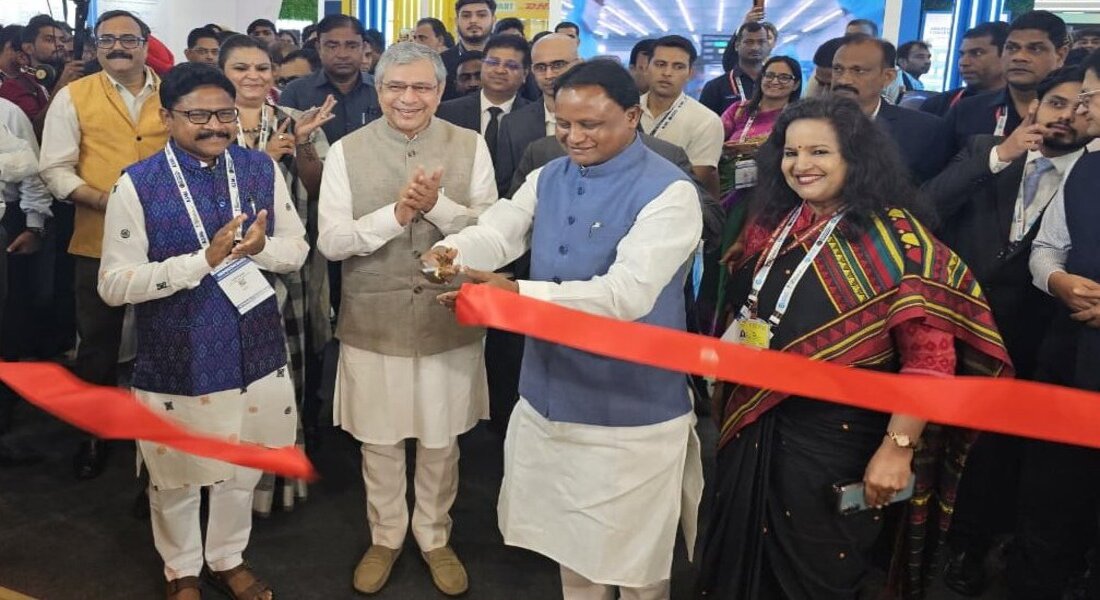
Bhubaneswar: Odisha Chief Minister Mohan Charan Majhi met with Union Minister for Electronics and Information Technology Ashwini Vaishnaw on the sidelines of SEMICON India 2026 in New Delhi to discuss strengthening the state’s semiconductor ecosystem.

The discussions centred on the way forward for Odisha in investment, technology, innovation, and skill development, the CM said in a post on X.

The state reiterated its commitment to developing a robust semiconductor and electronics ecosystem and contributing to the broader goal of Aatmanirbhar Bharat.

Majhi also highlighted the participation of NIT Rourkela in the semiconductor showcase at SEMICON India 2026. Indigenous chip designs developed by the institute were featured among the Made-in-India semiconductor chips displayed at the event.

Majhi described the showcasing of NIT Rourkela’s chip designs as a matter of pride for Odisha and said it reflected the talent, innovation and research capabilities of the state’s institutions.

He congratulated the scientists, researchers and the NIT Rourkela team for their contribution to India’s semiconductor journey.

The CM also credited the leadership of Prime Minister Narendra Modi and the efforts of Vaishnaw in advancing India’s semiconductor ecosystem, while underlining Odisha’s role in the country’s pursuit of technological self-reliance.

Meanwhile, Sambalpur MP Dharmendra Pradhan highlighted the presence of indigenous chip designs from NIT Rourkela among the Made-in-India semiconductor innovations showcased at SEMICON India 2026 in New Delhi.

Pradhan described the development as a proud moment for Odisha, saying the achievement reflected the strength of the state’s institutions, the ingenuity of its researchers, and the growing capabilities being developed within India.

Congratulating the scientists, researchers and the entire NIT Rourkela team, Pradhan said Odisha was proud to see its talent contributing to India’s journey towards technological self-reliance.

He also highlighted the role of Prime Minister Narendra Modi and Vaishnaw in laying the foundations of a robust semiconductor ecosystem in India.

The showcasing of NIT Rourkela’s indigenous chip designs at SEMICON India 2026 puts the research and innovation capabilities of the Odisha-based institution in the spotlight as India continues to strengthen its domestic semiconductor ecosystem.