At IndiaVerve, we go beyond the noise to bring you meaningful stories of change, resilience and progress—from India to the world stage. Our mission is to bring readers credible, wide-ranging coverage across politics, business, sports, culture, society and more.

Asian Games 2026: India strikes gold in kabaddi

New Delhi: India enjoyed a packed and eventful Day 7 at the Asian Games 2026 on Saturday, with strong performances across kabaddi, squash, athletics, badminton, shooting, fencing, boxing, canoe sprint, table tennis and equestrian events.

The country’s medal tally stood at 30 medals, comprising four gold, 12 silver and 14 bronze medals.

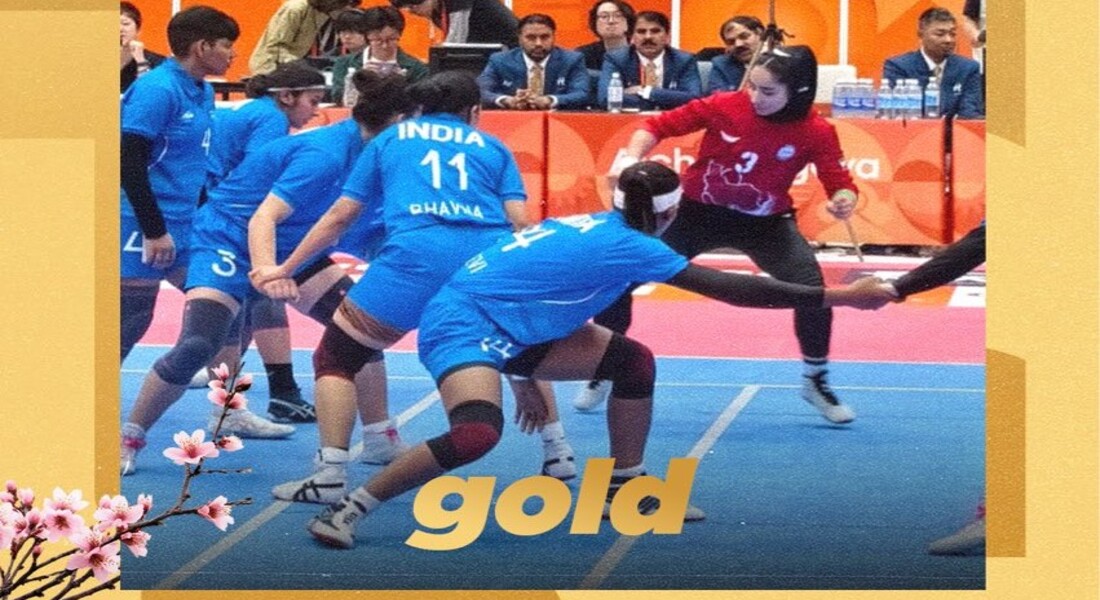
The biggest success came in kabaddi, where India retained its women’s gold medal after defeating Iran in the final. The result underlined India’s continued dominance in the sport, with both the men’s and women’s teams defending their Asian Games titles, according to reports.

Squash also produced two major highlights for India as Anahat Singh and Abhay Singh reached the singles finals. Anahat secured her place in the women’s singles final, while Abhay advanced to the men’s singles final, assuring both Indian players of at least silver medals.

Earlier, Sawan Barwal gave India a strong start to the day by winning silver in the men’s marathon with a national record time of 2:11:37.

Athletics also saw Tejaswin Shankar and Thowfeeq Noushad compete in the men’s decathlon. In the 100m heat, Tejaswin finished fifth with 865 points, while Thowfeeq was seventh with 856 points.

Tejaswin later won the decathlon long jump with a 7.53m effort, while Thowfeeq finished third at 7.37m. Tejaswin stood second overall with 1,807 points, while Thowfeeq was fourth with 1,759 points.

Animesh Kujur advanced to the men’s 200m semi-final, adding another positive result for India in athletics.

In shooting, Tilottama Sen, Vidarsa Vinod and Ashi Chouksey won silver in the women’s 50m Rifle 3 Positions team event. In the individual final, Tilottama finished fourth and Vidarsa fifth.

Canoe sprint also saw Indian athletes progress in different events. Harshwardhan Shaktawat finished fifth in the men’s kayak single 500m semifinal and moved into Final B. Parvathy Geetha and Prasanna Kumar finished second in the mixed kayak double 500m semifinal to qualify for Final A.

India’s fencing campaign produced mixed results. The women’s foil team defeated Indonesia 45-24 in the round of 16 before losing 45-15 to South Korea in the quarterfinal. The men’s sabre team defeated the Philippines 45-27 in the round of 16 but was later beaten 45-25 by South Korea in the quarterfinal.

In squash, Joshna Chinappa and Velavan Senthilkumar secured a bronze medal in mixed doubles, adding to India’s strong showing in the discipline.

Badminton delivered contrasting results. Lakshya Sen lost to Singapore’s Loh Kean Yew 12-21, 21-15, 14-21 in the men’s singles second round. PV Sindhu defeated Chinese Taipei’s Pin Chian Chiu to advance to the third round, while Unnati Hooda defeated Putri Kusuma Wardani to reach the quarterfinals.

Tressa Jolly and Gayatri Gopichand Pullela also progressed to the third round after defeating Japan’s Mayu Matsumoto and Yuki Fukushima. Ayush Shetty defeated Kazakhstan’s Makhsut Tajibullayev 21-7, 21-7 to reach the third round, but later exited the men’s singles competition after losing to Chou Tien Chen.

The busy badminton schedule also drew criticism during the Games, with several players, including Indian veteran HS Prannoy, raising concerns about the short turnaround between matches.

In table tennis, Yashaswini Ghorpade was beaten by Japan’s Miwa Harimoto in the women’s singles third round.

Boxing saw Kapil Pokhariya advance to the men’s 90kg quarterfinals after defeating Iran’s Sam Estaki.

India also progressed in equestrian sport, with Hriday Chheda and Jai Sud qualifying for the Dressage Individual Final.
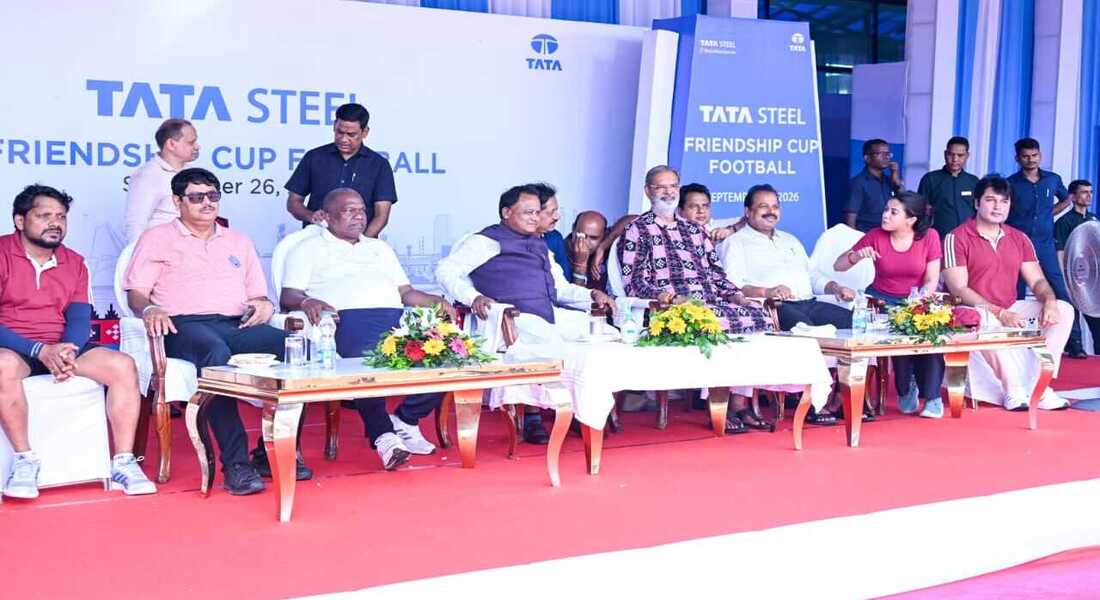
Sportsmanship and brotherhood are foundation of a healthy society: CM Majhi

Bhubaneswar: Sportsmanship and brotherhood are the foundation of a healthy society, Odisha Chief Minister Mohan Charan Majhi said on Saturday, emphasising the role of sports in fostering unity, harmony and mutual understanding.

Majhi made the remarks while attending the 16th Tata Steel Friendship Cup Football Tournament 2026 at Kalinga Stadium in Bhubaneswar. The friendly tournament brought together teams representing elected representatives, administrative officials, the media and Tata Steel.

“More important than winning or losing on the field is the sporting spirit,” the Chief Minister said, adding that sporting activities help establish greater coordination among people. He also appreciated the enthusiasm and participation of all teams in the friendly competition.

The Chief Minister praised Tata Steel for its social responsibility initiatives and thanked the company for organising the friendship tournament every year.

Media 11 emerged champions in the tournament, while Officers 11 finished runners-up.

The event also featured the felicitation of 10 hockey players from Odisha who represented India’s men’s and women’s teams in the Junior Asia Cup Hockey 2026 held in China. The Indian men’s and women’s teams emerged champions in the tournament.

Seven male and three female players from Odisha were felicitated by Majhi, with each player receiving a cash award of Rs 1.25 lakh.

The ceremony was attended by Deputy Chief Minister Kanak Vardhan Singh Deo, Panchayati Raj and Drinking Water Minister Ravi Narayan Naik, Health and Family Welfare Minister Dr Mukesh Mahaling, Industries, Skill Development and Technical Education Minister Sampad Chandra Swain, and Higher Education, Sports and Youth Services Minister Suryabanshi Suraj.

Ruling party Chief Whip Saroj Kumar Pradhan, Tata Steel Vice-President (Corporate Services) D.B. Sundar Ramam, legislators and media representatives were also present

Governor calls for making Odia a language of knowledge, skills and opportunity

Bhubaneswar: Odisha Governor Dr Hari Babu Kambhampati has called for concerted efforts to develop Odia as a language of knowledge, skills, innovation and opportunity, stressing that the empowerment of a language goes beyond merely speaking it.

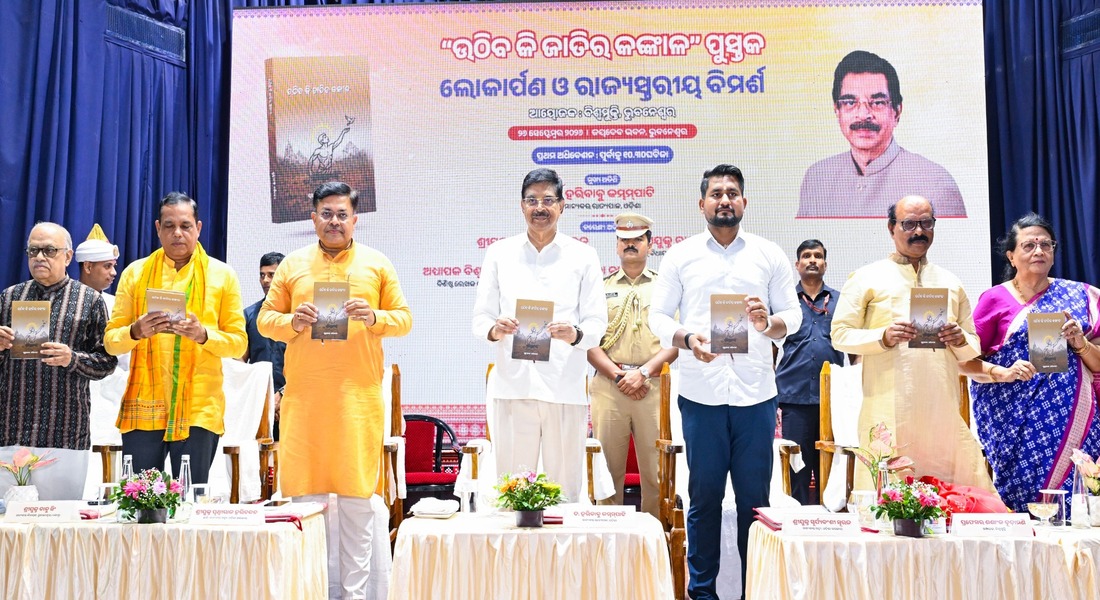
The Governor made the remarks while addressing a state-level seminar titled ‘Ama Bhasha – Ama Garba and Vision for Developed Odisha@2036’, organised by socio-cultural and literary organisation Bishwamukti at Jayadev Bhawan in Bhubaneswar on Saturday.

On the occasion, the Governor unveiled ‘Uthibaki Jatira Kankala’, a collection of poems authored by Law, Excise and Works Minister Prithviraj Harichandan, and congratulated him on the publication.

Kambhampati said quality educational resources in Odia, particularly books on technical, scientific and professional subjects, need to be made widely available. Laws, government schemes and important official documents should also be translated into simple and accessible Odia, he said.

Such efforts, according to the Governor, would particularly benefit students from Odia-medium schools by helping them understand subjects more easily, acquire knowledge and pursue further opportunities.

Describing language as more than a means of communication, Kambhampati said the mother tongue reflects a society’s imagination, values and collective aspirations. It also helps build confidence among children and enables wider participation in knowledge exchange and socio-economic life.

Referring to Odisha’s rich linguistic and literary heritage, the Governor recalled the contributions of Jayadeva, Sarala Das and Upendra Bhanja. He described the formation of Odisha as a separate linguistic province as a historic achievement and said every generation has a responsibility to protect, enrich and carry forward the state’s linguistic and cultural heritage.

As Odisha moves towards the goal of Developed Odisha@2036, Kambhampati called for transforming Odia into a dynamic language of knowledge and innovation. Modern technology, digital platforms and artificial intelligence, he said, can play an important role in making Odia more relevant and accessible to younger generations.

The Governor also emphasised the need to ensure equal opportunities for students from Odia-medium schools in higher education, professional fields and emerging technologies. He welcomed the emphasis placed on mother-tongue-based education under the National Education Policy 2020.

Among others, Prithviraj Harichandan; Higher Education, Sports and Youth Services and Odia Language, Literature and Culture Minister Suryabanshi Suraj; Bhubaneswar (Ekamra) MLA Babu Singh; writer and speaker Professor Archana Nayak; and writer and academic Biswaranjan addressed the seminar. Bishwamukti editor Professor Shashank Chudamani delivered the welcome address

Odisha plants over 47 lakh saplings in a single day

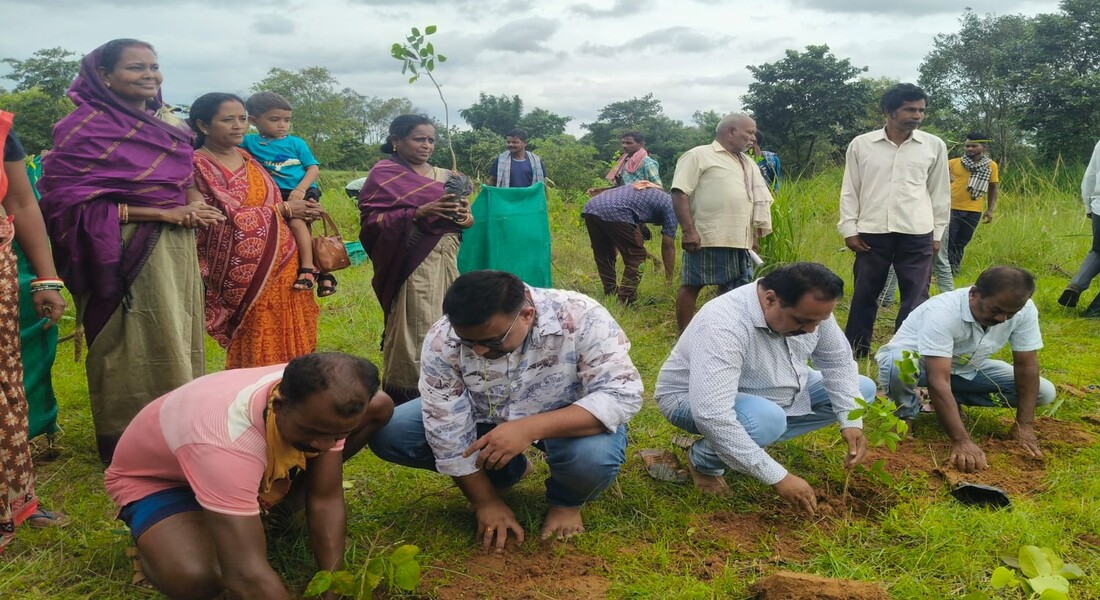
Bhubaneswar: Odisha witnessed a major plantation drive on Friday, with more than 47 lakh saplings planted across the State in a single day under ‘Ek Ped Maa Ke Naam 3.0’.

The plantation drive was organised as part of the Seva Sankalp Abhiyan–2026, with participation from all districts and Gram Panchayats. The campaign brought communities across Odisha together around a common resolve to build a greener and healthier State.

This year’s single-day plantation surpassed last year’s figure of 37 lakh saplings. The plantation was carried out at more than 14,000 sites across the State, highlighting the scale of mobilisation and grassroots participation.

Rural Development and Panchayati Raj & Drinking Water Minister Rabi Narayan Naik welcomed the participation from across Odisha. He said the involvement of every district and Gram Panchayat reflected the collective resolve to protect the environment and build a greener future.

Naik also stressed that planting saplings was only the beginning and that nurturing them and ensuring their survival was an equally important shared responsibility.

He called for sustaining the spirit generated by the campaign to make villages across Odisha greener, healthier and more sustainable.

Commissioner-cum-Secretary, Panchayati Raj & Drinking Water, Girish S.N. congratulated everyone involved in the achievement. He said the drive demonstrated how the State’s potential could be realised through serious and coordinated teamwork.

Girish S.N. particularly appreciated the efforts of teams across Odisha, who carried out the plantation drive despite inclement weather conditions. He also emphasised the need to maintain the same spirit and momentum in the days ahead.

The State-wide drive has highlighted the collective strength of Odisha’s grassroots institutions and communities.

With more than 47 lakh saplings planted in a single day, ‘Ek Ped Maa Ke Naam 3.0’ has taken environmental action to the grassroots while reinforcing the shared responsibility of nurturing the saplings and protecting Odisha’s green future.

Odisha launches ‘Angan Ka Utsav’ across 74,224 Anganwadi Centres

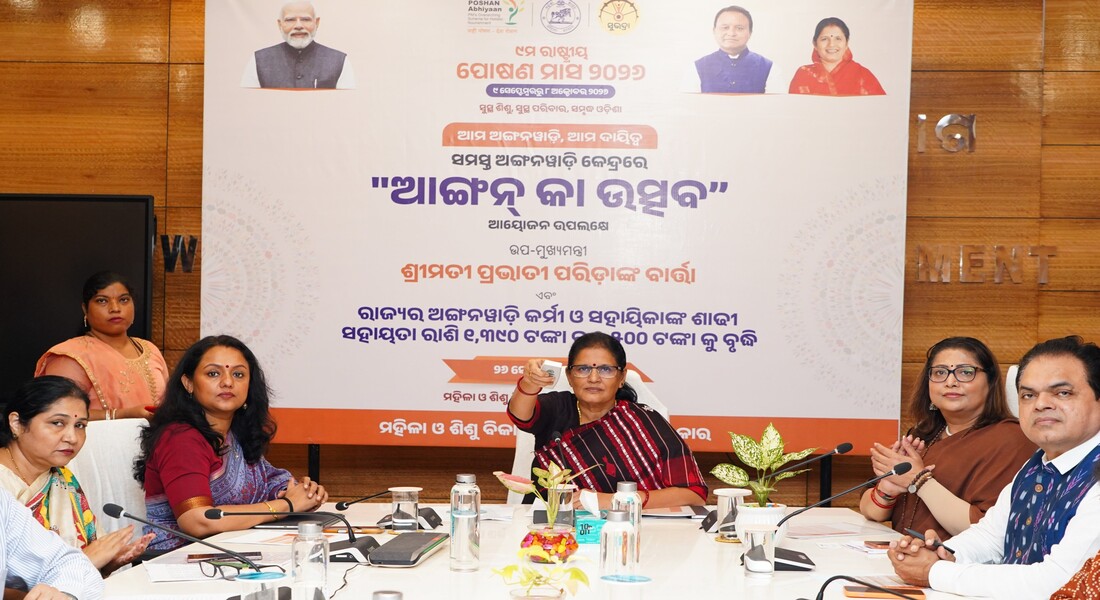
Bhubaneswar: Odisha Deputy Chief Minister Pravati Parida on Saturday virtually inaugurated the ‘Angan Ka Utsav’ campaign to strengthen nutrition, health awareness and early childhood development services for children, women and adolescent girls across the state.

The campaign was inaugurated from the Conference Hall of the Department of Women and Child Development.

On the occasion, the deputy CM announced an increase in the clothing allowance for Anganwadi workers and helpers from Rs 1,390 to Rs 1,500. Under the revised provision, the Central government will contribute Rs 600, while the Odisha government will provide Rs 900.

With a total budgetary provision of Rs 22.30 crore, approximately 1.48 lakh Anganwadi Workers and Helpers across Odisha will benefit directly from the revised allowance.

Parida also launched Direct Invoice Payment & Tracking Interface (DIPTI), a digital initiative for streamlined electricity bill management at Anganwadi Centres. The Department of Women and Child Development has become the first department in Odisha to introduce such an initiative.

Developed jointly by the Department of Women and Child Development and DISCOMs, DIPTI will enable digital and direct verification, payment and tracking of electricity bills.

The initiative is aimed at relieving Anganwadi Workers of the financial and administrative responsibility of paying electricity bills and helping ensure uninterrupted power supply at Anganwadi Centres.

Speaking at the programme, Parida said the initiative would reduce the administrative burden on Anganwadi Workers and save their valuable time, allowing them to focus more effectively on nutrition, health and early childhood development services for children and mothers.

The Angan Ka Utsav campaign will be observed across all Anganwadi Centres in Odisha from September 27 to 29, 2026. It is being organised as part of the ongoing Poshan Maah, being observed from September 9 to October 8, and the Seva Sankalp Abhiyan, which runs from September 17 to October 17.

The three-day campaign will cover all 74,224 Anganwadi Centres in the state. Around 37,11,200 beneficiaries and Anganwadi Management Committee members, along with 13,03,415 children in the 3–6 years age group, are expected to participate.

The first day, September 27, will focus on nutrition and food competitions. ‘Poshan Pitha’ prepared by family members will be showcased, while cooking competitions for fathers using locally available food ingredients will also be organised.

On September 28, the second day will feature child-centric recreational activities, games and storytelling sessions. Reading materials, including ‘Ama Kunipila’ and ‘Mo Bikash Patra’, will be showcased.

Children will also be served lassi, locally available fruits and millet cookies.

The concluding day on September 29 will feature discussions on key government initiatives and schemes, including POSHAN, SUBHADRA, MAMATA, PM-AWAS and ADVIKA. A healthy ‘Tiranga Thali’ meal will also be arranged for Anganwadi and ASHA workers.

Speaking at the inauguration, Parida highlighted the crucial role of Anganwadi Workers and Helpers in delivering nutrition and child development services at the grassroots level.

She called for making Angan Ka Utsav a meaningful platform for strengthening community participation in programmes aimed at the welfare of children and mothers. She also emphasised that active involvement of families and communities is essential for better nutrition, health and holistic development of children.

Commissioner-cum-Secretary of the Department of Women and Child Development Dr. Mrinalini Darswal, Director Monisha Banerjee, CEO of TP Central Odisha Distribution Limited (TPCODL) Gajanan S. Kale, and senior officials of the Department and TPCODL were present at the inaugural programme.

The officials called upon all stakeholders to actively participate in the campaign and make the three-day initiative a success.

India hits back at Pakistan at UNGA, warns cross-border terrorism will have consequences

Petal Ghelot , First Secretary in India’s Permanent Mission to the UN, strongly rejects Pakistan PM Shehbaz Sharif’s UNGA remarks, while S Jaishankar responds sharply to a Pakistani journalist over allegations of terrorism

New Delhi: India has strongly rejected Pakistan Prime Minister Shehbaz Sharif’s remarks at the United Nations General Assembly, with New Delhi accusing Islamabad of supporting cross-border terrorism and reiterating that India will exercise its right to defend itself against terrorist attacks.

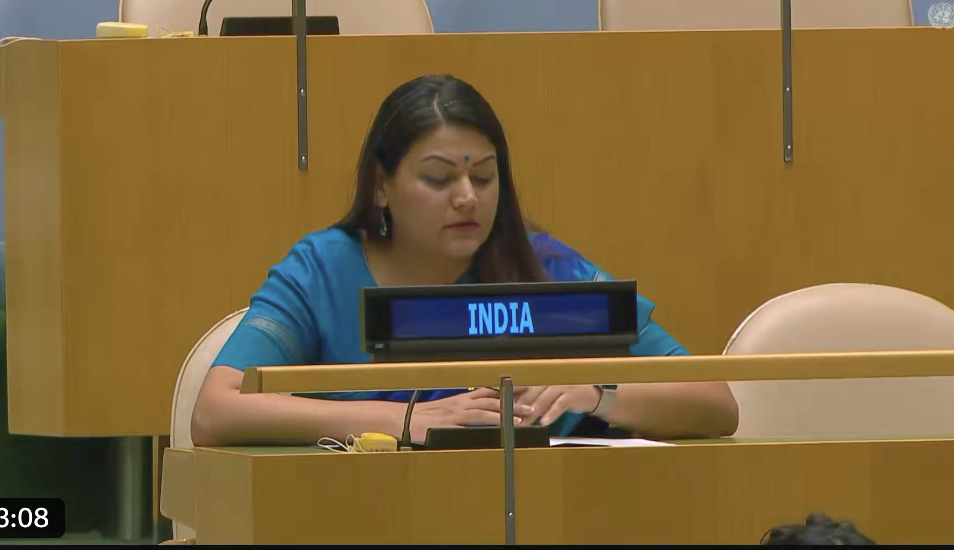
Exercising India’s Right of Reply after Sharif’s address, Petal Gahlot, First Secretary at India’s Permanent Mission to the UN, on Saturday rejected Pakistan’s remarks on Jammu and Kashmir and criticised what she described as Islamabad’s record on terrorism, democratic rights and treatment of minorities.

“At the heart of the issue is the long-standing practice of cross-border terrorism by Pakistan,” Gahlot said, adding that India had demonstrated that terrorists would have “nowhere to run and nowhere to hide”. She warned that terrorism from Pakistan “will have consequences”. The remarks were made in response to Sharif’s references to Kashmir and other issues involving India.

Gahlot also challenged Pakistan’s presentation of itself as a defender of democratic rights and human values, alleging that the country’s military establishment continues to exercise decisive political influence. She referred to Pakistan’s 27th Constitutional Amendment and alleged that it reflected the continuing influence of the country’s military leadership.

The Indian diplomat also invoked the presence of al-Qaeda founder Osama bin Laden in Abbottabad, near Pakistan’s premier military academy, while questioning Islamabad’s record on counter-terrorism. She further criticised Pakistan over its treatment of religious minorities and referred to its blasphemy laws.

India also rejected Pakistan’s position on Jammu and Kashmir, reiterating its stand that Jammu and Kashmir is an integral part of the country. New Delhi instead raised the issue of Pakistan-occupied Jammu and Kashmir. Sharif had also referred to the Indus Waters Treaty and India’s Operation Sindoor during his UNGA address.

The exchange at the UN came amid a broader escalation in rhetoric between the two countries at the 81st session of the UN General Assembly. India’s response followed Sharif’s address during the General Debate, which is being held from September 22 to 28 under the theme “Restoring trust, managing transformation: a United Nations that delivers for all”.

Separately, External Affairs Minister S Jaishankar was involved in another sharp exchange with a Pakistani journalist during a press interaction in New York on Friday.

Jaishankar was addressing reporters alongside Liberia’s Foreign Minister Sara Beysolow Nyanti in connection with the launch of the Group of Friends on Safety and Security of Shipping and Seafarers when a Pakistani journalist asked when the Indian government would stop “sponsoring terrorism in Pakistan”.

Jaishankar responded: “A terrorist country is asking me that question. Come on.” India’s Permanent Representative to the UN, Harish Parvathaneni, then told the journalist that he had heard the minister’s response.

The briefing was linked to the new India-Liberia maritime security initiative, which seeks to draw international attention to threats facing commercial shipping and seafarers. Jaishankar said attacks on commercial vessels and seafarers in the Gulf, Red Sea and surrounding waters had become a serious concern.

The latest exchanges come against the backdrop of continuing tensions between India and Pakistan over terrorism and security. India has repeatedly called on Pakistan to take what it describes as credible action against cross-border terrorism. New Delhi has also cited the April 2025 Pahalgam terror attack, in which 26 people were killed, as the trigger for Operation Sindoor.

India has also raised the issue of terrorist financing and sought international action against organisations and individuals it says operate from or have found shelter in Pakistan. Pakistan has rejected Indian allegations and has itself accused India of supporting militant activity against it.

The two sides continue to present sharply contrasting positions on terrorism, Jammu and Kashmir and regional security, with the latest exchanges at the UNGA adding to the diplomatic confrontation between the neighbouring countries.

Trump rejects Iran’s 7-day ceasefire proposal, bombing could resume after US midterms: report

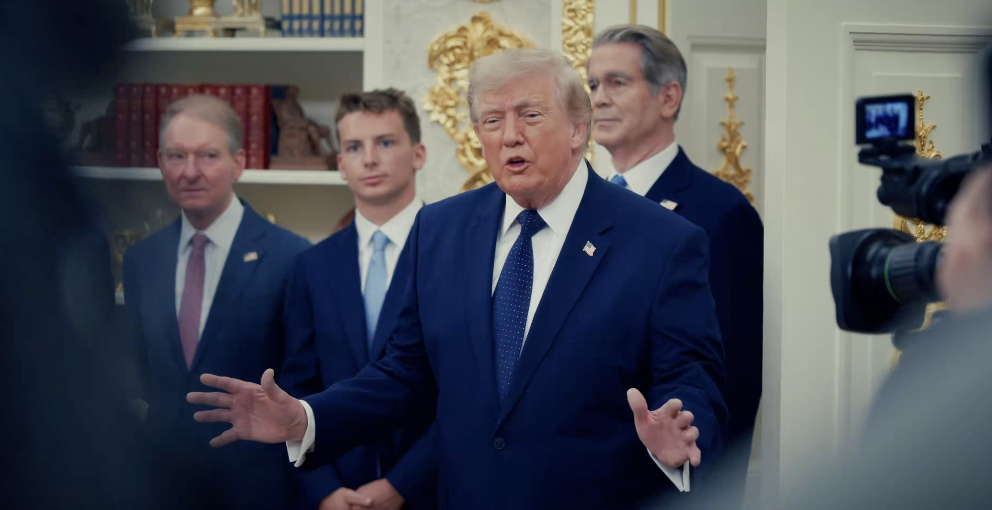
New Delhi: US President Donald Trump has rejected a seven-day ceasefire proposal from Iran and has told aides that he expects US bombing of Iran to resume after the November midterm elections, The Wall Street Journal reported, citing US officials.

The report comes after Iranian Foreign Minister Abbas Araghchi said Tehran had conveyed a concrete seven-day plan to the United States through Qatar that could lead to the reopening of the Strait of Hormuz and the resumption of nuclear negotiations.

According to Araghchi, Iran is prepared to restore normal maritime passage through the strategic waterway within seven days if Washington accepts Tehran’s conditions. “The choice now rests with the United States,” he said, adding that Iran would not accept coercion or pressure.

The Iranian proposal calls for the United States to lift its naval blockade of Iranian ports, waive oil sanctions and observe a ceasefire that would include Lebanon. In return, Iran would reopen the Strait of Hormuz and resume negotiations on its nuclear programme, according to reports.

The proposal was discussed by Araghchi during a private gathering on the sidelines of the United Nations General Assembly. Iranian President Masoud Pezeshkian also said the ceasefire process could begin immediately once Washington accepts the proposal.

However, The Wall Street Journal reported on Friday that Trump had rejected the offer, citing US officials familiar with the matter. According to the report, Trump remains sceptical that Tehran would meet his demands and believes a renewed bombing campaign is likely after the November elections. The officials also said Trump was reluctant to resume major combat operations and that the scale of any future strikes remained unclear. They cautioned that his position could change.

The White House has said separately that US officials are engaged in what it described as positive and constructive conversations with mediators, suggesting that diplomatic channels remain open.

The Strait of Hormuz has emerged as a central issue in the latest diplomatic efforts. The waterway is a critical route for global energy shipments, and its disruption has added pressure to oil markets and regional trade. The Iranian proposal specifically links its reopening to the lifting of the US naval blockade and a ceasefire.

The latest initiative bears similarities to a 14-point memorandum agreed between Washington and Tehran in June. The June agreement provided for an immediate cessation of military operations, including in Lebanon, and opened a 60-day period for negotiations on a final agreement. It also included provisions concerning the Strait of Hormuz, the US naval blockade, sanctions relief and Iran’s nuclear programme.

That agreement subsequently collapsed with Trump declaring the deal “over” on July 8. Tehran suspended the memorandum about a week later, accusing Washington of failing to honour its commitments. Iran has maintained that Washington reneged on commitments including lifting the blockade and other agreed measures, while Washington has accused Tehran of failing to fulfil its obligations concerning the Strait of Hormuz.

The latest proposal therefore represents another attempt to revive negotiations, but the reported rejection by Trump has cast uncertainty over whether a new ceasefire can be reached before the US midterm elections.

For now, the two sides remain publicly divided over the conditions for ending hostilities, Iran’s nuclear programme, sanctions and control of the Strait of Hormuz. The report also noted that Trump’s position could change, leaving the timing and scope of any possible renewed US military action uncertain.

Jaishankar highlights AI risks and opportunities in maritime security

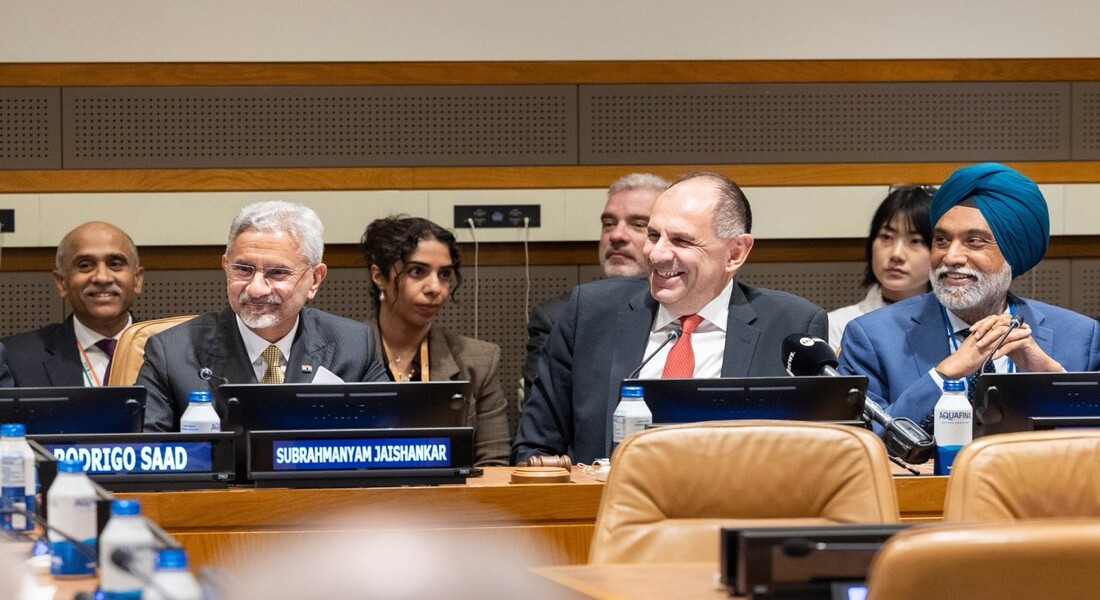
New Delhi: External Affairs Minister Dr. S. Jaishankar on Friday highlighted the opportunities and security challenges arising from the growing use of Artificial Intelligence (AI) in the maritime domain, stressing the need to encourage innovation while remaining alert to its security implications.

In a detailed post on X, Jaishankar said he was pleased to co-chair an event on “AI in the Context of International Peace & Security, with an Emphasis on Maritime Security” alongside Greece’s Foreign Minister George Gerapetritis.

Jaishankar underlined the need to harness the possibilities offered by AI, anticipate its consequences and mitigate associated risks. He said this requires an approach that supports innovation while remaining conscious of the security implications of the technology.

The Indian minister said the New Delhi Declaration emphasises democratic access to AI resources, the development of secure and trustworthy systems, investment in human capabilities and the use of AI for economic growth and social good.

He also outlined the potential applications of AI in maritime security. According to Jaishankar, AI can strengthen maritime domain awareness and support search and rescue operations, disaster response, identification of suspicious activity and the resilience of ports and critical infrastructure.

At the same time, he pointed to potential security risks, noting that AI could enable sophisticated reconnaissance, vulnerability mapping and cyber operations targeting vessels, communication networks and undersea infrastructure.

Jaishankar further said increasing autonomy in maritime systems raises questions concerning attribution, accountability and escalation. He added that greater autonomy could also compress the time available for decision-making.

On the international framework governing the use of AI in the maritime domain, Jaishankar said the UN Charter and international law, including the law of the sea, remain essential frameworks for governing the conduct of states.

He stressed the importance of greater transparency, confidence-building measures, capacity development, technical cooperation and the exchange of best practices to ensure that AI is developed and used consistently with these principles.

Jaishankar reaffirmed that AI and maritime security remain important priorities for India at the United Nations.

India held by Azerbaijan and Kazakhstan as Olympiad race tightens

New Delhi: India’s bid to strengthen its position at the 46th FIDE Chess Olympiad hit a setback on Thursday as the defending champions’ men’s and women’s teams drew 2-2 in the eighth round in Samarkand.

The results kept India in joint second place in both sections, with the race for the top positions remaining tightly contested.

In the Open section, India collected one match point from the draw against Azerbaijan to take its total to 13. Uzbekistan, which had been leading the standings, also suffered a surprise 2.5-1.5 defeat against Germany and now shares the top position with the hosts on 14 match points.

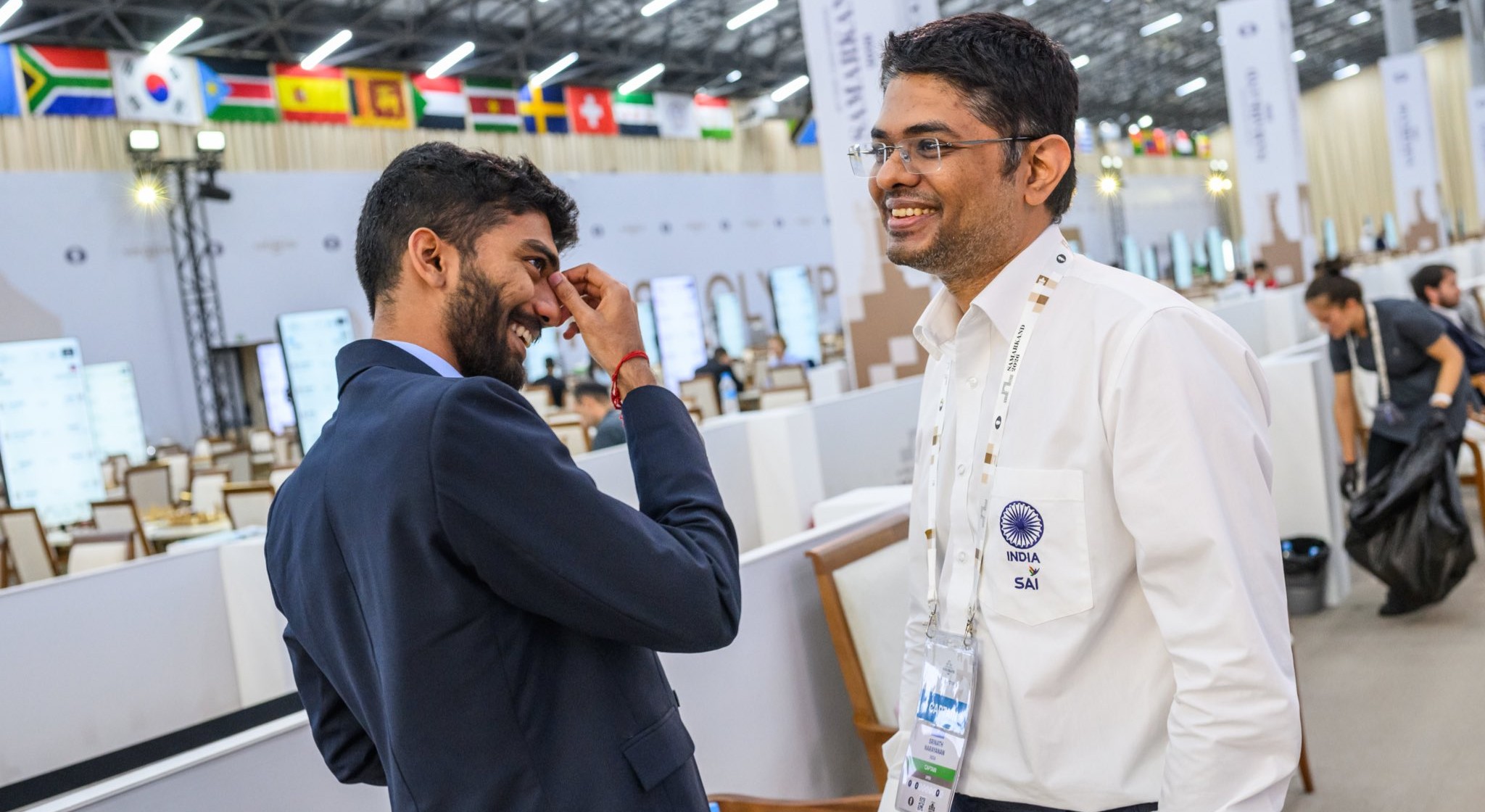
India fielded R Praggnanandhaa, Arjun Erigaisi, D Gukesh and Vidit Santosh Gujrathi against Azerbaijan, but none could secure a win. Vidit returned to the lineup in place of Nihal Sarin, according to reports.

The most closely watched encounter was between world champion D Gukesh and Azerbaijan’s Muradli Mahammad. Playing White in a Sicilian Najdorf, Gukesh took an ambitious approach but was unable to convert his chances after Muradli defended accurately.

The game eventually reached a queenless endgame, where Muradli strengthened his position by controlling the centre and activating his king. Gukesh attempted to generate counterplay on the queenside, but the Azerbaijani held firm. After 56 moves and intense time pressure, the players agreed to a draw.

Praggnanandhaa also settled for a draw against experienced Azerbaijani player Shakhriyar Mamedyarov. Arjun Erigaisi was held by Aydin Suleymanli with the white pieces, while Vidit drew against Rauf Mamedov.

Germany’s victory over Uzbekistan reshaped the top of the Open standings. Frederik Svane defeated Nodirbek Yakubboev, while Rasmus Svane beat Shamsiddin Vokhidov to help Germany secure the 2.5-1.5 win.

After eight rounds, Uzbekistan and Germany lead the Open section with 14 match points each. India, China, the Netherlands and the United States are among eight teams sharing second place with 13 points.

India’s women also missed the chance to move into the outright lead after Kazakhstan held the defending champions to a 2-2 draw.

Koneru Humpy drew with Bibisara Assaubayeva on the top board, while Divya Deshmukh was held by Meruert Kamalidenova. Both Humpy and Deshmukh played with the black pieces.

The biggest individual positive for India came from B Savitha Shri, who defeated Elnaz Kaliakhmet to register her seventh successive victory in the tournament. Her win came after Vaishali Rameshbabu lost to Nurman Alua, leaving India unable to secure the match victory.

Savitha Shri’s remarkable run has now produced seven wins from seven games, along with a rating performance of 2,955.

Odisha’s cultural heritage takes centre stage in PM Mementos e-auction 2026

Bhubaneswar: Odisha’s rich and diverse cultural heritage has found a prominent place in the PM Mementos e-Auction 2026, with 62 mementos showcasing the state’s traditions of devotion, craftsmanship, painting, textiles, festivals and literature.

The collection features a range of artefacts associated with Lord Jagannath, Devi Subhadra and Lord Balabhadra, along with representations of Odisha’s regional deities, traditional art forms, textiles, festivals and prominent cultural figures.

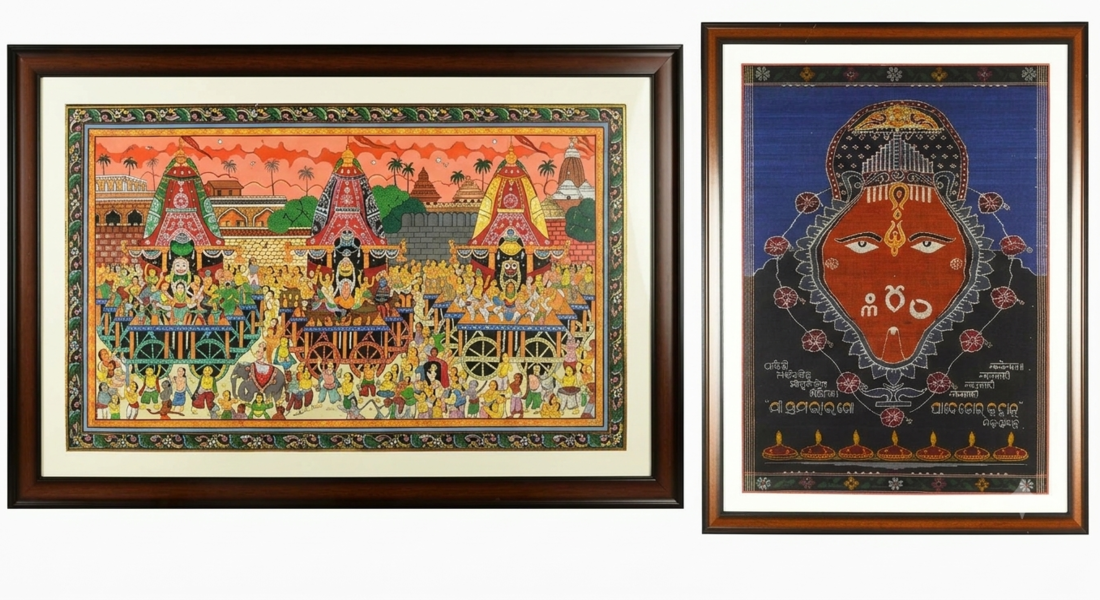
One of the notable works in the catalogue is a Jagannath Parivar on Chariot, depicting Lord Jagannath, Devi Subhadra and Lord Balabhadra seated on an intricately detailed chariot drawn by four sculpted horses.

The work represents the cultural and spiritual significance associated with Rath Yatra.

The collection also includes a Pattachitra painting depicting the Puri Rath Yatra, according to an official statement.

The artwork portrays the deities on their chariots against scenes of dance, music and celebration. Its intricate detailing and vibrant colours reflect Odisha’s devotional artistic traditions.

Traditional crafts of Odisha also feature prominently in the auction catalogue. These include works in Cuttack silver filigree, popularly known as Tarakasi, an intricate craft created using delicate silver wires, as well as Sambalpuri textiles and Ikat.

Another featured work is a devotional icon of Maa Samaleswari created using Sambalpuri Ikat.

The artwork has been entirely hand-woven through the traditional Bandha technique, highlighting the craftsmanship associated with Odisha’s textile traditions.

The catalogue also reflects the state’s vibrant festival culture beyond its Jagannath traditions. A framed print documents the Panchu Dola Melana, showing devotees carrying colourful miniature temple structures.

Another photograph captures the festival at Chilika Lake, featuring boats carrying village deities for their annual gathering.

Together, the 62 mementos offer a broad visual representation of Odisha’s living cultural heritage. The collection brings together traditions associated with Jagannath worship and Rath Yatra with Pattachitra, Tarakasi, Sambalpuri Ikat, regional festivals and literary heritage.

The 8th edition of the PM Mementos e-Auction 2026 is live until October 2, 2026. Details about the auction, participation, and the complete catalogue are available on the official PM Mementos e-Auction portal.