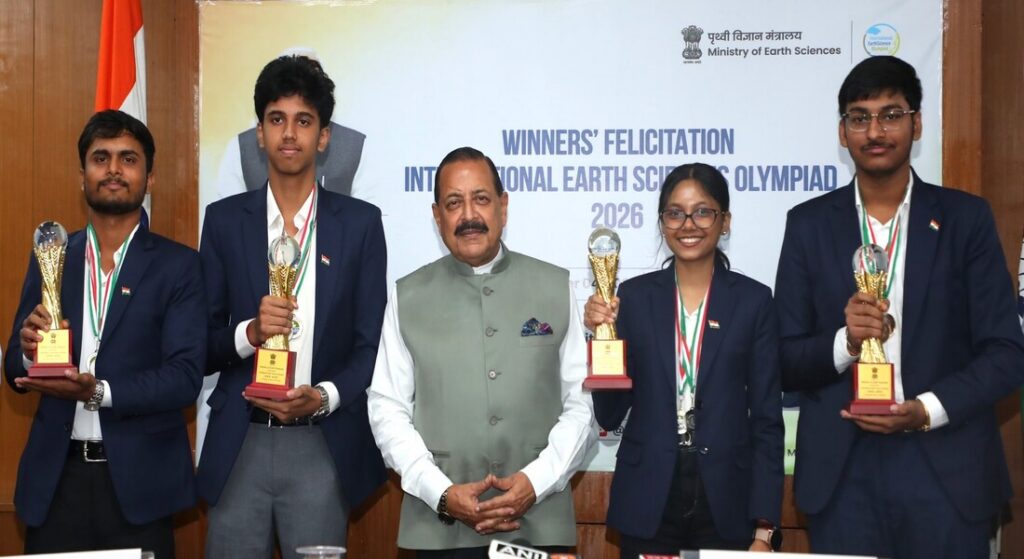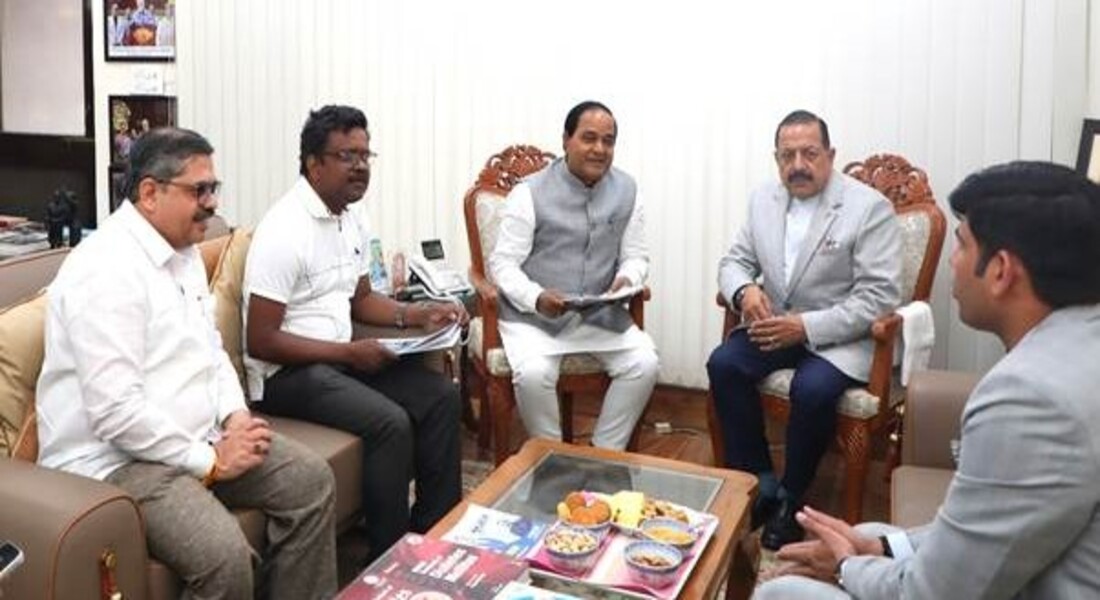

New Delhi: Odisha has secured a major role in the Union Budget’s Eastern coastal and science-led development plan. Union Minister of State (Independent Charge) for Science and Technology, Dr. Jitendra Singh, shared this on Tuesday during a meeting with State Science and Technology Minister, Krushna Chandra Patra.
The State will host one of India’s four proposed Rare Earth Corridors and benefit from new deep-sea fishing reforms, the Union minister said.
Dr. Singh outlined a focused roadmap for the eastern coastal region. It links ocean resources, rare earth minerals, nuclear expansion, fisheries reforms, and life sciences research.
He stated that Odisha will be at the core of the eastern coastal strategy, according to an official statement. The plan brings together marine assets, mineral corridors, nuclear and space infrastructure, and biotechnology under one framework.
For the first time, India is using a coordinated approach to tap ocean resources. Central research institutes will work closely with the Odisha government on ocean-related programmes.
The talks also covered the Deep Ocean Mission and policy support for deep-sea fishing within India’s Exclusive Economic Zone. These steps aim to create fresh income opportunities for coastal communities.
Both sides reviewed fisheries reforms and regulatory changes needed to support long-term marine growth.
On critical minerals, the discussion focused on setting up a rare earth corridor in eastern India. The move will reduce dependence on southern states for nuclear mineral exploration and open new prospects for Odisha.
Dr. Singh said Odisha will gain strongly from the current budget allocations. The State already hosts a space centre and several life sciences institutions. Stronger Centre-State coordination can speed up research and innovation.
The meeting also examined a proposal to set up a Bio-E3 Cell in Odisha. Plans for a new Department of Biotechnology centre were discussed. The State government has agreed to provide land support.
Both leaders agreed to maintain close coordination. The goal is the timely execution of projects across ocean science, atomic minerals, space research, and biotechnology.