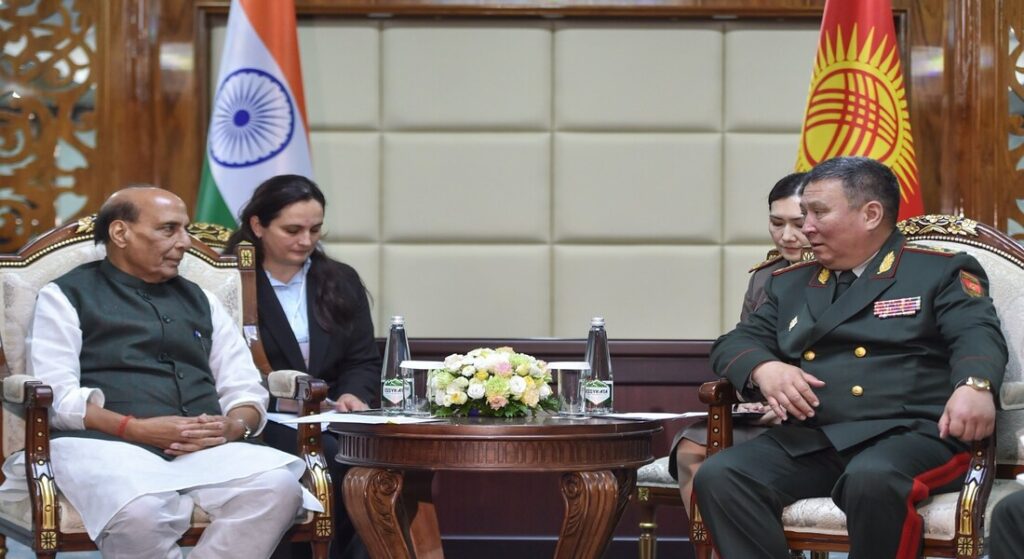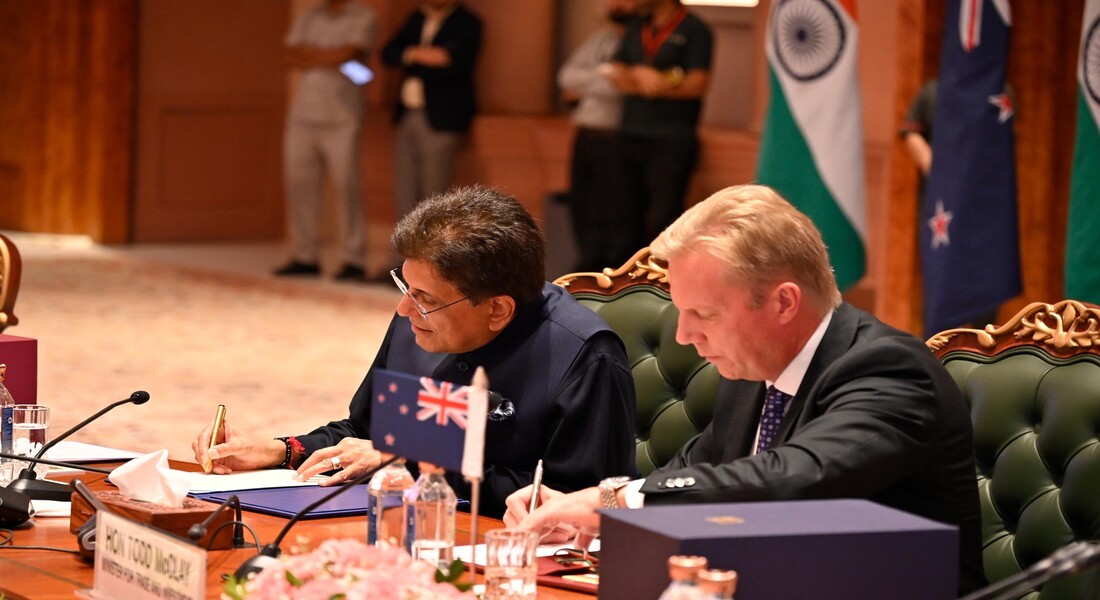

New Delhi: India and New Zealand on Monday signed a Free Trade Agreement (FTA) at Bharat Mandapam, New Delhi. Union Commerce Minister Piyush Goyal signed on India’s behalf, while New Zealand’s Trade Minister Todd McClay represented his country.
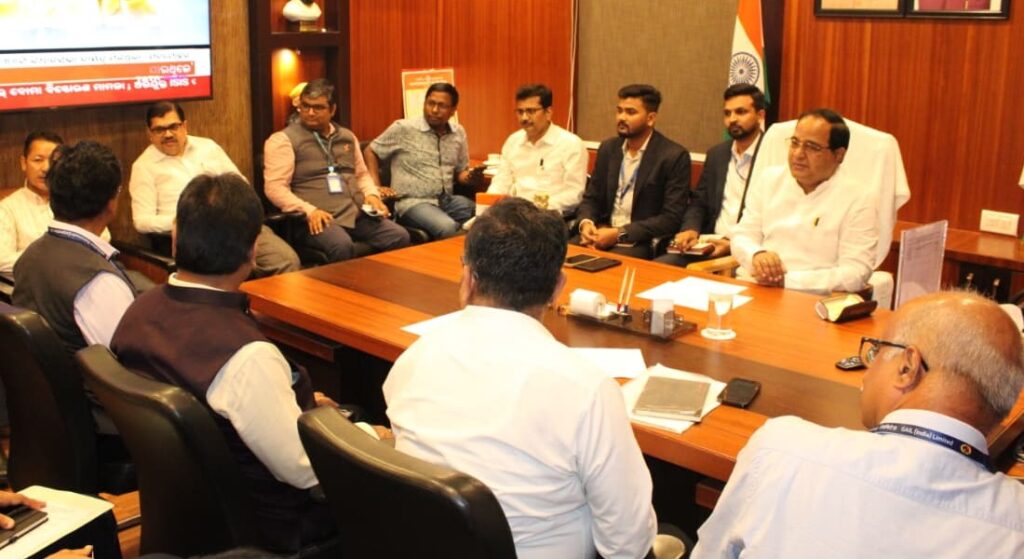
The ceremony was attended by business leaders and a cross-party New Zealand parliamentary delegation, along with over 30 New Zealand companies.
Prime Minister Narendra Modi said that the India-New Zealand FTA will create opportunities for farmers, youth, MSMEs, and entrepreneurs.
In a message, he said: “The India-New Zealand FTA marks a major milestone towards deeper global engagement and shared prosperity. It strengthens economic ties between two vibrant democracies, unlocking opportunities for farmers, artisans, youth, entrepreneurs, women, and MSMEs.”
New Zealand Prime Minister Christopher Luxon called the deal a historic milestone. He said it opens major opportunities in trade, investment, and innovation, and reinforces a commitment to rules-based trade.
Minister McClay described it as a “once-in-a-generation” opportunity. He said it will create jobs, open new export avenues, and deepen economic ties. Over 40 New Zealand exporters and business leaders travelled to India for the signing, according to an official statement.
McClay also noted the strong people-to-people ties between the two nations. Around 6% of New Zealand’s population has Indian heritage. He pointed to shared history from World War I and enduring cricket ties as further bonds between the countries.
Talks were formally launched on March 16, 2025, on the sidelines of a bilateral meeting between Modi and Luxon. The deal was concluded on December 22, 2025 – just nine months later, making it one of India’s fastest FTAs with a developed country. Five formal negotiating rounds and several intersessions were held.
Total India–New Zealand bilateral trade in goods and services stood at USD 2.4 billion in 2024. Merchandise trade in FY 2024–25 was USD 1.3 billion, up 49% from the previous year. New Zealand is India’s second-largest trading partner in Oceania.
Key Highlights: India gets duty-free access for all its exports to New Zealand from the day the agreement enters into force. This covers textiles, apparel, leather, footwear, gems and jewellery, engineering goods, and processed foods. Previously, New Zealand charged tariffs of up to 10% on several Indian goods.
India has offered tariff cuts on 70% of tariff lines, covering 95% of the bilateral trade value. Sensitive sectors – including dairy, most agricultural products, sugar, gems, copper, and aluminium – are excluded from liberalisation.
Selected agricultural goods from New Zealand – apples, kiwifruit, Mānuka honey, and milk albumin – will enter India under a Tariff Rate Quota (TRQ) system with Minimum Import Prices and seasonal windows to protect Indian farmers. A Joint Agriculture Productivity Council will monitor all TRQs alongside Agriculture Productivity Action Plans.
New Zealand has offered market access in around 118 service sectors. Key areas include IT, professional services, telecom, education, construction, finance, and tourism. Most-Favoured-Nation commitments cover around 139 sub-sectors. A new Temporary Employment Entry visa allows 5,000 Indian professionals at any given time to work in New Zealand for up to three years. It covers AYUSH practitioners, yoga instructors, Indian chefs, IT professionals, engineers, and healthcare workers.
New Zealand has committed to facilitating USD 20 billion in investment into India. A rebalancing clause ensures accountability if the target is not met.
Pharmaceuticals. India’s pharma and medical device exports will benefit from streamlined approvals. New Zealand will accept inspection reports from regulators such as the US FDA, EMA, and UK MHRA, cutting compliance costs and delays.
New Zealand will amend its GI law within 18 months to allow registration of Indian wines, spirits, and other goods – the same protection it previously gave only to the EU.
The agreement includes targeted support for small businesses, women-led enterprises, and startups through export readiness programmes, trade information access, and linkages with New Zealand’s SME ecosystem.