New Delhi: India and Malaysia on Sunday unequivocally condemned terrorism in all its forms, including cross-border terrorism, and agreed on zero tolerance and sustained international cooperation to counter the threat.
The commitment was underscored at the start of Prime Minister Narendra Modi’s official visit to Malaysia, as both leaders reaffirmed their resolve to combat radicalisation, terror financing, and the misuse of emerging technologies by terrorist networks.
“No double standards. No compromise,” Prime Minister Modi said during his joint press interaction in Kuala Lumpur, reiterating India’s firm position on terrorism.
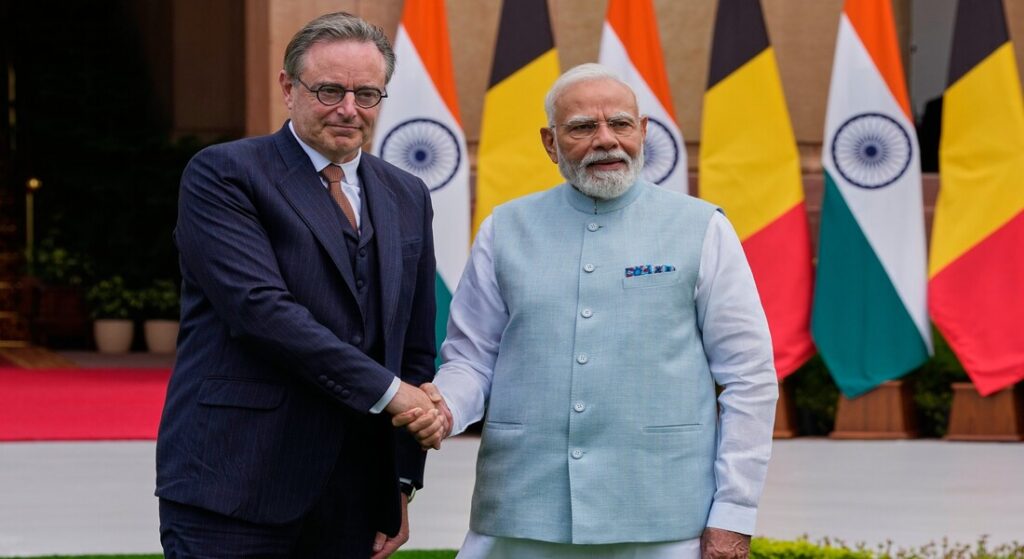
The strong message on counter-terrorism set the tone for wide-ranging talks between Prime Minister Modi and Malaysian Prime Minister Anwar Ibrahim on February 8, during which both sides agreed to further consolidate the India–Malaysia Comprehensive Strategic Partnership (CSP), elevated in August 2024. The leaders held detailed discussions covering defence and security, trade and investment, digital economy, energy, semiconductors, education, healthcare, culture, and regional and global issues.
Both leaders stressed closer cooperation in counter-terrorism frameworks, including at the United Nations and the Financial Action Task Force (FATF), and agreed to strengthen information-sharing, capacity building, and coordination against transnational organised crime. They also welcomed India and Malaysia’s co-chairmanship of the ASEAN Defence Ministers’ Meeting-Plus Counter-Terrorism Working Group for the 2024–27 term.
Accordig to the joint statement released post the meeting of the two leaders, defence and maritime cooperation featured prominently, with the two sides expressing satisfaction over regular military exercises, staff talks, and naval engagements. The leaders welcomed the successful conduct of the fifth edition of the India–Malaysia joint military exercise Harimau Shakti and reaffirmed commitment to maritime security and freedom of navigation in accordance with international law and UNCLOS 1982.
On economic ties, the leaders acknowledged steady growth in bilateral trade and investments, identifying semiconductors, advanced manufacturing, digital economy, fintech, artificial intelligence, green technologies, and renewable energy as priority sectors. Both sides welcomed progress under the Malaysia–India Comprehensive Economic Cooperation Agreement and agreed to complete the review of the ASEAN–India Trade in Goods Agreement at the earliest to make it more trade-facilitative and aligned with global practices.
Prime Minister Modi described India as “a trusted partner of several nations” and said strategic trust between India and Malaysia could pave the way for economic transformation. The leaders also welcomed the outcomes of the 10th India–Malaysia CEO Forum and encouraged greater private sector collaboration.
Digital and financial cooperation emerged as another key pillar, with both leaders welcoming the formalisation of the Malaysia–India Digital Council and the integration of India’s UPI system with Malaysia’s payment network. The initiative is expected to ease cross-border payments for tourists, students, and small businesses.
Energy cooperation, particularly in renewable energy and green hydrogen, was highlighted, with Malaysian firms already active in India’s clean energy sector. The leaders also agreed to strengthen collaboration across the semiconductor value chain, including workforce development and supply chain resilience.
People-to-people ties received special emphasis. Prime Minister Modi referred to the Indian diaspora in Malaysia as a “living bridge” of strength between the two nations. Measures such as visa liberalisation, social security arrangements for Indian workers, enhanced air connectivity, and academic exchanges were identified as steps that would make the partnership more people-centric.
“Any partnership truly succeeds only when its benefits reach the people directly,” Modi said during the visit.
The leaders also discussed regional and multilateral cooperation, reaffirming support for ASEAN centrality, a free and open Indo-Pacific, and reforms of global institutions, including the UN Security Council. Malaysia reiterated its support for India’s permanent membership of a reformed UNSC, while India welcomed Malaysia’s engagement with BRICS.
Prime Minister Modi arrived in Kuala Lumpur on Saturday to a grand red-carpet reception with his Malaysian counterpart personally receiving him at the airport. Modi was also accorded a ceremonial welcome at Perdana Putra on Sunday morning.
At the conclusion of his visit, Modi thanked the Malaysian leadership and people for their warm hospitality and invited Prime Minister Anwar Ibrahim to visit India, expressing confidence that the strengthened partnership would contribute to peace, stability, and prosperity in the region