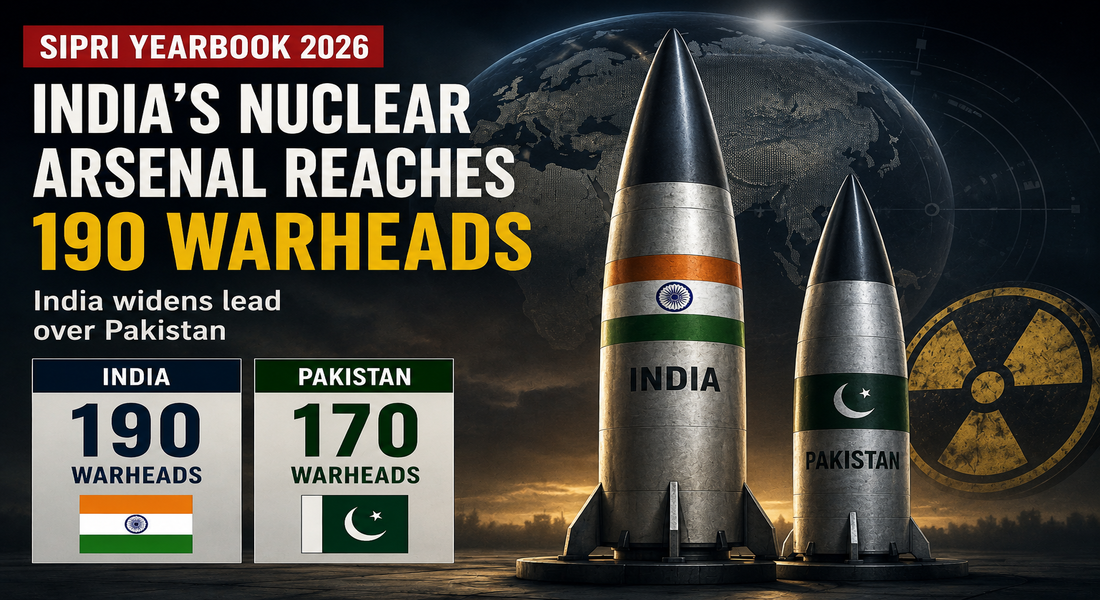

NEW DELHI: India is estimated to possess 190 nuclear warheads, widening its lead over Pakistan’s estimated stockpile of 170 warheads, according to the latest assessment released by the Stockholm International Peace Research Institute (SIPRI).
The findings are part of the SIPRI Yearbook 2026, which warns of growing nuclear risks amid heightened geopolitical tensions, expanding arsenals, and the continued modernization of nuclear forces by the world’s nuclear-armed states.
SIPRI estimates that the global inventory of nuclear warheads stood at 12,187 in January 2026. While the overall number of warheads has declined over the decades, the institute cautioned that a long-standing trend towards reductions in nuclear weapons appears to be slowing and, in some areas, reversing.
The report noted that India continued to develop new nuclear delivery systems and is believed to have slightly expanded its arsenal during 2025. Pakistan’s stockpile was estimated at 170 warheads, while China continued to expand its nuclear capabilities at a faster pace than any other nuclear-armed state.
According to SIPRI, all nine nuclear-armed states – the US, Russia, the UK, France, China, India, Pakistan, North Korea, and Israel – continued to modernise their nuclear arsenals during the past year, with several countries deploying new systems and upgrading existing capabilities.
The institute warned that increasing reliance on nuclear deterrence, coupled with deteriorating security conditions and weakening arms-control arrangements, has heightened the risk of escalation and miscalculation.
SIPRI said the current global security environment is marked by rising strategic competition and conflict, factors that are contributing to renewed emphasis on nuclear weapons in military planning and national security policies.
The yearbook also highlighted concerns over the future of arms-control efforts, noting that existing frameworks face mounting pressure at a time when many countries are investing heavily in modernizing their nuclear forces.
The Stockholm-based institute releases its annual yearbook to assess developments in global security, armaments, disarmament, and international peace.