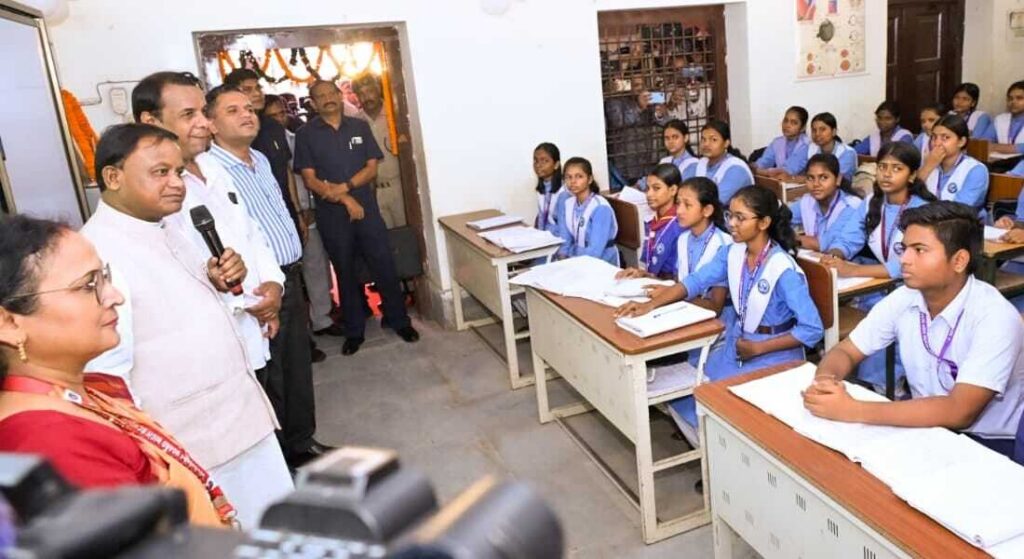
Bhubaneswar: A renewed focus on student well-being took centre stage on Friday as the Manodarpan Cell of NCERT and the Regional Institute of Education (RIE), Bhubaneswar, convened a consultative gathering on “Bhartiya Wisdom/Traditions with Mental Health Practices in School Education.”
The meeting, which brought together participants and resource persons from Odisha, West Bengal, Jharkhand, and the Andaman & Nicobar Islands, explored how schools could move beyond academic achievement and engage with learners’ emotional and behavioural needs by drawing from India’s cultural heritage, according to an official statement.
Speakers noted that the National Education Policy (NEP) 2020 clearly places mental and emotional development on par with cognitive learning. The discussion revolved around identifying classroom-friendly practices aligned with this vision – ranging from breathing routines and food habits to values-oriented upbringing and traditional healing knowledge.
Opening the programme, RIE Principal Prof. Manasi Goswami observed that students today navigate pressures that stem from both their surroundings and circumstances – whether family challenges, interrupted schooling, or disruptions caused by disasters. She noted that schools must actively cultivate coping skills and emotional resilience.
Prof. Vinod Kumar Shanwal, who leads Manodarpan activities at NCERT, shared how the initiative is building a support ecosystem through platforms such as Paricharcha and Sahayog. He underscored that counselling and support should be viewed as accessible resources rather than interventions reserved for crisis.
Highlighting practical pathways, Prof. Laxmidhar Behera pointed to the role of homegrown approaches – from local health traditions to region-specific practices – in reducing student stress when properly contextualised.
Welcoming delegates, Prof. Sankar Prasad Mohanty remarked that adolescence continues to be the most psychologically vulnerable phase in school life, and teacher preparedness is essential for early identification of distress.
Programme coordinator Dr. Shalini Dixit reiterated that traditional knowledge is not separate from modern mental health frameworks but can complement them when evaluated and adapted responsibly.
The meeting concluded that insights gathered would feed into broader national work underway through NEP 2020 and NCF-SE 2023. Participants expressed confidence that the proceedings would guide curriculum refinement, resource development, and policy suggestions for making emotional well-being an embedded dimension of school education.