At IndiaVerve, we go beyond the noise to bring you meaningful stories of change, resilience and progress—from India to the world stage. Our mission is to bring readers credible, wide-ranging coverage across politics, business, sports, culture, society and more.

Indians face uncertainty as US ends automatic work permit extensions

Washington: The U.S. Department of Homeland Security (DHS) has announced the end of automatic extensions for Employment Authorization Documents (EADs), a move that could leave thousands of foreign workers — including a large number of Indians — at risk of losing their jobs if renewals are delayed.

Under the new interim final rule effective October 30, 2025, foreign nationals applying to renew their work permits will no longer receive automatic extensions while their applications are being processed. This policy reversal marks a significant shift in the U.S. immigration system and is expected to increase anxiety among professionals dependent on valid EADs, particularly those on dependent visas such as H-4 and L-2.

“Aliens who file to renew their EAD on or after Oct. 30, 2025, will no longer receive an automatic extension of their EAD. Ending automatic extensions of EADs results in more frequent vetting of aliens who apply for employment authorization to work in the United States,” DHS said in a statement.

According to DHS, the change is intended to “prioritize proper screening and vetting” of applicants before extending employment authorization. The agency stated that the new rule will enhance national security by ensuring more frequent background checks and preventing potential misuse of work authorization.

“USCIS is placing a renewed emphasis on robust alien screening and vetting, eliminating policies that prioritized convenience ahead of Americans’ safety and security,” said U.S. Citizenship and Immigration Services (USCIS) Director Joseph Edlow. “Working in the United States is a privilege, not a right.”

Impact on Indian Workers

The decision is expected to hit Indian professionals particularly hard, as many dependents of H-1B visa holders in the U.S. work under EADs linked to their spouse’s visa. In recent years, automatic extensions had provided a crucial buffer against processing delays at USCIS, allowing individuals to continue working while awaiting renewals.

Without this cushion, thousands may face employment gaps if their renewal applications are not approved on time. Immigration experts warn that the rule could lead to a surge in job losses, particularly among those working in technology, healthcare, and research sectors.

“Even short lapses in work authorization can be devastating,” said an immigration attorney based in New York. “Employers are legally required to terminate employees whose EADs expire, even if renewal is pending. This rule will create significant uncertainty for both workers and companies.”

Limited Exceptions and Recommendations

DHS clarified that a few exceptions remain — including automatic extensions granted by law or through Federal Register notices for Temporary Protected Status (TPS) holders. The rule does not affect extensions that were approved before October 30, 2025.

The agency has urged applicants to file renewal requests at least 180 days before expiration to minimize the risk of job interruption.

However, advocates say that processing times, which often stretch beyond six months, make this timeline unrealistic. Calls are growing for the Biden administration to reconsider or provide transition relief, especially for high-skilled foreign workers who form a key part of the U.S. labor force.

President takes a sortie in Rafale aircraft at Ambala

Ambala: President Droupadi Murmu took a sortie in a Rafale aircraft at Air Force Station, Ambala, Haryana on Wednesday. She is the first president of the country to have taken sortie in two fighter aircrafts of the Indian Air Force. Earlier, she took a sortie in Sukhoi 30 MKI in 2023, according to a press release issued by Rashtrapati Bhavan.

Air Force Station, Ambala is the first Air Force Station where Rafale aircrafts arrived from Dassault Aviation Facility, France.

The president, who is the Supreme Commander of the Indian Armed Forces, flew for approximately 30 minutes covering about 200 kilometers before returning to the Air Force Station. The aircraft was flown by Group Captain Amit Gehani, Commanding Officer of the 17 Squadron. The aircraft flew at a height of about 15000 ft above sea level and at a speed of about 700 kilometers per hour.

Later in the visitor’s book, Murmu expressed her feelings by writing a brief note in which she said: “I am delighted to visit Air Force Station Ambala for my maiden flight on Rafale aircraft of the Indian Air Force. The sortie on Rafale is an unforgettable experience for me. This first flight on the potent Rafale aircraft has instilled in me a renewed sense of pride in the nation’s defence capabilities. I congratulate the Indian Air Force and the entire team of Air Force Station, Ambala for organising this sortie successfully.”

The president was also briefed on the operational capabilities of Rafale and the Indian Air Force.

Earth has hit its first climate tipping point, scientists warn

Frankfurt: Humanity may have already crossed a dangerous environmental threshold, with coral reefs reaching their tipping point and parts of the polar ice sheets possibly beyond recovery, according to the Global Tipping Points Report 2025. The report, produced by more than 100 scientists from over 20 countries, warns that rising global temperatures could soon trigger a cascade of irreversible system failures, including the transformation of the Amazon rainforest into savanna and the potential collapse of major ocean circulation systems.

The findings were led by researchers from Goethe University Frankfurt, the University of Exeter’s Global Systems Institute, and several global climate institutions. The study highlights that many of these tipping points could be reached once global temperatures exceed 1.5°C above pre-industrial levels—a milestone that scientists predict could occur within the next few years, ScienceDaily reported.

Nico Wunderling, Professor of Computational Earth System Sciences at Goethe University Frankfurt and one of the report’s lead authors, said, “The devastating consequences that arise when climate tipping points are crossed pose a massive threat to our societies. There is even a risk of the tipping of one climate system potentially triggering or accelerating the tipping of others. This risk increases significantly once the 1.5°C threshold is exceeded.”

The report identifies roughly two dozen elements of the global climate system that could reach critical tipping points. Coral reefs appear to be the first to have crossed such a threshold. With current global warming levels already around 1.4°C, tropical reefs are suffering unprecedented bleaching events, and scientists say recovery is unlikely unless global temperatures fall below 1°C above pre-industrial levels.

Tim Lenton, coordinating lead author of the report and Professor at the University of Exeter, explained, “We are entering a period where multiple tipping points could be crossed, each amplifying the effects of the others. The choices we make now will determine whether we trigger a cascade of system collapses—or create positive tipping points that move us toward sustainability.”

Other critical systems are also under strain. The Amazon rainforest, facing both deforestation and higher temperatures, risks transforming into a drier savanna-like ecosystem between 1.5°C and 2°C of warming. Such a change could further accelerate global climate change by releasing vast amounts of stored carbon dioxide. Meanwhile, the Atlantic Meridional Overturning Circulation (AMOC), which helps regulate global climate and includes the Gulf Stream, could fail at less than 2°C of warming—leading to colder winters in Europe, disrupted monsoons, and reduced agricultural productivity.

The report also suggests that parts of the Greenland and West Antarctic ice sheets may already be destabilized, potentially locking in several meters of sea-level rise over the coming centuries.

Despite these alarming findings, scientists emphasize that positive tipping points in technology, policy, and behavior could still help steer the planet toward a safer, more sustainable future. Renewable energy, now cheaper than fossil fuels in most regions, and the growing adoption of electric vehicles are examples of self-reinforcing changes that could accelerate decarbonization.

“Policy support for climate-friendly technologies—like sustainable heating systems and cleaner freight transport—can create powerful feedback loops that drive change faster,” the report notes. It also highlights how “social contagion” effects, such as shifts in diet or travel behavior, could magnify the impact of small groups committed to sustainability.

As the world prepares for the 30th World Climate Conference in Belém, Brazil, beginning November 10, 2025, scientists hope the findings will galvanize global leaders to act decisively. The Global Tipping Points Report, first published in 2023, has become a key reference in assessing both the risks of negative tipping points and the opportunities presented by positive societal transitions.

Humans Evolved Faster Than Any Other Ape: UCL Study

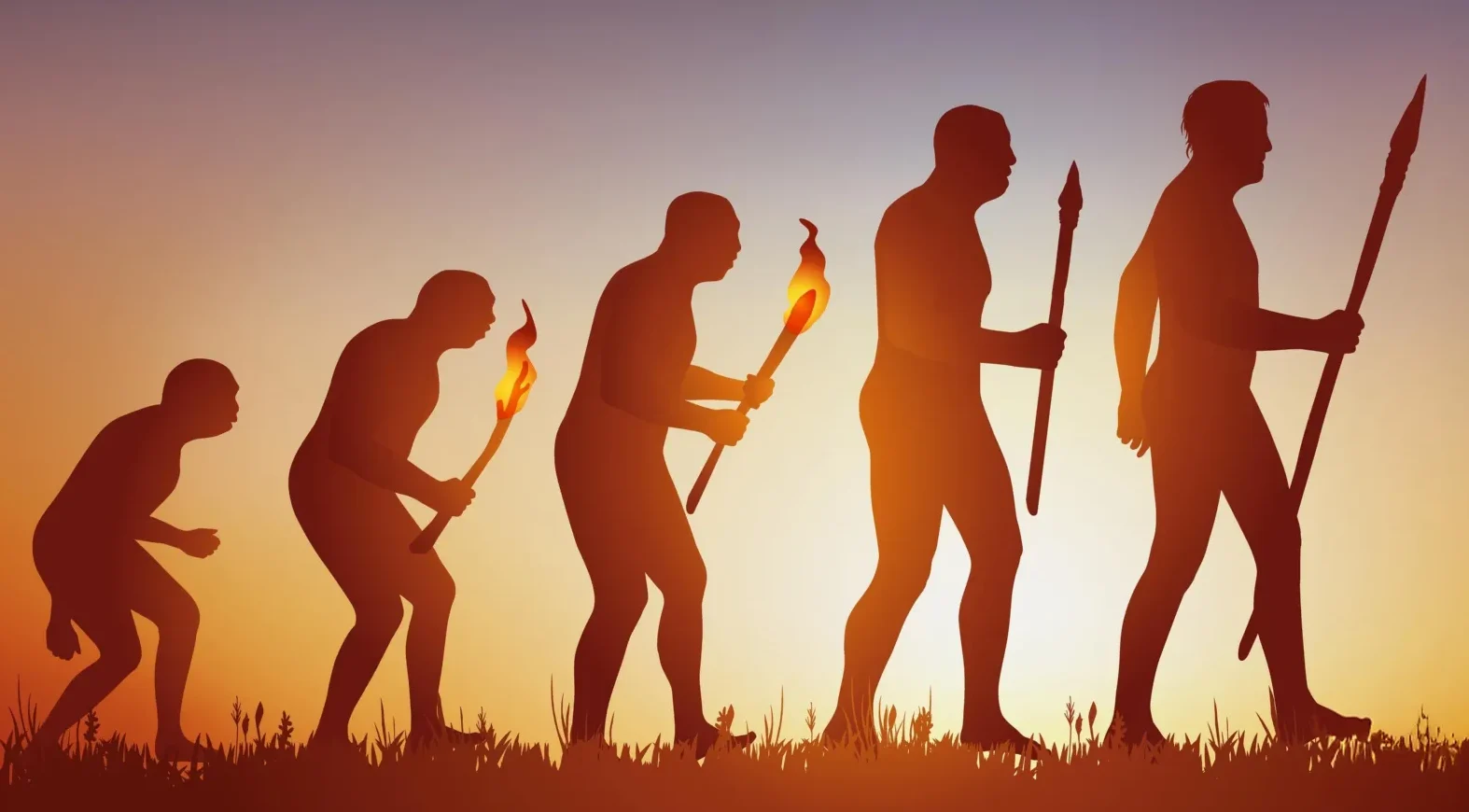
London: Humans evolved larger brains and flatter faces at an exceptionally rapid pace compared to other apes, according to new research from University College London (UCL). The study found that human skulls changed about twice as much as expected under normal evolutionary rates, suggesting that powerful forces—both cognitive and social—drove the distinct features that define our species today.

The research, published in the journal Proceedings of the Royal Society B, compared 3D models of skulls from various ape species, including humans, gorillas, chimpanzees, and gibbons. The findings revealed that humans’ skulls evolved at a much faster rate than any other closely related species, reflecting a unique evolutionary trajectory linked to brain expansion and facial flattening.

Lead author Dr. Aida Gomez-Robles from UCL Anthropology said,“Of all the ape species, humans have evolved the fastest. This likely speaks to how crucial skull adaptations associated with having a big brain and small faces are for humans that they evolved at such a fast rate.”

“These adaptations can be related to the cognitive advantages of having a big brain, but there could be social factors influencing our evolution as well,” Dr. Gomez-Robles was quoted as saying by ScienceDaily.

To conduct the study, the researchers created detailed three-dimensional digital models of skulls from seven great ape species, including humans, gorillas, and chimpanzees, as well as nine lesser ape species such as gibbons. These two groups diverged from a common ancestor around 20 million years ago. While gibbons have remained relatively uniform in skull structure, great apes—particularly humans—showed much greater diversity.

Each skull was divided into four regions: the upper face, the lower face, the front of the head, and the back of the head. Using computer analysis, the researchers measured how much each section varied between species, providing one of the most detailed comparative studies of ape skull structure to date.

The results showed that while most great apes have large, forward-projecting faces and smaller brains, humans developed rounder heads and much flatter faces. Although gibbons share some facial similarities with humans, such as a relatively flat face and round skull, their brains are far smaller.

By treating the slow rate of change in gibbons as a baseline, the researchers discovered that the human skull evolved roughly twice as fast as expected. This suggests that additional evolutionary pressures—beyond simple adaptation—accelerated the process.

However, Dr. Gomez-Robles cautioned against attributing this rapid evolution solely to intelligence. “After humans, gorillas have the second fastest evolutionary rate of their skulls, but their brains are relatively small compared to other great apes,” she said. “In their case, it’s likely that the changes were driven by social selection, where larger cranial crests on the top of their skulls are associated with higher social status. It’s possible that some similar, uniquely human social selection may have occurred in humans as well.”

The findings provide new insights into how both biological and social factors may have shaped the evolution of modern humans, highlighting the dynamic interplay between brain development, facial structure, and social behavior.