At IndiaVerve, we go beyond the noise to bring you meaningful stories of change, resilience and progress—from India to the world stage. Our mission is to bring readers credible, wide-ranging coverage across politics, business, sports, culture, society and more.

AIIMS-Bhubaneswar launches research on cycad toxicity and neurological risks in Odisha

https://x.com/AIIMSBhubaneswr

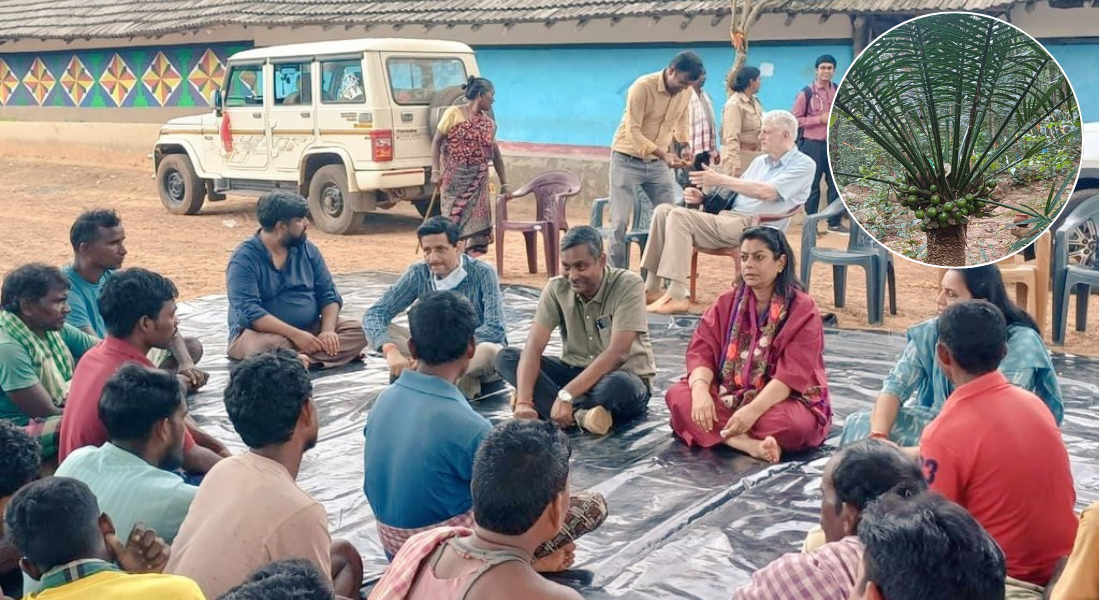
Bhubaneswar: The All India Institute of Medical Sciences (AIIMS), Bhubaneswar, has embarked on a groundbreaking study to investigate the toxicological and neurological impact of cycad plants in Odisha, following recent findings of the neurotoxin BMAA (β-N-methylamino-L-alanine) in local cycad species.

The research stems from growing concerns over the traditional consumption of cycad-based food products, such as pitha, by certain tribal communities in the state. Cycads — ancient plants that have existed for over 300 million years — contain powerful toxins including Cycacin, BMAA, and MAM (methylazoxymethanol). Globally, these compounds have been linked to neurodegenerative diseases such as Parkinsonism, motor neuron disease, and dementia, particularly in regions like Guam (USA) and Japan’s Kii Peninsula where cycads were part of local diets.

The Odisha study, spearheaded by Prof. Sanjeev Kumar Bhoi, Head of Neurology at AIIMS-Bhubaneswar, and Prof. S.K. Barik, Dean of Life Sciences at North-Eastern Hill University (NEHU), Shillong, aims to determine whether similar neurological risks exist among local populations who continue to use cycad seeds as food.

The initiative gained momentum during an international workshop on “Cycad-Related Neurological Disorders: A Multi-Dimensional Approach to Its Remediation”, jointly organized by AIIMS-Bhubaneswar and NEHU. The event featured eminent neuroscientists Prof. Peter S. Spencer and Prof. Valerie S. Palmer from Oregon Health & Science University, who shared insights from their long-term studies in Guam and Japan.

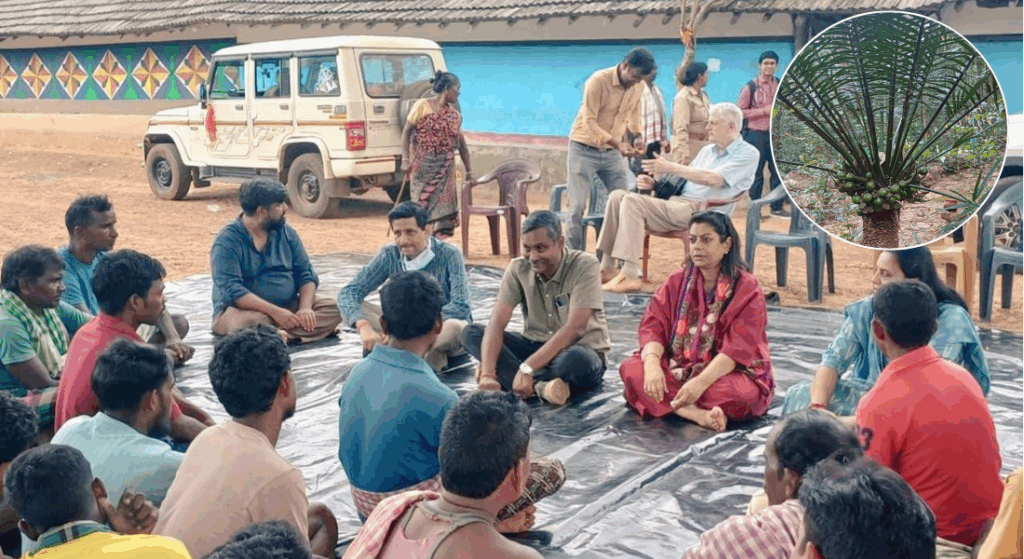
As part of the research, expert teams conducted field visits to the villages of Dhuannali in Khordha district and Gangamunda and Suaginali in Dhenkanal district, where communities traditionally consume cycad seeds. Interactions with villagers, patients, and healthcare providers helped document health symptoms potentially linked to cycad exposure. Known locally as Aruguna (or Veru), the Cycas plant continues to be an important part of the diet in some tribal belts of Odisha. The research team aims to develop a roadmap for community awareness, preventive strategies, and interdisciplinary collaboration to mitigate potential health risks associated with cycad consumption.

Bhubaneswar set to grow: 71 Villages to join BMC as city expands into a Singapore-designed smart township

Bhubaneswar: Odisha’s capital is set for a major expansion as 71 villages on the city’s outskirts may soon come under the jurisdiction of the Bhubaneswar Municipal Corporation (BMC). The proposal, now awaiting government approval, could significantly widen the civic body’s reach and transform the urban landscape.

Currently governed by rural panchayats, these villages lack access to many urban facilities despite being located close to the city. Following requests from local residents, the respective block development offices have submitted their resolutions to BMC, which will forward the proposal to the state government for a final decision.

Of the 71 villages, 66 belong to 12 panchayats under Bhubaneswar block, while one panchayat with one village falls under Balianta block and another with four villages under Jatni block. The civic body may either integrate these areas into adjoining wards or create new ones to manage the expanded jurisdiction. BMC currently has 67 wards, increased from 60 in 2013.

Some of the villages likely to be merged include Sijua, Tamando, Jagannathprasad, Andharua, Daspur, Dhauli, Kantabada, Mendhasala, Keshura, Raghunathpur, and Lingipur. Officials believe more villages could express interest in joining later, given the benefits of improved infrastructure and services.

The timing of this proposed merger aligns with the ambitious Bhubaneswar New City project — an 800-acre urban development designed by Singapore-based consultancy Surbana Jurong. The project envisions a sustainable and inclusive township that will serve as an economic hub with modern infrastructure, efficient drainage, and water management systems.

With the proposed merger and the upcoming smart township, Bhubaneswar is poised for another leap in its evolution from a planned city to a metropolitan region. The expansion reflects a broader push toward integrated, sustainable urban growth that connects the capital’s thriving core with its fast-developing peripheries.

Once approved, the initiative will not only extend BMC’s boundaries but also bring thousands of new residents under its fold — marking a significant step toward building a greener, smarter, and more inclusive Bhubaneswar.

Odisha man kidnapped by militia in Sudan’s Darfur region

An Indian national from Odisha’s Jagatsinghpur district has reportedly been kidnapped by the Rapid Support Forces (RSF) militia in Sudan, where conflict between rival armed groups has continued for over a year.

The victim, identified as 36-year-old Adarsh Behera, was abducted from Al Fashir, a city in Sudan’s North Darfur region, about 1,000 kilometres from the capital Khartoum. Behera had been working at the Sukarati Plastic Factory since 2022. His current location remains unknown, though media reports suggest that he may have been moved to Nyala, an RSF stronghold in South Darfur.

Souce: Kofy Time: X.com/cofy_time

Behera’s wife, Susmita, said the family was in shock after learning of his abduction. “He had told me that conditions were worsening, but we never imagined something like this could happen,” she told to a news channel. The couple has two sons, aged eight and three. The family has appealed to both the Odisha government and India’s Ministry of External Affairs (MEA) to help secure his release.

Odisha Pradesh Congress president Bhakta Charan Das has urged immediate government intervention. In a post on X, he wrote, “Deeply concerning that Adarsh Behera from Jagatsinghpur district who was working at a factory in Sudan was kidnapped by rebel forces. I urge CM Mohan Majhi to take up the matter with EAM Dr. S. Jaishankar and coordinate his release.”

Meanwhile, Sudan’s Ambassador to India, Mohammed Abdalla Ali Eltom, has confirmed that his government is in contact with Indian authorities to facilitate Behera’s rescue. According to the Indian Embassy, about 100 Indian nationals currently live and work in Sudan, following earlier evacuations when civil war erupted in 2023.

Sudan has remained in turmoil since April 2023, when fighting broke out between the Sudanese Armed Forces (SAF) and the RSF, displacing millions and leaving large parts of the country lawless.·

Centre releases Rs444 crore grants to Odisha

New Delhi: The Union government has released over Rs444 crore to Odisha under the 15th Finance Commission (XV FC) Grants for Rural Local Bodies (RLBs) for the financial year 2025–26.

According to a press release from pib.gov.in, the allocation includes the second installment of Untied Grants worth Rs342.5964 crore for 20 district panchayats (Zilla Parishads), 296 block panchayats (Panchayat Samitis), and 6,734 gram panchayats across the state.

In addition, the Centre has released Rs101.7815 crore – the withheld portion of the first installment of Untied Grants for FY 2025–26 – to 20 Zilla Parishads, 233 Panchayat Samitis, and 649 Gram Panchayats.

The grants are recommended by the Ministry of Panchayati Raj and the Ministry of Jal Shakti (Department of Drinking Water and Sanitation), and disbursed by the Ministry of Finance in two installments each financial year.

Untied Grants allow Panchayati Raj Institutions (PRIs) and RLBs to address location-specific needs under the 29 subjects listed in the Eleventh Schedule of the Constitution, excluding expenditure on salaries and establishment costs.

In contrast, Tied Grants are earmarked for essential services such as sanitation, solid and liquid waste management, maintaining ODF status, and ensuring safe drinking water supply, rainwater harvesting, and water recycling.

The release underscores the government’s continued support for strengthening grassroots governance and improving basic infrastructure in rural areas of Odisha.