At IndiaVerve, we go beyond the noise to bring you meaningful stories of change, resilience and progress—from India to the world stage. Our mission is to bring readers credible, wide-ranging coverage across politics, business, sports, culture, society and more.

South Africa stun India with record run chase to level ODI series

Raipur: South Africa pulled off one of the most memorable run chases in one-day history, hunting down a steep 359-run target here to win by four wickets and leave the three-match series tied 1-1 heading into the decider. Despite strong centuries from Virat Kohli and Ruturaj Gaikwad earlier in the evening, India’s bowlers could not defend what looked like a commanding total under heavy dew.

Asked to bat first, India powered their way to 358 for 5, thanks to two top-order masterclasses. Gaikwad showed remarkable timing from the start, cruising to his first ODI hundred from only 77 balls. Kohli, calm and controlled through the middle overs, also crossed three figures, marking his 53rd century in the format. Their partnership of 195 runs gave India complete control. KL Rahul added the finishing touches with an unbeaten 66 as South Africa struggled to contain the scoring.

But the advantage of a high total quickly faded once the visitors stepped in with the bat. With moisture settling on the outfield and the ball skidding on to the bat, India’s attack struggled for grip and movement under the floodlights.

South Africa’s chase wobbled early when Quinton de Kock departed cheaply. Temba Bavuma’s positive approach and Aiden Markram’s composure soon settled nerves, allowing them to rebuild. A moment that would haunt India came when Jaiswal dropped Markram while he was still in the 50s, and he went on to a fluent hundred from 88 balls guiding his team into a position of strength.

After Markam fell to Harshit Rana, Matthew Breetzke and Dewald Brevis lifted the tempo dramatically. They counter-attacked with crisp drives and clean hitting, adding 92 runs at a fast clip to put the Indian bowlers under pressure. Kuldeep Yadav removed Brevis, and Prasidh Krishna later sent back Breetzke to spark hopes of a comeback. Marco Jansen’s dismissal and Tony de Zorzi hobbling off briefly injected tension into the contest.

But Corbin Bosch, who had fought bravely in the previous ODI, turned finisher again. Showing calm control while partners fell around him, he found the boundary at crucial moments. With Keshav Maharaj offering steady support at the other end, Bosch sealed the chase with four balls remaining. He stayed unbeaten, steering South Africa over the line and avenging the narrow loss just days earlier.

India’s bowlers tried everything — variations from the pacers and tight fields for the spinners — but dew-assisted batting conditions clearly tilted the balance. The field grew wet, the ball refused to grip, and the hosts lacked the breakthroughs needed to halt the late surge.

The result sets up a thrilling finale in Visakhapatnam on December 6, with both sides showing strong form in very different conditions. For India, the promising performances with the bat will offer encouragement, but defending totals under pressure remains a concern. South Africa, meanwhile, will carry immense confidence from their late-innings nerve and tactical discipline.

Piyush Goyal calls for innovation-driven manufacturing

New Delhi: Union Minister of Commerce and Industry Piyush Goyal said on Wednesday that the government, under the leadership of Prime Minister Narendra Modi, is working with a clear vision to support the country’s economic progress.

Speaking at the IndiaEdge event organised by the Confederation of Indian Industry in New Delhi, he underscored the role of innovation, quality, sustainability, design, and efficiency in boosting India’s manufacturing competitiveness.

Goyal pointed to recent growth across agriculture, services, and manufacturing, and noted the diversification of India’s manufacturing into sectors such as electronics, white goods, chemicals, and petrochemicals.

He warned that recent global disruptions have highlighted the need for resilient supply chains and cautioned against overdependence on specific geographies. He urged industry to identify areas where domestic capacity and greater control over supply chains are essential.

He said collaboration across industry would help expand manufacturing output and, in turn, accelerate growth in the services sector. At the same time, he emphasised that India must remain open to competitive practices within the domestic economy as it strengthens its presence in global markets, according to an official statement.

Noting state-level progress, the minister cited Uttar Pradesh and Odisha as examples of regions that have recorded rapid development, creating local opportunities and reducing migration. He invited industry suggestions to simplify procedures, improve regulatory systems, and strengthen the manufacturing environment.

Highlighting regulatory reforms, Goyal referred to efforts to ease compliance, remove obsolete provisions, and modernise legal frameworks, including the introduction of the four Labour Codes. He said 23 States have framed corresponding rules and that the Codes will promote formalisation, ensure minimum wages, and bolster social security and workplace safety.

On MSMEs, he stressed the importance of timely payments, noting that prompt clearing of dues would ease cash-flow constraints and support productivity and growth.

Reiterating the long-standing national focus on Swadeshi and self-reliance, Goyal said that collective action by the government and industry is essential to advance the vision of Atma Nirbhar Bharat and achieve the goal of Viksit Bharat 2047.

Odisha reports steady progress in Panchayati Raj scheme implementation

New Delhi: The implementation of Panchayati Raj Schemes in Odisha continues to progress, with allocations to Panchayati Raj Institutions increasing in line with recommendations of successive Central Finance Commissions, Union Minister Rajiv Ranjan Singh, as reported by PIB india, said in a written reply to a question in the Rajya Sabha on Wednesday.

Under the XIII Finance Commission, Odisha received grants amounting to Rs. 2,898.22 crore. The allocation increased significantly under the XIV Finance Commission to Rs. 8,850.00 crore, and further rose under the XV Finance Commission to Rs. 11,058.00 crore.

The final distribution of grants depends on how the State allocates funds in accordance with the recommendations of the State Finance Commission. Additionally, the release of funds under the revamped Centrally Sponsored Scheme Rashtriya Gram Swaraj Abhiyan (RGSA) is linked to the timely finalisation of the Annual Action Plan, the release of the State’s matching share, the submission of utilisation certificates, and overall expenditure progress.

Under the RGSA scheme, the central share released to Odisha was Rs. 11.40 crore in 2022-23, which increased to Rs. 27.33 crore in 2023-24, and stood at Rs. 20.00 crore in 2024-25. This information was provided by Union Minister Rajiv Ranjan Singh in a written reply in the Rajya Sabha on Wednesday.

Odisha has been actively participating in centrally supported capacity-building programmes for PRI elected representatives and functionaries under RGSA. Since 2022-23, a total of 6,62,345 representatives and functionaries have been trained. The training is conducted through institutions including the State Institutes of Rural Development & Panchayati Raj, National Institute of Rural Development & Panchayati Raj, Indian Institutes of Management, and District Panchayat Resource Centres.

These capacity-building initiatives aim to strengthen governance, leadership, planning, implementation, resource mobilization, and management skills. Thematic workshops have also been organised in areas such as health, education, gender equality, environmental protection, social security, and good governance.

The RGSA scheme is implemented strictly as per approved guidelines applicable to all States and Union Territories, with no additional flexibility beyond the scheme provisions.

Indian study tracks Sun’s magnetic cycle

Kodaikanal: Astronomers have achieved a breakthrough in tracking how the Sun’s magnetic activity varies with latitude, offering fresh insight into solar cycles and their impact on Earth. The findings could strengthen scientific understanding of the Sun’s magnetic dynamo and improve future predictions of space weather events that influence communications systems, power infrastructure, and even climate patterns.

The Sun experiences an 11-year activity cycle, marked by shifting magnetic behavior and changing sunspot patterns. To study these variations, researchers from the Indian Institute of Astrophysics (IIA), an autonomous institute under the Department of Science and Technology (DST), analyzed 11 years of continuous calcium K line spectroscopic data (2015–2025) recorded at the historic Kodaikanal Solar Observatory, which recently completed 125 years of operation.

The Ca-K spectral line at 393.4 nm – originating from the Sun’s chromosphere – is widely recognized as a key diagnostic tool for monitoring magnetic activity. With the observatory’s extensive daily solar imaging archive, the team could examine long-term changes with a level of precision rarely achieved.

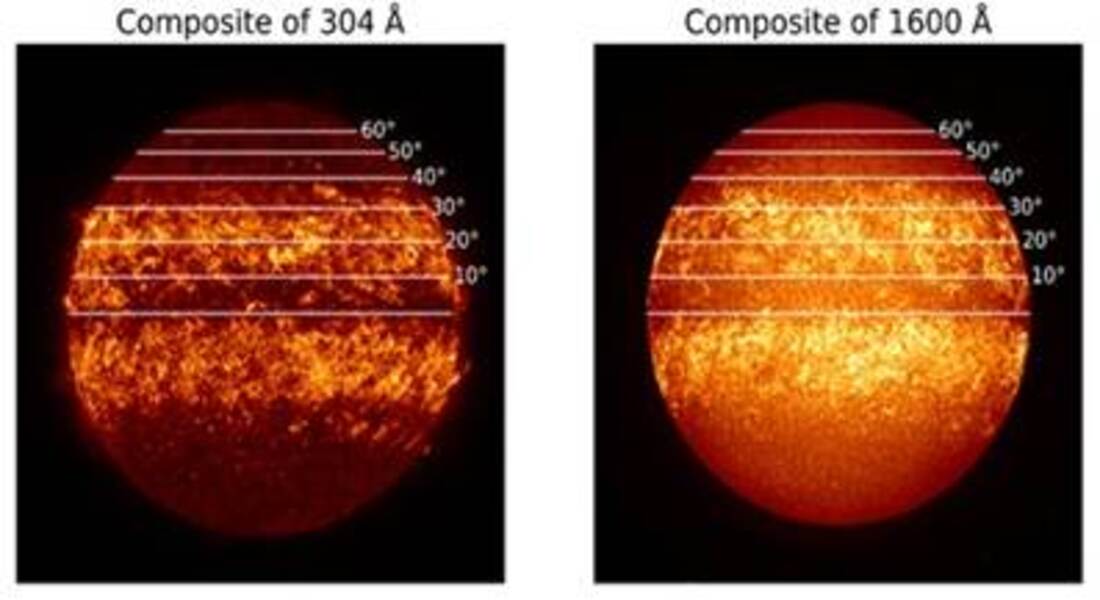
Instead of studying isolated sunspots, the researchers implemented a unique technique developed by IIA professor Jagdev Singh. As explained by K.P. Raju of IIA, “Rather than looking at individual sunspots or magnetic regions, we used an earlier technique devised by our team member and professor at IIA, Jagdev Singh, that captures light from entire latitude bands, slicing the Sun into horizontal strips from pole to pole and analyzing the combined light from each strip.” According to him, this approach helps reveal broader magnetic patterns invisible through traditional analysis.

The team tracked spectral features such as line width and intensity ratios – indicators linked to magnetic strength – throughout Solar Cycle 24 and continuing into Solar Cycle 25. Their analysis showed distinct clustering of activity, according to an official statement.

Co-author K. Nagarju noted: “The data revealed clear patterns showing that most solar activity concentrates between 40 degrees north and south latitudes, with particularly strong signals around 15–20 degrees in both hemispheres of the Sun, exactly where sunspot activity peaks during the solar cycle.” These results were strengthened through cross-verification using filling factor measurements from NASA’s Solar Dynamics Observatory.

The study also uncovered clear differences between the Sun’s northern and southern hemispheres, with the south exhibiting steeper increases in magnetic signatures and greater sensitivity to activity levels. Researchers developed “spectral response profiles” to quantify how changes in magnetic filling factor altered the Ca-K line – revealing systematic north-south asymmetry closely tied to latitude.

Lead author Apoorva Srinivasa said: “Our results confirm that solar activity follows predictable patterns related to the 11-year solar cycle, with the strongest magnetic activity occurring in specific latitude bands that shift over time. The observed variations directly reflect changes in temperature and magnetic field strength across the Sun’s chromosphere, contributing to our broader understanding of how the Sun’s magnetic dynamo operates.”

The findings, published in the Monthly Notices of the Royal Astronomical Society, were authored by researchers from IIA, Amrita Vishwa Vidyapeetham, IIT BHU, and NASA-linked analysis teams.

Odisha ramps up Jal Jeevan Mission

New Delhi: Odisha is reworking its rural water playbook to confront two simultaneous problems: chronically depleted and contaminated groundwater in parts of the state, and widespread delays in multi-village piped water projects under the Jal Jeevan Mission (JJM).

Launched by the Central government in August 2019, JJM aims to provide tap water to every rural household in partnership with States and Union Territories. Because “drinking water” is a state subject, Odisha is responsible for planning, approvals, implementation, and upkeep of schemes within its borders, while the Centre offers technical and financial help.

State monitoring has flagged groundwater depletion and contamination – iron, fluoride, salinity, and bacteriological impurities – as recurring problems in several blocks. Districts singled out for water-quality concerns include Nuapada, Bargarh, Mayurbhanj, and parts of Gajapati, Minister of State for Jal Shakti V. Somanna, as reported by PIB india, said in a written reply to a question in Rajya Sabha. At the same time, the State reports 705 multi-village piped water supply schemes have been delayed. The causes cited are familiar: land acquisition complications, contractor non-performance and hold-ups in right-of-way clearances from agencies such as NH, NHAI, R&B, RD, Forest, and Railways.

Odisha’s response blends fast fixes with long-term resilience:

  • Immediate and remedial steps – repairing defunct tube wells, reviving non-functional distribution systems, and installing new tube wells where needed – are being used to plug short-term supply gaps ahead of summer shortages.
  • Treatment measures – Iron Removal Plants (IRPs), de-fluoridation units, and routine disinfection – address site-specific contamination.
  • Sustainable supply projects – surface-water mega piped schemes, single- and multi-village piped projects, solar-based piped systems and Solar Dual Pump installations – are being prioritised to shift reliance away from compromised groundwater.
  • Source-sustainability actions – recharge structures, restoration of water bodies, and rainwater harvesting – are being executed with other departments to boost long-term water availability.
  • Community and governance strengthening – Village Water & Sanitation Committees are being mobilised for local surveillance using Field Test Kits, and community awareness drives on safe water handling are ongoing.

To unblock stalled projects, the State has set up higher-level coordination and accountability: a committee led by the Development Commissioner-cum-Additional Chief Secretary and another under the Commissioner-cum-Secretary, PR & DW Department, with engineers and departmental secretaries as members. Monthly district-level co-ordination meetings chaired by District Collectors aim to resolve pending approvals quickly. The State has also begun imposing penalties on defaulting agencies and tightening monitoring to speed implementation.

The mix of corrective repairs, water-treatment installations, and large-scale piped projects is designed to keep villages supplied now while building systems resilient enough to replace failing groundwater sources over time.

India, Maldives strengthen defence partnership in Kerala

Thiruvananthapuram: A fresh chapter in Indo–Maldives defence co-operation began on Tuesday as the 14th edition of Exercise EKUVERIN got underway in Thiruvananthapuram, Kerala. The joint military drill will run till 15 December and brings together 45 personnel from the Indian Army’s GARHWAL RIFLES and an equal number from the Maldives National Defence Force.

EKUVERIN, meaning “Friends” in Dhivehi, is more than a military exercise – it is a symbol of trust and a long-standing partnership. Since its launch in 2009, the exercise has alternated between both countries, reinforcing India’s Neighbourhood First approach and fostering closer defence ties with the Maldives, according to an official statement.

Over the next two weeks, the participating troops will work together across jungle, semi-urban, and coastal environments, focusing on Counter-Insurgency and Counter-Terrorism operations. The exercise includes sharing operational experience, refining tactical drills, and developing coordinated plans to handle real-world scenarios.

Beyond battlefield preparedness, EKUVERIN reflects the strategic importance both nations place on peace, co-operation, and security in the Indian Ocean Region. The growing defence engagement highlights a shared commitment to addressing common challenges and maintaining regional stability.