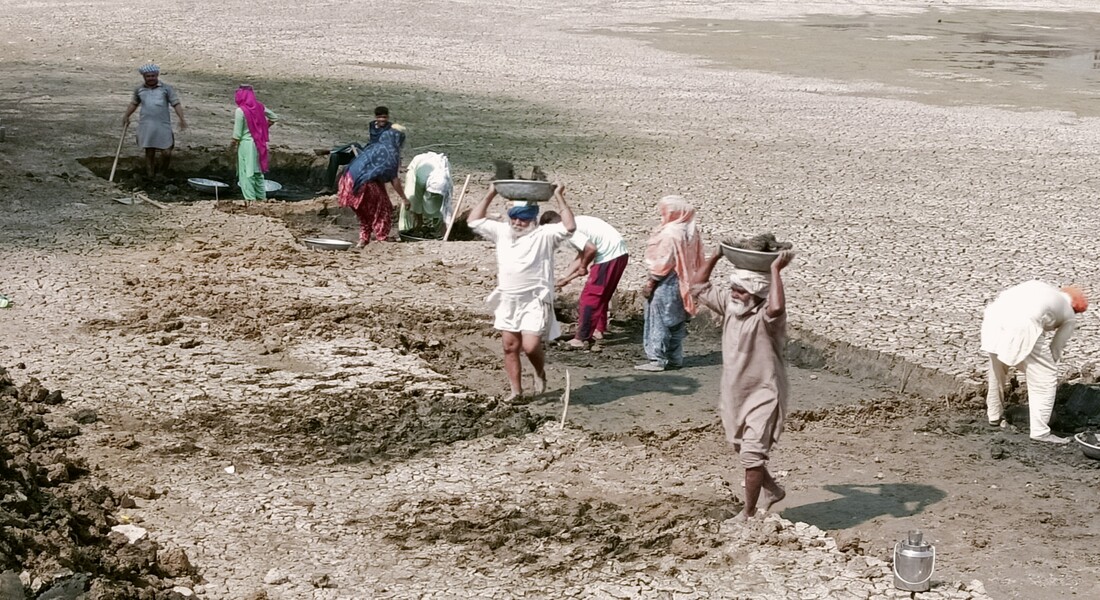
The Mahatma Gandhi National Rural Employment Guarantee Act (MGNREGA), enacted in 2005, marked a watershed moment in India’s social policy landscape. Passed unanimously by both Houses of Parliament, it reflected a rare political consensus that employment for the rural poor is not charity but a legally enforceable right. The law emerged from decades of workers’ struggles, trade union mobilisation and grassroots advocacy that pushed livelihood security from the margins of policy debate to the centre of India’s constitutional imagination.
MGNREGA translated this idea into a justiciable entitlement grounded in the everyday realities of rural work, migration and insecurity. Any rural household could demand employment, and the State was obligated to respond within a fixed timeframe or provide an unemployment allowance. Accountability mechanisms were deliberately anchored at the village level through Gram Sabhas, social audits and Panchayati Raj institutions. The Act recognised a fundamental truth drawn from lived experience: rural insecurity is best addressed when rights, rather than administrative discretion, guide public policy.
The government’s proposed Viksit Bharat Guarantee for Rozgar and Ajeevika Mission (Gramin) Bill, 2025 seeks to repeal MGNREGA and replace it with a new framework. On the surface, the promise appears expansive, increasing guaranteed employment from 100 days to 125 days per rural household. However, a closer reading suggests that the Bill redefines the nature of the employment guarantee itself, shifting it from a rights-based framework towards a centrally managed and conditional programme.
From a demand-driven right to a budget-managed programme
At the core of MGNREGA was a demand-driven architecture. Employment followed workers’ demand rather than administrative planning cycles or budgetary ceilings. This feature was central to the law’s effectiveness, particularly for landless labourers, women and marginalised communities facing chronic livelihood uncertainty.
The proposed VB-G RAM G Bill moves away from this principle. Employment is now linked to budgetary allocations determined by the Central Government and to planning frameworks aggregated upward from village to national levels. States are required to bear the financial burden for employment that exceeds their allocated ceilings. In practice, this risks transforming a legal entitlement into a budget-dependent provision, where access to work depends less on need and more on fiscal limits. The increase to 125 days may therefore remain largely notional if allocations are capped.
Restricting work, restricting choice
One of the more significant departures is the provision allowing suspension of works during peak agricultural seasons for up to sixty days each year. MGNREGA deliberately avoided such exclusions, recognising that rural households often rely on multiple income sources simultaneously and that income insecurity does not vanish during sowing or harvesting periods.
Halting public employment to ensure labour availability for agriculture raises concerns about treating rural workers as a reserve labour pool rather than as rights-holders capable of making choices about their own livelihoods. This restriction is likely to disproportionately affect landless workers and women, for whom MGNREGA wages often provide the only stable source of income across the year.
Centralisation in the name of convergence
MGNREGA placed planning and oversight firmly in the hands of local institutions. Gram Sabhas were entrusted with identifying works, scrutinising expenditure and conducting social audits that made corruption and exclusion visible.
Under the proposed Bill, planning is increasingly shaped by centrally defined priorities, convergence mandates and national infrastructure frameworks such as PM Gati Shakti. New National and State Steering Committees expand bureaucratic oversight over the selection and location of works. While Panchayats remain implementing agencies, their autonomy appears constrained by a more top-down approach. Decentralisation persists in form, but its substantive role risks being weakened.
When technology displaces social accountability
The Bill places substantial reliance on biometric authentication, geo-tagging, real-time dashboards and artificial intelligence-driven monitoring. While some of these tools already exist within MGNREGA, their expansion as statutory mechanisms raises important concerns.
Experience across welfare programmes suggests that digitally intensive monitoring systems often fail where vulnerability is highest—among migrants, older workers, women and those with limited digital access. Without robust grievance redressal, such systems risk shifting accountability away from people and communities towards platforms and algorithms.
A departure from consultative law-making
Equally concerning is the manner in which the Bill has been introduced. Unlike MGNREGA, which emerged from prolonged public debate and engagement with workers’ organisations, States and civil society, the proposed repeal has so far seen limited visible consultation with those most affected. For legislation that directly impacts the livelihoods of millions, this lack of broad-based engagement warrants careful parliamentary scrutiny.
The choice before Parliament is therefore not between reform and stagnation. The government could have amended specific provisions of MGNREGA to address genuine implementation challenges while preserving its rights-based core. Instead, it has opted for repeal, replacing a legal entitlement with a framework governed by fiscal ceilings and executive discretion. If enacted in its present form, the VB–G RAM G Bill would mark a significant shift from employment as a constitutional right shaped by democratic struggle to employment as a policy instrument aligned with planning priorities. Parliament must weigh this transition carefully, as it goes to the heart of India’s commitment to livelihood security, decentralised governance and democratic accountability.
**Sameet is a researcher working on social protection, employment guarantee programmes and welfare accountability. He has been associated with the Right to Food Campaign and LibTech India. The views expressed are personal and do not necessarily reflect those of IndiaVerve.