At IndiaVerve, we go beyond the noise to bring you meaningful stories of change, resilience and progress—from India to the world stage. Our mission is to bring readers credible, wide-ranging coverage across politics, business, sports, culture, society and more.

Odisha teen weightlifter Yoshna Sabar wins Pradhan Mantri Rashtriya Bal Puraskar for global sporting feats

New Delhi: Sixteen-year-old champion Indian weightlifter Yoshna Sabar from Odisha’s Gajapati district was conferred the Pradhan Mantri Rashtriya Bal Puraskar for excellence in sports at a ceremony held in New Delhi on December 26, 2025. The award was presented by President of India Droupadi Murmu. Competing primarily in the 40 kg weight category, Jyoshna is regarded as one of India’s most promising youth athletes as of December 2025.

Yoshna hails from Pekata village under Marlaba Gram Panchayat in Raigarh block and belongs to a small farming family. The daughter of Kirtan Shabar and Gachmeri Shabar, her journey from a remote tribal region to international sporting platforms reflects perseverance, discipline and strong institutional support.

Her talent for sports became evident during her early school years. She took up weightlifting in 2018 and was soon selected for the Tenvik High Performance Weightlifting Centre in Bhubaneswar. Alongside rigorous training, she continued her studies at the Kalinga Institute of Social Sciences (KISS), successfully balancing academics and competitive sport.

Yoshna has since emerged as a four-time international medallist, winning honours at the Asian, Commonwealth and World Championships, including two medals at the world level. She has also secured five national titles and earned recognition as the Best Weightlifter of India, an exceptional achievement at her age.

Her success highlights how timely access to quality education, professional training and encouragement can help unlock talent. Yoshna Shabar’s achievements now serve as a source of inspiration for young athletes from rural and tribal communities aiming for excellence on the global stage.

Odisha Vigilance detects DA against additional tahasildar

Barang: Odisha Vigilance officials have detected substantial Disproportionate Assets (DA) during ongoing searches linked to Jitendra Kumar Panda, Additional Tahasildar of Barang in Cuttack district.

Search operations conducted on Tuesday resulted in the detection of multiple immovable properties, including two multi-storeyed buildings in Bhubaneswar, a 2-BHK flat in the Uttara area of the city, and another multi-storeyed structure in Khordha town. During the searches, Vigilance teams also recovered around ₹75 lakh in cash, adding to the scale of the alleged assets under scrutiny. Investigators also identified four high-value land parcels, three of which are located in prime areas of Bhubaneswar and one in Khordha, according to a tweet from the Odisha Vigilance.

Panda entered government service in 1995 as a Senior Laboratory Assistant in the office of the Director of Animal Husbandry, Cuttack, under a rehabilitation scheme, drawing a monthly salary of ₹2,000 at the time. He was promoted to the Odisha Revenue Service in 2020 and subsequently served in the Sub-Registrar’s Office in Bhubaneswar, as well as holding postings as Additional Tahasildar and Sub-Registrar in Pipli.

Further investigation into the source of the assets is ongoing.

Bollywood in 2025: A Year of Intimacy, Loss, and Spectacle

The year 2025 marked a quiet yet significant shift in Bollywood’s cultural landscape. From deeply personal celebrity weddings to the loss of legendary figures and a box office defined by both spectacle and sentiment, Hindi cinema reflected a year of emotional contrasts. Beneath the glamour, 2025 revealed an industry increasingly drawn toward authenticity—both on-screen and off.

Redefining Celebrations: Bollywood Weddings in 2025

Bollywood weddings in 2025 were defined by intimacy, intention, and individuality. Moving away from extravagant public displays, celebrities embraced ceremonies that felt personal rather than performative. Spiritually rooted rituals, minimalist home weddings, and culturally blended unions dominated the year.

Samantha Ruth Prabhu & Raj Nidimoru: One of the most talked-about weddings of the year, Samantha Ruth Prabhu and Raj Nidimoru’s Bhuta Shuddhi Vivaha ceremony at the Linga Bhairavi Devi Temple in Coimbatore stood out for its spiritual depth. Rooted in ancient yogic traditions, the ceremony emphasized inner purification over grandeur. Samantha’s red saree, heirloom-inspired jewellery, and rare portrait-cut diamond ring became defining style moments of 2025.

Prateik Babbar & Priya Banerjee: Choosing privacy over publicity, Prateik Babbar and Priya Banerjee married in a quiet ceremony at their Mumbai residence. Attended only by close friends and family, the wedding embodied understated elegance. Priya’s ivory saree and minimal jewellery set a new benchmark for contemporary bridal fashion.

Prajakta Koli & Vrishank Khanal: Prajakta Koli and Vrishank Khanal’s Karjat wedding was widely praised for its cultural sensitivity. Seamlessly blending Marathi and Nepali traditions, Prajakta honoured her partner’s heritage with a Nepali Pote Mala, while Vrishank wore a traditional Daura–Suruwal. The ceremony resonated for its emotional authenticity.

Darshan Raval & Dharal Surelia: Singer Darshan Raval married architect Dharal Surelia in a serene ceremony at Rainforest Farm, Ahmedabad. Surrounded by lush greenery, the wedding balanced traditional rituals with a relaxed, modern aesthetic, making it one of the year’s most visually charming celebrations.

Hina Khan & Rocky Jaiswal: After a 13-year relationship, Hina Khan and Rocky Jaiswal opted for a quiet at-home registry wedding. Hina’s opal-green saree and Rocky’s classic white ensemble perfectly reflected the understated tone of the occasion.

Other Notable Weddings: Anuv Jain and Hridi Narang’s three-day New Delhi wedding celebrated simplicity and warmth, while Siddharth Chopra and Neelam Upadhyay’s wedding brought the Chopra family together in Mumbai for an intimate yet memorable affair. Aadar Jain and Alekha Advani’s wedding sparked conversation for its minimalist fashion choices, and Armaan Malik and Aashna Shroff’s hilltop Mahabaleshwar ceremony stood out for its calm, romantic elegance.

Together, these weddings reflected a larger shift in Bollywood—one that favours sincerity, cultural rootedness, and personal meaning over spectacle.

Remembering the Stars We Lost in 2025

While 2025 celebrated new beginnings, it was also marked by profound loss. The industry bid farewell to several iconic figures whose contributions shaped Indian cinema and music.

Veteran actor Manoj Kumar, fondly remembered as “Bharat Kumar,” passed away at 87, leaving behind a legacy of patriotic cinema. Legendary singer Zubeen Garg’s tragic passing created a void in Indian music, while actors Mukul Dev, Ashish Warang, and Shefali Jariwala were mourned for their untimely departures.

The deaths of stalwarts such as Kamini Kaushal, Satish Shah, Asrani, Pankaj Dheer, and finally, the iconic Dharmendra marked the end of important chapters in Bollywood history. Their work continues to influence generations, reminding audiences of the enduring power of storytelling.

Box Office 2025: Between Blockbusters and Bold Experiments

The Bollywood box office in 2025 delivered a dynamic mix of record-breaking successes, emotional dramas, and ambitious films that fell short of expectations. Audiences returned to theatres in large numbers, rewarding strong narratives and star-driven spectacles alike.

Top Performers of the Year

Dhurandhar, a high-octane spy thriller led by Ranveer Singh, emerged as one of the biggest hits of all time, crossing ₹872 crore worldwide.

Chhaava, starring Vicky Kaushal, combined historical action with emotional storytelling and earned over ₹805 crore globally.

Romantic drama Saiyaara surprised many by striking a deep emotional chord and collecting more than ₹570 crore.

Franchise Power & Star Vehicles

Films like War 2, Housefull 5, Raid 2, and Jolly LLB 3 reaffirmed the strength of established franchises, while Sitaare Zameen Par resonated for its sensitive portrayal of inclusivity and human connection.

Missed Expectations: Despite Salman Khan’s star power, Sikandar struggled to meet expectations, highlighting the growing importance of narrative strength over scale alone.

A Year of Reflection and Reinvention

Bollywood in 2025 stood at a crossroads. Celebrity weddings reflected a desire for intimacy and authenticity, the industry mourned the loss of its legends, and cinema itself balanced spectacle with emotional storytelling. Together, these moments painted a portrait of an industry in quiet transition—one learning to value depth over display, meaning over noise, and connection over excess.

As Bollywood moves forward, 2025 will be remembered as a year that asked important questions about identity, legacy, and the future of Indian cinema.

Former Bangladesh PM Khaleda Zia dies at 80; PM Modi expresses deep sorrow

Dhaka/New Delhi: Former Bangladesh Prime Minister Khaleda Zia, one of the central figures in the country’s political history and the first woman to hold the office, passed away in Dhaka on Tuesday at the age of 80 after a prolonged illness.

Her party, the Bangladesh Nationalist Party (BNP), said in a statement that she died at 6 am local time at Evercare Hospital, where she had been undergoing treatment since November 23. Doctors had earlier confirmed that she was suffering from multiple serious health complications, including advanced liver cirrhosis, arthritis, diabetes and cardiac and respiratory ailments.

“Our beloved Deshnetri Begum Khaleda Zia passed away around 6am, just after Fajr prayers,” BNP Secretary General Mirza Fakhrul Islam Alamgir told a press briefing in front of the hospital this morning, the BBS NEWS reported.

Khaleda Zia served three terms as Prime Minister and, along with her long-time political rival Sheikh Hasina, dominated the country’s political landscape for more than three decades. The two leaders were often described as the “battling begums”, symbolising one of South Asia’s most enduring political rivalries. Her death comes at a time of political transition in Bangladesh, months after Hasina was removed from office following mass student protests and went into exile in India.

Bangladesh’s interim chief adviser Muhammad Yunus expressed “profound sorrow” at her death, describing her as a symbol of the country’s democratic movement and saying the nation had “lost a great guardian”.

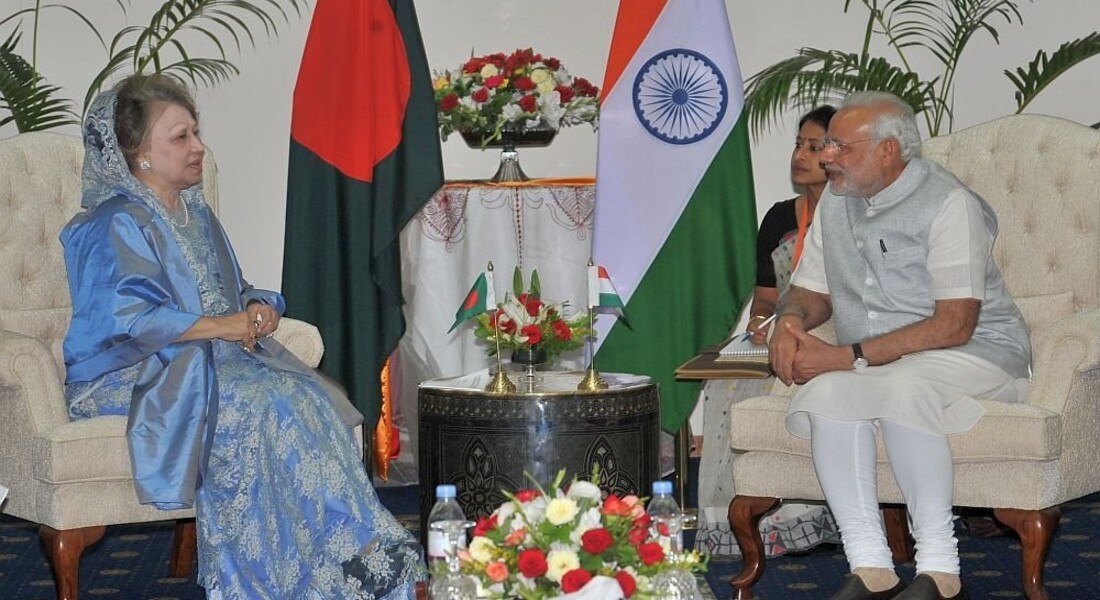
Prime Minister Narendra Modi also paid tribute to the late leader, recalling her earlier contributions to closer India–Bangladesh relations. In a message on X, he wrote that he was deeply saddened by the news and conveyed condolences to her family and the people of Bangladesh. Modi said her role in strengthening bilateral ties “will always be remembered” and recalled meeting her during his visit to Bangladesh in 2015.

Khaleda Zia’s passing comes just days after her son and BNP acting chairman Tarique Rahman returned to Bangladesh following 17 years of exile in London, a development that had already stirred political interest ahead of the national elections scheduled for February.

Her later years were marked by prolonged legal battles, periods of imprisonment and serious health complications that kept her largely out of public life. Nevertheless, she remained a powerful political symbol for her supporters, who viewed her as a long-standing opponent of authoritarian governance.

Funeral arrangements and official honours are expected to be announced shortly by the BNP and Bangladesh’s interim administration.

Khaleda Zia leaves behind a legacy closely tied to Bangladesh’s journey from military rule to electoral democracy, shaped by fierce political contest, personal struggle and decades of public service. Her death formally closes a defining chapter in the nation’s post-independence politics.

INSV Kaundinya begins maiden overseas voyage to Oman

Porbandar: The Indian Naval Sailing Vessel (INSV) Kaundinya, an indigenously built traditional stitched ship of the Indian Navy, embarked on its first overseas journey from Porbandar in Gujarat to Muscat in the Sultanate of Oman on Monday. The voyage represents a significant step in India’s endeavour to rediscover, document, and honour its ancient seafaring traditions through an active ocean passage.

The sailing vessel was ceremonially flagged off by Vice Admiral Krishna Swaminathan, Flag Officer Commanding-in-Chief, Western Naval Command. The event was attended by His Excellency Issa Saleh Al Shibani, Ambassador of Oman to India, along with senior naval officials and guests.

INSV Kaundinya has been crafted using age-old stitched shipbuilding practices, relying on natural materials and traditional construction techniques that have been followed for centuries. Drawing inspiration from historical records and visual depictions, the vessel reflects India’s long-standing traditions of indigenous ship construction, navigation and maritime skill, according to an official statement. Its journey follows historic sea lanes that once linked India’s western coastline with Oman, routes that played a crucial role in trade, cultural interaction, and long-standing civilisational contact across the Indian Ocean.

In a post on X, Prime Minister Narendra Modi congratulated the designers, artisans, shipbuilders, and the Indian Navy for their dedicated efforts in bringing this unique vessel to life.

The expedition is expected to further strengthen ties between India and Oman by highlighting their shared maritime past and deepening cultural and people-to-people connections. The vessel’s arrival in Muscat will stand as a symbolic reminder of the long-standing relationship, trust and mutual respect between the two seafaring nations. The voyage also draws attention to the historical links between Gujarat and Oman, underscoring a tradition of cooperation that remains relevant today.

Through this mission, the Indian Navy reaffirms its focus on maritime outreach, preservation of heritage and regional engagement. The journey of INSV Kaundinya reflects India’s enduring maritime ethos and its identity as a culturally grounded and responsible nation within the Indian Ocean Region.

The vessel is being commanded by Commander Vikas Sheoran, while Commander Y Hemant Kumar, who has been associated with the initiative since its early planning stages, is serving as the Officer-in-Charge of the expedition. The crew consists of four officers and thirteen sailors from the Indian Navy.

India tests long-range Pinaka rocket

Chandipur: India marked a significant milestone in its indigenous rocket programme as the Defence Research and Development Organisation (DRDO) on Monday carried out the first successful flight trial of the Pinaka Long Range Guided Rocket from the Integrated Test Range at Chandipur in Odisha.

The system was tested at its full operational reach of 120 kilometres, during which it executed all planned mid-air manoeuvres. According to the Ministry of Defence, the rocket struck its designated target with high accuracy, while tracking systems monitored the mission seamlessly from launch to impact.

The long-range guided variant has been developed by the Armament Research and Development Establishment, working in coordination with the High Energy Materials Research Laboratory, the Defence Research and Development Laboratory, and the Research Centre Imarat, according to an official statement.

A key highlight of the trial was the rocket’s launch from an existing Pinaka launcher, underscoring the platform’s flexibility to fire different Pinaka configurations across varying ranges without modification.

In a post on X, Defence Minister Rajnath Singh praised the DRDO teams for the achievement, stating that the successful development of long-range guided rockets would significantly strengthen the operational capabilities of the Armed Forces and serve as a major force multiplier.