
Dhaka/New Delhi: Former Bangladesh Prime Minister Khaleda Zia, one of the central figures in the country’s political history and the first woman to hold the office, passed away in Dhaka on Tuesday at the age of 80 after a prolonged illness.
Her party, the Bangladesh Nationalist Party (BNP), said in a statement that she died at 6 am local time at Evercare Hospital, where she had been undergoing treatment since November 23. Doctors had earlier confirmed that she was suffering from multiple serious health complications, including advanced liver cirrhosis, arthritis, diabetes and cardiac and respiratory ailments.
“Our beloved Deshnetri Begum Khaleda Zia passed away around 6am, just after Fajr prayers,” BNP Secretary General Mirza Fakhrul Islam Alamgir told a press briefing in front of the hospital this morning, the BBS NEWS reported.
Khaleda Zia served three terms as Prime Minister and, along with her long-time political rival Sheikh Hasina, dominated the country’s political landscape for more than three decades. The two leaders were often described as the “battling begums”, symbolising one of South Asia’s most enduring political rivalries. Her death comes at a time of political transition in Bangladesh, months after Hasina was removed from office following mass student protests and went into exile in India.
Bangladesh’s interim chief adviser Muhammad Yunus expressed “profound sorrow” at her death, describing her as a symbol of the country’s democratic movement and saying the nation had “lost a great guardian”.
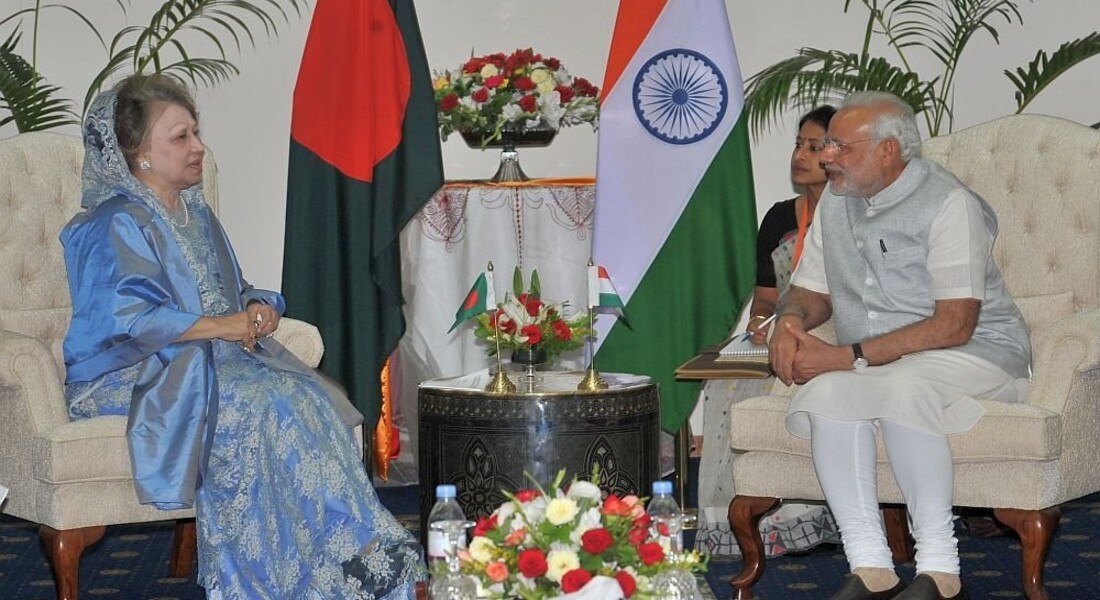
Prime Minister Narendra Modi also paid tribute to the late leader, recalling her earlier contributions to closer India–Bangladesh relations. In a message on X, he wrote that he was deeply saddened by the news and conveyed condolences to her family and the people of Bangladesh. Modi said her role in strengthening bilateral ties “will always be remembered” and recalled meeting her during his visit to Bangladesh in 2015.
Deeply saddened to learn about the passing away of former Prime Minister and BNP Chairperson Begum Khaleda Zia in Dhaka.
— Narendra Modi (@narendramodi) December 30, 2025
Our sincerest condolences to her family and all the people of Bangladesh. May the Almighty grant her family the fortitude to bear this tragic loss.
As the… pic.twitter.com/BLg6K52vak
Khaleda Zia’s passing comes just days after her son and BNP acting chairman Tarique Rahman returned to Bangladesh following 17 years of exile in London, a development that had already stirred political interest ahead of the national elections scheduled for February.
Her later years were marked by prolonged legal battles, periods of imprisonment and serious health complications that kept her largely out of public life. Nevertheless, she remained a powerful political symbol for her supporters, who viewed her as a long-standing opponent of authoritarian governance.
Funeral arrangements and official honours are expected to be announced shortly by the BNP and Bangladesh’s interim administration.
Khaleda Zia leaves behind a legacy closely tied to Bangladesh’s journey from military rule to electoral democracy, shaped by fierce political contest, personal struggle and decades of public service. Her death formally closes a defining chapter in the nation’s post-independence politics.