At IndiaVerve, we go beyond the noise to bring you meaningful stories of change, resilience and progress—from India to the world stage. Our mission is to bring readers credible, wide-ranging coverage across politics, business, sports, culture, society and more.

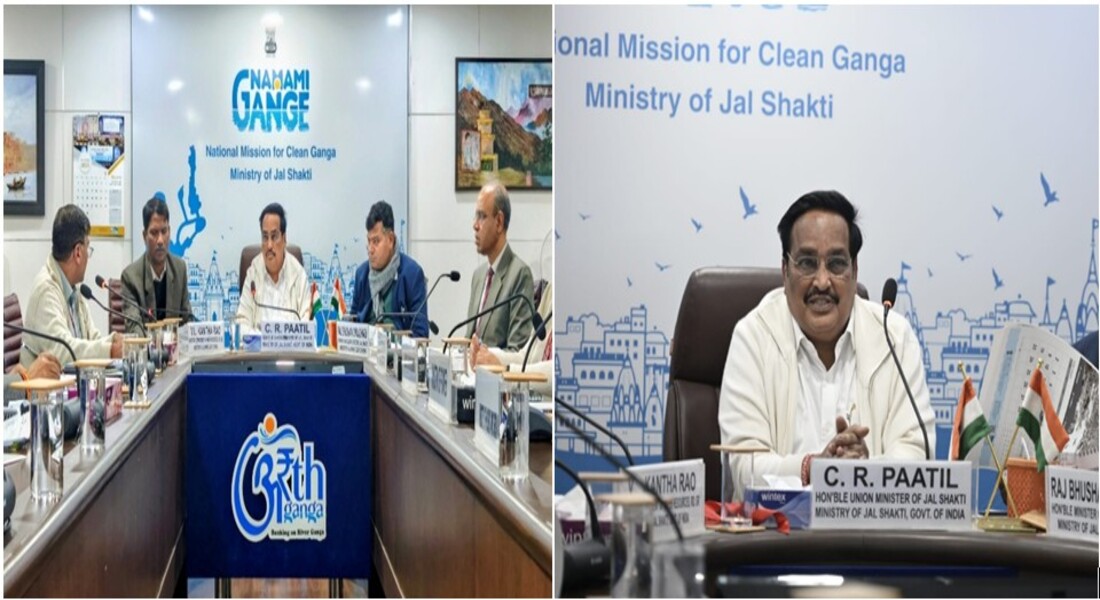
Jal Shakti Minister C.R. Paatil chairs ETF meet, pushes tech-led Ganga rejuvenation

New Delhi: Union Jal Shakti Minister C.R. Paatil on Monday chaired the 17th meeting of the Empowered Task Force (ETF) on the Namami Gange Programme, with the government placing renewed emphasis on technology-driven river rejuvenation, real-time monitoring and stricter compliance of sewage treatment systems along the Ganga basin.

At the meeting, senior officials from the Centre and Ganga basin states reviewed progress under the National Mission for Clean Ganga (NMCG), including the completion of 15 pollution-abatement projects this year across Uttar Pradesh, Bihar, West Bengal, Uttarakhand and Delhi. The minister said the implementation momentum reflected improved coordination and monitoring on the ground.

A key focus of the discussions was the deployment of advanced mapping and surveillance tools to track pollution sources more accurately. Officials reported significant progress in an aerial drainage-mapping project in Uttar Pradesh using LiDAR and drone imagery, which is being integrated into a live GIS-based dashboard to help identify pollution hotspots, prioritise interventions and prepare more accurate project reports.

The minister also directed states to finalise policies for reuse of treated wastewater in line with the national framework and to promote large-scale adoption of recycled water to reduce pressure on freshwater sources.

To strengthen oversight of sewage treatment plants, the NMCG announced plans to introduce CCTV-based visual surveillance and AI-enabled compliance checks, supplementing the Online Continuous Effluent Monitoring Systems already in place. These systems are linked to the public-facing Ganga Pulse dashboard, which discloses treatment performance data.

The meeting also reviewed financial performance, with the ETF clearing the NMCG’s annual accounts and noting a reduction in pending utilisation certificates. Paatil said sustained, coordinated, and technology-enabled efforts would be critical for long-term river rejuvenation.

Manchester United part ways with head coach Ruben Amorim

Manchester: Ruben Amorim has stepped down from his position as head coach of Manchester United, bringing an end to his brief spell at the club.

Amorim took charge in November 2024 and oversaw a notable run in Europe, guiding United to the UEFA Europa League final in Bilbao in May. However, with the team currently placed sixth in the Premier League, the club’s hierarchy has decided that a managerial change is necessary at this stage of the season.

In a statement, the club indicated that the decision was taken to maximise their chances of securing the strongest possible league finish. While acknowledging the difficulty of the move, the leadership believes the change will better serve the team’s immediate objectives.

Manchester United expressed gratitude to Amorim for his efforts during his tenure and wished him success in his future endeavours.

Assistant Coach Darren Fletcher will assume interim responsibility and will be in charge for Wednesday’s Premier League fixture against Burnley.

Trump warns India of swift tariff hike over Russian oil imports

New Delhi: US President Donald Trump has warned that the United States could raise tariffs on Indian goods “very quickly,” saying New Delhi understands the importance of keeping Washington satisfied as scrutiny grows over India’s continued purchase of Russian crude oil.

Speaking to reporters aboard Air Force One, as reported by Fox News, Trump referred to Prime Minister Narendra Modi’s outreach on the issue of Russian oil and said New Delhi was aware of the stakes.

“They wanted to make me happy, basically. Modi is a very good man; he is a good guy. He knew I was not happy, and it was important to make me happy,” Trump said, referring to India’s energy imports from Russia.

The Trump administration has already imposed tariffs of up to 50 per cent on several categories of Indian exports to the US, citing New Delhi’s continued oil purchases during the Russia–Ukraine conflict. Trump made it clear that Washington retains the option of tightening pressure even further.

“They do trade and we can raise tariffs on them very quickly. It would be very bad for them,” he said.

The comments come at a time when India–US trade talks remain stalled. Several rounds of negotiations this year failed to produce a breakthrough on tariff rollbacks, even as both governments said they wished to maintain momentum in the broader strategic partnership.

US Senator Lindsey Graham, who was on the same flight, told reporters that Indian officials had recently emphasised reductions in Russian oil imports. “I was at the Indian Ambassador’s house a month ago and all he wanted to talk about was how India is buying less Russian oil,” Graham said, adding that New Delhi had appealed for tariff relief.

Meanwhile, Congress Party sharply criticised the remarks, saying those raised serious questions about whether New Delhi’s energy and foreign policy choices were being influenced by pressure from Washington. Referring to Trump’s claim that Prime Minister Narendra Modi acted to “make me happy,” the party, in a post on X, demanded clarity on whether India had altered its purchases of Russian oil to appease the US President, and accused the government of projecting weakness instead of maintaining an “independent and robust” foreign policy.

According to media reports, recent trade data indicates Russian crude continues to make up a significant share of India’s oil basket. Official figures show that imports from Russia rose to a six-month high in November 2025, accounting for about 35 per cent of total crude intake. Purchases from the United States have also increased and now cover nearly 13 per cent of India’s oil imports, meaning the two countries together supply close to half of India’s crude needs.

India has repeatedly argued that price-sensitive oil imports are necessary to protect domestic consumers and ensure energy security, particularly in a volatile global market.

Trump’s latest warning also coincides with heightened geopolitical focus on global oil flows after the US operation in Venezuela, a country that holds the world’s largest proven crude reserves but has seen output collapse due to sanctions and underinvestment.

Despite the economic pressure, Trump also struck a softer note toward New Delhi in recent weeks, calling India “an important strategic partner” and describing Modi as “a great friend” of the United States.

The future trajectory of tariffs — and whether they become a central flashpoint in the relationship — now rests on whether Washington believes New Delhi is significantly cutting back its purchases of Russian crude.

India commissions ICGS Samudra Pratap

Goa: Marking a significant milestone in India’s push for Aatmanirbharta in shipbuilding and maritime capability, Defence Minister Rajnath Singh on Monday commissioned Indian Coast Guard Ship (ICGS) Samudra Pratap in Goa. The vessel is the first of two Pollution Control Vessels constructed by Goa Shipyard Limited for the Indian Coast Guard.

Built with more than 60% indigenous content, ICGS Samudra Pratap is India’s first indigenously designed pollution control vessel and currently the largest ship in the Coast Guard’s fleet. Its induction is expected to considerably enhance the ICG’s operational reach in pollution response, fire-fighting, maritime safety, environmental protection, and long-duration surveillance missions across the country’s expansive maritime zones.

Describing the ship as a symbol of India’s evolved defence manufacturing ecosystem, the minister said the country now possesses the capability to successfully execute complex industrial projects. He added that sustained efforts are underway to raise the indigenous content of warships and specialised vessels to nearly 90%.

“ICGS Samudra Pratap has been specially designed for pollution control, but its role is not limited to this alone. As multiple capabilities have been integrated into a single platform, the ship will prove to be effective in coastal patrol, and strengthen maritime safety. It is a product of the modern approach adopted by the GSL to enhance flexibility and readiness to deal with present-day maritime challenges,” said Singh.

The minister lauded the Indian Coast Guard for its multifaceted responsibilities, ranging from marine pollution mitigation and coastal cleanliness to search and rescue operations and maritime law enforcement. He noted that the ICG’s performance sends a clear message to adversaries that any attempt to threaten India’s maritime security would be met with a strong and decisive response.

The vessel is fitted with advanced pollution detection systems, specialised pollution response boats, and modern firefighting equipment, according to an official statement. It also includes a helicopter hangar and aviation support facilities, significantly expanding its operational reach. Singh expressed confidence that these features would enable the ship to maintain stability even in challenging sea conditions, providing a major operational advantage during real-world missions.

Calling marine environmental protection both a strategic imperative and a moral duty in the context of climate change and global warming, the Raksha Mantri praised the Coast Guard’s role in oil spill response, fire-fighting, and salvage operations. He said these capabilities place India among a select group of nations equipped with advanced environmental response systems.

Named Samudra Pratap, meaning Majesty of the Seas, the ship reflects the Indian Coast Guard’s determination to ensure clean, secure, and safe maritime spaces while protecting national interests. The vessel has a displacement of 4,170 tonnes, measures 114.5 metres in length, and can achieve speeds exceeding 22 knots. It is powered by two 7,500 kW diesel engines coupled with indigenously developed controllable pitch propellers and gearboxes, providing enhanced manoeuvrability and an operational endurance of approximately 6,000 nautical miles.

Apple iphone exports from India cross USD50bln by 2025

New Delhi: Apple has reached a major manufacturing milestone in India, exporting iPhones worth around USD50 billion by the end of 2025, underscoring the country’s growing role in the company’s global supply chain. Ashwini Vaishnaw, the minister for railways, information & broadcasting, electronics & information technology, also confirmed the news on Monday on his X account.

Vaishnaw said: “Electronics production has increased 6 times in the last 11 years. And electronics exports have grown 8 times under PM Modi Ji’s focused leadership. This progress has propelled electronics products among the top 3 exported items.”

“Adding to the ecosystem, 46 component manufacturing projects, laptop, server, and hearable manufacturers are making electronics manufacturing as a major driver of manufacturing economy. Four semiconductor plants will start commercial production this year,” the minister added.

The surge in exports has been driven largely by India’s production-linked incentive scheme, introduced in the 2021–22 fiscal year to boost domestic electronics manufacturing and attract global players.

During the first nine months of FY26, Apple shipped close to USD16 billion worth of iPhones from India, reflecting a sharp rise in output and overseas demand.

Manufacturing operations are currently anchored by five large facilities operated by Tata Group and Foxconn, supported by an ecosystem of nearly 45 component suppliers that produce parts for both Indian assembly lines and international markets. The expanding network has positioned India as a key export hub for Apple’s flagship product.

BCB decides against India travel

New Delhi: The Bangladesh Cricket Board (BCB) on Sunday said it has decided that the national team will not travel to India for the ICC Men’s T20 World Cup 2026, citing concerns related to safety and security.

In an official press release, the BCB stated that the decision was taken after reviewing the prevailing situation and assessing potential risks for players, team officials, and support staff. The board said ensuring the well-being of its contingent remains its top priority.

The press release further noted that the BCB has formally communicated its position to the International Cricket Council (ICC), requesting that Bangladesh’s World Cup matches be arranged at venues outside India. The board clarified that the move does not amount to a withdrawal from the tournament, but reflects its current inability to send the team to India under the existing circumstances.

According to the BCB, it is awaiting a response from the ICC and remains open to discussions on alternative arrangements that would allow Bangladesh to participate in the global event in a secure environment. The ICC has not yet issued an official statement on the matter.

The development adds a fresh layer of uncertainty to preparations for the 2026 T20 World Cup, with scheduling and venue planning now likely to be reviewed in consultation with all stakeholders.

US ‘in charge’ of Venezuela, says Trump, targets Cuba and Colombia

US President Donald Trump said the United States is now effectively “in charge” of Venezuela following the detention of President Nicolás Maduro in a military operation, declaring that Washington would help run the crisis-hit nation until stability is restored, even as he warned that neighbouring Cuba was “ready to fall” and suggested possible action against Colombia.

According to Fox News, Trump made the comments while speaking to reporters aboard Air Force One, amid ongoing questions about who is governing Venezuela after Maduro and his wife, Cilia Flores, were detained during a coordinated US operation in Caracas over the weekend.

Asked directly who was currently running Venezuela, Trump replied that the answer would be “very controversial,” before clarifying, “It means we’re in charge.” He said the United States would oversee Venezuela’s administration, rebuild core institutions and delay national elections until the country was back on a stable footing.

Trump also said he had not personally spoken to newly sworn-in Venezuelan Vice-President Delcy Rodríguez, but suggested there was already coordination between US officials and the interim authorities in Caracas.

He described Venezuela as a failed state unable to immediately transition to democratic rule, saying years of economic collapse had left public systems and infrastructure in ruins. Maduro is currently facing US charges linked to narcotics-related conspiracies.

“We’re going to run everything,” Trump said and added, “We’re going to run it, fix it. We’ll have elections at the right time.”

Turning to regional implications, Trump said Cuba could soon face political collapse following Maduro’s arrest, arguing that Havana no longer had access to Venezuelan oil and financial support.

“I think it’s just going to fall. I don’t think we need any action,” Trump said. “Looks like it’s going down for the count,” he was quoted as saying by Fox News.

Cuban authorities, meanwhile, have said that 32 Cuban military and intelligence personnel were killed during the US raid in Venezuela, accusing Washington of violating sovereignty and urging supporters to rally.

Trump also issued a warning to Colombia, describing the country as “very sick,” in what appeared to be a reference to President Gustavo Petro. When asked whether the US might consider a military operation there, Trump responded, “It sounds good to me.”

The remarks come as Latin America’s political order faces fresh uncertainty following Maduro’s arrest, with allies and rival governments watching closely to see how US involvement in Venezuela will evolve in the weeks ahead.