At IndiaVerve, we go beyond the noise to bring you meaningful stories of change, resilience and progress—from India to the world stage. Our mission is to bring readers credible, wide-ranging coverage across politics, business, sports, culture, society and more.

Ishan Kishan’s maiden T20I century powers India to big win over New Zealand

Thiruvananthapuram: Ishan Kishan’s maiden T20I century powered India to a commanding 46-run win over New Zealand in the fifth T20I at the Greenfield International Stadium here, as the hosts signed off their series with a dominant all-round performance ahead of the T20 World Cup.

India posted a massive 271 for 5, their third-highest total in T20 internationals. Kishan led the charge with a blistering 103 off 42 balls. Suryakumar Yadav added 63, while Hardik Pandya chipped in with 42. The innings featured 23 sixes, the joint-most by India in a T20I.

India had a slow start after losing both openers early. They managed just 54 runs in the powerplay. Kishan and Suryakumar then took control of the innings. The duo stitched a 137-run stand in just 58 balls and changed the momentum completely.

Kishan went into overdrive after the ninth over. He smashed 77 runs off his final 23 deliveries and brought up his hundred in just 42 balls. He took on Mitchell Santner and the New Zealand quicks with ease. Suryakumar also looked sharp, especially with his straight hits against pace.

Chasing 272, New Zealand began with intent. Finn Allen returned to international cricket with a fluent 80 off 38 balls. He added 100 runs with Rachin Ravindra, giving the visitors brief hope.

India struck back through Axar Patel, who removed Allen and Glenn Phillips in quick succession. Arshdeep Singh then turned the game decisively. After an expensive start, he finished with figures of 5 for 51, his first five-wicket haul in T20Is.

Axar supported well with three wickets, as New Zealand folded for 225. The margin could have been wider had India not used part-time bowlers at the end.

The win marked a strong return to full strength for India after their defeat in Visakhapatnam and served as a timely boost ahead of the T20 World Cup.

Khandagiri Magha Mela in full swing in Bhubaneswar

Bhubaneswar: The Khandagiri Magha Mela is a special occasion for drama enthusiasts and a much-awaited event for artists eager to entertain large audiences. Crowds swell from the evening onward, and from early morning until late at night, opera troupe owners call out repeatedly – “Eaade… Eaade… Aaila Aaila…”

The historic mela is currently taking place near the ancient Khandagiri and Udayagiri caves in Bhubaneswar. The Bhubaneswar Municipal Corporation and the Odisha Culture Department are jointly organising the festival, making it one of the largest religious and cultural gatherings in the state.

Security and Safety Measures: To ensure safety and smooth conduct, Mayor Sulochana Das chaired a preparatory meeting. Officials announced plans to install 100 CCTV cameras across the mela grounds. Extra police personnel will manage crowds and maintain law and order.

Facilities for Saints and Devotees: Organisers are arranging accommodation, food, and sanitation for over 1,000 saints and monks arriving from across the country. Seven large pandals will host cultural programmes and religious discourses. The mayor clarified that organisers will not allow obscene dances or performances, preserving the festival’s sanctity.

Cultural and Spiritual Significance: The mela, which will conclude on February 1, honours 144 saints and eminent personalities. Organisers will conduct five Mahayajnas following Magha Purnima and Ravi-Pushya Yoga. They will also set up stalls for traders and temporary cottages for visiting saints. Organisers emphasised that they will not encourage superstitious or unscientific practices.

Mythological Roots: According to Hindu mythology, Samba, the son of Lord Krishna, cured his leprosy after worshipping the Sun God and meditating at Khandagiri and Udayagiri. The mela commemorates this legend while promoting spirituality and cultural harmony.

Attractions for Visitors: Visitors can enjoy spiritual discourses, folk music, and dance performances that showcase Odisha’s rich cultural heritage. The nearby Khandagiri and Udayagiri caves, important Jain monuments, attract many tourists. Handicraft stalls displaying applique work and pottery support local artisans. Organisers expect the heaviest footfall between 6 p.m. and 9 p.m.

Special Highlights: This year’s mela holds special significance as it coincides with the golden jubilee of the Vishva Sanatan Vaidik Dharma Parishad and marks the 5,126th year of Kaliyuga. To commemorate the occasion, organisers will release a special souvenir.

India sends Bailey bridges to SL to aid post-cyclone recovery

New Delhi: India on Saturday stepped up support for Sri Lanka’s post-cyclone recovery by dispatching a consignment of 10 Bailey bridges to help restore critical connectivity damaged by Cyclone Ditwah, reinforcing its role as a first responder in the region.

The bridges were sent from Visakhapatnam to Colombo aboard INS Gharial, an Indian Navy landing ship, highlighting the close coordination between India’s civilian and defence agencies in humanitarian assistance and disaster relief operations.

The supply of Bailey Bridges forms part of India’s Special Economic Package of USD450 million announced during External Affairs Minister Dr. S. Jaishankar’s recent visit to Sri Lanka. The package is aimed at supporting reconstruction, infrastructure rehabilitation, and long-term economic recovery in the island nation.

In a post on X, Randhir Jaiswal, spokesperson, the Ministry of External Affairs, said: “The supply of bridges is a part of India’s Special Economic Package of USD 450 million announced during the recent visit of EAM @DrSJaishankar to Sri Lanka, after India’s emergency #HADR support through #OperationSagarBandhu.”

The latest consignment marks a shift from emergency response to reconstruction-focused support, particularly in reconnecting remote and damaged areas.

Bailey Bridges are known for their rapid deployment and durability, making them crucial for restoring road links and enabling the movement of essential goods, relief materials, and services in disaster-hit regions.

The assistance underlines India’s continued commitment to Sri Lanka’s recovery and reflects New Delhi’s broader vision of neighbourhood-first cooperation and humanitarian solidarity in the Indian Ocean region.

India seeks stronger Arab cooperation: Jaishankar

New Delhi: External Affairs Minister Dr. S. Jaishankar on Saturday called for deeper India-Arab cooperation to address regional instability, counter terrorism, and expand collaboration in emerging areas such as digital technology, space, and innovation.

He was addressing the 2nd India-Arab Foreign Ministers’ Meeting in New Delhi.

Speaking against the backdrop of a rapidly changing global order, Jaishankar said developments in West Asia, particularly the Gaza conflict, have implications well beyond the region and directly affect India’s relations with Arab nations.

He noted that the comprehensive peace plan endorsed under UN Security Council Resolution 2803, following the Sharm-el-Sheikh Peace Summit in October 2025, remains a shared international priority.

The external affairs minister also flagged multiple regional crises requiring collective attention, including ongoing conflicts in Sudan and Yemen, concerns over maritime security, and instability in Lebanon, Libya, and Syria. He said India and Arab countries have a shared interest in strengthening forces of stability, peace, and prosperity across the region.

Highlighting terrorism as a common threat to both regions, Jaishankar reiterated India’s position of zero tolerance, stressing that cross-border terrorism violates fundamental principles of international relations and demands stronger international cooperation.

Jaishankar underlined India’s deepening engagement with the League of Arab States, noting that partnerships with several Arab countries have evolved to the strategic level.

He pointed to strong people-to-people ties, large Indian expatriate communities, energy partnerships, trade links, and growing cooperation in food and health security, according to the External Affairs Ministry.

The meeting reviewed the agenda of the India-Arab Cooperation Forum for 2026–28, which currently spans sectors such as energy, environment, agriculture, tourism, education, and culture.

Jaishankar said India is keen to expand cooperation into contemporary domains, including digital public infrastructure, start-ups, space, and innovation, alongside counter-terrorism efforts and parliamentary exchanges.

He also welcomed the launch of the India-Arab Chamber of Commerce, Industry and Agriculture, describing it as a step that would complement bilateral engagements and strengthen economic ties.

Expressing confidence in the outcome of the meeting, Jaishankar said India is ready to share its people-centric technological experiences and best practices, adding that closer collaboration would be mutually beneficial.

Cabinet clears science, technology council scheme

Bhubaneswar: The Cabinet on Saturday approved the State Council on Science and Technology scheme, an umbrella initiative aimed at strengthening scientific research, innovation, and public engagement with science across the state over the next five years.

The scheme will be implemented from 2025–26 to 2029–30 with an estimated outlay of Rs254.85 crore, and will function under the Department of Science and Technology.

The Odisha State Council on Science and Technology plays a key role in advancing scientific and technological development in the state by integrating science, technology, and innovation for socio-economic progress. A major focus of the council is to popularise science among the general public – particularly students – by fostering scientific temper through educational programmes, exhibitions, and competitions.

The council also seeks to enhance the quality and relevance of Research and Development (R&D) by strengthening linkages between academia, research institutions, and industry. In addition, it aims to build a skilled workforce by supporting education and training programmes in basic and applied sciences, according to a government release.

The approved scheme comprises 14 sub-schemes and programmes, with objectives that include encouraging meritorious students to pursue higher education and research in science, supporting universities and research institutions in R&D activities, promoting scientific collaboration and innovation, and increasing awareness of Intellectual Property Rights.

Another key component of the initiative is the promotion of rational thinking and scientific temper among students and the public through District Science Centres and Planetariums. The scheme also envisions the development of a strong innovation ecosystem by establishing Innovation Hubs, preparing an innovation roadmap, and extending support to young and grassroots innovators across the State.

Fast-aging fish offers clues to slowing kidney ageing

A tiny fish that lives for just a few months is helping scientists unlock new insights into how kidneys age and how that process might be slowed, according to a new study published in the journal Kidney International.

Researchers studying the African turquoise killifish, one of the fastest-ageing vertebrates known, found that its kidneys develop age-related damage similar to what is seen in humans over decades. Because the fish completes its entire life cycle in four to six months, scientists can observe kidney ageing in real time, making it a powerful model for ageing research.

The study, led by an international team from the MDI Biological Laboratory, Hannover Medical School and Colby College, showed that as the fish aged, their kidneys lost small blood vessels, developed damage to filtration structures, showed higher inflammation and suffered disruptions in how cells produce energy. These are all hallmark features of kidney ageing and chronic kidney disease in people.

After establishing the fish as a reliable model, the researchers tested a class of widely used diabetes medicines known as SGLT2 inhibitors. These drugs are already prescribed to protect the heart and kidneys in people with and without diabetes, but the biological reasons behind their benefits are not fully understood.

The results were striking. Fish treated with SGLT2 inhibitors showed healthier kidneys as they aged. Their organs retained stronger networks of tiny blood vessels, more intact filtration barriers and better cellular energy balance compared to untreated fish. The treatment also reduced age-related inflammation and helped preserve communication between different kidney cell types.

Senior author Hermann Haller of the MDI Biological Laboratory said the findings help explain why the benefits of these drugs go beyond blood sugar control. He noted that the study offers biological evidence for why SGLT2 inhibitors consistently reduce kidney and heart complications across different patient groups.

One of the clearest differences was seen in blood vessel health. In untreated fish, ageing kidneys gradually lost capillaries, forcing cells to rely on inefficient backup energy systems. In contrast, treated fish maintained healthier vessels and showed gene activity patterns closer to those seen in younger animals, suggesting slower kidney ageing.

First author Anastasia Paulmann, who helped establish the killifish model, said the rapid-ageing fish allows researchers to compress decades of kidney decline into a short timeframe. This makes it possible to test therapies quickly while still generating insights that are relevant to human health.

The research team plans to study whether these drugs can also help repair kidneys after age-related damage has already occurred and whether the timing of treatment affects long-term outcomes. Scientists believe the fast-ageing fish kidney ageing model could speed up the search for treatments that help people maintain kidney health later in life.

The study was supported by funding from the US National Institutes of Health and several research foundations.

Minister Mohapatra pushes heritage, urban development in Cuttack

Bhubaneswar: Minister of Housing and Urban Development and Public Enterprises, Krushna Chandra Mohapatra, on Saturday directed officials to fast-track ongoing development projects in Cuttack city and ensure their completion within stipulated timelines.

During a high-level review meeting at Unnati Bhavan, the minister emphasized preserving heritage sites, restoring ponds, and utilizing vacant spaces effectively to maintain environmental balance.

The meeting was attended by the Additional Secretary of the Housing and Urban Development Department, the Commissioner of Cuttack Municipal Corporation (CMC), the Vice-Chairperson of Cuttack Development Authority (CDA), and senior officials from both CMC and CDA.

The meeting also focused on modernizing gaushalas (cow shelters), developing multifunctional parks, expanding fish markets, and maintaining cleanliness, hygiene, and proper upkeep across all city parks.

Strategies for sustainable and inclusive urban development were deliberated along with action plans for upcoming projects.

Under the leadership of Chief Minister Mohan Charan Majhi, the government aims to strengthen Cuttack’s infrastructure, improve facilities for residents, and enhance urban living standards, Mohapatra said in a post on X.

Coordination among all stakeholders was stressed as crucial to developing Cuttack as a heritage city while ensuring that progress benefits residents directly.

Erigaisi fights hard despite loss at Tata Steel Masters

New Delhi: Indian grandmaster Arjun Erigaisi showed grit and resilience on Friday despite suffering a narrow defeat against Uzbekistan’s Javokhir Sindarov in Round 11 of the Tata Steel Chess Masters 2026 in Wijk aan Zee.

Playing with the white pieces, Erigaisi applied sustained pressure and remained competitive for most of the contest. He found a long sequence of strong moves and kept the game balanced deep into the middlegame, according to reports.

A slip around the 40th move shifted the advantage towards Sindarov. However, Erigaisi refused to fold. He continued to pose problems and briefly unsettled his opponent before the Uzbek grandmaster eventually converted his edge.

The loss ended Erigaisi’s hopes of joining the tournament lead, but his fighting performance underlined his growing maturity at the elite level.

Sindarov’s victory lifted him to the top of the standings alongside compatriot Nodirbek Abdusattorov. Both Uzbek players now share the lead on seven points with two rounds remaining.

Abdusattorov, meanwhile, drew his Round 11 game against Dutch grandmaster Jorden van Foreest. The result allowed him to retain his position but opened the door for Sindarov to catch up.

With the final rounds approaching, Erigaisi remains an important presence in the tournament, continuing to test the world’s best and gaining valuable experience on one of chess’s biggest stages.

Iran reiterates peaceful nuclear stance

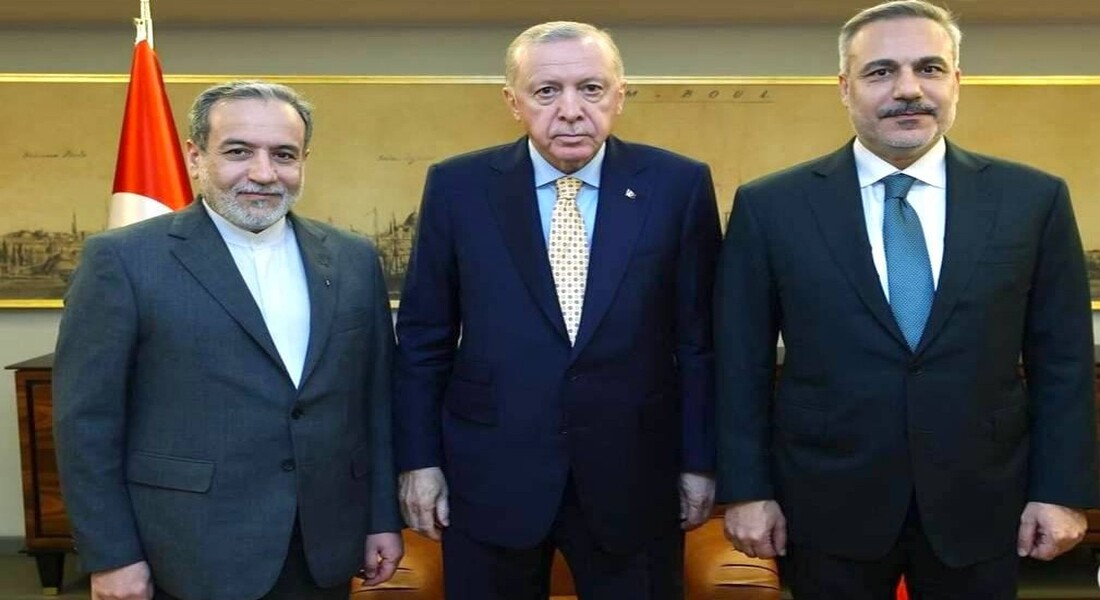
New Delhi: Iran’s Foreign Minister Seyed Abbas Araghchi on Friday reaffirmed that Iran has no intention of developing nuclear weapons and remains open to a fair nuclear agreement that safeguards national interests and ensures the lifting of sanctions.

Araghchi made the remarks after holding discussions with Turkish President Recep Tayyip Erdoğan and Foreign Minister Hakan Fidan, focusing on Iran–Türkiye bilateral ties and regional developments of mutual concern.

He stated that Iran is prepared to engage constructively in a balanced nuclear deal that guarantees a “no nuclear weapons” commitment while addressing the legitimate economic rights of the Iranian people.

The Iranian foreign minister also welcomed Türkiye’s diplomatic outreach aimed at promoting peace and stability in the region. He described Ankara’s efforts, along with those of other neighbouring countries, as valuable in easing tensions and preventing further escalation.

In a post on X, Araghchi said Iran remains committed to working closely with regional states to preserve stability and protect the region from unlawful aggression.

In parallel diplomatic outreach, Araghchi held separate telephone conversations with the foreign ministers of Qatar, Egypt, the United Arab Emirates, Pakistan, and Oman. The discussions focused on the evolving regional and international situation and its security implications, according to Iranian Ministry of Foreign Affairs.

During these calls, Araghchi outlined Iran’s position on recent developments and stressed the importance of responsible diplomacy. The participating ministers agreed on the need to manage the current situation carefully, keeping regional peace and security as a priority.

Iran continues to emphasise dialogue and regional cooperation as key pillars of its foreign policy amid heightened geopolitical sensitivities.

Bihar CM seeks CBI probe in NEET aspirant death

New Delhi: Bihar Chief Minister Nitish Kumar has formally written to the Union government, requesting that the investigation into the death of a National Eligibility-cum-Entrance Test (NEET) aspirant in Patna be taken up by the Central Bureau of Investigation (CBI). The chief minister stated that the case must be investigated transparently and fairly to ensure justice for the student and her family.

Bihar Deputy CM Samrat Choudhary confirmed the news on Saturday on his X account.

The case, registered as Case No. 14/26, relates to an 18-year-old girl who was preparing for the NEET in a private hostel in Patna. She was found unconscious in her room earlier this month and later died in the hospital, according to reports. Authorities initially treated the matter as a possible suicide. However, questions soon emerged about the circumstances surrounding her death.

Her family has consistently rejected the suicide theory and alleged foul play. They have accused investigative agencies of downplaying critical aspects of the case and have repeatedly demanded a central probe. Recent public demonstrations by students and residents in Patna have highlighted growing concerns over how the matter was handled locally.

Earlier, police suspended two officers for failing to take timely action and gather crucial intelligence early in the investigation. The State government’s move to seek a CBI investigation reflects both public pressure and political consensus that the matter should be examined without bias.