At IndiaVerve, we go beyond the noise to bring you meaningful stories of change, resilience and progress—from India to the world stage. Our mission is to bring readers credible, wide-ranging coverage across politics, business, sports, culture, society and more.

Nepal votes in first election after protests toppled Oli government

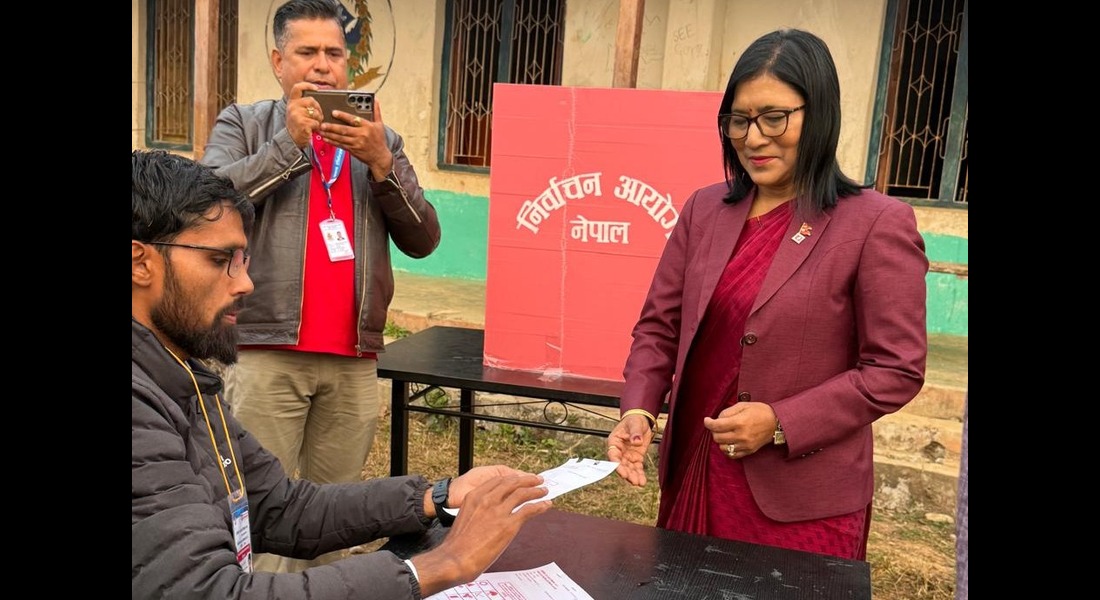
Kathmandu: Voting was underway across Nepal on Thursday in the country’s first general election since mass protests led to the resignation of former prime minister KP Sharma Oli earlier this year. More than 18 million voters are eligible to cast ballots to elect the 275-member House of Representatives.

Polling began at 7 am and is scheduled to continue until 5 pm. Of the total parliamentary seats, 165 will be decided through direct voting while the remaining 110 will be filled through a proportional representation system based on the overall vote share secured by political parties. Ram Prasad Bhandari, acting chief commissioner of the Election Commission of Nepal, has stated that the conducive atmosphere has been created for confident voting, the Himalayan Times reported.

The elections come nearly six months after widespread protests forced the resignation of Oli following public anger over a government decision to ban several social media platforms. Although the ban was lifted within days, the demonstrations expanded into broader protests against alleged corruption and governance failures, eventually leading to the government’s collapse.

Some polling disruptions were reported during the voting process. According to Nepalnews.com, polling did not begin at two centres in Darchula district after residents boycotted the vote. In Apihimal Rural Municipality and Nauged Rural Municipality, voters refused to participate, continuing a no-vote campaign launched earlier this year to press for administrative reforms and ward restructuring. The two centres together have nearly 950 registered voters.

Security arrangements have been tightened nationwide to ensure smooth polling. Nepal’s Home Minister Om Prakash Aryal, Home Secretary Raj Kumar Shrestha and chiefs of various security agencies monitored the electoral process from the Home Ministry’s control room, according to officials.

Logistical measures have also been taken to ensure voting access in remote areas. The Himalayan Times reported that helicopters were used to transport election materials to isolated mountainous regions and are expected to help deliver ballot boxes from dozens of remote polling stations to counting centres.

Security forces have been deployed in multiple layers around polling centres and ballot transport routes. The Nepal Army will provide outer-layer security for ballot boxes, with the Armed Police Force and Nepal Police handling inner security responsibilities.

The election is being closely watched as a key test of Nepal’s political stability following months of unrest and calls for governance reforms.
Scindia calls for affordable digital connectivity at Mobile World Congress 2026

New Delhi: Union Communications Minister Jyotiraditya M Scindia emphasised on Wednesday that connectivity must become universally affordable if it is to be truly transformative.

Scindia commented while delivering the closing keynote address at the Ministerial Stage during the session titled “Breaking the Cost Barrier” at Mobile World Congress 2026 in Barcelona, Spain.

He led India’s engagements at the GSMA Ministerial Programme and the MWC Main Stage, outlining India’s vision for affordable, inclusive, and future-ready digital connectivity, according to an official statement.

Scindia stressed the need to bridge the digital usage gap and make connectivity affordable for all. The minister said device and service affordability remained central to digital inclusion. He noted that billions of people still faced barriers to accessing the digital economy due to high costs.

The minister further said that the challenge was not the absence of technology but the cost barriers that prevent billions from participating in the digital economy.

He highlighted India’s experience in lowering data costs through policy reforms, competition, and large-scale adoption. Scindia said India’s digital journey shows that scale, innovation, and stable policy frameworks can dramatically reduce costs.

He added that the collective responsibility of nations is to ensure that next-generation connectivity, from 5G to emerging 6G ecosystems, remains affordable, inclusive, and scalable.

The minister also called for coordinated action by governments, industry, financial institutions, and global organisations to promote device affordability, innovative financing, and sustainable digital ecosystems.

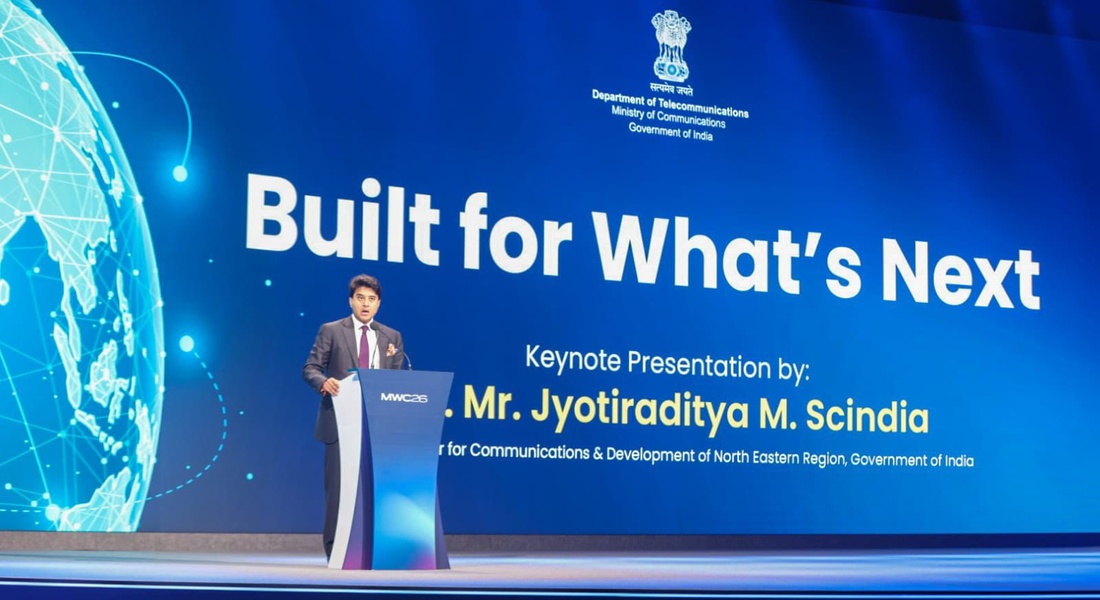
Later in the day, Scindia addressed the main stage at Mobile World Congress 2026 in a keynote session titled “Built for What’s Next.”

He spoke about the transformation of telecom networks into intelligent and adaptive platforms powered by artificial intelligence and cloud-native technologies. Scindia said the world is moving into an era where networks are becoming intelligent, autonomous, and anticipatory.

He added that AI-driven systems, cloud-native architectures, and secure digital ecosystems are redefining how citizens experience connectivity and how enterprises innovate.

He further said the future of connectivity lies not only in faster speeds but also in resilient infrastructure and seamless digital experiences. According to him, technology must empower individuals, strengthen businesses, and enable societies to thrive.

The address reaffirmed India’s commitment to building a secure and globally competitive digital infrastructure.

India suffer losses at All England Open 2026 in Birmingham

New Delhi: India on Wednesday suffered setbacks in men’s singles, men’s doubles, and mixed doubles at the All England Open 2026 in Birmingham.

India’s Ayush Shetty bowed out of the men’s singles event after losing to Indonesia’s Alwi Farhan in Birmingham. Farhan, the 2023 World Junior Champion, defeated the Indian 19-21, 21-9, 21-17 in a 75-minute match.

Shetty, who had claimed bronze at the 2023 World Junior Championships, fought hard in an intense contest. He took the opening game 21-19 but failed to maintain momentum. Farhan dominated the second game 21-9 and sealed the decider 21-17 to close the match.

Meanwhile, India’s top men’s doubles pair of Satwiksairaj Rankireddy and Chirag Shetty suffered a Round of 32 defeat against Malaysia’s Aaron Tai and Khai Xing Kang, according to olympics.com.

The World No. 4 Indian pair lost 23-21, 21-12 in 42 minutes and exited the competition. The Malaysians controlled most of the opening game. Rankireddy and Shetty saved two game points to level at 20-20. However, Tai and Kang claimed the crucial points to take the opener 23-21.

The second game turned one-sided. The Indian duo trailed by seven points at one stage and failed to recover as the Malaysian pair wrapped up the match 21-12.

Similarly, in mixed doubles, India’s Rohan Kapoor and Ruthvika Gadde went down to France’s Thom Gicquel and Delphine Delrue.

The French pair secured a straight-game victory 21-12, 21-15 in 42 minutes to knock the Indians out of the tournament.