At IndiaVerve, we go beyond the noise to bring you meaningful stories of change, resilience and progress—from India to the world stage. Our mission is to bring readers credible, wide-ranging coverage across politics, business, sports, culture, society and more.
At IndiaVerve, we go beyond the noise to bring you meaningful stories of change, resilience and progress—from India to the world stage. Our mission is to bring readers credible, wide-ranging coverage across politics, business, sports, culture, society and more.
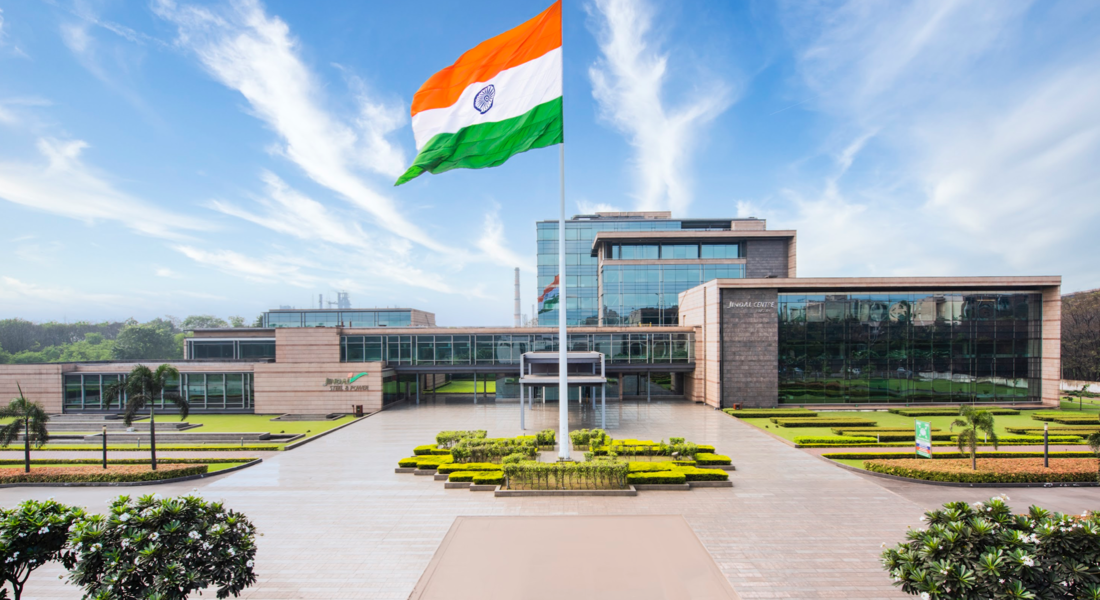
Bhubaneswar: Jindal Steel Limited on Wednesday said it has emerged as the preferred bidder for the Thakurani-A1 Iron Ore Block in Keonjhar, marking a key step in the company’s expansion strategy.
The company secured the block after the conclusion of an online auction conducted by the government of Odisha. Jindal Steel is committed to paying a 101.20% premium to the government as part of the bidding process, the company said in a press release.
The Thakurani-A1 Iron Ore Block, spread across 202 hectares, was among 12 virgin mineral blocks put up for auction by the Odisha Directorate of Mines and Geology in December 2025.
According to government documents, the block is classified as G3-level explored and contains around 50 million tonnes of iron ore resources.
Jindal Steel Limited is one of India’s integrated steel producers and is known for its large-scale operations and focus on efficiency in steel manufacturing.
New Delhi: Prime Minister Narendra Modi on Wednesday launched and inaugurated a series of infrastructure and development projects worth over Rs 16,600 crore in Tiruchirappalli and Kochi, aimed at strengthening connectivity, energy infrastructure, and industrial growth in the two states.
Addressing a gathering in Tiruchirappalli, the PM said the projects, worth Rs 5,600 crore, would improve energy access, strengthen connectivity, and create employment opportunities for the youth of Tamil Nadu.
Modi laid the foundation stone for Bharat Petroleum Corporation Limited’s City Gas Distribution network, according to an official statement.
The Rs 3,700-crore project will supply piped natural gas to nearly nine lakh households and several commercial establishments in the Nilgiris and Erode districts. Modi said the project would deliver major environmental benefits over the next eight years.
He also dedicated the Indian Oil Corporation Limited’s lube blending plant in Chennai to the nation. The PM further said the facility would strengthen the Make in India programme by boosting domestic production and reducing lubricant imports.
Highlighting rural connectivity, Modi inaugurated 370 kilometres of roads built under the Pradhan Mantri Gram Sadak Yojana. He said better roads would improve access to healthcare, education, and markets for villages and support rural economic activity.
The PM also announced a new highway bypass at Gangaikonda Cholapuram Temple to divert heavy traffic away from the historic site built by Emperor Rajendra Chola and improve safety for visitors.
During the visit, Modi also highlighted the modernization of railway stations under the Amrit Bharat Station Scheme. New train services linking cities such as Nagercoil, Coimbatore, Rameshwaram, Tirunelveli, Mayiladuthurai, and Karaikkudi were flagged off to improve connectivity and promote tourism and trade.
Earlier in Kerala, the PM launched and laid the foundation stone for projects worth around Rs 11,000 crore in Kochi. He said the initiatives would accelerate infrastructure development and strengthen Kerala’s economic growth.
Among the key projects is the Polypropylene Unit at the Kochi Refinery, which is expected to produce four lakh tonnes annually to support industries such as packaging, textiles, and medical devices.
Modi also laid the foundation stone for a 50-MW floating solar project in West Kallada to promote renewable energy in the State. He said Kerala’s large number of water bodies provides strong potential for floating solar power generation.
The PM also highlighted railway upgrades and connectivity improvements under the Amrit Bharat Station Scheme, including modernization work at Shoranur Junction, Kuttipuram, and Changanassery stations. A new Palakkad–Pollachi train service was also launched to strengthen regional connectivity between Kerala and Tamil Nadu.
On road infrastructure, Modi said new six-lane highway projects, including the Kozhikode Bypass and improved connectivity to Azhikkal Port, would reduce travel time and ease congestion while supporting trade, tourism, and agriculture.
He added investments in modern infrastructure generate employment and support long-term economic growth. He expressed confidence that the projects would contribute to building a prosperous and developed future for the region.
New Delhi: The Union government has allocated Rs 20,000 crore under the Nuclear Energy Mission announced in the Union Budget 2025–26 to support the research, design, development and deployment of Small Modular Reactors (SMRs), the Lok Sabha was informed on Wednesday.
In a written reply to a parliamentary question, Union Minister of State (Independent Charge) for Science and Technology and Atomic Energy, Dr. Jitendra Singh said the initiative aims to advance indigenous reactor technology and strengthen India’s nuclear energy capabilities.
Bhabha Atomic Research Centre (BARC), a unit of the Department of Atomic Energy (DAE), is currently working on the design and development of three types of small modular reactors. These include 220 MWe Bharat Small Modular Reactor (BSMR-200), 55 MWe Small Modular Reactor (SMR-55), and a high-temperature gas-cooled reactor of up to 5 MWth capacity intended for hydrogen generation. The lead units of these reactors will be set up at DAE sites to demonstrate the technology, the minister informed the House.
He said that an estimated Rs 5,960 crore has been earmarked for the development and construction of the BSMR-200 reactor. Around Rs 7,000 crore will be used for developing and constructing two units of the SMR-55, while Rs 320 crore has been allocated for the design and construction of the high-temperature gas-cooled reactor. Additional funds have been earmarked for reactor design and engineering work as well as civil and infrastructure development for the reactor complex.
Providing details of progress made so far, the minister said the BSMR-200 project has received in-principle approval from the Atomic Energy Commission (AEC), and a proposal for administrative and financial sanction has been cleared for submission to the Cabinet Committee. The SMR-55 project has also received in-principle approval.
For the high-temperature gas-cooled reactor, a detailed project report has been prepared. Siting consent has been obtained and the terms of reference for environmental clearances have been issued by the Ministry of Environment, Forest and Climate Change.
Dr. Singh further said key technologies required for these reactors have been developed domestically. A special material known as Advanced Purified Reactor Vessel Alloy (ApuRVA) has been developed in collaboration with Indian industries for forging reactor pressure vessels used in the BSMR-200 and SMR-55 reactors. The control rod drive mechanism has also been developed within the country.
He noted that most of the equipment required for the reactors can be manufactured by Indian industries with technological support from BARC.
The Bharat Small Modular Reactor is being jointly designed and developed by BARC and the Nuclear Power Corporation of India Limited (NPCIL). The estimated construction time for the BSMR is expected to be between 60 and 72 months after administrative and financial approval is granted.
Bhubaneswar: The Centre has sanctioned 400 electric buses for five cities in Odisha under the PM-eBus Sewa scheme to strengthen clean urban transport in the state.
Minister of State for Heavy Industries Bhupathiraju Srinivasa Varma, as reported by PIB India, shared the information in a written reply in the Lok Sabha.
The government has sanctioned Rs 88.16 crore for Odisha, of which Rs 47.87 crore has already been spent, the minister said.
The PM-eBus Sewa Scheme, implemented by the Ministry of Housing and Urban Affairs, aims to strengthen urban transport by deploying 10,000 air-conditioned electric buses in cities with a population between three lakh and 40 lakh.
The scheme also covers clusters of adjoining statutory towns, state capitals, and capital cities in the Northeast India and hilly regions with a population below three lakh.
The initiative will help about 30% of participating cities introduce organised public transport systems. Around 80% of the cities will move toward electric mobility for the first time.
The government said the scheme has received an overwhelming response. It provides infrastructure support, including 100% financial assistance for Behind-the-Meter power infrastructure needed to operate electric buses.
Authorities have approved more than 200 infrastructure proposals, covering both civil depots and power infrastructure, along with the demand for 10,000 e-buses. The government has also sanctioned over 500 circuit kilometres of high-tension power lines and depot construction across more than 300 acres of land.
Till December 2025, the government sanctioned Rs 1,254.38 crore for infrastructure proposals under the scheme, while Rs 483.70 crore has already been spent.
Overall, 10,000 buses have been approved across 116 cities in 20 states and six Union Territories under the PM-eBus Sewa Scheme.
New Delhi: External Affairs Minister Dr. S. Jaishankar on Wednesday said he exchanged views on the ongoing West Asia conflict with French Foreign Minister Jean-Noël Barrot.
In a post on X, the minister said: “Appreciate the exchange of assessments today with FM Jean-Noël Barrot of France on the West Asia conflict.”
“Look forward to continuing it in person,” he added.
Jaishankar also had a useful discussion with Kaja Kallas, Vice-President of the European Commission (EC), on the West Asia conflict and its repercussions.
West Asia conflict: Yousef Pezeshkian, an Iranian government adviser and the son of the country’s president, said on Wednesday that Iran’s new Supreme Leader, Mojtaba Khamenei, is “safe and sound” despite suffering injuries during the war.
State television earlier described the 56-year-old leader as a “wounded veteran of the Ramadan war” but did not reveal the nature of his injuries, theguardian.com reported.
Meanwhile, two ships were struck by unidentified projectiles in the strategic Strait of Hormuz near Iran. One vessel suffered damage, but its crew remained unharmed. The second ship, identified by the Thai Navy as a Thai bulk carrier, caught fire, and the crew evacuated the vessel. The Thai Navy said rescuers have saved 20 crew members and are trying to locate the remaining three.
US Central Command said it destroyed 16 Iranian vessels involved in laying mines near the Strait of Hormuz. US President Donald Trump earlier said there were “no reports” that Iran had placed mines in the strait. He warned that if mines were present, they must be removed “IMMEDIATELY” or Iran would face military consequences “at a level never seen before”.
The Israeli military said it launched a “wide-scale wave” of strikes on targets in Iran and Lebanon. Earlier, the Israel Defense Forces said they hit key command centres of the Iranian armed forces in Tehran and Tabriz. In Lebanon, Israeli attacks killed 84 people on Tuesday, raising the overall death toll to 570 since the conflict began.
The Israeli military also said Iran fired missiles and drones across the Gulf, including toward Israel, and targeted oil infrastructure in Saudi Arabia. Saudi Arabia’s defence ministry said it destroyed five drones heading toward the Shaybah oil field in the Empty Quarter desert. Kuwait said it shot down eight drones over its territory. Bahrain also sounded sirens early Wednesday to warn of an incoming Iranian attack.
Bhubaneswar: The Food Supplies and Consumer Welfare Department of Odisha has earmarked Rs 6,538.28 crore for food supply and paddy procurement programmes in the financial year 2026-27.
Of the total allocation, Rs 102.53 crore has been set aside for administrative expenditure, while Rs 6,435.75 crore will be spent on programme activities aimed at strengthening procurement operations and food distribution systems in the State, the department shared at a press brief on Tuesday.
The department highlighted a record achievement in paddy procurement during the Kharif Marketing Season 2024–25. More than 92.64 lakh metric tonnes of paddy were procured from 19.73 lakh farmers – the highest procurement recorded in Odisha so far. Nearly Rs 28,719 crore was transferred directly to farmers’ bank accounts towards Minimum Support Price (MSP) along with input assistance.
The State government is providing additional input assistance over and above the MSP announced by the Centre, ensuring farmers receive Rs 3,100 per quintal for their paddy. During KMS 2025-26, payments worth Rs 20,519 crore have already been credited to farmers’ accounts for the procurement of about 70 lakh metric tonnes of paddy.
To improve transparency and efficiency, the government has introduced several technology-driven initiatives, including AI-based smart grain analysers, mobile paddy cleaners, direct benefit transfer through Aadhaar-KYC and NPCI systems, CCTV surveillance in mandis, and a toll-free grievance helpline “1967”.
The government has also created a revolving fund of Rs 5,000 crore to ensure MSP payments reach farmers within 24–48 hours through the paddy procurement automation system.
In addition, the state has extended a government guarantee of Rs 17,500 crore to the Odisha State Civil Supplies Corporation Limited to facilitate loans for procurement operations. Plans are also underway to create 10 lakh metric tonnes of additional storage capacity under the Odisha State Private Entrepreneur Scheme through a public–private partnership model.
The budget also includes Rs 887.42 crore under the Public Distribution System scheme for the supply of food grains in 2026-27.
Bhubaneswar: The Odisha Vigilance today carried out simultaneous searches at seven locations linked to Prasanna Samantaray, an OAS officer serving as Tahasildar of Kantapada in Cuttack district, in connection with allegations of possessing assets disproportionate to his known sources of income.
The searches were conducted on the strength of warrants issued by the Special Vigilance Court in Cuttack. The operation was led by two Additional Superintendents of Police, eight Deputy Superintendents of Police, eleven Inspectors, five Assistant Sub-Inspectors and supporting staff.
The raids, according to an official release, were carried out at multiple locations across Cuttack, Bhubaneswar in Khordha district, Puri and Kendrapara. These included two multi-storey residential buildings in the Kesura area of Bhubaneswar, one of which is still under construction, the officer’s paternal house in Duchhia village in Puri district, the residences of relatives in Bhubaneswar and Kendrapara, his office chamber at Kantapada in Cuttack district, and his official government quarters.
During the searches, vigilance officials said they had so far detected two multi-storey buildings, seven high-value land plots in Bhubaneswar, cash amounting to Rs 2.15 lakh, one four-wheeler and three two-wheelers.
The two buildings identified during the operation include a completed three-storey structure with an approximate area of 4,065 square feet at Kesura in Bhubaneswar and another under-construction three-storey building with an area of around 6,750 square feet at the same location.
Investigators also traced seven land parcels located in different parts of Bhubaneswar, including Kesura, Koradakanta, Bankuala and Meherpalli.
Officials said the technical wing of the vigilance department is currently conducting measurements and valuation of the properties. Details regarding bank deposits, postal savings and other financial investments linked to the officer and his family members are also being examined.
According to vigilance officials, Samantaray entered government service on January 21, 2000 as a Local Fund Auditor with an initial salary of Rs 5,130. The investigation into the alleged disproportionate assets case is currently underway.
New Delhi: In a landmark decision, the Supreme Court of India today permitted the withdrawal of life support for a 31-year-old man from Ghaziabad who has been in a persistent vegetative state for more than a decade following a tragic accident. The ruling is being seen as one of the most significant judicial interventions on passive euthanasia in India.
The man, Harish Rana, suffered severe brain injuries in 2013 after falling from the fourth floor of a paying guest accommodation while he was a student at Panjab University. Since the accident, he has remained bedridden and dependent on medical support systems, including a tracheostomy tube for breathing and a feeding tube for nutrition.
Acting on a plea filed by his parents, the court allowed the withdrawal of life-sustaining treatment after noting that Rana had shown no signs of recovery in the 13 years since the accident. Medical reports presented before the court indicated that he remained in a persistent vegetative state with no meaningful neurological improvement.
The court, according to media reports, observed that while the primary duty of doctors is to treat and preserve life, such an obligation cannot continue indefinitely when there is no realistic hope of recovery. It also emphasised that the withdrawal of life support must be guided by two key considerations — whether the intervention qualifies as medical treatment and whether continuing or withdrawing it serves the best interests of the patient.
The bench directed that Rana be admitted to All India Institute of Medical Sciences for palliative care, where doctors will prepare a medically supervised plan for the withdrawal of life support while ensuring that the process is carried out with dignity.
The ruling also included a recommendation to the central government to consider introducing comprehensive legislation governing passive euthanasia, which currently operates largely through judicial guidelines and case-by-case approvals.
Passive euthanasia in India was first recognised by the Supreme Court in the 2011 judgment in the Aruna Shanbaug v. Union of India case. Shanbaug, a nurse who had been left in a vegetative state following a brutal assault decades earlier, became the centre of a national debate on the right to die with dignity. While the court rejected the plea to withdraw life support in her case, it laid down guidelines permitting passive euthanasia in exceptional circumstances.
The latest ruling further clarifies how those principles may be applied in cases involving prolonged irreversible medical conditions, marking another step in the evolving legal and ethical debate surrounding end-of-life care in India.
Baipariguda: In Sarukunda, a remote hilltop village in Odisha’s Koraput district, education has never truly arrived. For generations, residents of this small settlement have grown up without learning even the basics of reading and writing. In a country striving for universal literacy and digital governance, the children of Sarukunda are still waiting for something as basic as their first classroom.
Villagers say the chalk and slate of the education department have simply never made the climb to their village. As a result, Sarukunda, which comes under Dasmantpur Gram Panchayat, remains trapped in a cycle of illiteracy, where even today many residents cannot recognise the first letters of the alphabet.
Reaching Sarukunda itself explains part of the story. From the Baipariguda block headquarters, one must travel via Tanginiguda to the Tapajodi village junction. From there, a narrow road branches left toward Kanchapodapadar village under Kolar Gram Panchayat. After crossing that settlement, another four kilometres of rough and uneven terrain must be navigated before Sarukunda finally appears atop a hill. Though the village is barely 20 kilometres from the block headquarters, the difficult terrain has effectively kept it cut off from several basic services.
Only 19 families live in this isolated settlement, and agriculture remains their primary livelihood. Yet while the villagers cultivate their land to sustain themselves, education has never taken root here. Neither the elders nor the younger generation have had the opportunity to take even the first step toward literacy.
The author is having an interaction with community members in Sarukunda village
Today, Sarukunda has 24 children between the ages of five and twelve. Shockingly, not one of them can even write their own name. When the author interacted with the children during the visit, they spoke of their desire to go to school, learn to read and write, and build a better future. But the absence of even the most basic access to education has quietly begun to silence their dreams before they can truly take shape.
“We want to go to school and learn to read and write like other children. If we get a chance to study, we can become something in life and help our village grow. But without a school nearby, our dreams remain only dreams,” said Rukuni Gouda, one of the children of Sarukunda.
According to the villagers, no government arrangement has ever been made for the education of their children, and none of them have attended a nearby school. Residents allege that officials from the block and district education departments often treat the children of Sarukunda as belonging to neighbouring villages, effectively leaving them outside the formal education system.
“We have repeatedly submitted written appeals to the authorities requesting a school for our village children, but no one has listened to our concerns so far,” said village head Madhu Khil. “Our children are eager to learn, but without a school or any educational support, their future remains uncertain.”
Villagers say that if authorities arrange admission for the children in a nearby residential school, the next generation could finally break free from the cycle of illiteracy.
The situation raises serious questions about how the education system functions at different administrative levels. How an entire village has remained outside the reach of basic education for decades is a matter that demands urgent attention and investigation.
Panchayat Samiti Chairman Prashant Kumar Gupta, however, said he had not received any formal complaint about the issue so far. “If the situation described is indeed true, it is a serious matter. I will immediately take it up with the education department and ensure that arrangements are made so the children of the village can access education,” he said.
Block Education Officer Sukanta Kumar Kartami said he would personally visit the village to assess the situation. “After visiting the village, I will report the matter to the District Education Officer and take necessary steps to find a solution so that the children can begin their education,” he said.
For now, however, Sarukunda continues to live in the shadow of educational neglect. As the country moves forward with ambitious literacy drives and digital initiatives, the villagers wonder whether their children too will grow up like their elders — signing documents with thumb impressions instead of their own names.
Bhubaneswar: KIIT Deemed to Be University will host the 61st Femina Miss India Grand Finale at its Bhubaneswar campus this April, marking a significant national event on the university grounds.
KIIT signed a Memorandum of Understanding (MoU) with Femina Miss India on Tuesday to formalize this collaboration. The signing ceremony, held at the Times of India office in Mumbai, was streamed live at 3 PM.
The event was attended by Prof. (Dr.) Saranjit Singh, Vice-Chancellor of KIIT, Rohit Gopakumar, CEO of Times Network, Prof. Achyuta Samanta, founder of KIIT, and other distinguished personalities.
Members of the KIIT, KISS, and KIMS communities were invited to watch the live ceremony through the official link.
This collaboration strengthens KIIT’s mission of empowering future leaders and underscores the university’s role as a hub for national-scale events celebrating women’s talent and leadership, the educational institution said in a statement.
The partnership highlights KIIT’s commitment to women’s empowerment and inclusive education. Nearly 50% of students at KIIT and about 70% at KISS are women, reflecting the institutions’ dedication to creating an environment where young women can learn, grow, and lead with confidence and dignity.
Femina Miss India, which has celebrated and empowered women for over 70 years, provides a national platform recognizing the talent, confidence, and leadership of young women across India.