At IndiaVerve, we go beyond the noise to bring you meaningful stories of change, resilience and progress—from India to the world stage. Our mission is to bring readers credible, wide-ranging coverage across politics, business, sports, culture, society and more.

India greco-roman wrestlers win two medals at Asian Championships 2026

New Delhi: India’s Greco-Roman wrestlers secured two medals on the second day of the Asian Wrestling Championships 2026 in Bishkek, Kyrgyzstan, on Tuesday.

Lalit claimed silver in the 55kg category, while Sunil Kumar won bronze in the 87kg division.

Lalit, ranked 12th in the 55kg Greco-Roman rankings, lost 9-0 to world No. 7 Ikhtiyor Botirov of Uzbekistan in the final. The 23-year-old registered his first senior medal at the continental championships. He had reached the final after defeating China’s Huoying Shi 11-3 in the semi-finals on Monday. Lalit had also won bronze at the Muhamet Malo Wrestling meet last month and is a U23 Asian Championships bronze medallist, according to .olympics.com.

Sunil Kumar added another podium finish to his record with a 5-4 win over Uzbekistan’s Mukhammadkodir Rasulov in the bronze medal bout. He had lost his semi-final 8-0 to Iran’s Gholamreza Farokhisenjani on Monday. The result marked Sunil Kumar’s sixth senior medal at the continental meet. He had earlier won silver in 2019 and gold in 2020, ending India’s 27-year wait for a Greco-Roman title at the event. He has also claimed bronze medals in 2022, 2023, 2025, and 2026.

In the 77kg bronze medal match, Aman suffered a narrow 15-14 defeat to Korea’s Yeonghun Noh. He staged a comeback from a 12-7 deficit after the first round but fell short by a single point. Aman had lost his semi-final to Zagreb Open gold medallist Ali Oskou of Iran on Monday.

India will have more medal opportunities in Greco-Roman wrestling on Wednesday. Nitesh entered the 97kg final after defeating China’s Zegang Wang 7-2 in the semi-finals. He will face defending champion Mohammadhadi Saravi of Iran in the gold medal bout. Nitesh had won bronze in the previous edition.

India and Sri Lanka forge landmark maritime MoU

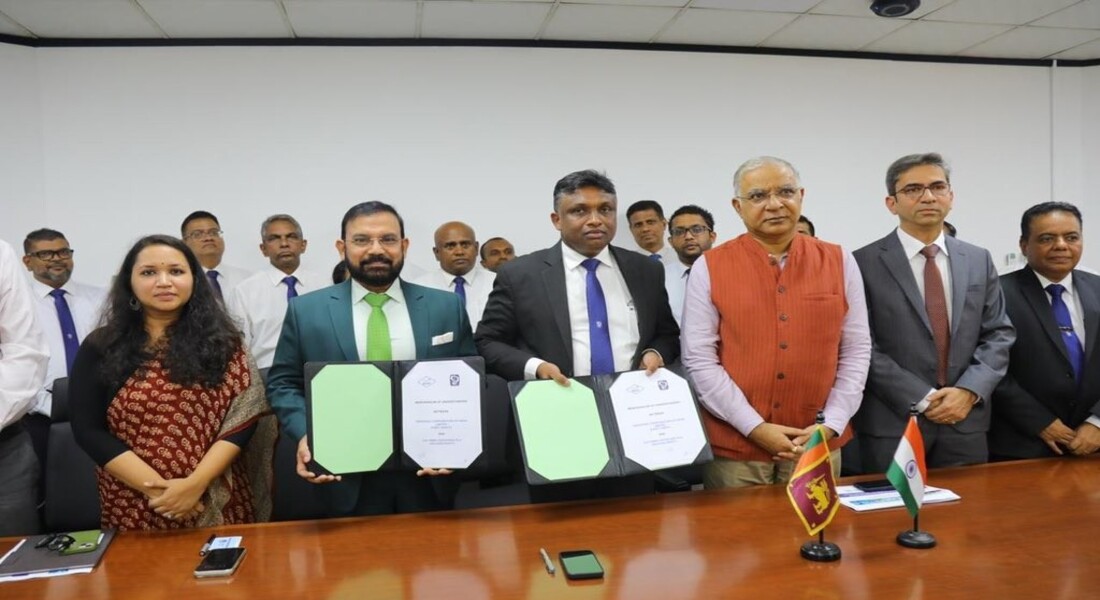
New Delhi: In a ceremony witnessed by Santosh Jha, the Indian High Commissioner to Sri Lanka, two of the Indian Ocean’s most prominent maritime institutions came together on Tuesday to sign an agreement that experts say could significantly deepen the sub-regional maritime economy.

The Memorandum of Understanding (MoU) between Dredging Corporation of India Limited (DCIL) and Colombo Dockyard PLC (CDPLC) covers comprehensive drydocking and ship repair services for DCIL’s operational fleet at Colombo Dockyard’s world-class facility.

The agreement was formally executed by Capt. S. Divakar, Managing Director and CEO of DCIL, and Thimira S. Godakumbura, Managing Director and CEO of CDPLC. The signing ceremony also saw the presence of Mazagon Dock Shipbuilders Limited’s chairman and managing Director, along with other senior directors, underscoring the strategic importance India’s shipbuilding industry places on this bilateral relationship.

MDL, which holds a strategic stake in Colombo Dockyard PLC as an associate company, played a pivotal role in brokering and facilitating this partnership. The state-owned defence shipbuilder described the deal as part of its broader commitment to generating tangible commercial value for CDPLC and reinforcing India’s maritime footprint across the Indian Ocean Region, Mazagon Dock said in a post on X.

For Colombo Dockyard, the partnership opens a significant new revenue stream by tapping into the steady maintenance demand of India’s expanding dredging fleet – vessels that are central to India’s ambitious port infrastructure and waterway development programmes.

Odisha budget 2026 more than a financial statement, says CM Majhi

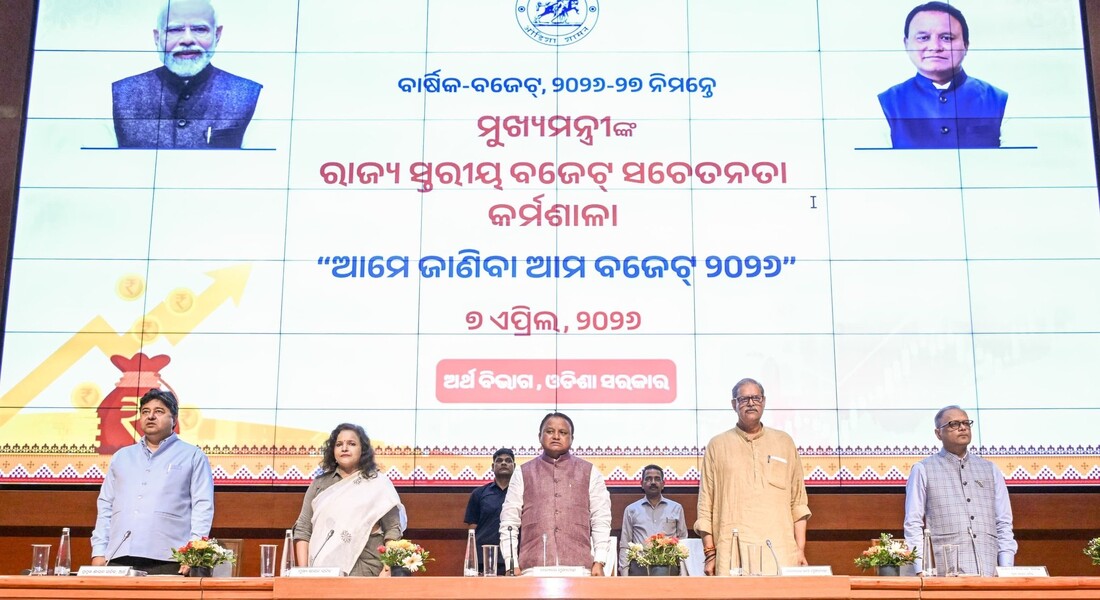
Bhubaneswar: Chief Minister Mohan Charan Majhi on Tuesday described the state’s 2026-27 budget as more than a financial statement, calling it a “robust roadmap” for Odisha’s holistic development and the fulfilment of citizens’ aspirations.

Speaking at the state-level budget awareness workshop “Ame Janiba, Ama Budget” at the Lok Seva Bhavan Convention Centre, the chief minister said the government has aligned its fiscal vision with national goals, setting ambitious targets for 2047.

He said Odisha aims to raise per capita income from Rs 1.8 lakh to Rs 32 lakh, reduce multidimensional poverty to 5%, increase women’s workforce participation to 70%, and push life expectancy beyond 80 years. The government also plans to eliminate anaemia and malnutrition completely.

Highlighting the scale of the budget, Majhi said the 2026-27 financial plan lays a strong foundation for a developed and prosperous Odisha. The budget proposes a total outlay of Rs 3.10 lakh crore, marking a 7% increase over the previous year’s estimates, with a strong focus on capital expenditure. A total of 31 new initiatives have been introduced across sectors.

The chief minister further outlined long-term economic goals, stating that Odisha is targeting a USD 500 billion economy by 2036 and USD 1.5 trillion by 2047. He expressed confidence that while the targets may appear ambitious, they are achievable with the collective strength of the people and the blessings of Lord Jagannath.

The budget places priority on infrastructure, industry, tourism, agriculture, education, healthcare, and women’s empowerment. Key projects include the Bhubaneswar–Cuttack–Puri–Paradip Economic Corridor and National Waterway 5, alongside new corridor and port initiatives aimed at transforming Odisha into a major logistics hub.

Tourism is also expected to receive a boost through the Shamuqa project in Puri and the restoration of Chilika Lake, which are projected to enhance the state’s appeal as a travel destination.

Focusing on inclusive growth, Majhi said the budget includes targeted interventions for rural development, employment generation, and migration control. Women-centric schemes such as “Subhadra,” “Lakhpati Didi,” and “Mukhyamantri Kanya Sumangala” have been allocated dedicated funding to strengthen financial independence and social empowerment.

In the social sector, the government plans to expand access to quality services by setting up new medical colleges, universities, and ICU facilities across the state.

Majhi also announced that the “Ame Janiba, Ama Budget” campaign will be conducted from April 1 to 14 across Odisha to simplify and communicate budget provisions to the public. He urged citizens to actively participate and share feedback.

US, Iran agree to two-week ceasefire amid escalating war tensions

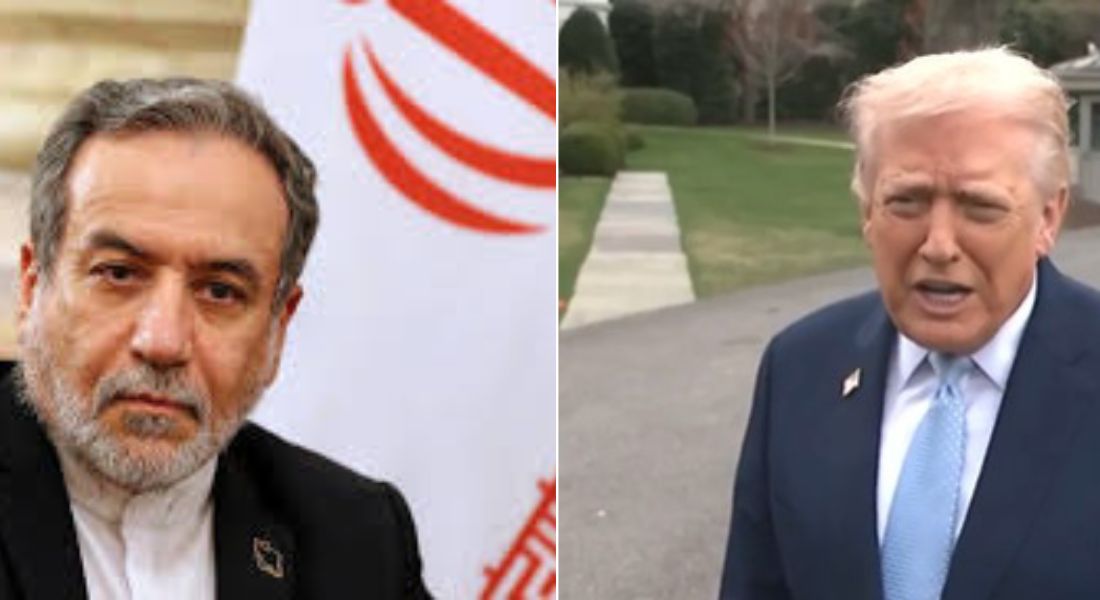
The United States and Iran have agreed to a temporary two-week ceasefire, marking a pause in escalating hostilities that had brought the region to the brink of a wider conflict. The development comes after US President Donald Trump pulled back from imminent military strikes just hours before a self-imposed deadline.

Announcing the decision on his Truth Social platform, Trump said the move followed last-minute diplomatic efforts involving Pakistan’s leadership. “Based on conversations with Prime Minister Shehbaz Sharif and Field Marshal Asim Munir… I agree to suspend the bombing and attack of Iran for a period of two weeks,” he wrote, adding that the decision was conditional on the “COMPLETE, IMMEDIATE, and SAFE OPENING of the Strait of Hormuz.”

Earlier in the day, Trump had issued a stark warning, stating, “A whole civilization will die tonight, never to be brought back again,” if Iran failed to comply with his demands. He had described the deadline as “one of the most important moments in the long and complex history of the World.”

Iran confirmed its acceptance of the ceasefire, with Foreign Minister Abbas Araghchi stating that Tehran would halt its military response if attacks ceased. “If attacks against Iran are halted, our Powerful Armed Forces will cease their defensive operations,” he said in a statement posted on X. Aragachi added that safe passage through the Strait of Hormuz would be allowed for two weeks under coordination with Iranian forces.

Trump later claimed that the pause in hostilities reflected progress in negotiations. “This will be a double sided CEASEFIRE,” he wrote, asserting that the United States had already “met and exceeded all Military objectives” and was close to a broader agreement. He added that a “10 point proposal” from Iran could form the basis for long-term peace, stating, “Almost all of the various points of past contention have been agreed to.”

The ceasefire, reportedly mediated with support from Pakistan, is expected to be followed by negotiations in Islamabad. Iran’s Supreme National Security Council indicated that the truce could be extended depending on the progress of talks.

Despite the announcement, violence continued across parts of the region, with strikes reported in Iran, Israel and Gulf countries, underscoring the fragile nature of the agreement.

The conflict, which began with US and Israeli strikes on Iran in late February, has already resulted in significant casualties. Reports indicate that more than 2,000 people have been killed in Iran, while dozens have died across Gulf countries. The United States has lost 13 military personnel, and casualties have also been reported in Israel.

Trump’s shifting positions have drawn sharp criticism from political leaders and international observers. US Senate Democrat Chuck Schumer described the president as an “extremely sick person” following his earlier threats, while Senator Chris Murphy warned that the strategy risked killing civilians and worsening the global crisis.

The United Nations has also raised concerns over the rhetoric and conduct of the war. UN human rights chief Volker Turk warned that deliberate attacks on civilians and infrastructure would constitute a war crime under international law.

ALSO READ: West Asia conflict enters uncertain phase amid US contradictions and Iran’s defiance

Meanwhile, the Strait of Hormuz remains central to the conflict. Iran has indicated that passage through the key energy corridor will be allowed under its supervision during the ceasefire period, with reports suggesting plans to impose transit fees in coordination with Oman.

The temporary truce comes amid rising global concern over energy disruptions and economic fallout, as well as growing pressure on all sides to pursue a diplomatic resolution. However, continued military exchanges even after the ceasefire announcement highlight the uncertainty surrounding the path ahead.