New Delhi: As high-stakes negotiations between the United States and Iran are set to begin in Islamabad on Saturday, a powerful symbolic gesture by Iran’s parliamentary speaker has underscored the emotional and political weight surrounding the talks.
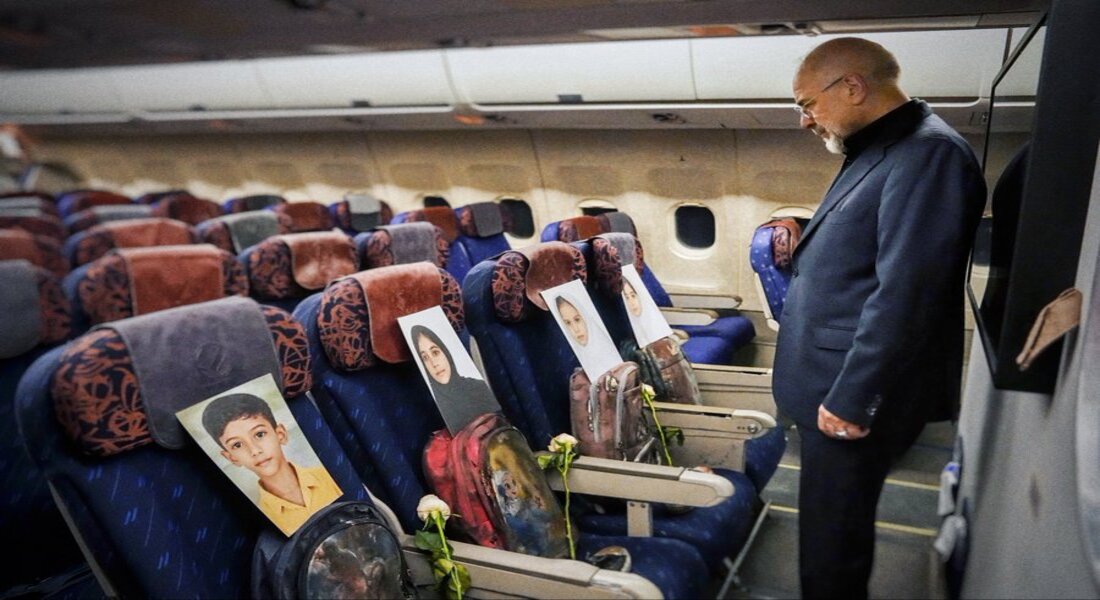
Iranian Parliament Speaker Mohammad Baqer Ghalibaf, en route to Pakistan for the negotiations, shared an image from inside his aircraft showing empty seats marked with photographs and belongings of victims from the Minab school strike.
Referring to the victims, he wrote on X, “my companions on this flight, Minab168,” invoking the memory of children and staff killed in the February 28 attack. The visual message has emerged as a stark reminder of the human cost of the conflict, setting the tone for the fragile diplomatic engagement.
The talks are being held in Islamabad over the weekend after both Iran and the US accepted an invitation from Pakistani Prime Minister Shehbaz Sharif. According to an Al Jazeera report, discussions are set to begin on Saturday morning (Pakistan time). The Iranian delegation arrived in Islamabad late on Friday night, while a US aircraft carrying its negotiation team reportedly landed in the Pakistani capital on Saturday morning.
The negotiations come amid continuing uncertainty over the Strait of Hormuz, a key global energy corridor that remains effectively disrupted despite a two-week ceasefire between Washington and Tehran.
US President Donald Trump said the waterway would reopen “fairly soon” with or without Iran’s cooperation. Speaking to reporters after departing Washington for a domestic visit, he said, “It won’t be easy… We will have that open fairly soon.”
Trump also warned that Washington would not accept any attempt by Iran to impose transit fees on vessels. “If they are doing that, we’re not going to let that happen,” he said.
Emphasising US priorities, Trump added, “No nuclear weapons, that’s 99 percent of it,” asserting that the strait would reopen “automatically” once an agreement is reached.
The Strait of Hormuz, through which nearly one-fifth of global oil and gas supplies pass, has seen shipping disruptions since the conflict escalated, triggering concerns over global energy stability.
The US delegation includes Vice President JD Vance, special envoy Steve Witkoff and Jared Kushner, while the Iranian team is led by Ghalibaf and Foreign Minister Abbas Araghchi.
Speaking ahead of the talks, Vance expressed cautious optimism but warned against strategic deception. “If they’re going to try to play us, then they’re going to find the negotiating team is not that receptive,” he said.
On arrival, Ghalibaf struck a guarded tone, saying Iran enters the dialogue with “good intentions but no trust.” He added, “Our experience in negotiating with the Americans has always been met with failure and broken promises,” he was quoted as saying by the Tasnim News Agency.
Iran has maintained that talks would proceed only if its conditions are addressed, including a ceasefire in Lebanon and the release of frozen assets. However, Israel and the United States have both clarified that the current ceasefire does not extend to Lebanon, where hostilities continue.
Lebanese authorities report that the ongoing conflict has claimed over 1,950 lives, with more than 350 deaths recorded on the first full day after the ceasefire announcement.
The juxtaposition of diplomatic engagement and continued military tensions highlights the fragility of the current moment, where symbolic gestures, strategic mistrust and geopolitical interests continue to shape the trajectory of the West Asia conflict.