
New Delhi: Four astronauts aboard NASA’s Artemis II mission safely returned to Earth on Saturday, marking the first human journey to the Moon in more than 50 years.
Astronauts Reid Wiseman, Victor Glover, Christina Koch, and Jeremy Hansen splashed down in the Pacific Ocean off San Diego at 5:07 p.m. PDT, completing a nearly 10-day mission that took them as far as 252,756 miles from Earth, according to a NASA release.
Officials said the mission set a new record for the farthest distance travelled by humans in space, surpassing the benchmark set during the Apollo 13 mission in 1970. In total, the crew covered 694,481 miles during the journey.
Following splashdown, recovery teams from NASA and the US military assisted the astronauts out of the Orion spacecraft and transported them to the USS John P. Murtha for initial medical evaluations. The crew is scheduled to return to Johnson Space Center.
The mission lifted off on April 1 from Kennedy Space Center aboard NASA’s Space Launch System rocket. During the flight, the crew tested critical systems on Orion, including life support, navigation, and manual control capabilities.
On the second day of the mission, Orion executed a key engine burn that placed the spacecraft on a trajectory toward the Moon. The crew later conducted a lunar flyby, passing within 4,067 miles of the surface.
NASA leadership said the mission demonstrated the performance of the rocket and spacecraft and validated systems required for future deep space missions. The agency noted that the mission’s success will support preparations for Artemis III, which aims to return humans to the lunar surface.
Throughout the mission, the astronauts carried out a series of tests and scientific studies. These included evaluations of life support systems, emergency procedures, and spacesuit performance. The crew also supported experiments on how the human body responds to microgravity and deep space radiation.
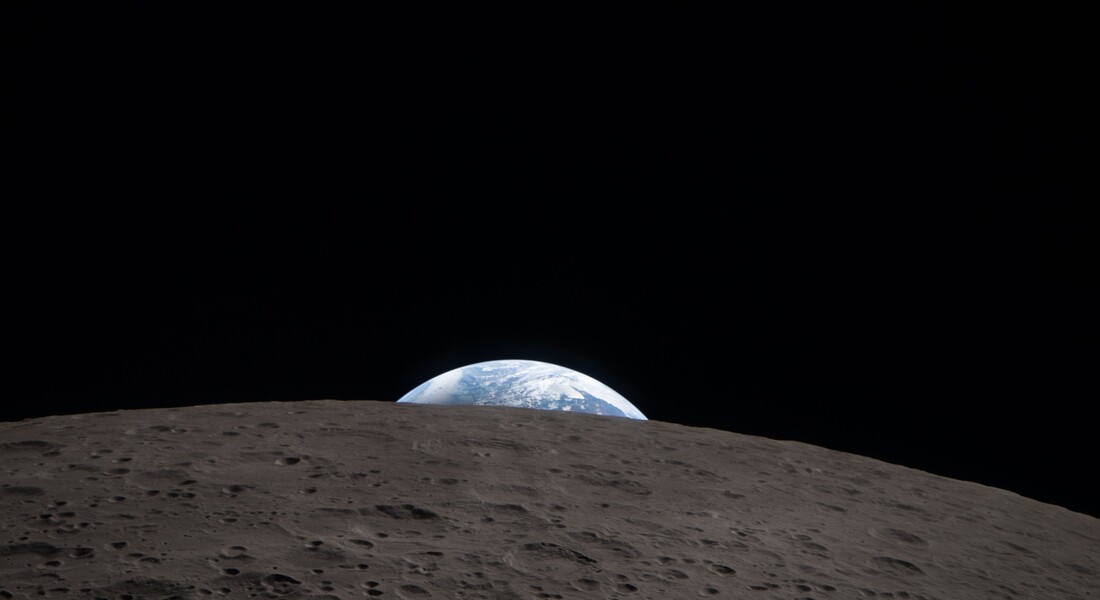
During the lunar flyby on April 6, the astronauts captured more than 7,000 images of the Moon and space. The visuals included views of craters, lava plains, and a solar eclipse observed from Orion, along with images of Earthrise and Earthset.
NASA officials said the mission represents a major step forward in human space exploration and strengthens international collaboration for future missions to the Moon and beyond.