At IndiaVerve, we go beyond the noise to bring you meaningful stories of change, resilience and progress—from India to the world stage. Our mission is to bring readers credible, wide-ranging coverage across politics, business, sports, culture, society and more.

Odisha gets India’s first 3D glass substrate packaging facility

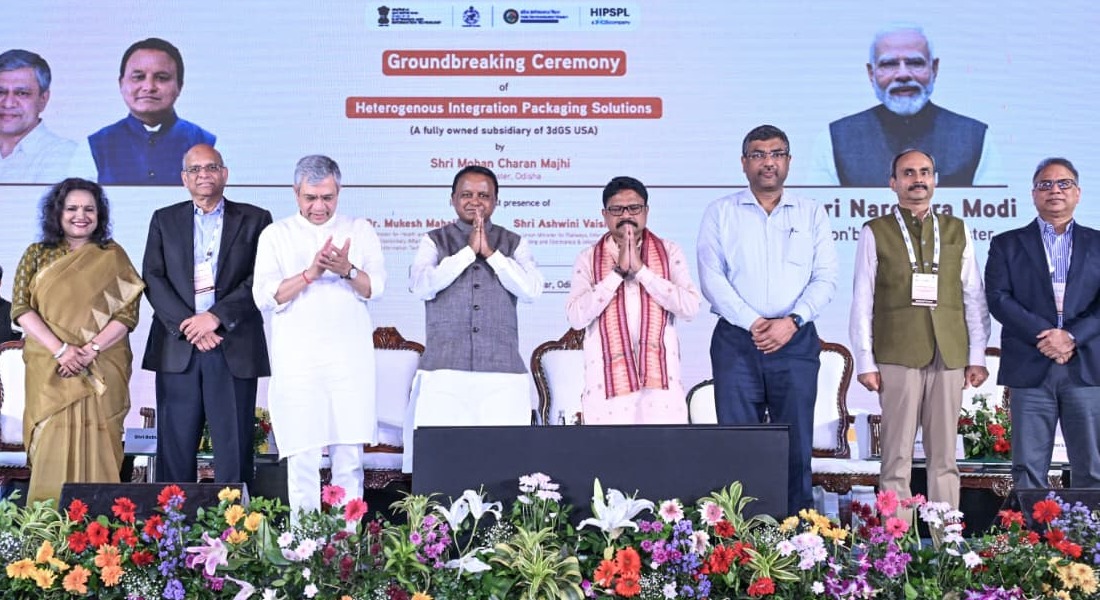
Bhubaneswar: India marked a major milestone in its semiconductor journey on Sunday as the foundation stone for the country’s first advanced 3D glass substrate packaging facility was laid in Odisha.

Chief Minister Mohan Charan Majhi attended the groundbreaking ceremony along with Union Minister for Electronics and Information Technology Ashwini Vaishnaw. The project is expected to position Odisha at the forefront of global electronics manufacturing and artificial intelligence.

The facility involves an investment of Rs 1,943 crore and is expected to generate more than 2,500 direct and indirect employment opportunities, Majhi said in a series of posts on X. Officials said the project will also support the development of testing laboratories and ancillary industries, strengthening the state’s industrial ecosystem.

The initiative aims to accelerate Odisha’s transition from a mineral-driven economy to a knowledge-driven economy by leveraging skilled human resources and modern infrastructure.

The chief minister said the project reflects the state’s commitment to attracting high-technology investments and creating quality employment opportunities for youth. He added that Odisha is emerging as a preferred destination for advanced electronics manufacturing due to its availability of power, skilled workforce, and supportive governance.

The project is being developed with support from the Union government and aligns with broader national efforts to strengthen domestic capabilities in semiconductor and electronics manufacturing.

Officials said the initiative is expected to contribute to the vision of building a self-reliant India and support the growth of next-generation industries in the country.

Meanwhile, Majhi held a courtesy meeting with Vaishnaw and discussed various development works.

Iran reimposes restrictions on Strait of Hormuz amid standoff with US

New Delhi: Iran has reimposed restrictions on the Strait of Hormuz, reversing its earlier reopening, as tensions with the US continue over maritime access and sanctions.

Iranian officials said the move followed Washington’s refusal to lift what Tehran described as a blockade on its ports. Authorities stated that the strategic waterway is now under strict management and control by the country’s armed forces.

A UK-based maritime agency reported that vessels linked to the Islamic Revolutionary Guard Corps fired at a tanker attempting to pass through the strait on Saturday. Reports also said that an Indian-flagged crude oil vessel came under attack in the same area, guardian.com reported.

Iranian officials said restrictions would remain in place unless the US ensured full freedom of navigation for ships traveling to and from Iran. Senior officials reiterated that the country would respond to any breach of commitments.

Iran’s top negotiator, Mohammad Bagher Ghalibaf, said recent talks with the US showed some progress but key differences remained, particularly on nuclear issues and the status of the Strait of Hormuz. He indicated that both sides continued to hold firm positions on certain matters.

US President Donald Trump said Washington was engaged in constructive discussions with Tehran but warned against attempts to exert pressure through the strategic shipping route. He also commented on regional alliances in the context of the ongoing conflict.

Neither side disclosed details of the negotiations, which come just days before a fragile ceasefire linked to the US-Israeli conflict with Iran is set to expire.

The conflict has entered its eighth week and has led to significant casualties. It has also expanded into other regions, including Israeli strikes in Lebanon, and has pushed global oil prices higher due to disruptions in the Strait of Hormuz, a key route for global energy shipments.

Iranian officials said the country remained committed to ensuring safe passage through the strait but maintained that it would not accept restrictions on its own maritime access.

Odisha reviews palm leaf manuscript digitisation drive

Bhubaneswar: A high-level meeting on the survey, conservation, and digitisation of ancient palm leaf manuscripts was held at Lokaseba Bhawan under the chairmanship of Chief Secretary Anu Garg.

The chief secretary appealed to the public to cooperate in preserving these valuable cultural assets and urged individuals to voluntarily register manuscripts in their possession.

The initiative is part of the Government of India’s ‘Gyan Bharatam Mission’, which aims to create a central National Digital Repository through survey, collection, conservation, and digitisation of manuscripts across the country.

Odisha’s rich collection of palm leaf manuscripts, available in Sanskrit, Pali, Odia, and other regional languages, is expected to contribute significantly to the repository and support research, cataloguing, and preservation.

Officials informed that around 53,950 manuscripts have been registered in the state so far. The Department of Odia Language, Literature and Culture is undertaking survey and digitisation work, with priority being given to collections at religious institutions, heritage sites, and private holdings.

It was discussed that locations and individuals with a higher number of registered manuscripts would be surveyed first, followed by a wider coverage of all registered collections.

To expedite the process, the department has urged registration through the ‘Gyan Bharatam’ mobile app. Officials will also conduct field visits where voluntary registration is not feasible.

The survey under the mission commenced on March 16, 2026, and is scheduled to continue for three months. Awareness activities are ongoing to encourage participation.

Districts such as Ganjam, Bhadrak, Cuttack, Nayagarh, and Puri have reported higher registrations, and special focus will be given to these areas.

Garg also directed that district-wise data of registered manuscripts be shared with District Magistrates to ensure faster and more efficient execution of the survey.

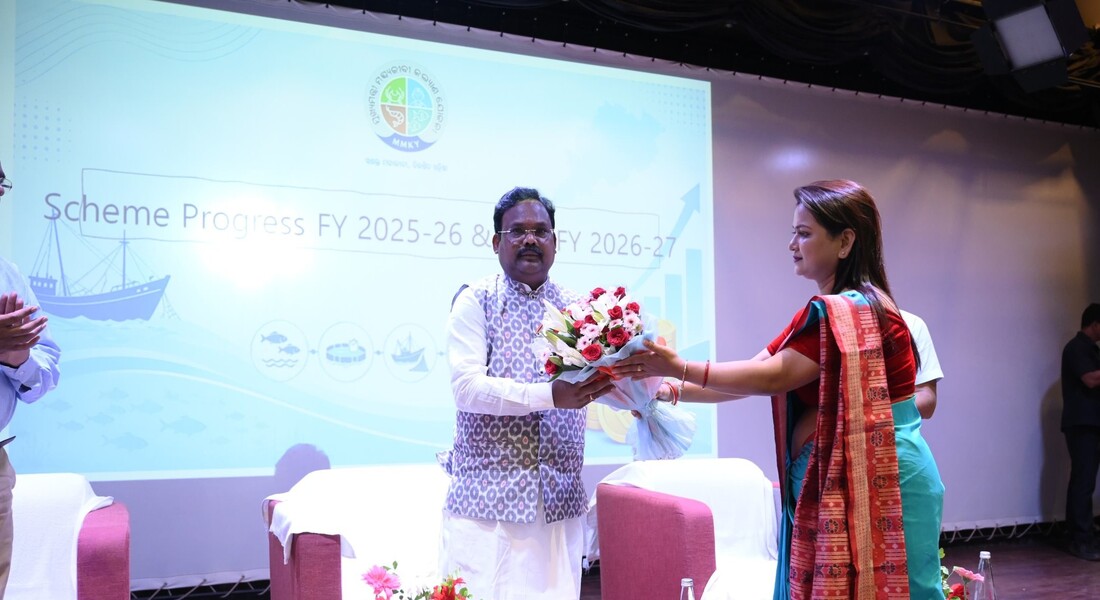
Odisha to double fish production to 23.84 lakh mt

Bhubaneswar: Odisha has set an ambitious target to double its fish production by the next year, with current output standing at 11.92 lakh metric tonnes, as the state government pushes ahead with its long-term development roadmap under Vision 2036.

A high-level review meeting of district fisheries officers was held at the Krushi Bhavan auditorium in Bhubaneswar, chaired by Minister for Fisheries and Animal Resources Development and MSME, Gokulananda Mallik.

The minister said the vision of a developed India through a developed Odisha can be achieved only when rural farmers and fishers progress economically. He stressed that strengthening rural livelihoods remains central to the state’s development strategy.

During the meeting, key welfare and development schemes, including the Chief Minister Fishermen Welfare Scheme, Pradhan Mantri Matsya Sampada Yojana, and Chief Minister Krishi Udyog Yojana, were reviewed in detail.

Officials informed that Odisha has emerged as a leading state in fish production and seafood exports, with steady growth in the sector. The state has now fixed a target to significantly scale up production within the next year as part of its expansion strategy.

The minister directed officials to focus on empowering rural women through fish farming initiatives and to encourage educated youth to adopt modern aquaculture practices such as biofloc and cage culture technologies.

He also highlighted integrated farming models combining paddy cultivation with fish farming to improve farmers’ income through dual livelihood systems. Special emphasis was placed on initiatives like the Shrimp Mission, deep-sea fishing expansion, and the use of advanced aquaculture technologies.

Discussions were also held on improving the productivity of water bodies through cage fish farming and other innovative methods, aimed at enhancing output from reservoirs across the state.

To improve safety in the fisheries sector, the state has strengthened measures, including ISRO transponders fitted on fishing boats and the distribution of life jackets to fishermen operating in marine areas.

Commissioner-cum-Secretary of the Fisheries and Animal Resources Development Department, Prem Chandra Chaudhary, urged officials to ensure effective implementation of all schemes and maintain close coordination for achieving departmental targets.

Senior officials and district fisheries officers from across the state attended the review meeting and discussed ongoing progress and future action plans.

Lok Sabha seventh session ends with 93% productivity, 9 bills passed

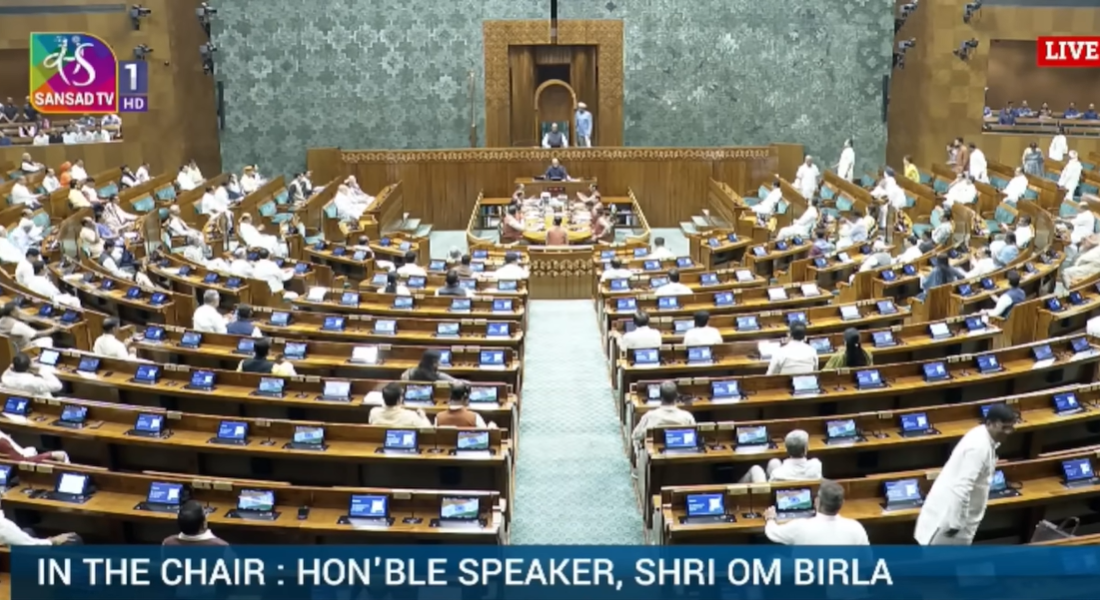
New Delhi: The Seventh Session of the Eighteenth Lok Sabha, which commenced on January 28, concluded on Saturday after recording a productivity of 93%, Lok Sabha Speaker Om Birla informed the House.

The Session witnessed 31 sittings spanning around 151 hours and 42 minutes, during which key legislative, financial, and policy matters were taken up.

President Droupadi Murmu addressed members of both Houses on January 28, followed by a discussion on the Motion of Thanks that continued for 2 hours and 46 minutes, according to an official statement.

The Union Budget 2026-27 was presented on February 1, 2026, with the general discussion lasting around 13 hours, in which 63 members participated. The finance minister replied to the discussion on February 11. Demands for Grants were discussed between March 16 and 18, after which the Appropriation Bill was passed on March 18 and the Finance Bill on March 25.

During the Session, 12 government bills were introduced, and 9 were passed. Key legislations cleared included amendments related to industrial relations, insolvency and bankruptcy, transgender rights, Jan Vishwas provisions, central armed police forces administration, and the Andhra Pradesh Reorganisation framework.

A major legislative discussion took place on April 16 and 17 on three bills, including the Constitution (One Hundred and Thirty-First Amendment) Bill, 2026, the Union Territories Laws (Amendment) Bill, 2026, and the Delimitation Bill, 2026. The debate lasted 21 hours and 27 minutes, with 131 members participating. While the discussion concluded, the Constitution Amendment Bill was not passed.

Birla also informed the House that Prime Minister Narendra Modi made a statement on March 23 regarding the conflict in West Asia and its implications for India.

In addition to legislative business, 126 starred questions were answered orally, while members raised 326 matters of public importance during Zero Hour and 650 issues under Rule 377.

The Session also saw the presentation of 73 standing committee reports and the laying of 2,089 papers on the Table of the House. A short-duration discussion on efforts to eliminate Left-Wing Extremism was held on March 30, lasting over six hours.

Highlighting technological and procedural advancements, the speaker informed the House that 181 statements were delivered by members in 18 Indian languages with simultaneous interpretation support. He also noted the declaration of India’s 500 MW Prototype Fast Breeder Reactor achieving first criticality during the Session.

Sadhvi Satish Sail crowned Miss India 2026 in Bhubaneswar

BHUBANESWAR: Sadhvi Satish Sail from Goa was crowned Miss India 2026 at the 61st Femina Miss India grand finale held on Saturday at KIIT University campus.

Contestants from across the country participated in a glittering showcase of talent, confidence, and elegance.

Representing Goa, Sail emerged as the winner and was crowned Miss India 2026, KIIT University said in a post on X.

In the final results, Rajnandini Pawar from Maharashtra was declared the first runner-up, while Advaita from Jammu and Kashmir secured the second runner-up position.

The event witnessed a vibrant gathering and strong participation from contestants representing various states, with the finale concluding in a grand crowning ceremony.

From 30 dreams to 3 shining crowns, tonight, the stage at KIIT witnessed ambition turn into legacy.

An esteemed panel comprising veteran actor Zeenat Aman, filmmaker Madhur Bhandarkar, Femina Miss India 2002 and actor Neha Dhupia, choreographer and actor Terence Lewis, Miss Universe 2001 runner-up and actor Celina Jaitly, actor Simran, music composer and singer Amaal Mallik, two-time Olympian and 100m national record holder Dutee Chand, and Miss Diva 2019 and actor Vartika Singh judged the event.

PM Modi expresses regret over stalled women’s reservation bill

New Delhi: Prime Minister Narendra Modi on Saturday said he felt deep sorrow over the inability of the proposed Nari Shakti Vandan Adhiniyam Amendment to move forward, describing it as a setback for efforts aimed at strengthening women’s representation in governance.

He made the remarks while addressing the nation, according to an official statement.

He said he regretted the development and extended an apology to women across the country, noting that the legislation had been designed to significantly enhance their participation in political and decision-making processes. According to him, the proposal was intended to create long-term structural changes to ensure greater inclusion of women in legislative institutions.

In a series of posts on X, Modi said the government had undertaken sustained efforts to advance the proposed amendment, adding that the intent behind the legislation was reform-oriented and aimed at expanding democratic participation. He maintained that national interest remained paramount and should not be overshadowed by political considerations.

The PM also criticised certain political parties, alleging that they had prioritised partisan objectives over a reform meant to benefit women. He said such resistance had come in the way of what he described as an important initiative for empowering half the population.

Explaining the intent of the proposal, the prime minister said the amendment was designed to increase women’s representation in legislative bodies through a structured and equitable expansion of seats across states. He said the objective was to ensure that representation grows in a balanced manner without disadvantaging any region.

Modi further said that women across the country were closely observing political developments and would take note of those responsible for blocking empowerment-related measures. He added that grassroots participation of women in local governance structures had already demonstrated their growing role in public life.

Addressing concerns related to delimitation, he clarified that no state would lose representation under the proposed framework and that the intention was to ensure fair and proportionate expansion of seats across all states.

Referring to earlier reforms such as digital payments, the Goods and Services Tax, and the law against Triple Talaq, he said that several major policy decisions in the past had faced resistance before eventually being accepted as transformative measures.

The prime minister reiterated that his government remained committed to the broader goal of women’s empowerment and said efforts would continue to advance the objectives of the proposed legislation in the future.