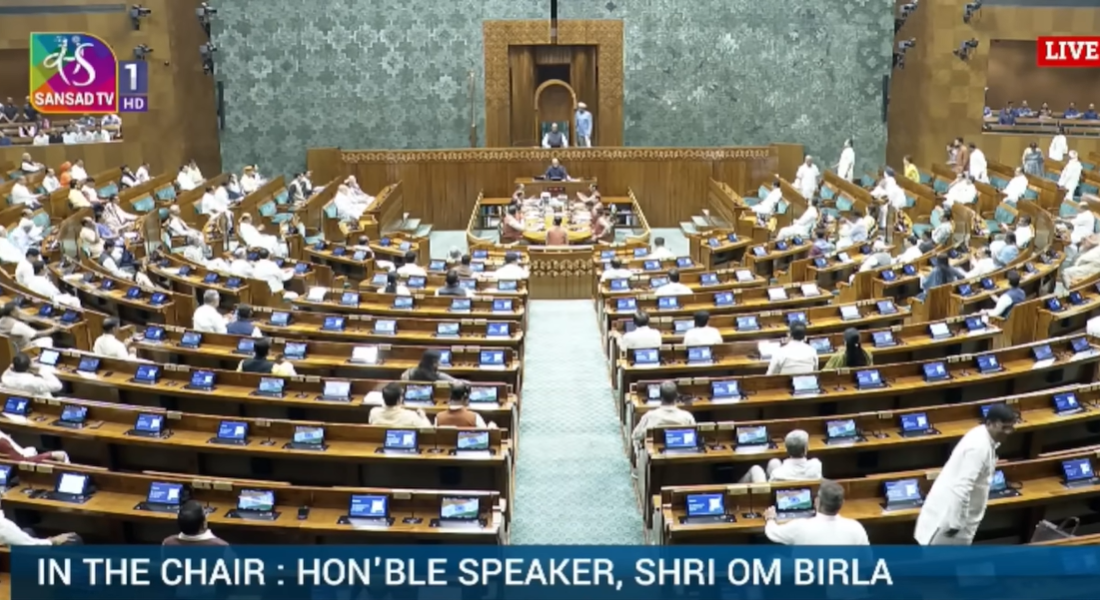

New Delhi: The Seventh Session of the Eighteenth Lok Sabha, which commenced on January 28, concluded on Saturday after recording a productivity of 93%, Lok Sabha Speaker Om Birla informed the House.
The Session witnessed 31 sittings spanning around 151 hours and 42 minutes, during which key legislative, financial, and policy matters were taken up.
President Droupadi Murmu addressed members of both Houses on January 28, followed by a discussion on the Motion of Thanks that continued for 2 hours and 46 minutes, according to an official statement.
The Union Budget 2026-27 was presented on February 1, 2026, with the general discussion lasting around 13 hours, in which 63 members participated. The finance minister replied to the discussion on February 11. Demands for Grants were discussed between March 16 and 18, after which the Appropriation Bill was passed on March 18 and the Finance Bill on March 25.
During the Session, 12 government bills were introduced, and 9 were passed. Key legislations cleared included amendments related to industrial relations, insolvency and bankruptcy, transgender rights, Jan Vishwas provisions, central armed police forces administration, and the Andhra Pradesh Reorganisation framework.
A major legislative discussion took place on April 16 and 17 on three bills, including the Constitution (One Hundred and Thirty-First Amendment) Bill, 2026, the Union Territories Laws (Amendment) Bill, 2026, and the Delimitation Bill, 2026. The debate lasted 21 hours and 27 minutes, with 131 members participating. While the discussion concluded, the Constitution Amendment Bill was not passed.
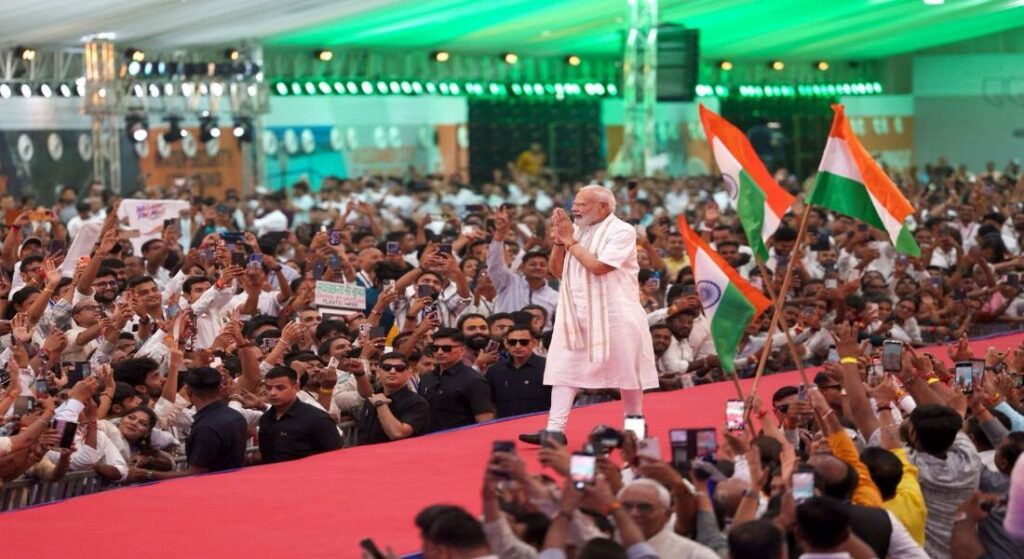
Birla also informed the House that Prime Minister Narendra Modi made a statement on March 23 regarding the conflict in West Asia and its implications for India.
In addition to legislative business, 126 starred questions were answered orally, while members raised 326 matters of public importance during Zero Hour and 650 issues under Rule 377.
The Session also saw the presentation of 73 standing committee reports and the laying of 2,089 papers on the Table of the House. A short-duration discussion on efforts to eliminate Left-Wing Extremism was held on March 30, lasting over six hours.
Highlighting technological and procedural advancements, the speaker informed the House that 181 statements were delivered by members in 18 Indian languages with simultaneous interpretation support. He also noted the declaration of India’s 500 MW Prototype Fast Breeder Reactor achieving first criticality during the Session.