At IndiaVerve, we go beyond the noise to bring you meaningful stories of change, resilience and progress—from India to the world stage. Our mission is to bring readers credible, wide-ranging coverage across politics, business, sports, culture, society and more.

Odisha, IRRI step up partnership on rice systems, agri innovation

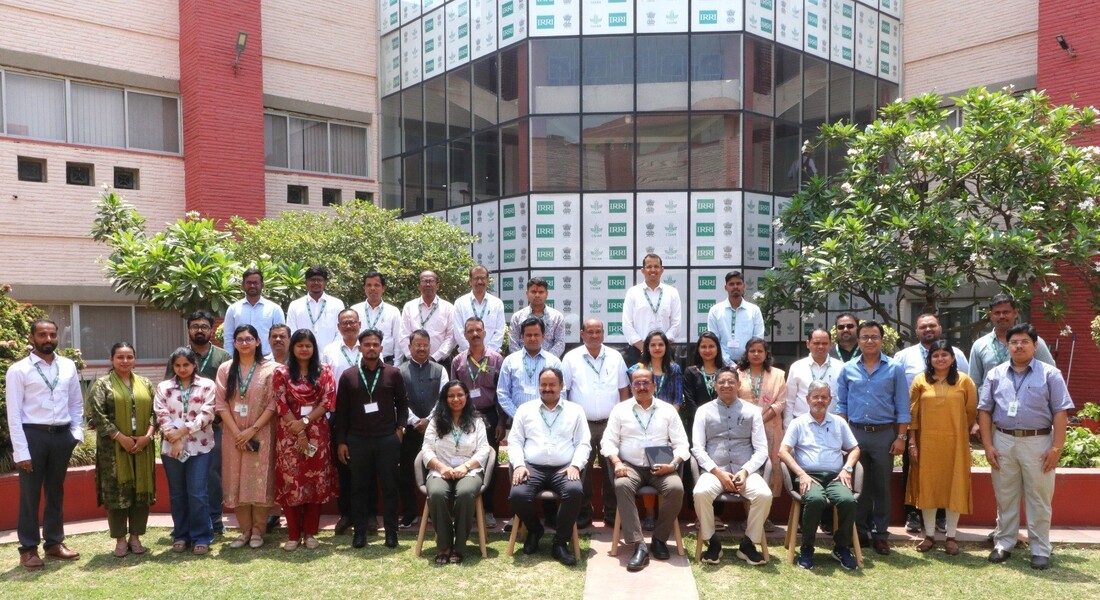
Bhubaneswar: Sachin Ramchandra Jadhav, Commissioner-cum-Secretary, Department of Agriculture & Farmers’ Empowerment, government of Odisha, visited the International Rice Research Institute–South Asia Regional Centre (ISARC) in Varanasi on April 27–28 to advance collaboration on sustainable rice systems, digital agriculture, and value chain development.

The delegation was received by Dr. Vikas Kumar Singh, Interim Director, ISARC, along with senior scientists, who outlined ongoing initiatives in Odisha and efforts in climate-resilient, technology-driven agriculture.

The visit focused on strengthening rice-based agri-food systems through geospatial tools, digital platforms, capacity building, and value addition. A key highlight was the inauguration of a two-day workshop under the Innovative Project Scheme titled “Optimizing Agricultural Land Use and Rice Fallow in Odisha with Geospatial Technology and a Decision Support System.”

The workshop, being held from April 28–29 at ISARC and moderated by the Geospatial Intelligence Lab, has brought together around 23 officials from Odisha to support data-driven planning.

Dr. Swati Nayak, IRRI Scientist-cum-India Country Manager (Interim), briefed the delegation on IRRI’s work in India and its initiatives in Odisha. Senior officials, including the Additional Secretary and Joint Director, took part in the discussions.

The delegation toured ISARC’s facilities, including plant and soil science labs, remote sensing-based decision support systems, speed breeding units, a mechanisation hub, and regenerative agriculture models.

At the Centre of Excellence in Rice Value Addition, discussions focused on strengthening Odisha’s rice and millet value chains through product development, processing, and value addition. The review also covered a project on promoting self-help group-led entrepreneurship through rice value addition, aimed at developing products from traditional rice landraces and popular varieties for domestic and export markets.

Plans were discussed to establish a Specialty Rice and Millet Factory-cum-Training Centre in Bhubaneswar with modern food processing infrastructure to support entrepreneurship and capacity building. Emphasis was laid on promoting nutritionally enriched low glycemic index (low-GI) and high-protein rice varieties, along with rice-millet-based products to improve nutrition outcomes.

The project review was led by Principal Investigator Dr. Nese Sreenivasulu, along with IRRI scientists and team members. The visit concluded with a shared commitment to scale up geospatial and digital solutions, strengthen value chains, and promote climate-resilient agriculture in Odisha.
Odisha government reviews fuel supply situation, no shortage reported

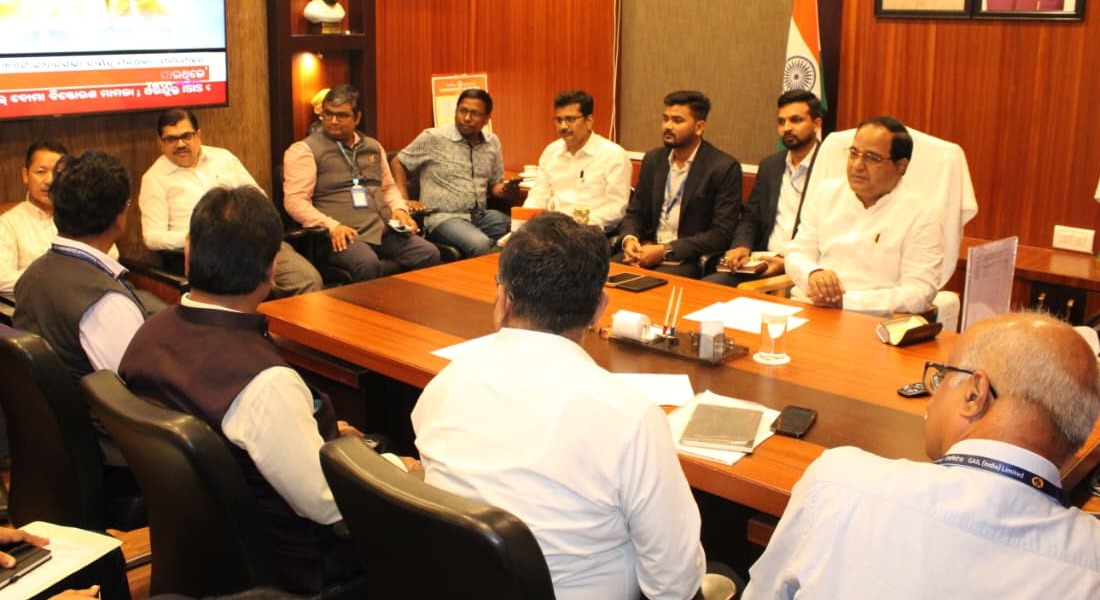
Bhubaneswar: Food Supplies and Consumer Welfare Minister Krushna Chandra Patra on Tuesday reviewed the availability of cooking gas and petroleum products across the state, asserting that supplies remain stable and adequate.

The review meeting was held at Lok Seva Bhavan, where the minister interacted with representatives of major fuel distribution companies, including HPCL, IOCL, BPCL, and the Adani Group. Officials provided a detailed assessment of the current supply position of LPG, petrol, and diesel.

According to the review, domestic LPG supply is functioning normally, with consumers receiving cylinders within the prescribed delivery timelines after booking. The government noted that concerns over a possible shortage have eased. In the commercial segment, nearly 80% of the demand is being met, ensuring that hotels and restaurants continue operations without major disruption.

The state also has sufficient stock of petrol and diesel, and no immediate price rise is anticipated, the minister said. He urged citizens to disregard unverified claims circulating on social media regarding shortages or price hikes.

Highlighting enforcement measures, Patra said the seizure of over 7,000 illegal LPG cylinders in recent drives marks a significant step in curbing irregularities. He reiterated that black marketing of fuel will not be tolerated under any circumstances.

The minister directed oil and gas companies to scale up the supply of 5-kg LPG cylinders, expand piped natural gas (PNG) networks across urban areas, and strengthen corporate social responsibility initiatives.

Senior officials of the department and representatives of oil and gas firms were present at the meeting.

Andhra TPP chairperson studies Odisha’s governance, SDG progress

Bhubaneswar: Lanka Dinakar, Chairperson of the Twenty Points Programme (TPP), government of Andhra Pradesh, is on a study tour to Odisha from April 26 to 29, 2026, to review the implementation of Centrally Sponsored Schemes, SDG performance, and the State’s Vision Document aligned with Viksit Bharat 2047.

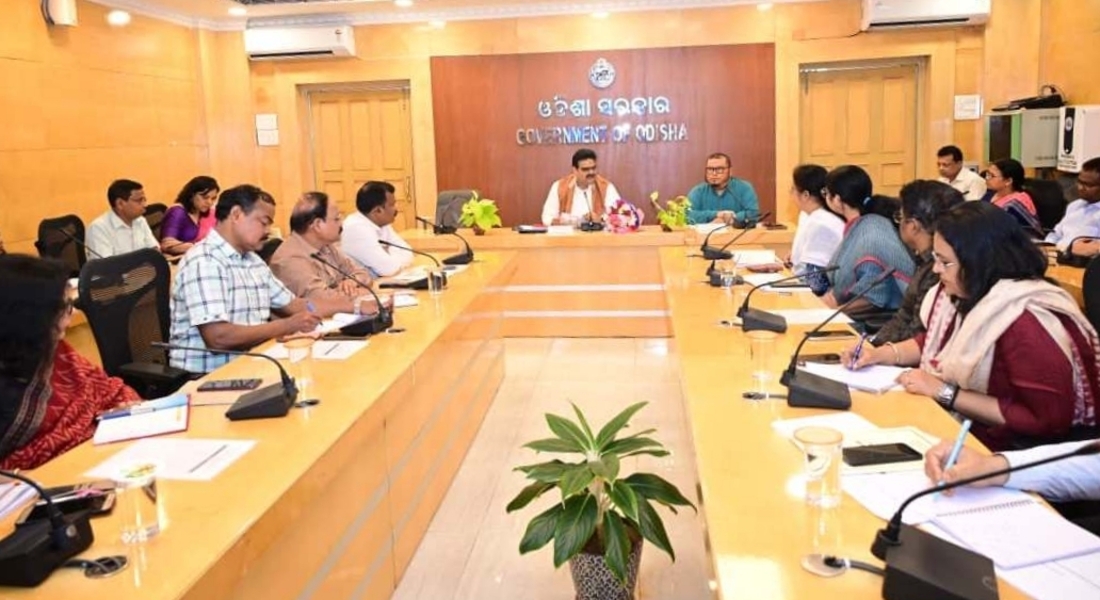
As part of the visit, he held a meeting with senior officials of the Odisha government at Lokseva Bhawan on April 27. T. Ao, Special Secretary, Planning & Convergence Department, delivered the welcome address and outlined the agenda.

Addressing officials from various departments, Dinakar appreciated Odisha’s growth under Chief Minister Mohan Charan Majhi. He highlighted the objectives of the Viksit Bharat initiative launched by Prime Minister Narendra Modi, focusing on welfare, governance, and development.

He noted that India has progressed from the 11th-largest economy in 2014 to one of the world’s leading economies and is on track to become the third-largest by 2029-30, with a long-term goal of becoming the largest by 2047. He emphasised that states will play a crucial role in achieving this vision.

Dinakar pointed to the strategic proximity of Visakhapatnam to cities such as Bhubaneswar, Cuttack, and Berhampur, stating that improved road, rail, and air connectivity offer strong regional opportunities. He said the Visakhapatnam Industrial Corridor could act as a key growth driver.

He highlighted Odisha’s rich mineral resources as a foundation for long-term growth, along with potential in eco-tourism and spiritual tourism. He also commended the state’s disaster management capabilities in coastal regions, citing best practices in preparedness, response, and post-disaster recovery during cyclones.

The Chairperson noted Odisha’s strong financial management and its recognition as the top-ranked state in the Fiscal Health Index. He further appreciated the state’s handloom and handicrafts sector, including Dokra art and palm leaf painting, as well as its pace of urbanisation.

Officials from the Planning & Convergence Department presented details on Odisha’s Vision Document and SDG achievements. The Finance Department outlined the role of Centrally Sponsored Schemes and major development projects in poverty reduction and socio-economic growth.

Dinakar interacted with participants and said the visit would support knowledge exchange and improved governance practices. He added that both Odisha and Andhra Pradesh would contribute to the vision of a Viksit Bharat through strengthened public service delivery.

India eyes global supply role as Google Cloud AI hub project begins

New Delhi: Union Minister for Electronics & Information Technology Ashwini Vaishnaw on Tuesday said India is set to emerge as a trusted global value and supply chain partner in electronics manufacturing, backed by policy support and leadership.

He was addressing the gathering after the ground-breaking ceremony of the Google Cloud India AI Hub in Visakhapatnam.

The event was held in the presence of Andhra Pradesh Chief Minister N. Chandrababu Naidu, along with Union and State ministers and industry leaders.

The project, involving an estimated investment of USD 15 billion, is being developed in partnership with Adani ConneX and Airtel Nxtra. It will feature a 1 GW hyperscale AI data centre in Visakhapatnam, according to an official statement.

The state government has allocated around 600 acres of land across Turluvada, Rambilli, and Adavivaram for the development.

Highlighting India’s progress, Vaishnaw noted that the country has already established itself as a leader in IT services and is rapidly expanding its footprint in electronics manufacturing. He stressed the importance of advancing in emerging sectors such as semiconductors, quantum technologies, space, and artificial intelligence, in line with the vision of Prime Minister Narendra Modi.

He pointed out that mobile phones have become one of India’s top export items, with nearly half of domestic electronic demand now being met through local production. Under the Semiconductor Mission, commercial production has already commenced, further strengthening India’s position in the global electronics ecosystem.

The minister also urged global technology firms, including Google, to manufacture servers, GPUs, and semiconductor components within India, reinforcing the country’s role as a reliable production hub.

Describing the initiative as transformative, Vaishnaw said Visakhapatnam is poised to evolve into an “AI City”, driven by advanced infrastructure and global investments. He credited the vision of Chandrababu Naidu in building IT ecosystems and noted that the AI data centre would bring significant changes across sectors such as education, healthcare, aerospace, logistics, and agriculture.

He further acknowledged Google’s efforts in laying three subsea cables from Visakhapatnam, enhancing global digital connectivity through routes linking Australia, the Middle East, Europe, Africa, and the US.

Industry leaders also highlighted the strategic importance of the project. Google Cloud Global Infrastructure Vice President Bikash Koley stated that the AI Hub would support India’s long-term development goals and strengthen its role in the global AI economy. Jeet Adani described the hyperscale data centre as a major milestone that would position Visakhapatnam as a key digital gateway for the country.

The ceremony was attended by senior government representatives, Members of Parliament, and officials from Google, Adani Group, Airtel Nxtra, and other organisations.

India calls for unified action against terrorism at SCO meet

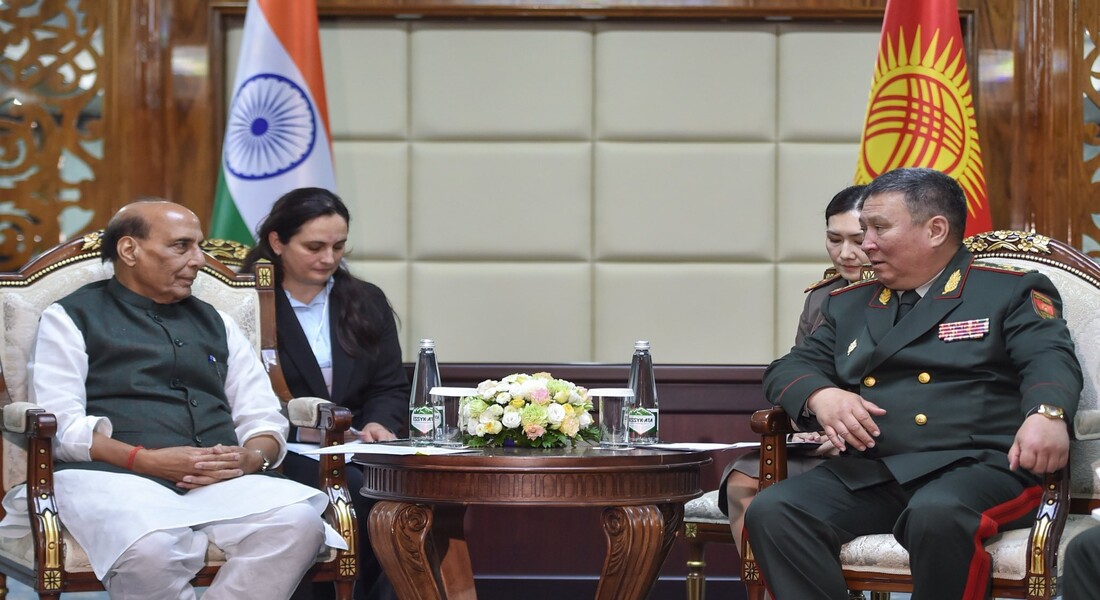
New Delhi: India asserted that terror epicentres can no longer remain immune from response, as Defence Minister Rajnath Singh addressed the Shanghai Cooperation Organisation (SCO) Defence Ministers’ Meeting in Bishkek, Kyrgyzstan, on Tuesday.

Referring to Operation Sindoor, Singh conveyed that it reflected India’s firm resolve to respond to terrorism and stressed the need for a unified approach against terrorism, separatism, and extremism. He emphasised that safe havens must be dismantled and that no political exceptions should be allowed.

He also underlined that state-sponsored cross-border terrorism targeting national sovereignty must be addressed without double standards, according to an official statement.

The minister urged SCO members to take appropriate action against entities and nations that support or shelter terrorists. He indicated that eliminating terrorism, separatism, and extremism without exception could transform regional security into a foundation for peace and prosperity.

Describing counter-terrorism as a core principle of the SCO, Singh noted that the organisation has consistently condemned such acts. Rajnath referred to the Tianjin Declaration of the previous year as a reflection of India’s zero-tolerance stance and stressed that the credibility of collective efforts depends on consistent action.

He reiterated that terrorism cannot be linked to any nationality or religion and called for a united global stand.

Highlighting institutional efforts, Singh pointed to the role of the SCO’s Regional Anti-Terrorist Structure and said that the joint statement issued during India’s chairmanship on countering radicalisation demonstrated shared commitment among member states.

He further observed that in the current global environment marked by uncertainty and fragmentation, the SCO has an important role to play as nations increasingly turn inward. Singh argued for a more orderly global framework based on dignity, mutual respect, and peaceful coexistence, warning against tendencies that challenge established rule-based systems.

The minister added that ensuring regional and global peace remains a collective responsibility of SCO members. He stressed the importance of dialogue and diplomacy over the use of force and cautioned against allowing the present era to descend into conflict. Recalling the philosophy of Mahatma Gandhi, Singh underscored the importance of compassion, restraint, and responsibility in the exercise of power, particularly in protecting the vulnerable.

PM Modi marks Sikkim Statehood closing ceremony with major projects

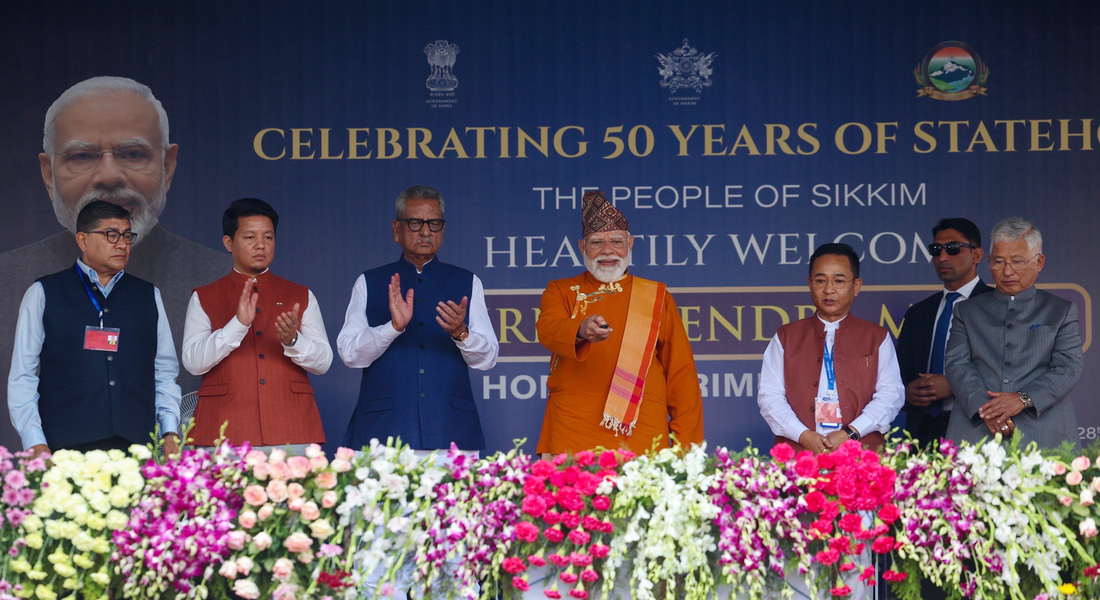
Gangtok: Prime Minister Narendra Modi on Tuesday participated in the closing ceremony of Sikkim’s 50th Year of Statehood celebrations in Gangtok, where he launched and inaugurated over 30 development projects spanning multiple sectors.

Addressing the gathering at Paljor Stadium, the Prime Minister described Sikkim as a state “known for serenity and enterprise” that has witnessed rapid progress. He underlined that the projects cover roads, power, tourism, health and education, with a particular focus on restoring connectivity in areas affected after 2023, according to an official release.

Reflecting on his visit, Modi spoke about Sikkim’s natural beauty and cultural vibrancy, noting the “mesmerizing performances,” enthusiastic public participation and scenic surroundings that created a unique atmosphere during the celebrations. He also recalled the large public turnout during a roadshow, describing it as a reflection of the spirit of “Ek Bharat Shreshtha Bharat.”

Highlighting infrastructure development, the Prime Minister said the government is placing maximum focus on connectivity in Sikkim. He noted that hundreds of kilometres of highways have been constructed in recent years and work is underway to connect every village by road. Key projects such as the Bagdogra-Gangtok expressway and the Sevok-Rangpo rail line were cited as major steps to improve access to the state.

Modi emphasised tourism as a major strength of Sikkim’s economy, pointing out its rich biodiversity and natural assets, including extensive floral diversity, bird species and forest cover. He said initiatives such as ropeways, skywalks and homestay development are aimed at enhancing visitor experience and generating local employment.

On healthcare, the Prime Minister noted the expansion of medical infrastructure in the state, including Ayushman Arogya Mandirs, district hospitals and wellness centres. He reiterated that affordable treatment remains a priority, with Ayushman Bharat benefits now extended to all senior citizens aged 70 years and above, along with access to low-cost medicines through Jan Aushadhi Kendras.

Touching upon sports, Modi said Sikkim’s youth have demonstrated their talent at national and international levels, and initiatives such as Khelo India and new sports infrastructure projects will further support their growth.

He further praised the people of Sikkim for maintaining cleanliness and environmental stewardship, calling them “true protectors of nature” and “brand ambassadors.”

He also highlighted initiatives such as tree plantation drives and sustainable practices as examples for the wider world.

Concluding his address, the Prime Minister reaffirmed the government’s commitment to accelerating development in Sikkim and the Northeast, describing the region as integral to India’s growth vision.

Earlier, the PM also participated in a football session with youngsters in Gangtok, and wrote on X that “Nothing like playing some football with my young friends in Sikkim on a lovely Gangtok morning!”

CM Majhi lays foundation for ₹1,647 crore grid project in Keonjhar

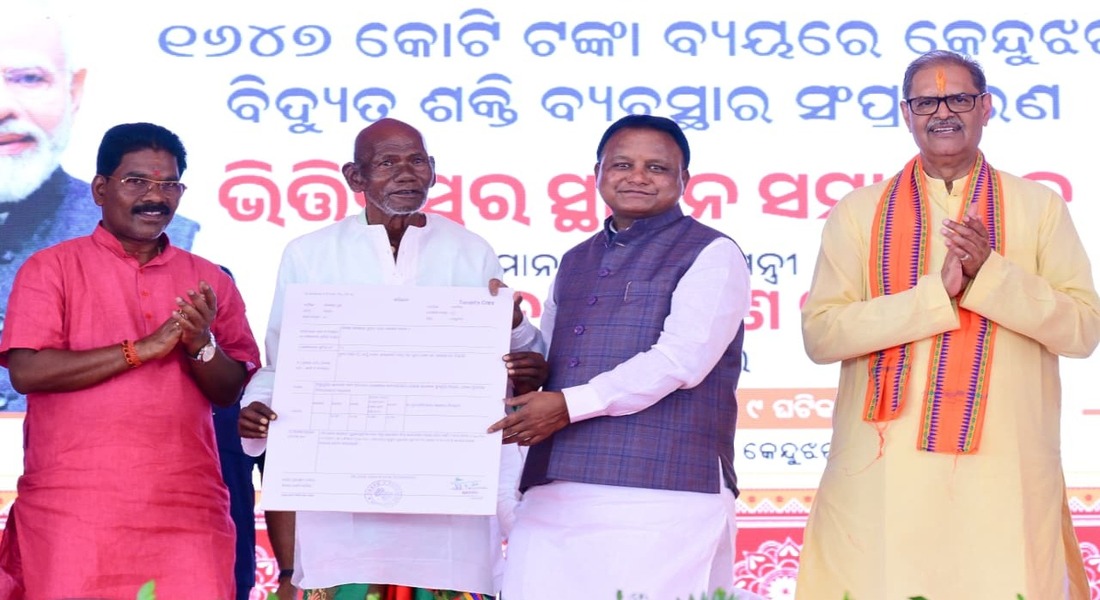
Bhubaneswar: Chief Minister Mohan Charan Majhi on Tuesday laid the foundation stone for a ₹1,647 crore 420/220 kV grid substation at Uchhabali in Keonjhar’s Barbil region, marking a major step towards strengthening the state’s power infrastructure.

The project, launched on the birth anniversary of Utkal Gourav Madhusudan Das, is part of a broader roadmap to transform Keonjhar into a key industrial hub. The Chief Minister said the district would be developed as the “second Jamshedpur of eastern India.”

Alongside the substation, five new transmission lines were also inaugurated. According to an official release, the project is expected to provide uninterrupted power supply to around 7.17 lakh consumers across Keonjhar Sadar, Telkoi, Jhumpura, Joda and Barbil regions.

Emphasising the importance of reliable electricity, Majhi said quality power supply is essential for a developed society and reiterated the government’s commitment to turning mineral-rich Keonjhar into a “prosperous district.”

The project will integrate the region into a stronger transmission network through 400 kV LILO lines and connectivity with TTPS-Joda and Turumunga-Rairangpur lines, ensuring balance between industrial and domestic demand.

In a key announcement, the Chief Minister introduced “hotline maintenance”, under which repair work can be carried out without interrupting power supply. “There will be no need for power cuts during maintenance,” he said.

He also emphasised the shift towards smart power management, stating that the new State Load Despatch Centre (SLDC) at Mancheswar will act as the central control system. Under the STAMS initiative, around 70 grids will be monitored remotely for faster fault detection and resolution.

Providing a broader outlook, Majhi said Odisha’s electricity consumer base has grown from 16 lakh in 2000 to nearly one crore today. To meet rising demand, the state plans to establish 34 new grid substations by 2036, including 765 kV grids in Bhubaneswar, Jajpur, Jharsuguda and Gajapati.

Reaffirming his commitment to the district, the Chief Minister said Keonjhar’s development remains a priority and highlighted future industrial prospects, including a proposed electrical steel plant by Japan’s JFE Steel.

Deputy Chief Minister Kanak Vardhan Singh Deo said the project would strengthen power supply not only in Keonjhar but also in adjoining regions such as Sundargarh and Angul, while efforts are underway to expand electricity access to remaining underserved areas.

Iran offers Hormuz deal, US pushes back; Russia signals support for Tehran

Tehran links reopening of Strait of Hormuz to lifting blockade and delaying nuclear talks, while Moscow backs Iran amid stalled diplomacy

New Delhi: A fresh diplomatic push to ease tensions in the Middle East has run into uncertainty after Iran proposed reopening the strategically vital Strait of Hormuz under specific conditions, even as the United States signalled reluctance to accept terms that sideline Tehran’s nuclear programme.

According to reports by The Wall Street Journal and The New York Times, Iran has offered to reopen the key shipping route if the US lifts its naval blockade, ends the ongoing conflict, and postpones negotiations over its nuclear programme to a later phase. The proposal was conveyed by Iranian Foreign Minister Abbas Araghchi during recent diplomatic engagements in Oman and Pakistan.

However, US officials indicated that President Donald Trump and his national security team remain sceptical. The administration has consistently maintained that any agreement must directly address Iran’s nuclear ambitions.

US Secretary of State Marco Rubio underscored this position. He told Fox News that “we can’t let them get away with it… We have to ensure that any deal that is made… definitively prevents them from sprinting towards a nuclear weapon at any point.”

A White House spokesperson added that Washington would not negotiate publicly, stating, “The United States will not negotiate through the press – we have been clear about our red lines.”

The proposal comes amid a fragile ceasefire and an ongoing standoff over the Strait of Hormuz, a critical global energy corridor through which nearly a fifth of the world’s traded oil and gas passes. The continued blockade and disruption have triggered sharp increases in global energy prices, adding economic and political pressure on the US and its allies.

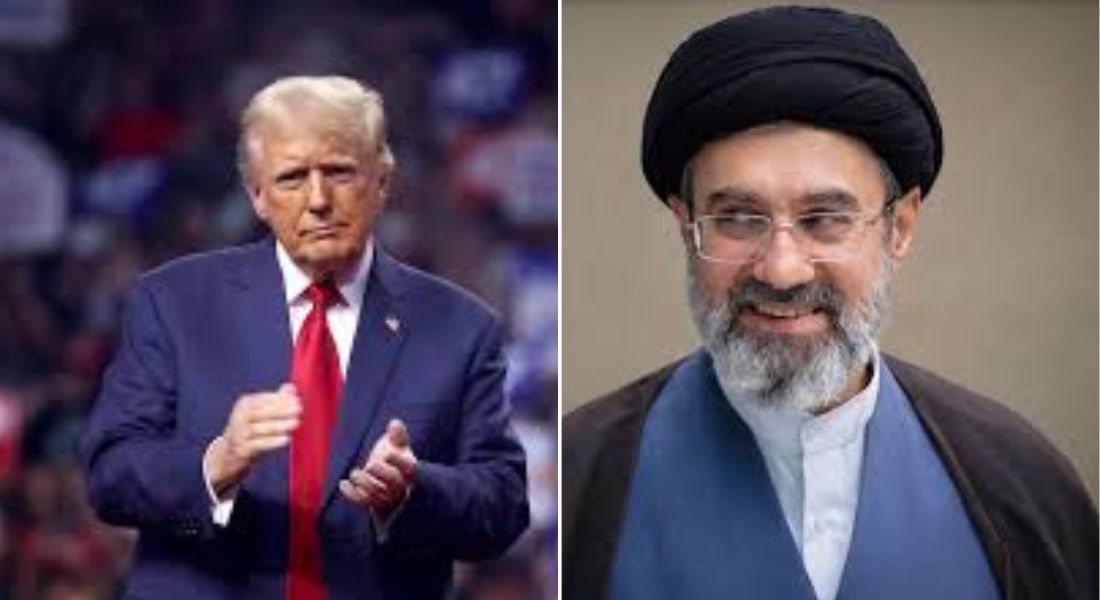
President Trump has also expressed frustration over Iran’s internal dynamics, writing on Truth Social: “Iran is having a very hard time figuring out who their leader is! They just don’t know!” He further described divisions between “Hardliners” and “Moderates” within Tehran’s leadership.

Meanwhile, geopolitical dimensions of the conflict widened as Russian President Vladimir Putin met Araghchi in Saint Petersburg and signalled Moscow’s continued support for Iran. According to Russian state media RT, Putin said, “Last week I received a message from the Supreme Leader of Iran,” referring to Mojtaba Khamenei, whose public absence had fuelled speculation about his condition.

Putin also reiterated Russia’s commitment to regional stability, stating, “For our part, we will do everything that serves your interests… so that peace can be achieved as soon as possible.” He added that Russia intends to maintain its strategic partnership with Iran.

Araghchi, in remarks reported by Iran’s official news agency IRNA, blamed Washington for stalled negotiations, saying earlier talks failed due to “excessive demands” and “wrong approaches” by the US.

With diplomatic efforts continuing but positions hardening, the future of negotiations remains uncertain, particularly as disagreements over Iran’s nuclear programme and control of key maritime routes continue to dominate the conflict narrative.