At IndiaVerve, we go beyond the noise to bring you meaningful stories of change, resilience and progress—from India to the world stage. Our mission is to bring readers credible, wide-ranging coverage across politics, business, sports, culture, society and more.

Odisha sees sharp rise in market investors as SEBI chief highlights growth at Bhubaneswar programme

Bhubaneswar: Chairman of Securities and Exchange Board of India (SEBI) Tuhin Kanta Pandey on Monday said Odisha has emerged as one of India’s fast-growing states in terms of economic expansion and investor participation, while addressing an Investor Awareness Programme in Bhubaneswar.

Speaking at the event, Pandey described Odisha as his “Karmabhoomi” and said the state had witnessed rapid economic progress driven by industrial growth, mineral resources, and infrastructure investments.

He said Odisha’s real GDP was estimated to grow at around 7.9% in FY26, higher than the national average of 7.4%. The manufacturing sector in the state is also expected to grow at 8.3%, above the national pace, SEBI said in a statement.

According to Pandey, Odisha’s per capita income increased from nearly Rs 65,000 in FY16 to around Rs 1.9 lakh in FY26, recording annual growth faster than the national average.

Highlighting the rise in investor participation from Odisha, the SEBI chairman said the number of investors in the securities market from the state had increased more than tenfold over the last decade, rising from around 2.5 lakh in FY15 to 28.5 lakh in FY26.

He added that nearly 15 lakh mutual fund investors from Odisha currently hold around 59 lakh folios with assets worth approximately Rs 71,000 crore.

Pandey said the trend reflected growing awareness, confidence, and financial aspirations among people in the state, though he noted that the investment journey still had a long way to go.

Explaining the importance of securities markets, he said markets act as a bridge between household savings and businesses seeking capital for expansion and infrastructure development.

He highlighted the role of instruments such as equity, debt, REITs, InvITs, and municipal bonds in supporting economic growth and urban infrastructure financing.

Pandey said India’s securities market had witnessed massive expansion over the past decade. Market capitalisation increased from around Rs 95 trillion in FY16 to nearly Rs 463 trillion by April 2026, while the corporate bond market grew from Rs 20 trillion to about Rs 59 trillion.

Retail participation has also surged sharply, with the number of unique investors rising from 38 million in FY19 to nearly 145 million now.

The SEBI chairman also said India witnessed 366 IPOs in FY26, mobilising around Rs 1.9 trillion. Total fund mobilisation through equity and debt markets during the last financial year stood at approximately Rs 13.6 trillion.

He also highlighted the rapid growth of the mutual fund sector. Assets under management increased from Rs 12 trillion in FY16 to nearly Rs 82 trillion by April 2026, while monthly SIP inflows crossed Rs 31,000 crore.

However, Pandey pointed out that despite rising awareness, actual participation remained limited. Referring to the SEBI Investor Survey 2025, he said 63% of households were aware of market products, but only 9.5% actively invested. Rural participation remained particularly low at around 6%.

The SEBI chairman encouraged investors to consider mutual funds as a simple entry point into markets, noting that systematic investment plans allow people to begin investing with as little as Rs 250 per month.

He also highlighted several investor protection measures introduced by SEBI, including validated UPI payment systems, SEBI Check verification tools, Digilocker integration, simplified nomination processes, SCORES 2.0 grievance redressal platform, and the MITRA platform for tracking inactive mutual fund folios.

Pandey said SEBI was also taking steps against misleading financial content on digital platforms and unregulated investment advice circulated by social media influencers.

Centre signs Jal Jeevan Mission 2.0 reform pacts with West Bengal and Andaman & Nicobar Islands

New Delhi: The Union government on Monday signed reform-linked Memorandums of Understanding (MoUs) with the State of West Bengal and the Union Territory of Andaman and Nicobar Islands under the Jal Jeevan Mission 2.0, marking a major step towards community-driven rural water governance and universal tap water access.

The agreements were signed during separate meetings held in the presence of Union Jal Shakti Minister C. R. Patil, Minister of State for Jal Shakti V. Somanna, and senior officials of the Department of Drinking Water and Sanitation (DDWS).

The reform-linked framework aims to strengthen Gram Panchayat-led water management systems with a focus on transparency, accountability, and community participation under the vision of Viksit Bharat 2047.

For the Andaman and Nicobar Islands, the MoU was signed between Joint Secretary (Water), DDWS, Swati Meena Naik, and Secretary-cum-Commissioner of the Union Territory administration, Dr Sachin Shinde. The agreement was exchanged in New Delhi in the virtual presence of Lieutenant Governor D. K. Joshi and Chief Secretary Dr Chandra Bhushan Kumar, according to an official statement.

The Union Territory administration highlighted that the Andaman and Nicobar Islands had achieved 100% rural tap water coverage in 2021 and had already implemented decentralised pilot projects under Jal Jeevan Mission 2.0, including a model initiative in Sippighat Gram Panchayat.

Officials also stated that the Union Territory had successfully utilised allocated funds across 40 completed rural water projects.

The MoU with West Bengal was signed at the Chief Minister’s Office in the presence of Chief Minister Suvendu Adhikari, Chief Secretary Manoj Kumar Agarwal, and senior state officials. The agreement was signed between DDWS Joint Secretary Swati Meena Naik and Principal Secretary of the Public Health Engineering Department Narayan Swaroop Nigam.

Addressing the meetings, C. R. Patil said Jal Jeevan Mission had evolved into a people-centric movement under the leadership of Prime Minister Narendra Modi with a focus on dignity, health, and empowerment in rural India.

The Union minister said the original deadline of May 2024 for the mission had been extended till December 2028 to ensure 100% tap water coverage and sanitation across the country.

Patil praised the Andaman and Nicobar Islands for becoming one of the early achievers of complete rural tap water coverage and obtaining Har Ghar Jal certification across all blocks.

He also directed the Union Territory administration to complete financial reconciliation of ongoing schemes to maintain transparency in project implementation.

During discussions with West Bengal officials, Patil urged the state government to speed up the implementation of Jal Jeevan Mission 2.0 and conduct immediate physical reviews in districts such as Darjeeling, Kalimpong, and Purulia, which have historically lagged in water infrastructure development.

He also called for stronger implementation of Jal Sanchay Jan Bhagidari and the Karmabhoomi se Matrubhoomi campaign to encourage public participation.

The minister stressed that village-level operation and maintenance of water infrastructure, daily management and water tariff collection should be legally transferred to Village Water and Sanitation Committees under the new framework.

IMD warns of severe heatwave in Northwest, Central India

New Delhi: The India Meteorological Department (IMD) on Monday warned of heatwave to severe heatwave conditions across parts of northwest and central India over the coming days, with temperatures expected to rise further in several regions this week.

In a special heatwave bulletin, the weather office said maximum temperatures are likely to increase gradually by 2°C to 3°C across many parts of northwest India between May 19 and May 24, while parts of Chhattisgarh may witness a sharper rise of 3°C to 4°C until May 21.

The IMD said isolated areas of Punjab, Haryana, Chandigarh, Delhi, west Rajasthan and east Rajasthan are likely to experience heatwave conditions through the week ending May 24.

In Uttar Pradesh, both western and eastern regions may witness heatwave to severe heatwave conditions from May 20 to May 24, it added.

Several parts of Madhya Pradesh, Chhattisgarh, Vidarbha, Marathwada and central Maharashtra are also expected to face heatwave conditions in isolated pockets on different days between May 19 and May 24.

The weather office further stated that Bihar and Telangana could experience heatwave conditions in isolated areas between May 19 and May 21, while similar conditions are expected over coastal Andhra Pradesh and Yanam from May 20 to May 24.

However, the IMD said no major changes in daytime temperatures are expected over most other parts of the country until May 24.

For Maharashtra and Gujarat, the department forecast no significant change in temperatures until May 18, followed by a gradual drop of 2°C to 3°C between May 19 and May 24.

The IMD has advised people in heatwave-prone regions to avoid prolonged exposure to direct sunlight, remain hydrated and take precautions against heat-related illnesses, particularly vulnerable groups such as children, senior citizens and outdoor workers.

Govt plans ‘Ama Gaaanre Ama Tahasil’ programme

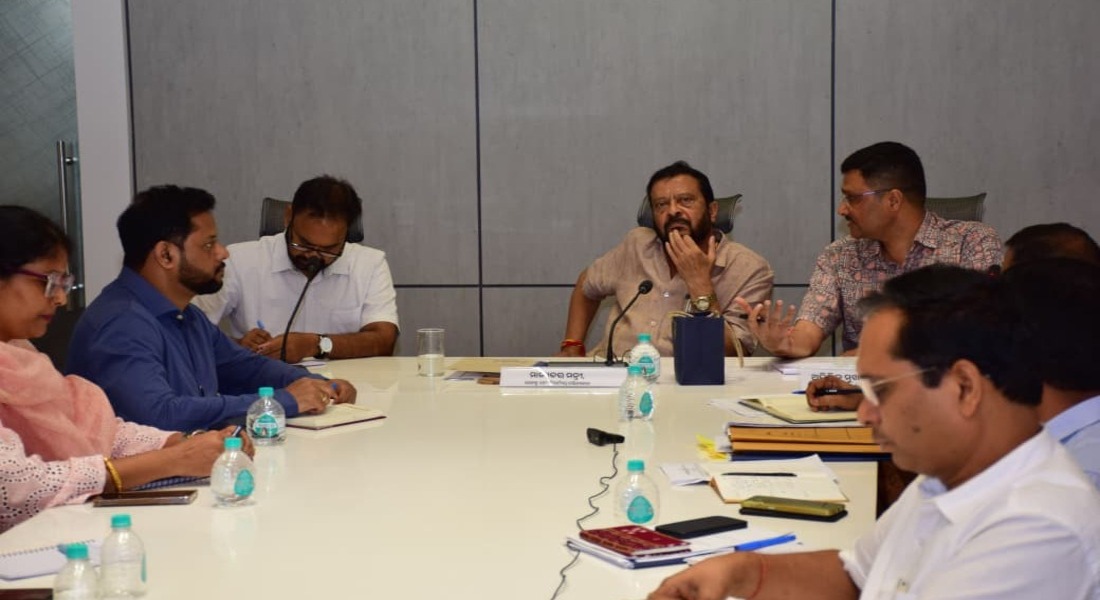
Bhubaneswar: The Odisha government is set to launch a new initiative, ‘Ama Gaaanre Ama Tahasil’ (Tahasil at Doorstep), aimed at taking revenue services closer to people through village and panchayat-level camp courts.

The proposal was discussed during a high-level review meeting chaired by Revenue and Disaster Management Minister Suresh Pujari at Lok Seva Bhawan on Monday, where officials assessed the department’s performance over the past two years and outlined future plans.

Under the proposed initiative, Tahasil Camp Courts will be organised at the village and panchayat levels to provide on-the-spot delivery of key revenue services and address public grievances.

Officials said services such as correction of Record of Rights (RoR), land demarcation and other revenue-related matters will be handled directly at the grassroots level, reducing the need for citizens to visit Tahasil offices.

Speaking at the meeting, Pujari stressed the importance of ensuring that public services effectively reach citizens.

“What we consider as our achievement is not the real success; rather, the schemes and initiatives accepted and appreciated by common people are our true achievements,” the minister said.

As part of efforts to strengthen public outreach, senior officers of the Revenue and Disaster Management Department will be assigned as nodal officers for different districts. They will undertake field visits, stay overnight in districts, interact with citizens and collect feedback on revenue services while spreading awareness about key public welfare programmes.

The minister also directed officials to ensure prompt grievance redressal through the proposed camp courts and improve the accessibility of revenue services at the local level.

During the meeting, discussions were also held on simplifying rules related to conversion of agricultural land classification (Kisama) in urban areas.

Officials informed the meeting that more than 2.5 crore revenue services have been delivered under the Odisha Right to Public Services (ORTPS) Act over the past two years. The department aims to further improve service delivery and make it more citizen-centric in the coming days.

The meeting also decided that a new framework for rehabilitation and resettlement of displaced persons will be drafted and implemented soon.

Additional Chief Secretary of the Revenue and Disaster Management Department, Dr Arabinda Padhee, Executive Director of the Odisha State Disaster Management Authority (OSDMA), Dr Kamal Lochan Mishra, and senior departmental officials attended the meeting.

India, Norway elevate ties to green strategic partnership during Modi’s Oslo visit

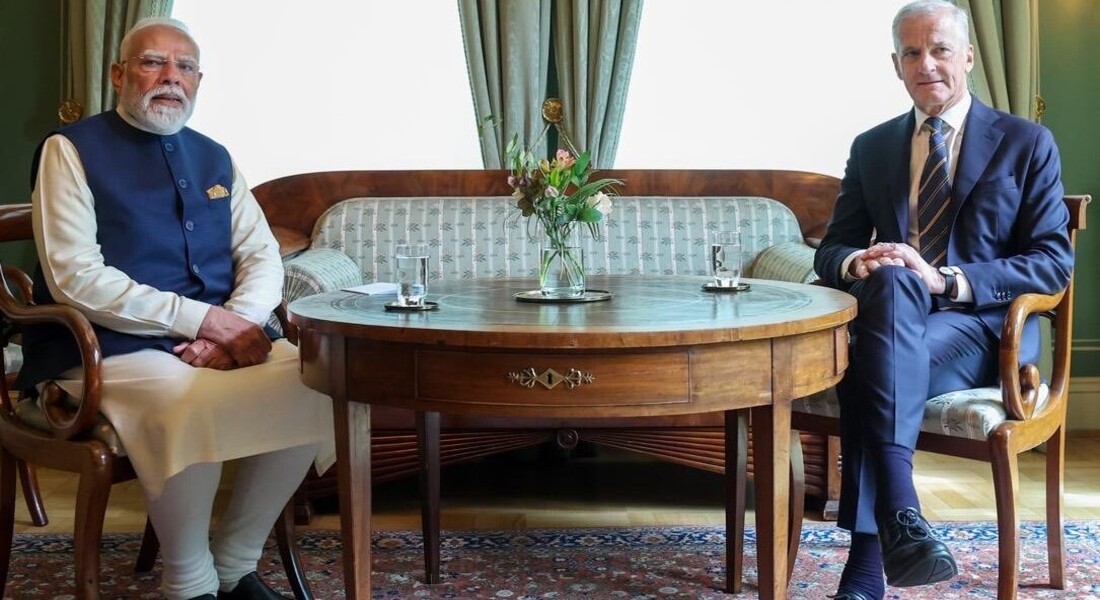
New Delhi: Prime Minister Narendra Modi on Monday announced a major expansion of India’s partnership with Norway during his visit to Oslo, with both countries deciding to elevate bilateral ties to a Green Strategic Partnership focused on clean energy, maritime cooperation, climate action, innovation, and emerging technologies.

Addressing a joint interaction in Oslo along with Norwegian Prime Minister Jonas Gahr Støre, Modi described Norway as a country where nature and human progress exist in harmony. He also extended greetings to the people of Norway on the occasion of the country’s Constitution Day, according to an External Affairs Ministry statement.

Modi recalled that his planned visit to Norway last year had been postponed following the terrorist attack in Pahalgam. He thanked Norway for standing firmly with India against terrorism during that period and said the support reflected the strength of ties between the two countries.

Highlighting global challenges, Modi said the world was passing through a period of instability and uncertainty due to ongoing conflicts in regions such as Ukraine and West Asia. Against this backdrop, he said India and Europe were entering a new phase of strategic cooperation.

Referring to the Trade and Economic Partnership Agreement signed between India and the European Free Trade Association last year, Modi said the pact aimed to bring USD 100 billion of investment into India and generate one million jobs over the next 15 years.

He said India and Norway had taken several important decisions to convert the agreement into practical outcomes and strengthen economic cooperation further.

Under the newly announced Green Strategic Partnership, both countries will work together in sectors including clean energy, climate resilience, blue economy, and green shipping. Modi said the partnership would combine India’s scale, talent, and speed with Norway’s technology and investment strength to develop global solutions.

The Indian PM also highlighted growing cooperation in research, education, and innovation. He said the two sides had agreed to expand joint research in sustainability, ocean energy, geology, and healthcare.

India and Norway will also strengthen collaboration in engineering, artificial intelligence, cyber technology, and digital innovation by connecting universities and startup ecosystems.

Modi said cooperation in skill development and talent mobility would also expand further in the coming years.

Highlighting Norway’s strategic importance in the Arctic region, Modi thanked Oslo for supporting India’s Arctic research station Himadri. He also welcomed the signing of an agreement between the Indian Space Research Organisation and the Norwegian Space Agency, saying it would open new opportunities in space cooperation.

He also said deeper scientific cooperation between the two countries would help advance climate research, ecosystem protection, and sustainable development efforts.

India also welcomed Norway’s decision to join the Indo-Pacific Oceans Initiative. Modi said both maritime nations would work together to strengthen cooperation in the marine economy, maritime security, and capacity building.

The two countries also concluded a triangular development cooperation agreement aimed at supporting human development projects in countries of the Global South through India’s Digital Public Infrastructure initiatives.

On international issues, Modi said India and Norway both supported dialogue, diplomacy, and a rules-based global order. He stressed that military conflict could not resolve global disputes and reiterated support for peace efforts in Ukraine and West Asia.

The PM also underlined the need for reforms in global institutions and reaffirmed the shared commitment of both countries to eliminating terrorism in all forms.

Modi said cooperation between India and Norway was expanding across sectors ranging from Arctic research and outer space to energy security, food security, and green shipping, opening a new chapter in long-term bilateral ties.

BJP reviews organisational strategy at Bhubaneswar meeting, highlights Odisha development push

Bhubaneswar: BJP national President Nitin Nabin on Monday held an organisational meeting in Bhubaneswar on Monday, focusing on party expansion, governance outreach, and Odisha’s development agenda.

The meetings took place at the party’s state headquarters in Bhubaneswar in the presence of Chief Minister Mohan Charan Majhi, Deputy Chief Ministers K.V. Singh Deo and Pravati Parida, Union Education Minister Dharmendra Pradhan, Odisha BJP President Manmohan Samal, and the party’s national Vice-President Baijayant Panda.

During the State Core Committee meeting, leaders discussed organisational activities, future strategies, and coordination among party workers.

Addressing party leaders and workers, Nabin said the double-engine government under the leadership of Prime Minister Narendra Modi and Majhi was taking Odisha towards a new phase of development.

Majhi said the government was working towards Odisha’s overall growth with a focus on social security, economic progress, and citizen welfare. He added that the state government remained committed to strengthening Odisha’s identity at the national and global level.

As part of the programme, leaders also attended a district-level training camp organised under the Pandit Deendayal Upadhyay Prashikshan Mahaabhiyan in Bhubaneswar, Nabin said in a series of posts on X.

During the event, Nabin inaugurated an exhibition showcasing the BJP’s organisational journey, welfare initiatives, and governance achievements under Modi over the past 12 years.

The exhibition also highlighted major developmental initiatives undertaken in Odisha during the last two years under the state government.

Nabin said the exhibition reflected the party’s commitment towards public service, good governance, and nation-building. He added that such initiatives would inspire and guide party workers.

Party leaders said the training programme aimed to strengthen organisational structure and connect workers more closely with governance and development initiatives.

India eyes USD 1 trillion export push as Piyush Goyal calls for stronger domestic manufacturing

New Delhi: Union Commerce and Industry Minister Piyush Goyal on Monday said India is aiming to achieve exports worth USD 1 trillion this year and USD 2 trillion over the next five years, stressing that stronger exports and domestic manufacturing would define the country’s journey towards an Atmanirbhar Bharat.

Speaking at the website launch event of the Bharatiya Vyapar Mahotsav in New Delhi, Goyal said India’s exports had already reached USD 863 billion this year despite difficult global conditions. He noted that both goods and services exports recorded growth compared to the previous year.

The minister described the export target as a national mission rather than only a government objective, according to an official statement. He said the Centre was prepared to provide all necessary support to industries and businesses to help achieve the goal.

Highlighting India’s trade strategy, Goyal said the government had worked on Free Trade Agreements with nearly 38 developed countries over the past three-and-a-half years. He said these agreements would help Indian products access global markets at lower import duties and improve competitiveness.

He added that the proposed Free Trade Agreement with Oman could come into effect from June 1, while other agreements awaiting procedural clearances would also become operational gradually.

Goyal also pushed for greater focus on import substitution. He urged businesses to closely study import trends and identify products that can be manufactured within India. According to him, reducing dependence on imported goods is equally important for economic growth.

The minister called on industrial clusters in cities such as Rajkot, Jalandhar, Ludhiana, Batala, and Pune to increase domestic production in sectors where India still depends heavily on foreign suppliers, especially capital goods.

He stressed the need to strengthen the spirit of Swadeshi and encourage wider use of Indian-made products. He warned that rising domestic consumption could lead to higher imports if local industries fail to meet demand.

Goyal also highlighted India’s growing capabilities in medical device manufacturing. Referring to a CT scan machine being produced in Visakhapatnam, he said greater public acceptance of Indian products would help industries scale operations further.

The minister said India should not become complacent despite being among the world’s fastest-growing economies. He stressed the importance of improving product quality, packaging standards, and productivity to compete effectively in international markets.

He also pointed to the huge potential in agriculture and fisheries exports, which have crossed nearly Rs 5 lakh crore. However, he noted that value addition in these sectors remains low and called on young entrepreneurs to enter food processing and manufacturing.

Goyal said the government had expanded the definition of MSMEs to include enterprises with turnover up to Rs 500 crore. He said the move was aimed at helping businesses grow larger and become globally competitive.

Government holds urban governance orientation for IAS probationers

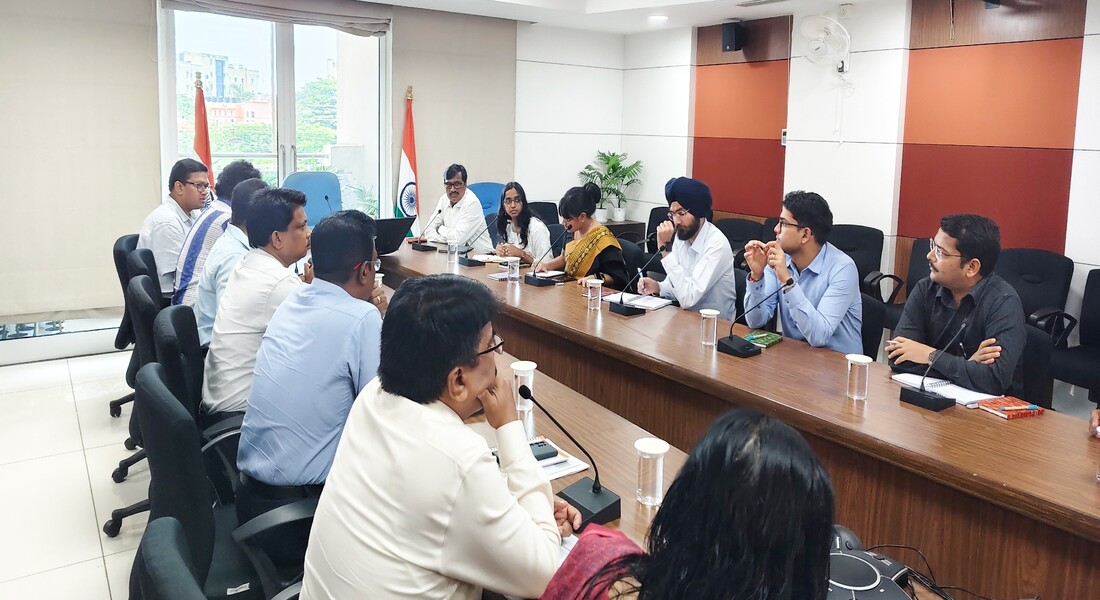
Bhubaneswar: The Housing and Urban Development Department on Monday organised an interactive orientation session for six IAS probationers of the 2025 Odisha cadre to familiarise them with the state’s urban governance system and public service initiatives.

The session was led by Director of Municipal Administration Arindam Dakua, along with senior department officials and vertical heads.

During the programme, officials briefed the probationers on major urban development initiatives related to affordable housing, water supply, sanitation, waste management, urban infrastructure, and technology-based governance systems.

The officers also explained how different government policies are implemented at the field level to improve public service delivery in urban areas.

The session focused on the importance of citizen-centric and responsive governance amid rapid urbanisation. The probationers were encouraged to remain connected with grassroots realities while using innovation, data-based planning, and inter-departmental coordination to improve urban administration.

As part of the programme, the probationers visited an AAHAR Kendra and the BSABT facility to observe urban service delivery systems and technology-driven governance initiatives being implemented in Odisha.

Officials said the exposure visit helped the young officers gain a practical understanding of the state’s integrated urban management model and the importance of inclusive and sustainable urban development.

Praggnanandhaa stays unbeaten after solid fourth-round display in Romania

New Delhi: Indian chess star R Praggnanandhaa has continued his steady run at the Grand Chess Tour’s Superbet Chess Classic Romania 2026 after securing a composed draw against Dutch Grandmaster Jorden van Foreest in Round 4.

Playing with the black pieces, Praggnanandhaa absorbed early pressure and gradually neutralised Van Foreest’s attacking intentions in a tightly contested battle that eventually ended in repetition, according to chess.com.

The match opened with the English Opening before quickly transitioning into a strategic middlegame without queens on the board. Van Foreest attempted to control more space and maintain initiative through active piece placement, but Praggnanandhaa responded with disciplined defence and timely counterplay.

As the game progressed, the Indian grandmaster slowly improved his position by activating his rook and knight. His accurate coordination prevented White from converting the slight positional edge into anything concrete.

The turning point arrived in the later stages when Praggnanandhaa began creating continuous checks around the white king. The pressure forced Van Foreest to abandon hopes of pushing for victory, and both players eventually repeated moves to split the point.

The draw helped Praggnanandhaa maintain an unbeaten record after four rounds in the prestigious tournament.

The 19-year-old has enjoyed a strong campaign so far. He began the event with a draw against Alireza Firouzja before producing one of the standout results of the tournament by defeating Javokhir Sindarov in Round 2. That victory also ended Sindarov’s impressive 53-game unbeaten run in classical chess.

Praggnanandhaa then followed it up with another draw against German Grandmaster Vincent Keymer in Round 3.

With consistent performances against elite opposition, Praggnanandhaa has once again underlined his growing maturity and stability at the highest level of international chess.

VD Satheesan takes oath as Kerala Chief Minister

Thiruvananthapuram: Congress leader VD Satheesan on Monday took oath as the Chief Minister of Kerala, ushering in a Congress-led government in the southern state after a decade and marking the return of the United Democratic Front (UDF) to power following a decisive electoral victory.

Governor Rajendra Vishwanath Arlekar administered the oath of office to the 61-year-old leader at a ceremony held at Central Stadium in Thiruvananthapuram. Satheesan was sworn in along with a 20-member Council of Ministers comprising leaders from the Congress and its UDF allies.

Senior Congress leaders, including party president Mallikarjun Kharge, Rahul Gandhi and Priyanka Gandhi Vadra, attended the swearing-in ceremony, alongside leaders from other Congress-ruled states.

Satheesan’s elevation comes 10 days after the Congress-led alliance secured a commanding mandate in the Kerala Assembly elections, ending the Left Democratic Front’s (LDF) decade-long rule. The UDF won 102 seats in the 140-member Assembly, with the Congress emerging as the single-largest party by winning 63 seats. Alliance partner Indian Union Muslim League (IUML) secured 22 seats.

Seen as the architect of the Congress comeback in Kerala, Satheesan had emerged as a strong contender for the top post after spearheading the party’s campaign and aggressively targeting the LDF government on governance and financial issues.

However, his appointment followed days of internal deliberations amid reports that sections of the Congress leadership were backing senior party leader KC Venugopal for the position.

Political observers view Satheesan’s elevation as a recognition of his growing popularity among party workers and public support, as well as backing from key UDF ally IUML. Media reports suggest consultations involving senior Congress leaders eventually paved the way for a consensus around his leadership.

The new Cabinet includes senior Congress leaders Ramesh Chennithala, K Muraleedharan and Kerala Pradesh Congress Committee chief Sunny Joseph. The IUML secured five ministerial berths, while smaller UDF allies such as Kerala Congress (Joseph), Revolutionary Socialist Party, Kerala Congress (Jacob), and Communist Marxist Party were also accommodated.

Among the ministers are Ramesh Chennithala, Sunny Joseph, AP Anil Kumar, PC Vishnunadh, Roji M John, Bindu Krishna, T Siddique and K A Thulasi from the Congress, along with IUML leaders PK Kunhalikutty, PK Basheer, N Samsudheen, KM Shaji and VE Abdul Gafoor.

Satheesan has also announced senior Congress leader Thiruvanchoor Radhakrishnan as the Speaker of the Kerala Assembly, while Shanimol Usman will serve as Deputy Speaker.

Even before formally assuming office, Satheesan signalled a shift in governance style, promising austerity measures and an end to VIP culture in the state. He has announced that ministers, including the chief minister, will continue using vehicles from the previous administration instead of purchasing new official cars.

The chief minister has also said he would travel with a reduced security convoy, a move aimed at projecting fiscal discipline at a time when Kerala faces financial stress.

With several first-time ministers in the Cabinet and expectations of administrative reforms, the Satheesan government now faces the challenge of translating its electoral mandate into governance.