At IndiaVerve, we go beyond the noise to bring you meaningful stories of change, resilience and progress—from India to the world stage. Our mission is to bring readers credible, wide-ranging coverage across politics, business, sports, culture, society and more.

International Art of Giving Day celebrated across 190 countries with massive global participation

Bhubaneswar: The 13th International Art of Giving Day on Sunday witnessed massive participation across the globe this year, with programmes and outreach activities organised in 190 countries across six continents. The campaign, inspired by educationist and social reformer Achyuta Samanta, also saw participation at nearly 50,000 locations worldwide.

Organisers said the movement reached all 222 member nations of the International Volleyball Federation, every state and Union Territory in India, and thousands of locations across Odisha, including district headquarters, blocks, and panchayats.

In Odisha alone, Art of Giving Day was celebrated at around 20,000 locations, KIIT said in a release. According to organisers, nearly 2.5 crore people, including followers and supporters of the movement, were directly impacted during this year’s campaign.

Activities linked to the celebration were held over the past week in different parts of the world and across several Indian cities. People from diverse social and professional backgrounds took part in the programmes.

This year’s theme, “Share to Shine,” focused on the idea that sharing happiness and support with others also contributes to personal growth and collective progress.

Sports promotion emerged as a major highlight of this year’s celebrations. More than 9,100 volleyballs were distributed at over 3,000 locations across Odisha along with volleyball nets. The initiative aimed to encourage youth participation in sports and strengthen friendship and social harmony among communities.

Speaking on the occasion, Samanta said the Art of Giving philosophy had shaped his life and helped him receive affection and support from people across the world.

A major event marking the occasion was organised in Bhubaneswar with participation from personalities from different sectors. During the programme, the official Art of Giving theme song, sung by noted playback singer Shaan, was unveiled.

The event was attended by Lok Sabha MP Rabindra Narayan Behera, Indian tennis icon Leander Paes, Tibetan Buddhist spiritual leader Getrul Jigme Rinpoche, and Nikita Porwal, among others.

The prestigious AOG Hero Awards were also presented during the event. Medical expert Dr Bidyut Das, social worker and Rotarian Ajay Agrawal, and KIIT professor Kumar Debadatta received the awards for their contribution to social service. Each award carried a cash prize of Rs 1 lakh.

The programme also saw the presence of KIIT and KISS Vice Chancellor Prof Saranjit Singh along with senior institutional officials.
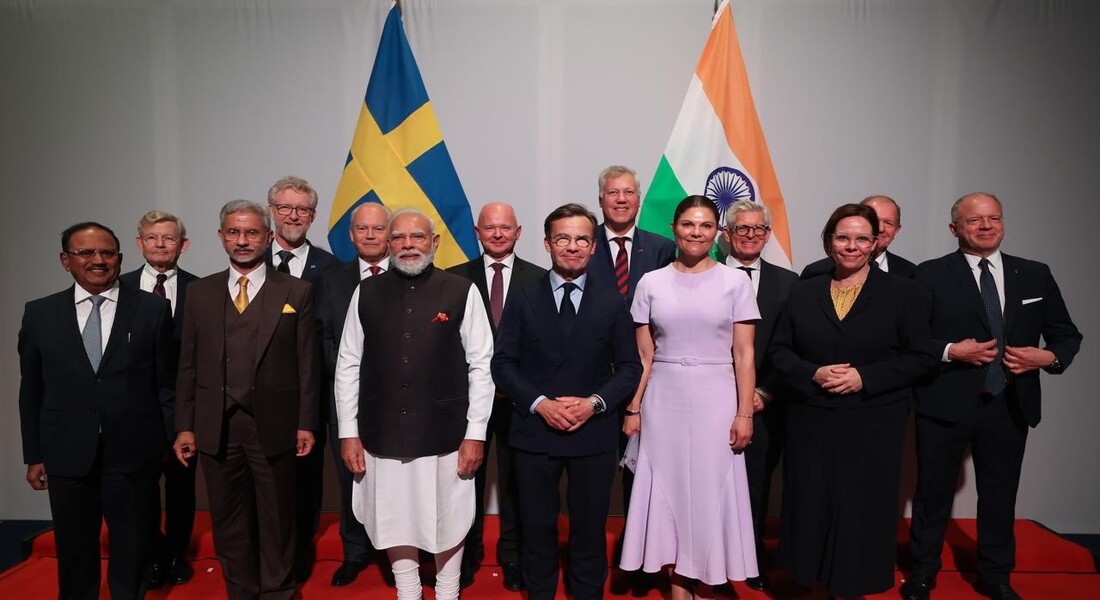
India, Sweden push strategic reset as Modi pitches Europe for deeper economic partnership

New Delhi: Prime Minister Narendra Modi used his visit to Sweden to position India as Europe’s long-term economic and strategic partner amid shifting global trade and security dynamics. During high-level engagements in Gothenburg, India and Sweden agreed to elevate bilateral ties to a Strategic Partnership, while India also intensified its outreach to leading European industries.

Addressing the European Round Table for Industry, Modi stressed the need for trusted partnerships amid global uncertainty. The interaction brought together Swedish Prime Minister Ulf Kristersson, European Commission President Ursula von der Leyen, senior industry executives, and representatives from major Indian and European companies, according to an official statement.

Modi described the recently concluded India-EU Free Trade Agreement as a breakthrough that could reshape trade, technology cooperation, and industrial growth between the two regions. He said the agreement would strengthen supply chains and create fresh opportunities across manufacturing, services, and innovation sectors.

The PM also highlighted the strategic importance of the India-Middle East-Europe Economic Corridor, saying the project could unlock new economic value for both India and Europe.

Pitching India as a major investment destination, Modi pointed to the country’s rapid economic expansion, infrastructure growth, and digital transformation. He said India’s governance reforms and manufacturing push had created strong opportunities for global investors.

He urged European companies to expand their engagement with India under the vision of “Design for India, Make in India, and Export from India.”

Modi also called for stronger India-Europe cooperation in semiconductors, artificial intelligence, telecom infrastructure, clean energy, mobility, healthcare, and deep-tech manufacturing. He underlined the importance of resilient and diversified supply chains as geopolitical uncertainties continue to affect global commerce.

Modi said India’s young workforce and expanding innovation ecosystem could play a major role in future economic growth. He also pushed for closer cooperation in talent mobility, education, and skill development between India and Europe.

In a move aimed at institutionalising business engagement, Modi proposed an annual India-Europe CEOs Round Table and suggested setting up a dedicated India Desk at the ERT.

Modi also held bilateral talks with Swedish Prime Minister Ulf Kristersson. Crown Princess Victoria of Sweden also joined the meeting and conveyed greetings from King Carl XVI Gustaf and Queen Silvia. Modi extended wishes to the Swedish monarch on his 80th birthday.

The two leaders reviewed cooperation across trade, innovation, defence, green transition, digitalisation, research, space, SMEs, and cultural exchanges. They agreed to upgrade bilateral ties into a Strategic Partnership framework.

Under the new framework, India and Sweden will focus on four key pillars – strategic dialogue and security cooperation, next-generation economic partnership, emerging technologies and trusted connectivity, and collaboration in health, sustainability, and resilience.

To support the new partnership, both countries adopted the India-Sweden Joint Action Plan 2026-2030. The roadmap covers cooperation in political engagement, technology, climate action, economic growth, and people-to-people exchanges.

The two sides also backed early implementation of the India-EU Free Trade Agreement to deepen trade and investment linkages further.

Modi appreciated Sweden’s role in sectors such as clean technology, advanced manufacturing, and sustainable mobility. Kristersson praised India’s progress in digital transformation and artificial intelligence and acknowledged the contribution of the Indian community to Sweden’s economy and innovation ecosystem.

The leaders also discussed regional and global developments. Both sides stressed the need for reforms in the UN and other multilateral institutions. Modi thanked Sweden for supporting India’s fight against terrorism.

The meeting concluded with both countries reaffirming their commitment to peace, stable supply chains, and sustainable economic growth.

UAE raises alarm after drone-linked fire near Barakah nuclear facility

New Delhi: Tensions in the Gulf region escalated further after the UAE accused Iran or allied proxy groups of being behind a drone-related fire incident near the Barakah nuclear power facility. Authorities described the development as a serious provocation amid the fragile ceasefire atmosphere surrounding the ongoing Iran conflict.

Officials clarified that the blaze occurred outside the secured perimeter of the nuclear installation in the Al Dhafra region and did not trigger radiation leaks or public safety concerns. The UAE’s nuclear regulator confirmed that the plant’s operations remained unaffected and no injuries were reported.

According to the UAE defence ministry, three drones entered the country from the western direction, with one striking an electrical generator located outside the inner zone of the Barakah nuclear plant. Authorities said investigations were underway to identify the origin of the drones and promised further updates once inquiries were completed.

The incident comes during a sensitive phase in regional diplomacy, with negotiations linked to the Iran conflict reportedly facing deadlock. Meanwhile, US President Donald Trump intensified pressure on Tehran through a strongly worded social media statement, indicating that time was running out for Iran to move towards an agreement, according to theguardian.com.

Reports suggested that Trump recently held discussions with national security advisers in Virginia and was expected to conduct additional meetings with his security team to review strategic options concerning the Middle East situation.

The US leader also reportedly spoke with Israeli Prime Minister Benjamin Netanyahu ahead of a key Israeli security cabinet meeting focused on Iran, Lebanon, and Gaza. Israeli media speculation has grown over the possibility of renewed military confrontation if diplomatic efforts continue to stall.

Amid the crisis, UAE Foreign Minister Sheikh Abdullah bin Zayed Al Nahyan held consultations with regional counterparts, including officials from Saudi Arabia, which publicly condemned the incident despite recent strains in bilateral ties with the UAE.

The UAE also briefed International Atomic Energy Agency (IAEA) Director General Rafael Grossi regarding the drone strike. Emirati officials reportedly conveyed that the country reserved the right to respond to attacks threatening its national security.

The IAEA later expressed concern over the development, stressing that military actions capable of endangering nuclear safety were unacceptable.

The UAE has increasingly aligned itself with Israel during the regional conflict and has adopted a more assertive posture against Iran compared to several other Gulf nations. Reports have also indicated that Abu Dhabi previously responded militarily after alleged Iranian attacks targeting Emirati oil infrastructure.