At IndiaVerve, we go beyond the noise to bring you meaningful stories of change, resilience and progress—from India to the world stage. Our mission is to bring readers credible, wide-ranging coverage across politics, business, sports, culture, society and more.

Odisha governor highlights NEP 2020 focus on holistic education and life skills

Bhubaneswar: Highlighting the implementation of the National Education Policy (NEP) 2020 in Odisha, Governor Hari Babu Kambhampati on Friday said the policy is designed to promote holistic and multidisciplinary education.

He added that NEP 2020 also focuses on nurturing creativity, ethics, leadership qualities and essential life skills among students.

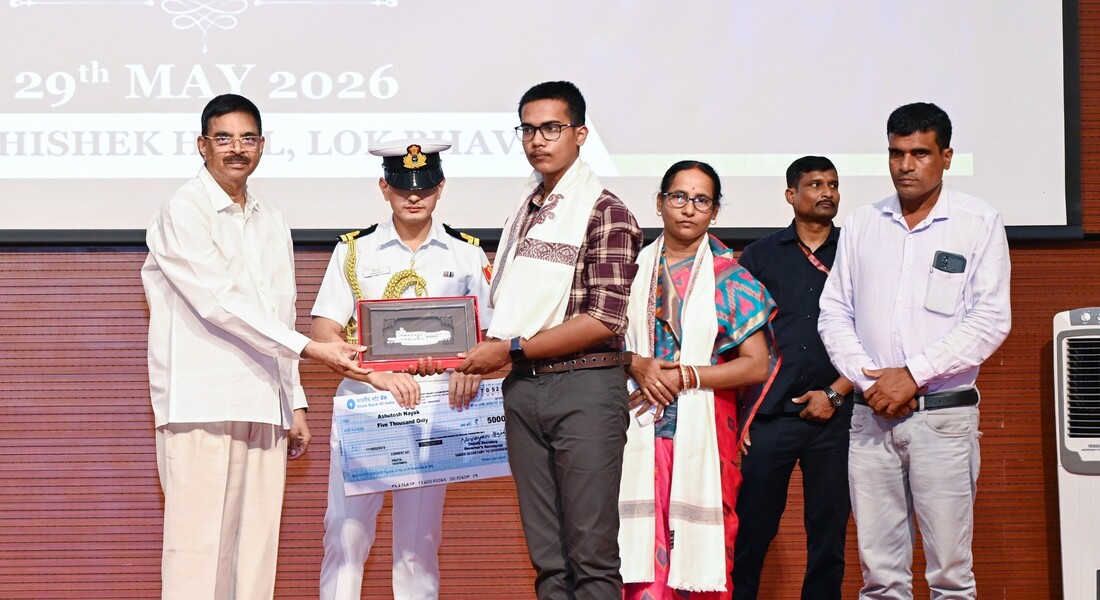
He made the remarks while addressing a special felicitation programme organised for toppers of the Annual High School Certificate Examination 2026 conducted by the Board of Secondary Education, CBSE, and ICSE in Odisha. The event was held at the New Abhishek Hall of Lok Seva Bhawan. The First Lady of Odisha, Jayashree Kambhampati, was present on the occasion.

Addressing the meritorious students, the governor said that life beyond the classroom is filled with opportunities, responsibilities, and challenges that test a person’s character. He emphasised that true success is measured not only by academic marks but also by values, compassion, and the positive impact one has on society.

Congratulating the toppers, he said their achievement reflects discipline, dedication, perseverance, and courage, adding that their success has brought pride to the state and inspired other students across Odisha.

Governor Hari Babu observed that academic excellence is only the beginning of a larger journey and urged students to remain committed to the welfare of society and the nation. He said education becomes meaningful only when it shapes responsible citizens and better human beings.

He further noted that the country requires not only skilled professionals but also honest, empathetic, and service-oriented citizens. He advised students to uphold integrity, humility, and compassion in every stage of life.

Reiterating the importance of values in education, the governor said that life would ultimately be defined not just by academic performance but by the values one upholds and the difference one makes in others’ lives.

He also appreciated the role of parents, teachers, and mentors in guiding students and shaping their academic journey through constant support, sacrifice, and encouragement.

Calling upon the toppers to become role models, he urged them to contribute towards building a just, inclusive, and compassionate society.

Commissioner-cum-Secretary to the Governor, Dr. Roopa Roshan Sahoo, delivered the welcome address at the programme.

Students, parents, and teachers also shared their experiences during the event, which concluded with a cultural presentation.
BSF gets new outposts in Gujarat as Amit Shah outlines security overhaul

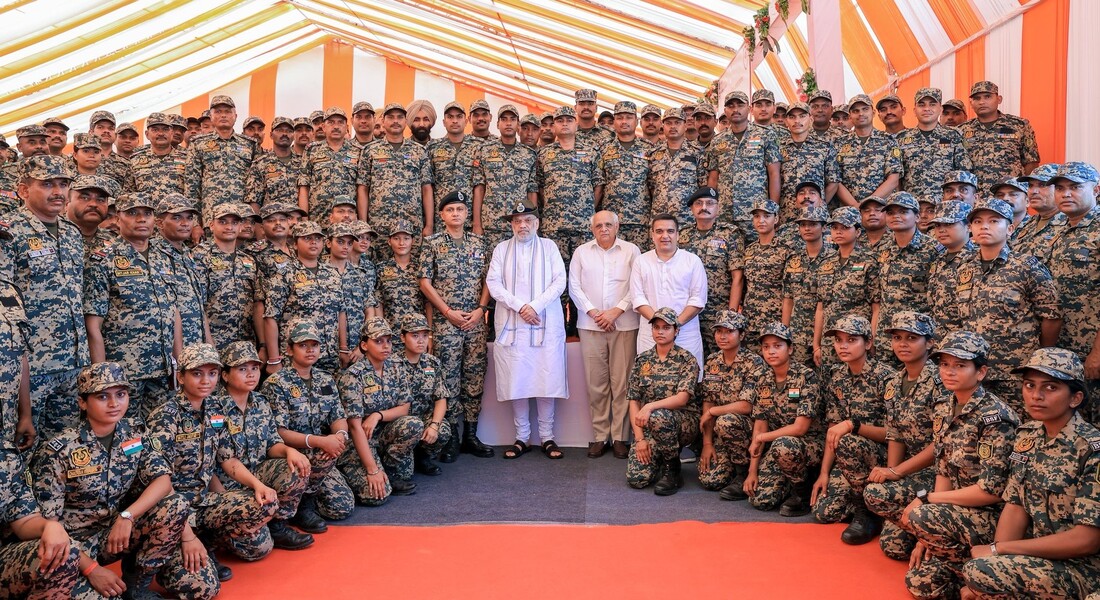
New Delhi: Union Home Minister Amit Shah has outlined an ambitious plan to strengthen India’s border security architecture through advanced technology, infrastructure upgrades, and greater community participation while inaugurating two Border Security Force (BSF) border outposts in Gujarat’s Bhuj region.

The minister interacted with BSF personnel stationed in the border area and said the government is working towards creating a more comprehensive security framework that combines surveillance technology, physical infrastructure, and coordination among multiple agencies.

Accompanied by Gujarat Chief Minister Bhupendra Patel, senior officials of the Ministry of Home Affairs, and top BSF leadership, Shah praised the force for operating in some of the country’s most demanding environments.

He noted that BSF personnel have spent six decades guarding India’s most challenging frontiers, serving in conditions ranging from freezing temperatures in the north to scorching desert regions in the west.

According to Shah, the force has carried out its responsibilities across diverse terrains, including Kashmir, Rajasthan, Kutch, the Sundarbans, Gangasagar, Meghalaya, and Assam.

Highlighting the force’s contribution to national security, Shah said around 2,000 BSF personnel have made the supreme sacrifice in the line of duty since the organisation’s formation.

The minister said the government has launched initiatives to improve public awareness about the role of the BSF. A visitor centre established in Banaskantha has attracted more than 2.5 lakh visitors in the past month, offering insights into the challenges faced by border guards.

Feedback collected from visitors has shown growing public appreciation for the force, with many expressing a desire to see their children join the BSF, according to an official statement.

Focusing on border infrastructure, Shah said a review conducted after he assumed office identified gaps in security preparedness in the Sir Creek and Harami Nala regions. In response, the government initiated work on watchtowers, roads, drinking water facilities, medical support systems, accommodation, and fencing to strengthen security along the sensitive stretch.

He said the objective is to create a “leak-proof” security network and expressed confidence that the region would be comprehensively secured within the next two years.

According to Shah, the government has prioritised the use of technology and infrastructure development to reduce operational challenges faced by personnel deployed in remote border locations. He said new watchtowers have been built and key installations elevated above ground level to improve security and operational effectiveness.

The minister also announced plans to redefine India’s border management strategy. As the BSF marks its 60th year, the government is preparing to move beyond traditional border guarding and introduce a broader “territorial security” approach involving local communities, civil administration, police forces, and security agencies working alongside the BSF.

He said the Smart Border Security Project is being implemented with investments worth thousands of crores of rupees. The initiative includes the deployment of drones, radars, modern surveillance systems, and advanced monitoring infrastructure aimed at strengthening border protection.

Shah further said the government is examining the possibility of assigning additional responsibilities to the BSF. Referring to the India-Bangladesh border in West Bengal, he said incomplete fencing has remained a key weakness in the security grid. He added that progress has recently been made in land allocation for fencing projects, which would help accelerate efforts to curb infiltration.