At IndiaVerve, we go beyond the noise to bring you meaningful stories of change, resilience and progress—from India to the world stage. Our mission is to bring readers credible, wide-ranging coverage across politics, business, sports, culture, society and more.

US plans fresh tariffs on India as trade talks continue in Delhi

New Delhi: Even as a United States trade delegation is here to advance negotiations on an interim trade agreement, the Donald Trump administration has proposed fresh tariffs on India and several other countries over alleged failures to prevent imports linked to forced labour.

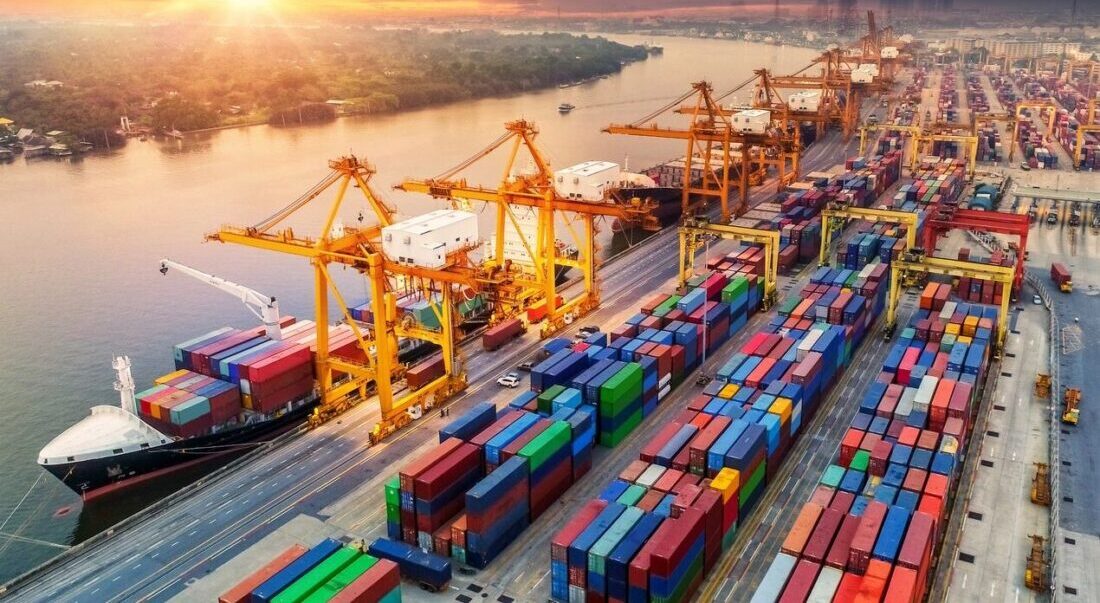
The proposed tariffs, announced by the Office of the United States Trade Representative (USTR), include an additional 12.5 per cent duty on imports from India, alongside countries such as China, Japan, South Korea, Brazil and Switzerland. According to a USTR filing released on Wednesday, the move targets trading partners that Washington believes have not adequately enforced restrictions on goods allegedly produced using forced labour.

The proposed duties are currently under review and will not take effect immediately. Public comments have been invited until July 6, after which hearings will be conducted before any final decision is made.

The development comes as the Trump administration looks for alternative legal pathways to revive parts of its tariff policy after several measures were challenged in US courts earlier this year.

US Trade Representative Jamieson Greer reportedly said countries that fail to stop imports linked to forced labour create unfair competition for American workers.

“The failure of our most important trading partners to address the importation of goods made with forced labor is unacceptable. This creates a dynamic where American workers are forced to compete globally on an unlevel playing field,” Greer was quoted as saying by CNBC..

“We will no longer tolerate this disparity. Some trading partners have taken initial steps to prevent the importation of forced labor goods, including through USMCA and commitments in Agreements on Reciprocal Trade. However, each of our trading partners must do more to ensure that trade does not perversely encourage and entrench forced labor globally.”

India is among 54 economies identified by the USTR as allegedly failing to effectively implement and enforce restrictions on such imports. Other countries named include Bangladesh, Vietnam, Taiwan, Israel, Saudi Arabia, Singapore, the United Arab Emirates and the United Kingdom.

However, the proposed tariff structure includes exemptions for certain products such as beef, coffee, fruits and nuts. Goods covered under the North American trade pact involving Canada and Mexico, along with select textile and apparel products, are also expected to remain exempt.

The proposed tariffs come at a sensitive time for India-US trade ties, with a US delegation led by chief negotiator Brendan Lynch currently in New Delhi for discussions aimed at finalising an interim trade agreement between the two countries.

India’s negotiating team is being led by Commerce Ministry Additional Secretary Darpan Jain. The talks are focused on issues including market access, customs facilitation, non-tariff barriers, investment promotion and broader economic security cooperation under the proposed Bilateral Trade Agreement (BTA).

The trade negotiations follow a framework agreed upon by both countries in February. Under the proposed first phase of the BTA, the US had reportedly agreed to lower tariffs on certain Indian goods and reconsider some duties linked to India’s purchase of Russian oil, offering relief after months of trade-related tensions.

While the fresh tariff proposal may complicate negotiations, both sides continue to push for an interim arrangement aimed at strengthening economic ties.
Middle East conflict weighs on global tourism growth in 2026

New Delhi: Global international tourist arrivals reached 307 million in the first quarter of 2026, up by about 6 million compared to the same period last year, according to UN Tourism data.

Overall growth stood at 2.5% in January and February. However, the pace slowed sharply in March to just 0.4%, as the Middle East conflict began affecting travel patterns, UN Tourism said in a press release.

UN Tourism now expects the conflict to cut international arrival growth by 1 to 2 percentage points below its earlier forecast of 3% to 4% for the full year. The agency cited flight disruptions, rising oil prices, jet fuel shortages, and weakened traveller confidence as key factors. It also warned that higher airfares could push demand toward closer destinations.

UN Tourism Secretary-General Shaikha Al Nuwais said the conflict was disrupting travel well beyond the Middle East, driving up inflation in transport and accommodation. She said tourism had nonetheless shown resilience, and stressed its role in supporting economies and communities.

Europe recorded over 130 million arrivals in Q1, up 4%. Central Eastern Europe led with 6% growth. Southern Mediterranean and Northern Europe each grew 4%. Africa grew 4%, with North Africa posting an 18% surge in March alone.

Asia and the Pacific grew 3%, with Oceania up 9% and North-East Asia up 5%. South Asia fell 27% due to disruptions at Middle Eastern air hubs. The region overall remained 11% below pre-pandemic levels. The Americas grew 2%, with Central America surging 18% while South America dipped 1%.

The Middle East saw arrivals fall 14%. Several Gulf destinations recorded sharp declines, though Egypt bucked the trend with 16% growth.
Among the top-performing destinations, Paraguay led with 46% growth, followed by New Zealand at 45% and El Salvador at 43%.

India rules out third-party role in Nepal border dispute

New Delhi: India has firmly rejected any third-party involvement in resolving its boundary dispute with Nepal.

The rejection came days after Nepalese Prime Minister Balen Shah suggested that the UK and China could play a role in addressing the issue.

External Affairs Ministry spokesperson Randhir Jaiswal said the two countries already have established bilateral mechanisms to handle all border matters. He stated that there is no role for any third party in what is a bilateral matter between India and Nepal. Jaiswal noted that around 98% of the India-Nepal boundary has already been demarcated.

He further said the remaining unresolved segments have largely arisen due to changes in the course of the Gandak River. He also pointed to instances of cross-border occupation and encroachment of No-Man’s Land in demarcated stretches, adding that both sides are currently jointly mapping those areas.

India and Nepal have a long-standing dispute over the Lipulekh, Limpiyadhura, and Kalapani areas. New Delhi maintains that these territories are part of the Indian state of Uttarakhand. The three areas lie near the Indo-China border.

Shah, a rapper-turned-politician, had told Nepal’s Parliament that while Kathmandu continues talks with New Delhi, it is also in touch with China and Britain. He argued that Britain should be involved because the dispute dates to the time of British India’s departure from the region.

Jaiswal said India had taken note of Shah’s remarks and also of a subsequent clarification issued by Nepal’s Foreign Ministry.