At IndiaVerve, we go beyond the noise to bring you meaningful stories of change, resilience and progress—from India to the world stage. Our mission is to bring readers credible, wide-ranging coverage across politics, business, sports, culture, society and more.

Commerce Minister Piyush Goyal highlights India-France innovation partnership

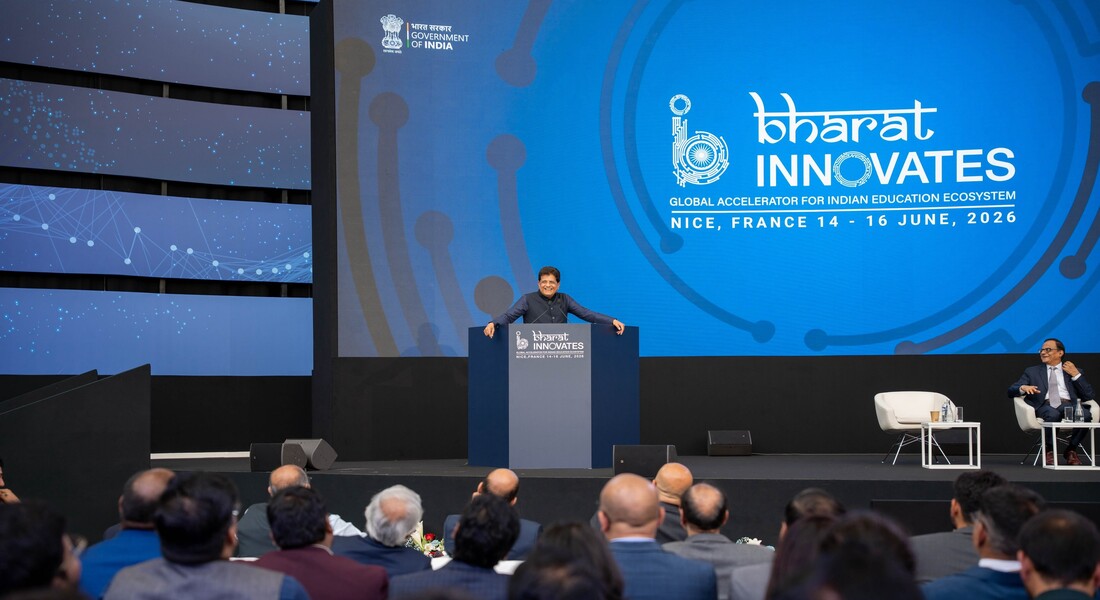
NEW DELHI: Union Minister of Commerce and Industry Piyush Goyal on Tuesday highlighted the growing strength of the India-France innovation partnership while addressing the closing ceremony of Bharat Innovates 2026 in Nice, France.

The minister expressed optimism about the outcomes achieved during the three-day event, stating that the collaboration reflected the significant potential of innovation-driven cooperation between the two countries.

In a post on X, he said the shared vision of Prime Minister Narendra Modi and French President Emmanuel Macron under the India-France Year of Innovation 2026 had helped create a platform aimed at fostering deeper engagement in innovation and technology.

Goyal invited business leaders, chief executives, investors, and innovators to collaborate with India in building a sustainable future powered by innovation at scale.

During his visit to Nice, the minister also launched the Unified Payments Interface at Galeries Lafayette Nice Massena, one of France’s prominent retail destinations.

The launch marked another step in the international expansion of India’s digital payments ecosystem. The initiative has been implemented with the participation of Lyra Collect and NPCI International Payments Limited, enabling wider access to India’s digital payment technology in France.

According to Goyal, the rollout demonstrates India’s capability to provide trusted, seamless and interoperable digital solutions at scale while strengthening economic and technological cooperation between India and France.

The developments come amid growing collaboration between the two countries in areas such as innovation, technology, and digital infrastructure, with Bharat Innovates 2026 serving as a platform for engagement among startups, investors, businesses, and policymakers.
Odisha launches ‘Advika Barta’ to amplify adolescent voices in policymaking

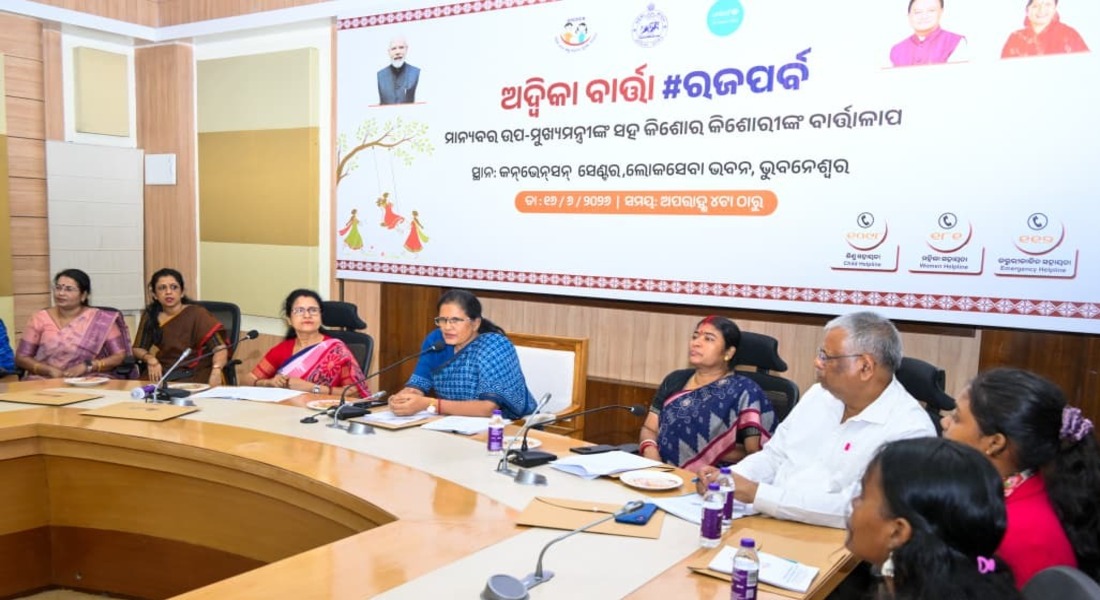
Bhubaneswar: In a unique initiative aimed at strengthening adolescent participation in governance and public policy, Odisha Deputy Chief Minister Pravati Parida on Tuesday interacted with young people from across the state through ‘Advika Barta’, a first-of-its-kind statewide dialogue platform.

The programme, organised jointly by the Odisha State Commission for Protection of Child Rights (OSCPCR) and UNICEF under the ‘A Day for Children’ initiative, created a platform for adolescents to directly engage with policymakers and share their concerns, aspirations and suggestions.

Held during Raja Parba celebrations, the event brought together adolescent girls and boys associated with Advika groups from different parts of Odisha. While a section of participants attended the programme physically at the Convention Centre in Bhubaneswar, representatives from all 30 districts joined virtually in the presence of district officials and local administrators.

During the nearly two-hour interaction, adolescents raised issues related to education, safety, gender equality, child rights, leadership opportunities, skill development and health. Many participants also spoke about their aspirations for the future and suggested ways to improve programmes and services designed for young people in the state.

Addressing the gathering, Deputy Chief Minister Pravati Parida reiterated the Odisha government’s commitment to ensuring that adolescents have a meaningful role in shaping decisions that affect their lives. She encouraged young people to actively engage in leadership and community development initiatives while assuring them that their feedback and recommendations would be taken into consideration in future policy discussions.

The event also highlighted the role of digital connectivity in widening access to such participatory platforms. Through online participation from all districts, adolescents from remote and diverse regions of Odisha were able to engage directly with the Deputy Chief Minister and senior officials.

Among those present at the event were Babita Patra, Chairperson of the Odisha State Commission for Protection of Child Rights; Prasanta Dash, Chief of Field Office, UNICEF Odisha; and Sovana Mohanty, Chairperson of the Odisha State Commission for Women, along with other senior officials.

The programme was streamed through digital platforms, enabling wider public participation and drawing attention to the issues, leadership potential and aspirations of adolescents across Odisha. Officials said the initiative reflects a growing focus on child and adolescent-centred governance in the state.

Odisha steps up preparations for President, PM visit on June 19–20

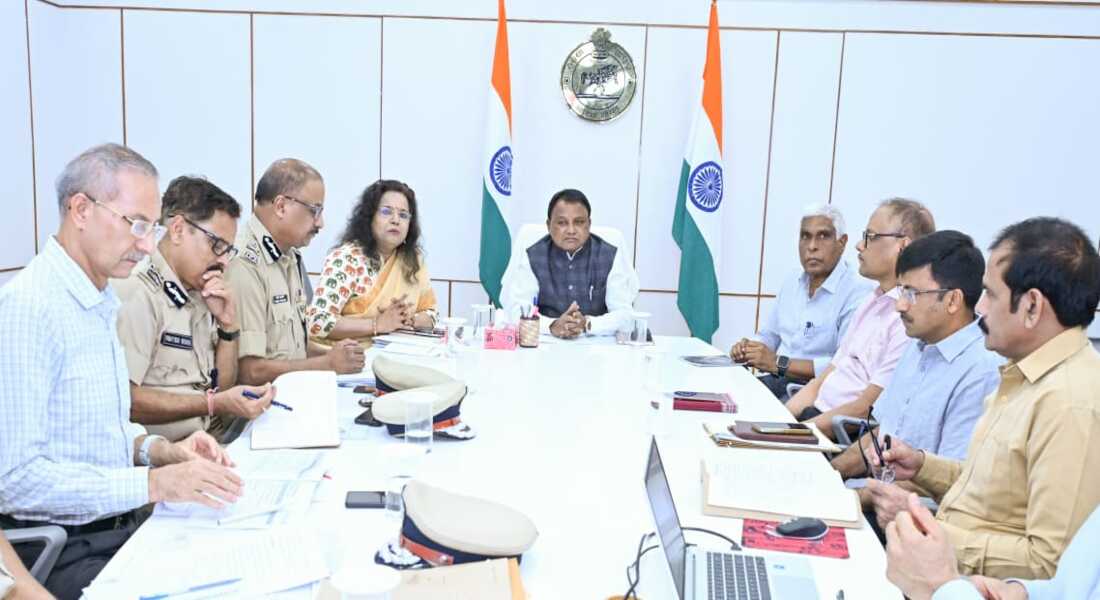
Bhubaneswar: Odisha Chief Minister Mohan Charan Majhi on Tuesday reviewed security and administrative arrangements for the upcoming visit of President Droupadi Murmu and Prime Minister Narendra Modi to the state on June 19 and 20, directing officials to ensure flawless coordination for the high-profile engagements.

The visit assumes political and developmental significance as it coincides with the completion of two years of the Odisha government and 12 years of the BJP-led government at the Centre. A mega public programme is scheduled in Mayurbhanj district’s Rairangpur, where the President and the Prime Minister are expected to jointly address a gathering.

Chairing a high-level review meeting at Lok Seva Bhawan, the Chief Minister discussed security protocols, administrative preparedness and event logistics with senior officials, including Chief Secretary Anu Garg, Director General of Police Y.B. Khurania, senior Home Department officials and top administrators.

Special focus was placed on ensuring foolproof arrangements during VVIP movement and the proposed mega public meeting. Majhi directed all departments to work in close coordination to avoid any lapses in security and event management.

According to an official release, President Droupadi Murmu will arrive in Odisha on June 19 for a two-day visit to her home district, Mayurbhanj. The visit carries emotional significance as June 20 marks the President’s birthday, which she is expected to celebrate in her hometown of Rairangpur — also regarded as her first karmabhoomi.

The state government is planning special arrangements to welcome the President in her native region. Chief Minister Majhi described the occasion as a matter of pride and joy for the people of Odisha.

Prime Minister Narendra Modi is scheduled to join President Murmu in Rairangpur on June 20, where both leaders will share the stage during a state-level event and address a large public gathering. Officials said the joint appearance of the country’s top two leaders in Odisha would be a landmark moment for the state.

The event is also expected to serve as a platform for the launch and inauguration of several major development projects worth thousands of crores for Odisha and Mayurbhanj district. According to discussions during the review meeting, key railway infrastructure initiatives and a major coal gasification project are among the proposed launches.

Officials indicated that several large-scale projects aimed at accelerating industrial growth and infrastructure development in the state may also be announced during the visit.

On June 19, President Murmu is scheduled to inaugurate various health sector initiatives at the Rairangpur Sub-Divisional Hospital, further adding to the significance of the visit for the region.

Chief Minister Majhi expressed confidence that the joint visit by President Murmu and Prime Minister Modi would provide fresh momentum to Odisha’s development agenda and help fast-track key infrastructure and industrial projects.

Among those present at the review meeting were Chief Minister’s Advisor Prakash Mishra, Development Commissioner D.K. Singh, Additional Chief Secretary to the Chief Minister Saswata Mishra, Additional Chief Secretary of Home and Information and Public Relations Department Hemant Sharma, and Intelligence DG Vinaytosh Mishra.

AI, digitisation transform global plant conservation efforts: Kew report

NEW DELHI: Advances in artificial intelligence, digitisation, and global data-sharing are reshaping efforts to conserve the world’s plants and fungi, according to a new report published by the Royal Botanic Gardens, Kew (RBG Kew), the UK.

The sixth edition of the State of the World’s Plants and Fungi report, compiled by more than 400 scientists from 40 countries, says emerging technologies are helping researchers uncover hidden biodiversity, identify conservation priorities, and bridge critical gaps in scientific knowledge at a time of mounting environmental pressures.

The report coincides with the completion of a landmark digitisation project at Kew, where all 7.4 million herbarium and fungarium specimens in its collections have been digitally archived, the Royal Botanic Gardens said in a press release.

Funded principally by the UK government through the Department for Environment, Food and Rural Affairs (Defra), the initiative has created one of the world’s largest freely accessible online resources for plant and fungal research.

Scientists say the digital transformation is opening new opportunities to study biodiversity, track environmental change, and improve conservation planning. Plants and fungi play a vital role in regulating climate, storing carbon, and providing food, medicines, and other resources essential for human well-being.

However, the report warns that inadequate information on species diversity, distribution, and climate impacts could leave vulnerable species unprotected and limit the discovery of new medicines and climate-resilient crops.

“Scientists, practitioners and anyone with a keen interest in biodiversity are now being equipped with unprecedented data and tools to learn and contribute in ways that are faster, better and more impactful than ever before,” said Professor Alexandre Antonelli, Executive Director of Science at RBG Kew.

According to the report, millions of preserved plant and fungal specimens collected over centuries are now being digitised and analysed at an unprecedented scale. Researchers can remotely examine collections, correct species identifications, and uncover biodiversity that may previously have gone unnoticed.

The report highlights several examples of how technology is supporting scientific discoveries. In Costa Rica, researchers increased the country’s recorded fungal diversity by nearly 20% by combining published records with digitised collections, improving understanding of how climate influences fungal distribution.

Artificial intelligence is also being used to identify difficult plant groups such as sedges and peat mosses, whose distinguishing characteristics are often microscopic. Researchers say the technology can accelerate species identification and help detect plants that may be new to science.

In another example, smartphone images of an unusual plant captured by researchers working in peatlands in the Republic of Congo were shared with scientists at Kew. The images suggested the plant could represent a previously undocumented species within the genus Sabicea, demonstrating how digital collaboration can support biodiversity research in remote regions.

The report also cites work by Kew’s Millennium Seed Bank and the Morton Arboretum in the US, which found that digitised seed collection records can be used to estimate the genetic diversity stored in seed banks. Researchers say such information could help guide habitat restoration efforts and the reintroduction of threatened plant species into the wild.

Centre refutes media reports on Oman-India deepwater pipeline project

New Delhi: The Union Ministry of Petroleum and Natural Gas on Tuesday dismissed media reports suggesting that India is actively pursuing a proposed deep-sea energy pipeline connecting Gujarat with Oman and other Gulf nations, clarifying that no such project is currently under consideration.

In an official clarification, the ministry categorically stated that there are no active discussions, negotiations or proposals at any level regarding the so-called Middle East-India Deepwater Pipeline (MEIDP).

“The Ministry of Petroleum and Natural Gas wishes to categorically clarify that no such proposal is currently under consideration by this Ministry. There are no active discussions or negotiations with Oman or any other Gulf countries on this project at any level in this Ministry,” the statement said.

The clarification came amid some media reports claiming that India was exploring a nearly 2,000-km subsea gas pipeline linking Oman to Gujarat as part of efforts to strengthen long-term energy security, particularly in the backdrop of recent geopolitical tensions in West Asia.

Some reports had described the proposed Oman-Gujarat deep-sea gas pipeline as a potential alternative energy corridor that could reduce India’s dependence on maritime oil and gas shipments passing through the strategically crucial Strait of Hormuz, which has remained vulnerable during regional conflicts.

The reports further suggested that renewed discussions around the decades-old proposal had gained traction amid concerns over energy disruptions linked to instability in West Asia.

The proposed project, previously promoted by South Asia Gas Enterprise (SAGE), had been examined intermittently over the past three decades. According to earlier reports, technical assessments, financial studies and seabed surveys had reportedly been undertaken to examine the feasibility of the route.

If implemented, the pipeline was expected to transport natural gas directly from Oman to India’s western coast through one of the deepest undersea routes attempted globally. Media estimates had placed the potential cost of the project at around ₹40,000 crore.

However, the ministry’s latest clarification effectively puts to rest speculation over any immediate government move to revive the proposal.

“The clarification is issued to put all speculation in this regard to rest,” the ministry added.

The government statement makes clear that, despite renewed public discussion surrounding the concept, the proposed deepwater energy corridor is not part of any active policy deliberation or bilateral engagement between India and Gulf nations at present.

Govt tightens rules on cough syrup sales, ends exemption in small villages

New Delhi: The Union Ministry of Health and Family Welfare has tightened regulations governing the sale of cough syrups by withdrawing a long-standing exemption that allowed their sale in small villages without standard licensing requirements.

The amendment to the Drugs Rules, 1945, notified by the ministry, removes the word “Syrup” from a category of medicines listed under Schedule K, effectively ending a regulatory exemption that previously applied to cough syrups in villages with populations below 1,000.

Under the earlier provision, certain cough syrups could be sold in remote villages without full compliance with retail licensing norms under the Drugs and Cosmetics Act, 1940. Following the amendment, cough syrups can now be sold and dispensed only through duly licensed pharmacies, even in smaller rural areas.

The change was notified through Gazette Notification G.S.R. 927(E), issued on December 29, 2025 and published in the Gazette of India on December 30, 2025. The Ministry of Health and Family Welfare said the move seeks to strengthen regulatory oversight and align medicine distribution norms with current public health and safety standards.

According to the ministry, the amendment is aimed at ensuring more responsible sale and distribution of syrup formulations, particularly cough syrups, while improving compliance with existing drug regulations across the country.

“The amendment has been undertaken to strengthen regulatory oversight of syrup formulations and to align the exemption framework with contemporary public health and safety requirements. The measure is expected to promote responsible distribution and sale of cough syrups while ensuring greater compliance with regulatory standards across the country,” the ministry said in an official release.

“Manufacturers, distributors and retailers dealing with cough syrups are advised to ensure strict adherence to the applicable licensing and regulatory requirements under the Drugs and Cosmetics Act, 1940 and the Drugs Rules, 1945,” it added.

The revised rule comes amid growing concerns over the misuse of cough syrups and several incidents in recent years involving allegedly contaminated syrup-based medicines linked to fatalities, including among children.

FIFA World Cup: Spain stunned; Uruguay, Egypt share points

NEW DELHI: Spain, one of FIFA World Cup’s hot favourites, failed to score a single goal in their first match as debutants Cabo Verde remarkably managed to hold the European giants to a goalless draw in their Group H match.

Cabo Verde’s impressive defensive performance and a couple of excellent saves from 40-year-old Vozinha ensured the African side registered their first point in the World Cup.

Spain’s rising star Lamine Yamal came on in the 71st minute as a substitute, but he failed to help his side score.

In another Group H match, Maxi Araújo scored an equaliser for Uruguay in the 80th minute as Saudi Arabia held the South American side to a 1-1 draw.

Saudi Arabia, which famously defeated Argentina 2-1 in their 2022 tournament opener, opened the scoring through Abdulelah Alamri’s 41st-minute strike.

Had they beaten Uruguay, the match would have been another shock of the tournament.

In a Group G clash, Belgium were held to a 1-1 draw by Egypt. A clever pass from Mohamed Salah helped Emam Ashour score a superb goal for Egypt in the 19th minute. Belgium tried hard to equalise but had to wait until the 66th minute, when an unfortunate own goal from Mohamed Hany helped the European side secure a draw.

Other Result: Group G: Iran 2, New Zealand 2

Odisha recognised for wind project facilitation and regulatory framework

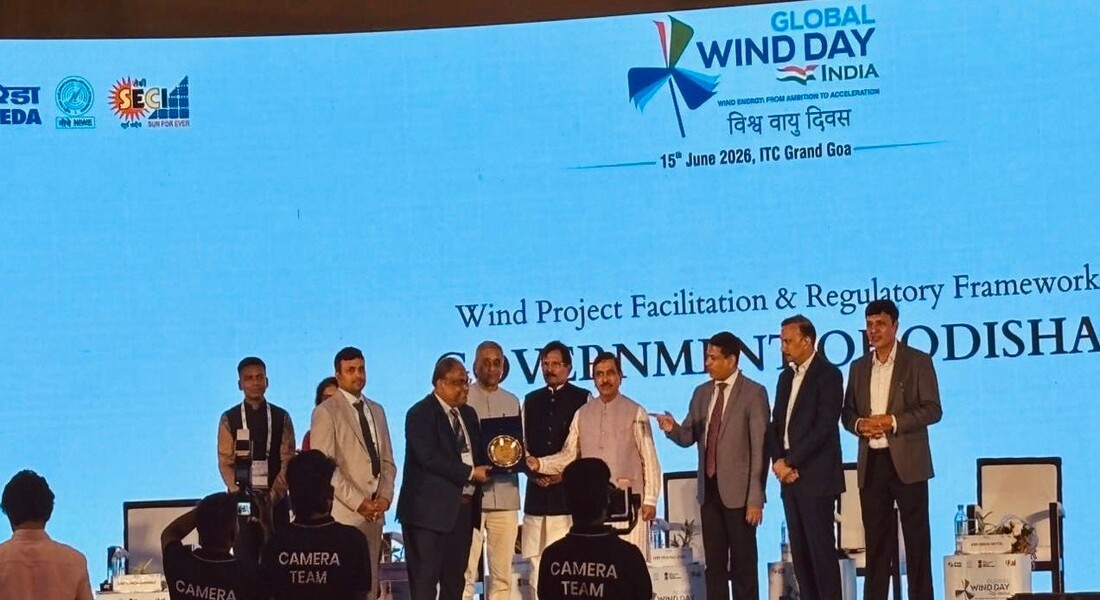
BHUBANESWAR: Odisha has been recognised by the Ministry of New and Renewable Energy for its performance in “Wind Project Facilitation & Regulatory Framework”.

The recognition highlights the state’s efforts in building an enabling environment for renewable energy development through progressive policy measures and streamlined regulatory processes.

It also reflects the role of the Renewable Energy Nodal Agency in supporting Odisha’s clean energy transition.

In a post on X, Energy Department said that under the leadership of Chief Minister Mohan Charan Majhi, the state continues to position itself as an attractive destination for renewable energy investments.

India, Denmark sign MoU to locate wreck of Danish ship Oresund off Karaikal

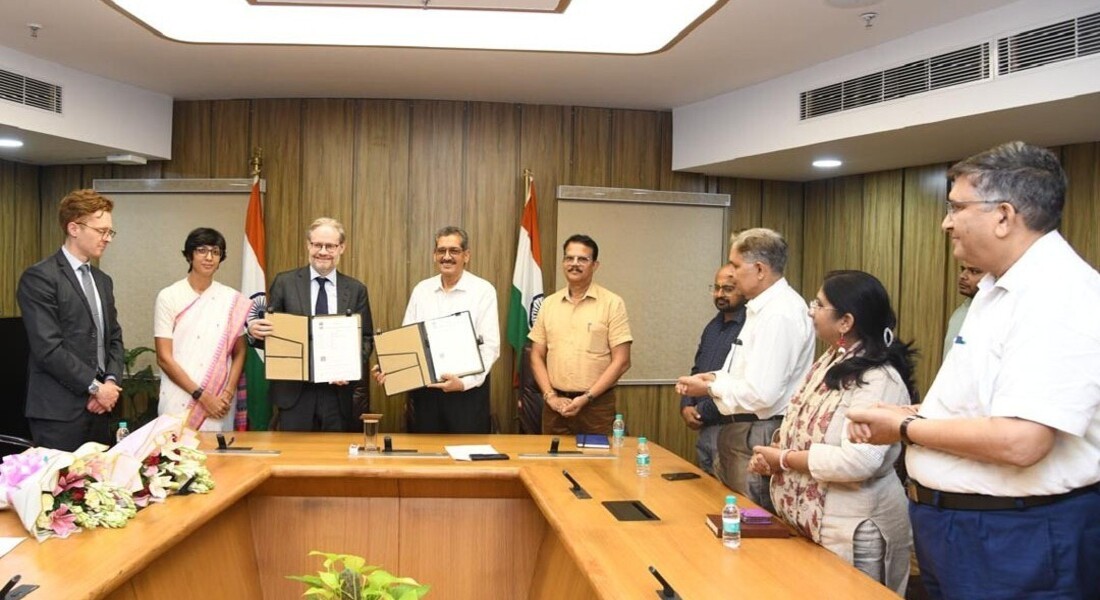
NEW DELHI: India and Denmark have signed a Memorandum of Understanding (MoU) to jointly undertake an underwater archaeological project to locate and document the remains of the historic Danish ship Oresund, which was wrecked off the coast near Karaikal in Puducherry in 1619.

The agreement was signed between the Archaeological Survey of India’s Underwater Archaeology Wing and the National Museum of Denmark’s Njord – Center for Maritime and Underwater Cultural Heritage in Copenhagen, according to an official statement.

The Oresund holds historical significance as the first known Danish ship to reach India. The vessel was wrecked near Karaikal shortly after arriving in Indian waters, making it an important source for studying early maritime links between Denmark and India as well as trade and navigation in the Indian Ocean during the early seventeenth century.

Under the MoU, the two institutions will conduct a non-invasive archaeological survey using advanced technologies and scientific methods to identify potential shipwreck remains. The investigations will be led by the Underwater Archaeology Wing of the Archaeological Survey of India in collaboration with the National Museum of Denmark.

Officials said the project marks the first international collaborative archaeological initiative undertaken by the Underwater Archaeology Wing of the Archaeological Survey of India. They added that the partnership is expected to enhance academic and scientific cooperation between India and Denmark in underwater cultural heritage research.

The initiative also reflects the commitment of both institutions to documenting, protecting, and studying underwater cultural heritage through international collaboration and the use of non-invasive scientific techniques.

Sarvam raises USD234 million in Series B funding round

BENGALURU: Bengaluru-based AI company Sarvam has raised USD 234 million in the first close of its USD 300 million Series B funding round at a post-money valuation of USD 1.5 billion.

The funding round saw participation from HCLTech and Bessemer Venture Partners, while existing investors Khosla Ventures and Peak XV Partners also continued their support. HCLTech is investing USD 150 million as the lead strategic investor, the company said in a press release.

Sarvam said the fresh capital will be used to advance research on its next frontier AI model focused on agentic, coding, and cybersecurity applications. The company also plans to expand access to large-scale computing infrastructure and strengthen its presence across key sectors.

Co-founder Pratyush Kumar said the company sees significant opportunities in developing AI systems that can operate at India’s scale, understand local languages and documents, and provide affordable intelligence solutions for enterprises and governments. He added that Sarvam is building a full-stack offering that enables organisations to own and operate sovereign AI systems.

HCLTech CEO and Managing Director C Vijayakumar said the investment would help strengthen India’s AI ecosystem by combining Sarvam’s AI research capabilities with HCLTech’s global reach and enterprise expertise to deliver secure, scalable, and responsible AI solutions.

Sarvam said it has recently released several AI models trained entirely in India. These include Sarvam 105B, which the company claims performs competitively on reasoning and agentic benchmarks, and Sarvam 30B, designed to run on consumer hardware. Its Sarvam Vision platform is being used to digitise more than 35 million pages of documents, while its speech models process over half a million hours of audio every month.

The company stated that its products are gaining traction across banking, insurance, government technology, and defence sectors. Its conversational AI platform now handles more than two million interactions daily, while its inference platform processes around 10 million API calls each day.

Sarvam also highlighted the impact of its large-scale deployments. The company said its multilingual voice agents helped collect data from 17 million farmers for the Ministry of Agriculture and Farmers Welfare, while a nationwide voice campaign for a major insurance provider supported policy renewals for 45 million customers.

Co-founder Vivek Raghavan said the company aims to make AI widely accessible across India for citizens, businesses, and governments, adding that the partnership with HCLTech demonstrates how Indian corporations can contribute to building foundational AI capabilities.

Bessemer Venture Partners Partner Pankaj Mitra said Sarvam is developing a sovereign AI platform designed to serve India’s large population, critical sectors, and enterprises, and praised the company’s combination of research expertise, engineering talent, and institutional trust.

Sarvam develops AI infrastructure, models, and products for enterprises, developers, and government agencies, with a focus on banking, insurance, government technology, and defence.