At IndiaVerve, we go beyond the noise to bring you meaningful stories of change, resilience and progress—from India to the world stage. Our mission is to bring readers credible, wide-ranging coverage across politics, business, sports, culture, society and more.

Agricultural experts call for faster delivery of climate-resilient rice varieties

New Delhi: Agricultural experts have said that India must accelerate the delivery of climate-resilient and healthier rice varieties to farmers to strengthen food security, improve farm resilience, and address growing climate pressures.

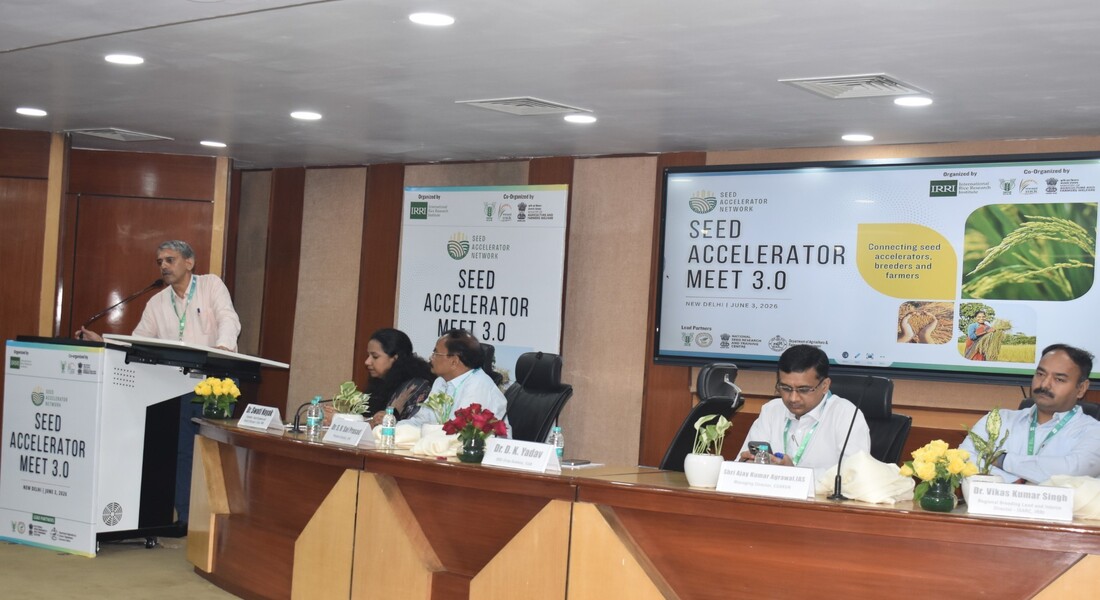
The call was made at Seed Accelerator Meet 3.0, organised by the International Rice Research Institute (IRRI), the Indian Council of Agricultural Research–Indian Institute of Rice Research (ICAR-IIRR), and the Ministry of Agriculture & Farmers Welfare in New Delhi.

The event brought together researchers, government agencies, seed companies, extension partners, and farmer organisations to advance the deployment of improved rice varieties, the IRRI said in a release.

Under the ICAR–IRRI collaborative framework and the One Rice Breeding Network, the Seed Accelerator Network (SAN) was launched in 2024 to bridge the gap between breeding innovations and farmer adoption by strengthening seed scaling systems and accelerating varietal deployment.

As co-convenor of SAN 2026, Dr. Swati Nayak, Lead of Seed Systems and Interim Country Manager–India at IRRI, said the platform enables public and private seed stakeholders to share evidence from on-farm validation of new rice genetics and strengthen seed delivery systems.

She added that it also helps build partnerships to speed up access to improved rice varieties for farmers.

Dr. D. K. Yadav, Deputy Director General (Crop Science) at ICAR, said accelerated adoption of improved varieties is essential for enhancing productivity, resilience, and national food security. He stressed that climate-resilient and specialty rice varieties must reach farmers faster through stronger coordination across the seed ecosystem.

Dr. S.V. Sai Prasad, Principal Scientist at ICAR-IIRR and Co-Convenor of SAN 2026, said varietal replacement is most effective when farmers clearly perceive benefits and have access to suitable seeds, highlighting the importance of farmer-centric approaches in accelerating adoption.

Dr. Vikas Kumar Singh, Regional Breeding Lead and Interim Director, ISARC, IRRI, said the success of rice breeding should ultimately be measured by farmer adoption and impact, adding that SAN is helping bridge the gap between breeders and seed deployers to scale superior varieties.

Agriculture Commissioner Dr. Praveen Kumar Singh said timely access to quality seed is as important as the development of new varieties. He noted that strong seed systems, digital tools, and collaborative partnerships are essential to ensure faster delivery of innovations to farmers.

The event featured technical sessions on demand-driven varietal scaling, adaptive on-farm testing, and climate-smart rice breeding. Experts presented findings from farmer-participatory trials and discussed strategies to improve seed delivery systems, strengthen varietal turnover, and speed up the adoption of climate-resilient rice varieties across diverse agro-climatic zones.

The meeting concluded with a call to strengthen collaboration across the seed sector to ensure that promising rice varieties move more rapidly from laboratories to farmers’ fields. Participants emphasised that faster adoption will be crucial for improving resilience, supporting livelihoods, and meeting future food security needs.
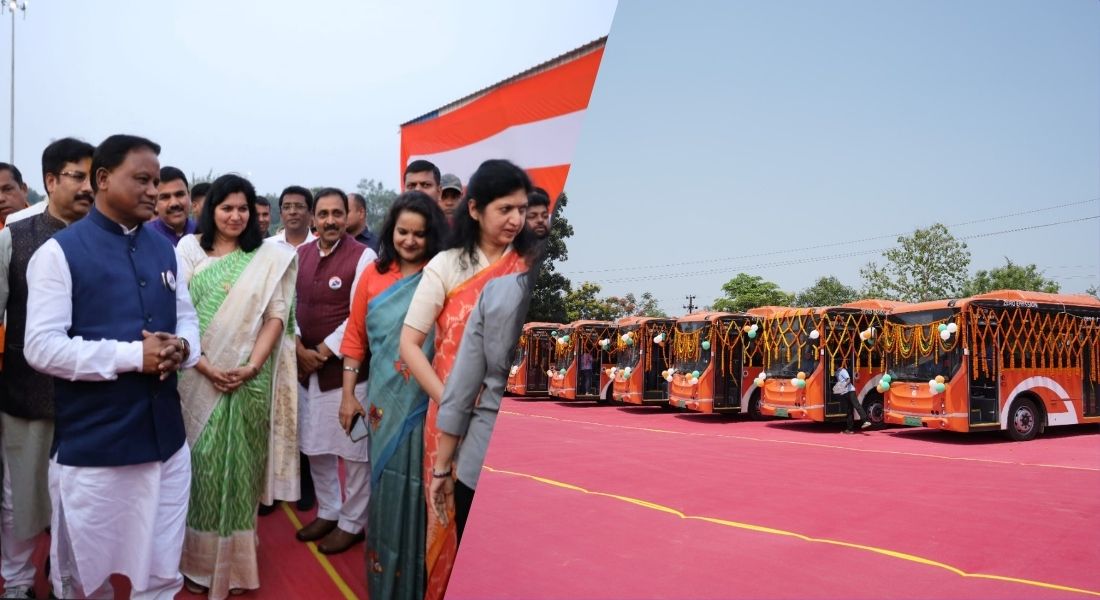
CRUT drives Odisha’s push for greener, technology-enabled urban mobility

With a fleet of 760 buses, growing electric mobility infrastructure and digital innovations, CRUT outlines its progress in urban transportation across Odisha

Bhubaneswar: Comprehensive Region Urban Transport (CRUT) has expanded its public transport network across Odisha through the introduction of electric buses, technology-enabled commuter services, enhanced safety systems and workforce development initiatives.

According to official information released on Thursday, the electric bus service, which was launched in Sambalpur and Berhampur in 2024, increased its active fleet strength to 760 buses by April 2026, supporting Odisha’s transition towards green mobility.

During 2025, CRUT inducted 80 midi electric buses in the Capital Region, five electric double-decker buses, 35 electric buses in Puri and 100 electric buses in Naraj. In 2026, Keonjhar became part of Odisha’s electric mobility network with the introduction of 25 electric buses.

To support the growing fleet, modern electric bus depots have been operationalised at Gadakana, Naraj, Puri, Sambalpur, Berhampur and Keonjhar. Dedicated Electric Odisha Terminals at Chandrasekharpur and Master Canteen, along with 153 newly developed bus poles in Cuttack, have further strengthened public transport infrastructure across the state.

Highlighting the Government’s commitment to modern and sustainable urban mobility, Housing & Urban Development Minister Dr. Krushna Chandra Mahapatra said, “The Odisha Government is committed to providing safe, affordable, environmentally sustainable and technology-enabled public transport services to citizens across the State. CRUT’s remarkable progress in electric mobility, digital innovation and commuter-centric services reflects our vision of creating modern urban centres where public transport becomes the preferred mode of travel. These achievements are contributing significantly towards building greener, smarter and more inclusive cities for future generations.”

CRUT now records an average daily ridership of more than three lakh passengers. Digital transactions account for nearly 45 per cent of fare collections, indicating increasing adoption of technology-enabled mobility solutions.

Emphasising Odisha’s vision for urban mobility, Additional Chief Secretary, Housing and Urban Development Department, Usha Padhee said, “Odisha is committed to building a public transport system that is sustainable, technology-driven, inclusive and accessible to every citizen. The rapid expansion of electric buses, digital mobility solutions and integrated transport infrastructure reflects our vision of creating future-ready cities that are environmentally responsible and citizen-centric. CRUT’s achievements demonstrate how innovation and good governance can transform urban mobility while improving the quality of life of people across the State.”

To improve commuter convenience, CRUT has introduced several digital initiatives. The Ama Bus ticketing platform has registered more than 90,000 ticket transactions and now offers online booking for the Chilika boating service at Satapada. Automatic Ticket Vending Machines installed at key locations have simplified ticket purchases, while WhatsApp-based ticket booking through the Open Network for Digital Commerce (ONDC) has made travel planning more accessible.

CRUT has also expanded its digital pass ecosystem and introduced the National Common Mobility Card to promote integrated and cashless travel.

Md. Siddique Alam, Managing Director, CRUT, said the focus over the past two years has been on providing safe, reliable, affordable and sustainable mobility solutions. He said expansion of the electric fleet, strengthening of digital services and initiatives for transport workers have been important milestones in CRUT’s journey.

Under the Government of India’s PM eBus Sewa Scheme, CRUT is preparing to deploy 400 additional electric buses across Bhubaneswar, Cuttack, Rourkela, Sambalpur and Berhampur. Odisha is also set to introduce three Hydrogen Fuel Cell Electric Buses under a grant from the Ministry of New and Renewable Energy.

Beyond city bus operations, CRUT has expanded its services through Odisha Yatri, a zero-commission ride-hailing platform for cabs and auto-rickshaws operating in Bhubaneswar, Cuttack, Puri and Sambalpur. According to the data shared, 16,779 drivers have earned more than ₹11.65 crore in commission-free income through the platform.

Passenger safety and operational efficiency have been strengthened through an integrated Command and Control Centre that enables real-time monitoring and tracking of buses using GPS and Vehicle Location Tracking systems. CRUT has also introduced a women’s safety module featuring SOS activation, emergency response integration, live location sharing and rapid support mechanisms.

More than 6,000 crew members have undergone training and capacity-building programmes since 2024. In addition, 20 women Heavy Motor Vehicle drivers received specialised training to operate electric buses. A KPI-based performance recognition system has also been introduced for frontline staff.

CRUT’s initiatives have received recognition from the Ministry of Housing and Urban Affairs. It was honoured as the “City with the Best Public Transport System” at the Urban Mobility India Awards 2024 and received a Special Mention at the Urban Mobility India Awards 2025 for urban transport initiatives.

Over 120 medical officers to face disciplinary action

Bhubaneswar: Adopting a tough approach, Chief Minister Mohan Charan Majhi has taken strict action against doctors who have been absent from hospitals for a long time in the state.

According to a government statement, more than 120 medical officers and dental surgeons across various hospitals in the state have remained absent from duty for over five years. The government was thus compelled to issue notices in newspapers, urging the doctors to explain their status.

Taking serious note of their unauthorized absence, Majhi has directed the Health Department to initiate disciplinary action against all of them.

In a significant decision, the chief minister dismissed Dr. Bichakhyana Panigrahi, former Medical Officer of the Kandhamal Police Hospital, from government service.

Dr. Panigrahi has been absent without authorization since 2012. Notwithstanding repeated directions from the department to explain his absence and report back to duty, he failed to comply. Due to his continued neglect of patient care, he has been removed from his post.

Majhi also announced that modernisation of hospitals across the state is one of his government’s top priorities. According to the chief minister, new medical colleges will be established in the state.

He lamented that many doctors, after being appointed, are not doing their jobs effectively and have remained absent.

Majhi warned that such behaviour will not be tolerated and strict action will be taken against them.

IIT Delhi tops India in QS rankings 2027

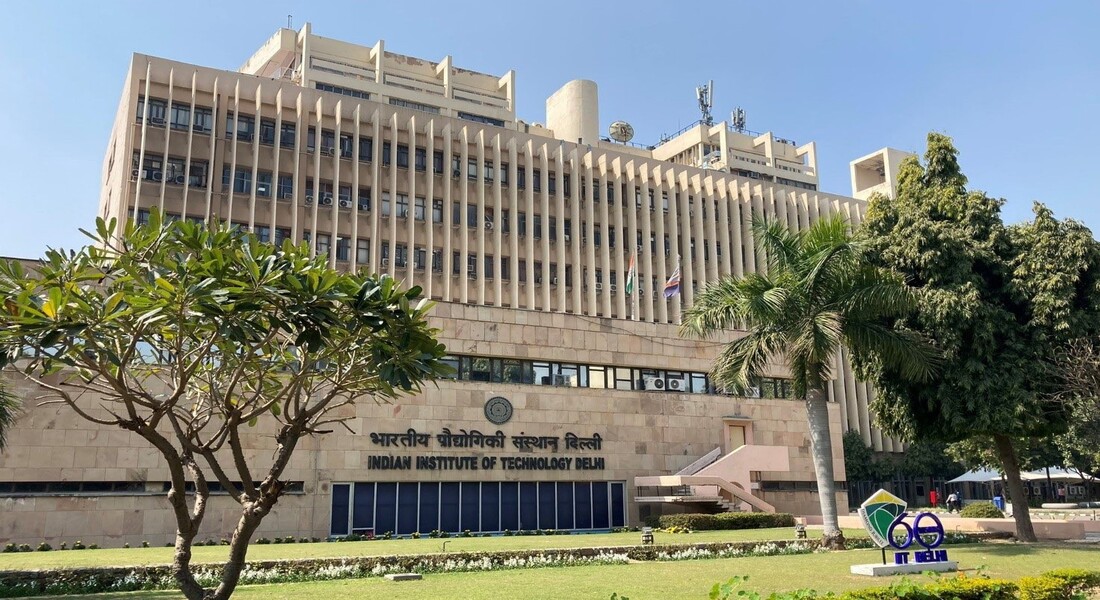
New Delhi: The Indian Institute of Technology (IIT) Delhi has emerged as India’s highest-ranked institution in the QS World University Rankings 2027, securing the 118th position globally and improving five places from its 123rd rank last year.

With the latest ranking, IIT Delhi has equalled the highest-ever global position achieved by an Indian institution in the QS World University Rankings, the premier institution said in a press release.

The rankings, announced on Thursday, showed significant gains for the institute across several performance indicators. IIT Delhi improved 11 positions in Employer Reputation to rank 39th globally, reflecting strong perceptions among employers about the job readiness of its graduates.

The institute also recorded a jump of 60 positions in the Employment Outcomes indicator, which measures graduate employability and the ability of institutions to nurture future leaders. Its Citations per Faculty score improved by 26 positions, highlighting the impact and quality of research output.

Commenting on the achievement, Prof. Somnath Baidya Roy, Dean, Planning and Head of the Ranking Cell at IIT Delhi, said the institute remains committed to providing world-class and affordable technological education while expanding its global academic footprint.

He said IIT Delhi’s revamped curriculum, new infrastructure, and growing international engagement are expected to further enhance its quality and impact in the coming years. He added that rankings are viewed as an outcome of sustained efforts rather than an objective in themselves.

Over the past four years, IIT Delhi has improved its position by 79 places, rising from 197th in the QS World University Rankings 2024 to 118th in the 2027 edition.

Meanwhile, the Ministry of Education said India continues to strengthen its presence in global higher education, with 52 Indian institutions featuring in the QS World University Rankings 2027.

IIT Delhi retained its position as India’s highest-ranked institution for the second consecutive year. Along with IIT Delhi, IIT Bombay, and IIT Madras are among the world’s top 200 universities, the ministry noted in a post on X.

Separately, Union Education Minister Dharmendra Pradhan said India’s global academic footprint is expanding, with 13 Indian universities securing places among the world’s top 550 institutions globally.

In a post on X, he said the achievement reflects the growing strength of India’s higher education ecosystem and the commitment of institutions, faculty, researchers, and students towards excellence. He added that a globally competitive higher education system remains central to the country’s vision of becoming a developed nation by 2047 under the framework of the National Education Policy 2020.

US-Iran peace deal takes effect amid hopes for regional stability

Trump and Pezeshkian sign landmark MoU to reopen Strait of Hormuz and end hostilities, but violence in Lebanon continues to test the agreement.

The United States and Iran have formally moved towards ending months of conflict after US President Donald Trump and Iranian President Masoud Pezeshkian electronically signed a memorandum of understanding (MoU) aimed at ending hostilities, reopening the Strait of Hormuz and easing tensions across the Middle East.

Pakistan announced that the “Islamabad MoU” has come into effect, while US officials said the agreement includes commitments by Iran not to develop or acquire nuclear weapons, an end to military operations on all fronts and the restoration of maritime traffic through the strategically important Strait of Hormuz.

The agreement follows months of escalating conflict involving the United States, Israel and Iran, which had disrupted regional stability and threatened global energy supplies.

According to The Guardian, Trump described the 14-point agreement as a major diplomatic achievement that helped avert a potential “worldwide depression”. He indicated that Washington had agreed to several concessions, including discussions on releasing frozen Iranian assets and recognising Iran’s right to enrich uranium for civilian purposes under agreed conditions.

Iranian President Pezeshkian signed the agreement from Tehran, while a formal ceremony involving senior representatives of both countries is expected in Geneva on Friday.

A major component of the deal is the reopening of the Strait of Hormuz, a key global energy corridor. According to Al Jazeera, Iranian authorities have shifted from earlier proposals that included transit restrictions and charges. Iranian Parliament Speaker Mohammad Bagher Ghalibaf said a new mechanism coordinated with Oman would ensure navigation through the strait in accordance with international maritime laws.

Swiss authorities have also confirmed that representatives from the United States, Iran, Pakistan, Qatar and other involved countries are expected to meet at the Buergenstock resort on Friday to discuss implementation of the agreement and future negotiations.

The deal has drawn positive reactions from several countries. Pakistan, Qatar, Saudi Arabia and Türkiye have welcomed the breakthrough, describing it as an important step towards regional peace and stability. Iran’s Foreign Minister Abbas Araghchi and Italy’s Foreign Minister Antonio Tajani also discussed the agreement in a phone conversation, stressing the importance of maintaining regional security and consolidating peace.

Hezbollah leader Naim Qassem described the agreement as a “big victory” and said any future talks with Israel should focus on mutual security arrangements rather than the disarmament of Hezbollah

Meanwhile, Israeli military operations in Lebanon have continued. Lebanon’s National News Agency reported that an Israeli drone strike near Kfar Tebnit killed one person and seriously injured another. Separately, The Times of Israel reported that Israeli soldier Alexander Filin, 29, was killed and seven others wounded in southern Lebanon in an explosion attributed to a Hezbollah explosive device.

The continuation of violence in Lebanon highlights the challenges facing implementation of the US-Iran agreement. While the deal has raised hopes for a broader regional de-escalation, developments on the ground suggest that achieving a lasting peace may still require difficult negotiations and sustained diplomatic engagement.

FIFA World Cup: England beat Croatia; Portugal held by DR Congo

England kicked off their FIFA World Cup campaign with an impressive 4-2 win over Croatia in their Group L clash.

Harry Kane opened the scoring for England from the penalty spot in the 12th minute following a foul on winger Noni Madueke, but Martin Baturina equalised for Croatia in the 36th minute with a screamer.

Kane completed his brace with a solid header in the 42nd minute.

Croatia’s Dallas-based striker Musa made it 2-2 on the stroke of half-time. Jude Bellingham’s goal in the 47th minute brought smiles back to thousands of Three Lions fans at the Dallas Stadium in Arlington, Texas.

Marcus Rashford finished the match with a cool goal in the 85th minute.

In another Group L clash, Ghana registered a hard-fought 1-0 win over Panama, with the only goal coming from Caleb Yirenkyi in the 95th minute.

The match between DR Congo and Portugal produced a notable milestone, with superstar Cristiano Ronaldo becoming the oldest outfield player to feature in a FIFA World Cup match.

The appearance marked Ronaldo’s 23rd outing at the tournament, moving him level with former Italy defender Paolo Maldini in fourth place on the all-time World Cup appearances list.

Joao Neves put Portugal ahead in the sixth minute with a solid header, but the African side snatched an equaliser in the 50th minute through a goal by Yoane Wissa.

DR Congo’s equaliser was a historic moment for the nation, as it scored its first goal in World Cup history more than five decades after making its tournament debut in 1974.

Other result: Group K: Uzbekistan 1, Colombia 3.

FIH Hockey Pro League: India stun Germany

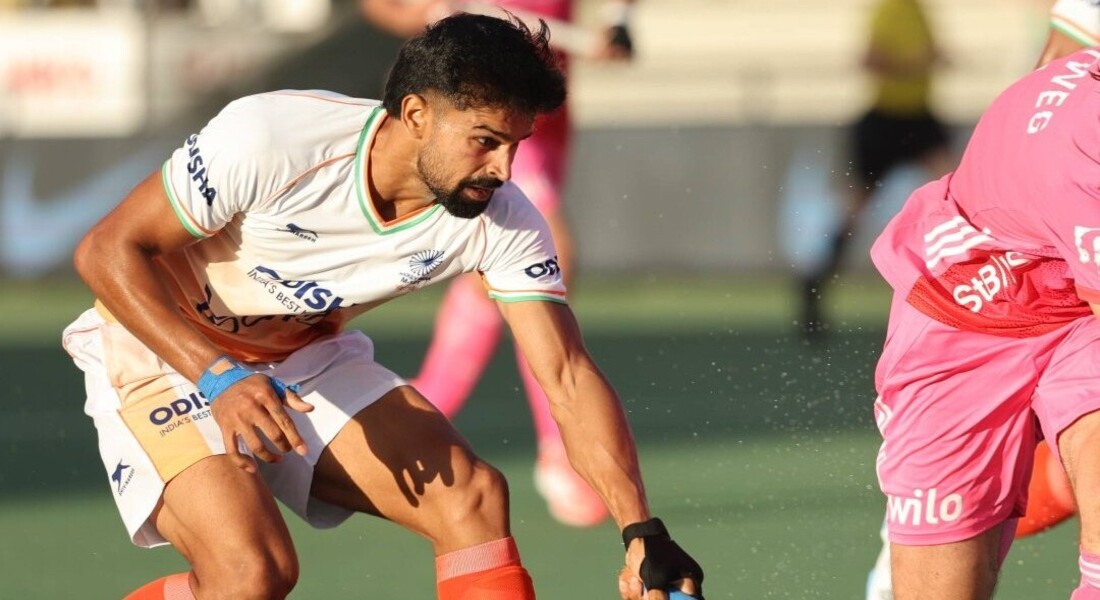
NEW DELHI: India registered an impressive 3-1 win over reigning world champions Germany in their FIH Hockey Pro League game in Rotterdam, Netherlands, on Wednesday.

It was India’s first victory of the League season. Mandeep Singh opened the scoring in the seventh minute, becoming India’s most-capped hockey player.

This was his 413th appearance for India, surpassing former captain and current Hockey India President Dilip Tirkey, who played 412 matches for the country.

Shilanand Lakra’s goal in the 13th minute gave India a comfortable 2-0 lead. The third quarter saw Nilakanta Sharma score a field goal, bolstering India’s position.

Raphael Hartkopf pulled one back for Germany in the 45th minute. The German side tried their best to put pressure on India, but a solid defensive display from the Indian team ensured that Germany could not score another goal.

India’s Hardik Singh won the Player of the Match award.

On June 14, India lost 2-3 to Olympic champion Netherlands. Both sides will meet again on Thursday.

Rajesh Power Services secures Rs 211.68 crore OPTCL contract

BHUBANESWAR: Rajesh Power Services Ltd. has secured an order worth Rs 211.68 crore, including taxes, from Odisha Power Transmission Corporation Limited (OPTCL) for the construction of a 220kV transmission infrastructure project in Odisha.

According to a regulatory filing, the contract covers the design, engineering, supply, installation, testing, and commissioning of a 220kV single-circuit transmission line through underground cable from the 400/220/132/33kV Grid Substation (GSS) at Mendhasal to the 220/132/33kV GIS GSS Chandaka-B.

The scope of work also includes one 220kV AIS bay extension at GSS Mendhasal and one 220kV GIS bay extension at Chandaka-B. The project will be executed on an Engineering, Procurement, and Construction (EPC) basis.

The company said the award marks its entry into Odisha, expanding its geographical footprint and strengthening its presence in eastern India. It added that the project is among the largest orders secured by the company in the transmission segment and represents a significant milestone in its growth journey.

Rajesh Power Services said the order reinforces the confidence placed in the company by leading power transmission utilities and highlights its capabilities in executing complex transmission infrastructure projects on an EPC basis.

The company noted that the project will strengthen its order book and is expected to contribute meaningfully to its long-term growth and execution pipeline.

The contract is scheduled to be executed within 24 months. Rajesh Power Services stated that the order was received in the normal course of business.

PM Modi, US President Trump review India-US ties

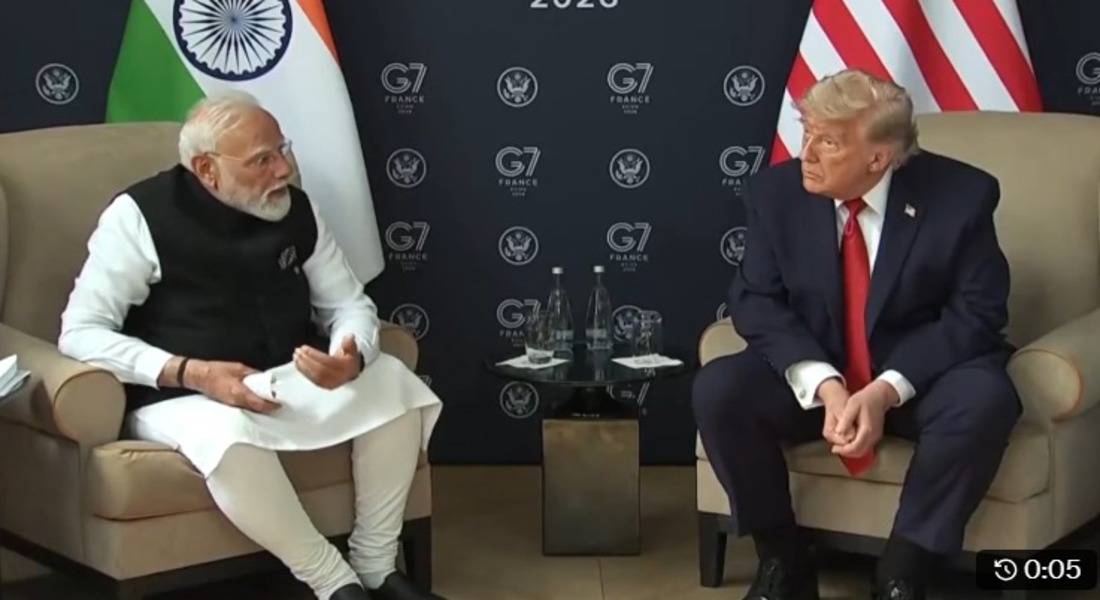
New Delhi: Prime Minister Narendra Modi on Wednesday held a bilateral meeting with US President Donald J. Trump on the sidelines of the G7 Summit in Evian, where the two leaders reviewed progress in Indo-US relations and discussed key global developments, including the situation in West Asia.

During the meeting, Modi commended Trump for efforts that had led to an understanding aimed at ending the ongoing conflict in West Asia and restoring peace and stability across the region. He also emphasized the importance of maintaining freedom of navigation and uninterrupted commercial activity through the Strait of Hormuz, while underscoring the need to ensure seafarers’ safety.

The leaders reviewed progress under the India-US COMPACT (Catalyzing Opportunities for Military Partnership, Accelerated Commerce and Technology), launched following their February 2025 meeting in Washington. They welcomed developments in defence cooperation, strategic technologies, energy collaboration, and bilateral trade, according to an External Affairs Ministry statement.

Both sides expressed satisfaction over the advancement of negotiations for an interim Bilateral Trade Agreement and directed officials to work towards concluding a balanced, mutually beneficial, and commercially meaningful pact at the earliest. The leaders noted that US Trade Representative Jamieson Greer is scheduled to visit India next week in connection with the ongoing discussions.

Modi and Trump also reaffirmed their commitment to further strengthening the India-US Comprehensive Global Strategic Partnership and expanding cooperation across sectors for the benefit of both countries and their people.

Earlier in the day, the PM addressed the Outreach Session on “Ensuring a Safe, Rapid and Efficient Rollout of Artificial Intelligence” at the G7 Summit.

Highlighting the transformative potential of Artificial Intelligence, Modi said the technology could redefine the course of human civilisation but must remain focused on empowering people. Referring to India’s recently hosted AI Impact Summit, he outlined India’s human-centric or MANAV (human) vision for AI, stressing that the technology should be guided by the principles of inclusivity, security, and public good.

Describing cyberspace as a global public good, Modi said democratic countries should have access to AI models capable of securing critical information infrastructure and addressing cyber threats. He called for an integrated approach to AI development that balances safety, speed, and efficiency.

The PM proposed four measures to advance responsible AI deployment: ensuring AI systems are safe by design; establishing common standards, testing frameworks, and regulatory guidelines; strengthening global cooperation to tackle deepfakes, misinformation, and cyber fraud; and extending the benefits of AI to countries in the Global South to promote inclusivity.