At IndiaVerve, we go beyond the noise to bring you meaningful stories of change, resilience and progress—from India to the world stage. Our mission is to bring readers credible, wide-ranging coverage across politics, business, sports, culture, society and more.

13 athletes meet Asian Games mark in Bhubaneswar

Bhubaneswar: Thirteen aspiring athletes, including six men’s triple jumpers, breached Asian Games qualification standards on the third day of the 65th National Inter-State Senior Athletics Championships at the Kalinga Stadium on Friday.

The Athletics Federation of India (AFI) selection committee will decide the final Asian Games contingent after the conclusion of the Bhubaneswar competition. As per selection norms, two athletes will be picked for each track and field event.

The evening session began with the hammer throw final, where Punjab’s Damneet Singh won gold with a best throw of 69.72m. His effort also surpassed the Asian Games qualification mark of 69.12m. Rajasthan’s Praveen Kumar claimed silver with a throw of 69.58m, which also met the qualification standard.

A strong showing followed in the discus throw event, where Haryana dominated the podium. Seema won gold, followed by Sanya Yadav with silver and Nidhi with bronze. All three athletes surpassed the Asian Games qualification mark of 55.48m.

The men’s triple jump witnessed another dominant display as the top six finishers cleared the Asian Games qualification mark of 16.28m. Praveen Chithravel clinched gold with an opening jump of 16.92m.

On the track, national record holder Tejas Shirse secured a comfortable win in the men’s 110m hurdles. He clocked 13.61 seconds, bettering the Asian Games qualification time of 13.63 seconds.

In the women’s 400m hurdles heats, Vithya Ramraj of Tamil Nadu recorded a time of 56.69 seconds to stay in contention for an Asian Games berth.

The day underlined a strong overall performance by Indian athletes, with multiple competitors meeting or exceeding qualification standards across events.

Other Results: Men: 110m hurdles (AG Q Time 13.63 seconds): Tejas Shirse (Maharashtra) 13.61 seconds, Manav R (Tamil Nadu) 13.66 seconds, Krishik M (Karnataka) 13.69 seconds.

Hammer throw (AG Q Mark 69.12m): Damneet Singh (Punjab) 69.72m, Praveen Kumar (Rajasthan) 69.58m, Ashish Jakhar (Haryana) 67.61m.

Triple jump (AG Q Mark 16.28m): Praveen Chithravel (Tamil Nadu) 16.92m, Karthik U (Kerala) 16.80m, Selva Prabhu (Tamil Nadu) 16.79m.

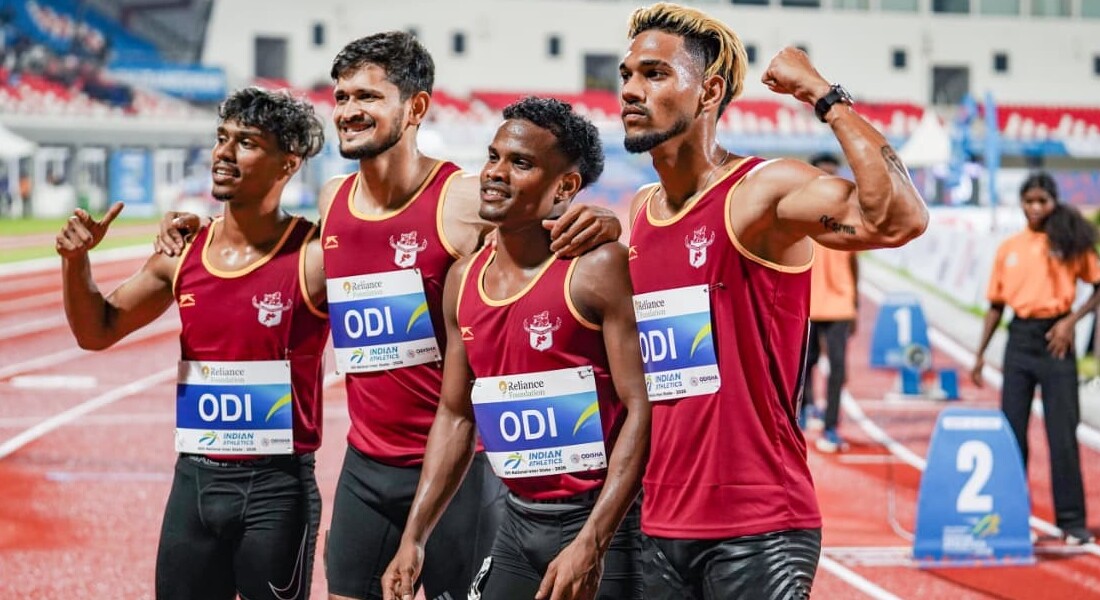
4x100m relay: Odisha 39.92 seconds, Tamil Nadu 40.02 seconds, Maharashtra 40.37 seconds.

Women: Discus throw (AG Q Mark 55.48m): Seema (Haryana) 59.73m, Sanya Yadav (Haryana) 56.05m, Nidhi (Haryana) 55.92m.

21km race walk (AG Q time 1:37:20.00): Munita Prajapati (Uttar Pradesh) 1:45:05.00, Reshma Patel (Uttar Pradesh) 1:45:48.00, Sejla Anil Singh (Maharashtra) 1:46:31.00.

4x100m relay: Karnataka 44.75 seconds, Tamil Nadu 45.07 seconds, Maharashtra 46.21 seconds. Odisha’s women’s team didn’t finish.

Mixed 4x400m relay: Tamil Nadu 3:23.51 seconds, Punjab 3:23.54 seconds, Rajasthan 3:23.85 seconds.

FIH Pro League Hockey: India thrash hapless Pakistan

India registered a thumping 7-1 win over arch-rivals Pakistan in their FIH Men’s Pro League hockey match in London.

It was Pakistan who took the lead in the 13th minute through a goal from Abu Mahmood.

India responded in the second quarter, with Sukhjeet Singh scoring in the 20th minute. Harmanpreet Singh then doubled the lead in the 26th minute through a penalty corner.

The “Men in Blue” continued their onslaught in the second half and made it 3-1 in the 34th minute, thanks to a goal from Hardik Singh. One minute later, Jugraj Singh extended India’s lead, while Abhishek made it 5-1 in the 41st minute.

In the third quarter, India received four consecutive penalty corners. From the fourth attempt, Raj Kumar Pal scored the sixth goal in the 44th minute.

In the 54th minute, Dilpreet Singh netted India’s seventh and final goal of the match. Pakistan conceded two penalty corners in the dying minutes, but veteran midfielder Manpreet Singh stood firm to deny both attempts.

Hardik Singh was named Player of the Match for his outstanding performance.

India currently occupy seventh position with 17 points from four wins and four draws.

Belgium are leading the points table with 36 points.

India to deploy 1,000 advisers ahead of UK CETA implementation

New Delhi: Union Commerce and Industry Minister Piyush Goyal on Friday announced the deployment of 1,000 advisory personnel across the country and the upgrade of the government’s trade portal to help businesses maximise the benefits of the India-UK Comprehensive Economic and Trade Agreement (CETA), which comes into force on July 15.

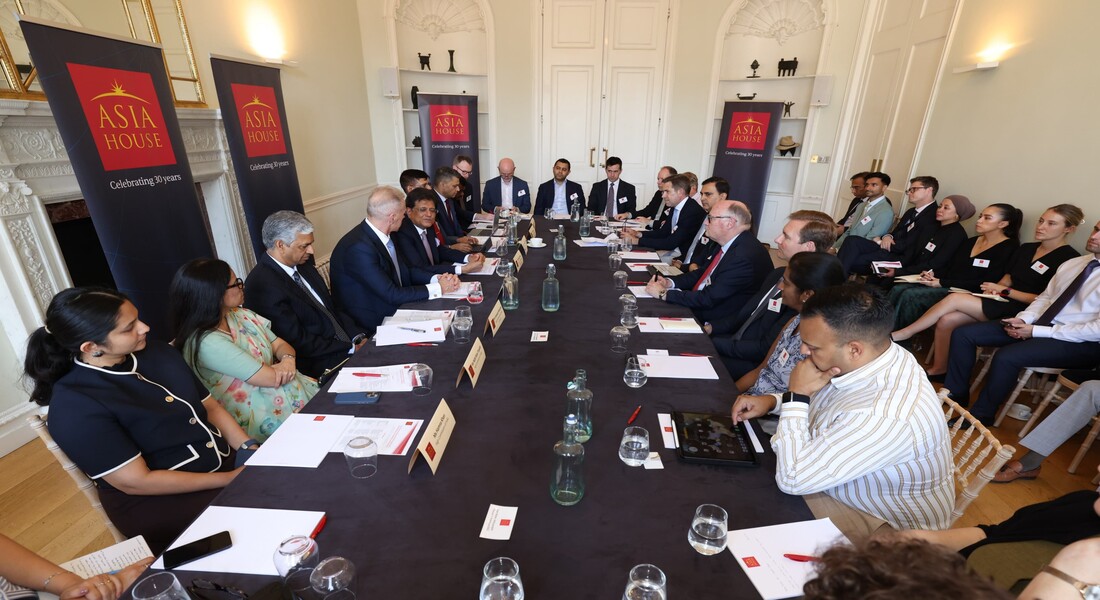
The announcement was made during the 10th Annual UK-India Week in London, where Goyal participated in a series of high-level engagements focused on expanding bilateral trade and investment under the new agreement.

The minister said the advisory network and upgraded trade portal would help businesses, particularly exporters, better understand and utilise the opportunities created by the India-UK CETA.

Billed as India’s most comprehensive free trade agreement to date, the CETA is projected to increase bilateral trade with the UK by GBP 25.5 billion annually, according to an official statement.

Addressing the India Global Forum’s Capital Frontiers Forum, Goyal said the India-UK partnership has evolved beyond traditional trade to include strategic sectors such as technology, sovereign AI, critical minerals, defence, and clean energy. He said the growing collaboration reflected the increasing depth and diversity of economic ties between the two countries.

At a reception hosted by the High Commission of India and FICCI, the minister welcomed the largest and most geographically diverse Indian business delegation to visit the United Kingdom. The delegation included companies from Tier-2 and Tier-3 cities as well as several first-time exporters.

Highlighting the benefits of the agreement for Indian professionals, Goyal said eligible professionals working in the United Kingdom would receive a five-year exemption from social security contributions. He said the savings could instead be invested in interest-bearing, tax-free provident fund accounts in India.

The minister also stressed the need to strengthen sub-national economic partnerships. He cited region-to-region collaborations such as Birmingham-Gujarat and Manchester-Maharashtra as important drivers of future bilateral growth.

Goyal said the India-UK CETA would improve market access, enhance the competitiveness of Indian businesses, facilitate greater mobility for professionals, and create new opportunities across goods, services, and investment.

Describing India as the world’s fastest-growing major economy, he urged businesses to promote Brand India globally, adopt international quality standards, and build long-term partnerships with British companies.

He added that India’s strengths in manufacturing, services, and innovation, along with its stable business environment, offer significant opportunities for global collaboration and sustained economic growth.

India inaugurates world’s first nuclear-powered hydrogen production facility

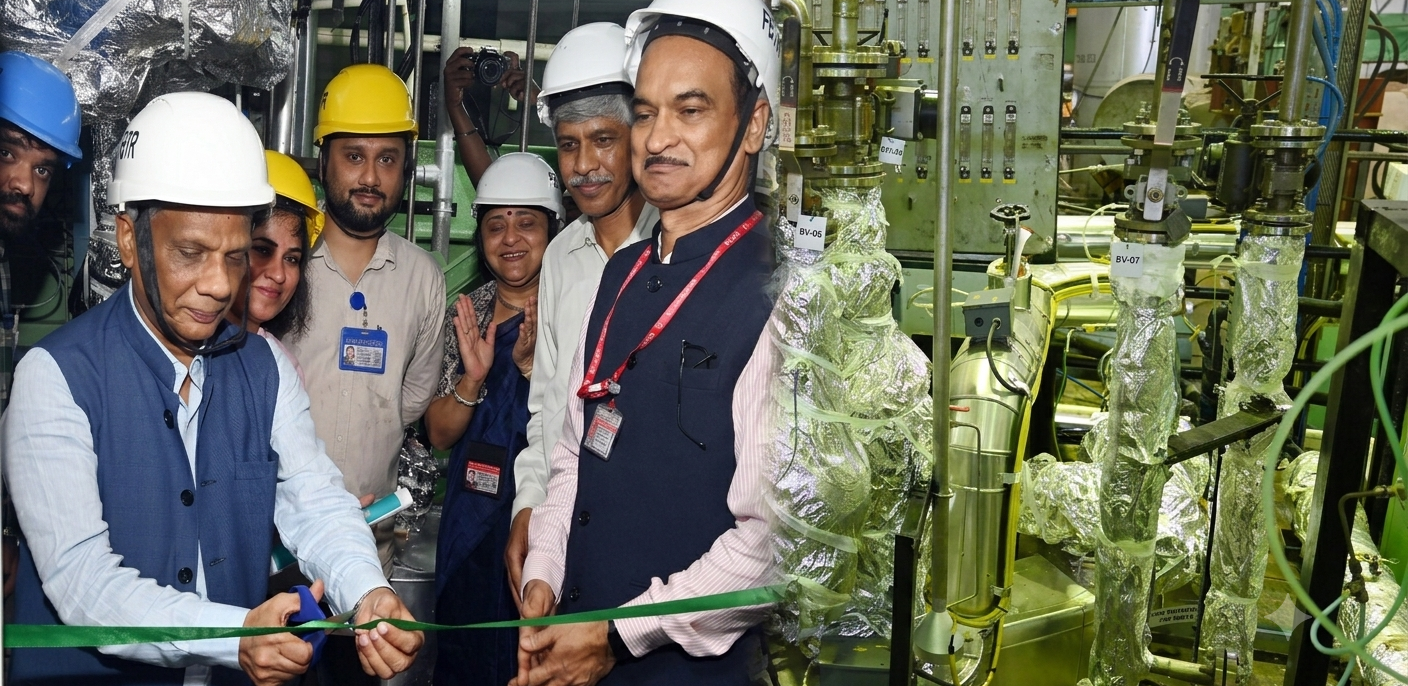
New Delhi: India on Friday achieved a major milestone in clean energy and advanced nuclear technology with the inauguration of the world’s first hydrogen production facility based on the Copper–Chlorine (Cu–Cl) thermochemical cycle using nuclear process heat from the Fast Breeder Test Reactor at the Indira Gandhi Centre for Atomic Research (IGCAR) in Kalpakkam.

The facility was inaugurated by Department of Atomic Energy (DAE) Secretary and Atomic Energy Commission Chairman Ajit Kumar Mohanty in the presence of IGCAR Director Sreekumar G. Pillai.

Developed jointly by the Bhabha Atomic Research Centre (BARC) and IGCAR, the facility has been established as a technology demonstrator to validate hydrogen production using the indigenously developed Cu–Cl thermochemical process powered by nuclear energy.

According to the DAE, the successful integration of nuclear process heat with hydrogen generation marks a technological breakthrough and paves the way for large-scale, carbon-free hydrogen production using advanced nuclear reactors.

Hydrogen is considered a key clean energy carrier for the future. Among the various technologies under development globally, the Cu–Cl thermochemical cycle is regarded as one of the most promising because of its lower operating temperatures and higher thermodynamic efficiency. The process also reduces dependence on fossil fuels and eliminates greenhouse gas emissions associated with conventional hydrogen production.

The department said the commissioning of the facility followed years of joint research, engineering design, equipment fabrication, installation, testing, and process development by BARC and IGCAR.

The plant is expected to provide operational experience, help optimise the Cu–Cl process, and support future research for commercial-scale deployment of nuclear-assisted hydrogen production, according to an official statement.

Addressing the event, Mohanty said integrating nuclear energy with hydrogen production offers a strategic pathway towards a sustainable energy future.

He said nuclear power can provide both carbon-free electricity and high-temperature process heat required for large-scale hydrogen production, while strengthening India’s energy security, decarbonisation efforts, and long-term sustainable development goals.

He also congratulated the scientists, engineers, and technical teams of BARC and IGCAR for transforming an advanced scientific concept into an operational reality, saying the achievement reflected India’s growing capabilities in advanced nuclear technologies and clean energy systems.

Highlighting IGCAR’s role, Pillai said the achievement was built on more than four decades of operational experience gained through the Fast Breeder Test Reactor programme.

He said the successful demonstration showcased the versatility of advanced nuclear systems and reaffirmed IGCAR’s commitment to developing technologies that support India’s clean energy transition and long-term energy security.

Established in 1971 under the DAE, IGCAR has played a key role in India’s fast breeder reactor programme. The centre designed, built, and operated the FBTR, which has supported the development of reactor fuels, materials, and sodium technologies for over four decades.

Its research also laid the foundation for the 500 MWe Prototype Fast Breeder Reactor, the flagship project of the second stage of India’s three-stage nuclear power programme.

The DAE said the inauguration of the hydrogen production facility is a significant step towards achieving the vision of AtmaNirbhar Bharat through indigenous innovation and the integration of nuclear energy with clean hydrogen technologies, while supporting the country’s long-term low-carbon energy goals.