At IndiaVerve, we go beyond the noise to bring you meaningful stories of change, resilience and progress—from India to the world stage. Our mission is to bring readers credible, wide-ranging coverage across politics, business, sports, culture, society and more.

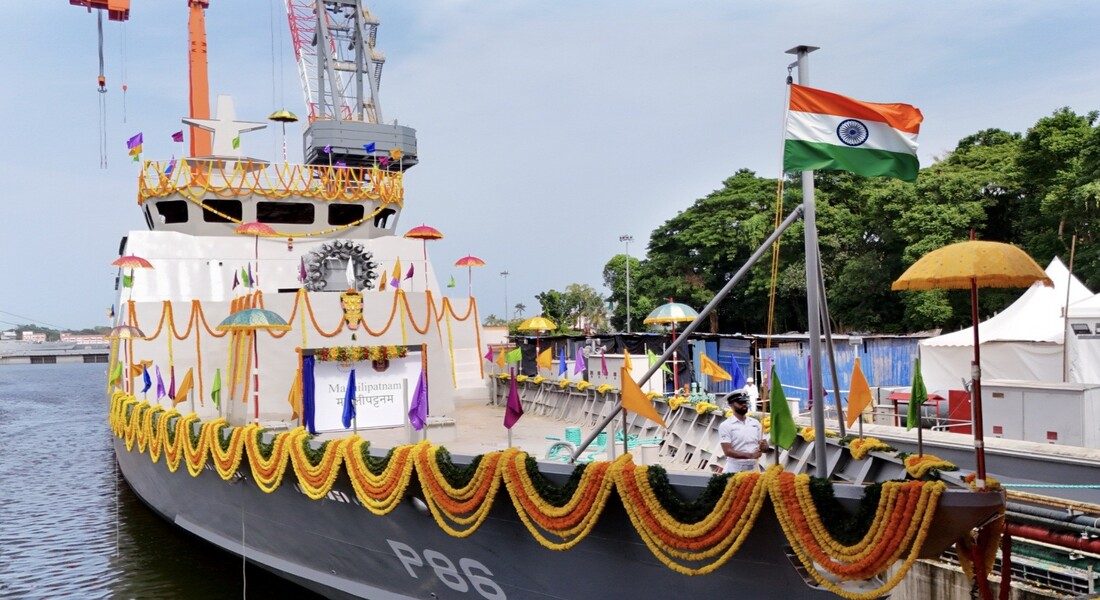
Indian Navy launches Machilipatnam, 7th anti-submarine warfare craft

New Delhi: The Indian Navy launched Machilipatnam (BY 529) on Wednesday, the seventh of eight Anti-Submarine Warfare Shallow Water Craft (ASW SWC) being built by Cochin Shipyard Limited (CSL).

Goolrukh Anand launched the vessel in the presence of Vice Admiral Atul Anand, Additional Secretary of the Department of Military Affairs. Senior officials from the Navy, CSL, and other guests attended the ceremony, according to an official statement.

The ship takes its name from Machilipatnam, a historic port city in Andhra Pradesh’s Krishna district known for its maritime legacy and role in trade along India’s eastern coast. Officials said the vessel reflects that heritage while reinforcing the Navy’s role in protecting India’s maritime interests.

Machilipatnam is built for underwater surveillance, anti-submarine warfare, and low-intensity maritime operations, along with mine warfare capability. It is expected to strengthen coastal defence and improve maritime domain awareness.

The launch marks another step forward in the ASW SWC project and supports India’s push for self-reliance in defence manufacturing under Aatmanirbhar Bharat.

With indigenous content above 80 percent, the project highlights the growing strength of India’s shipbuilding sector. Officials said it will boost the Navy’s operational readiness in the Indian Ocean Region.

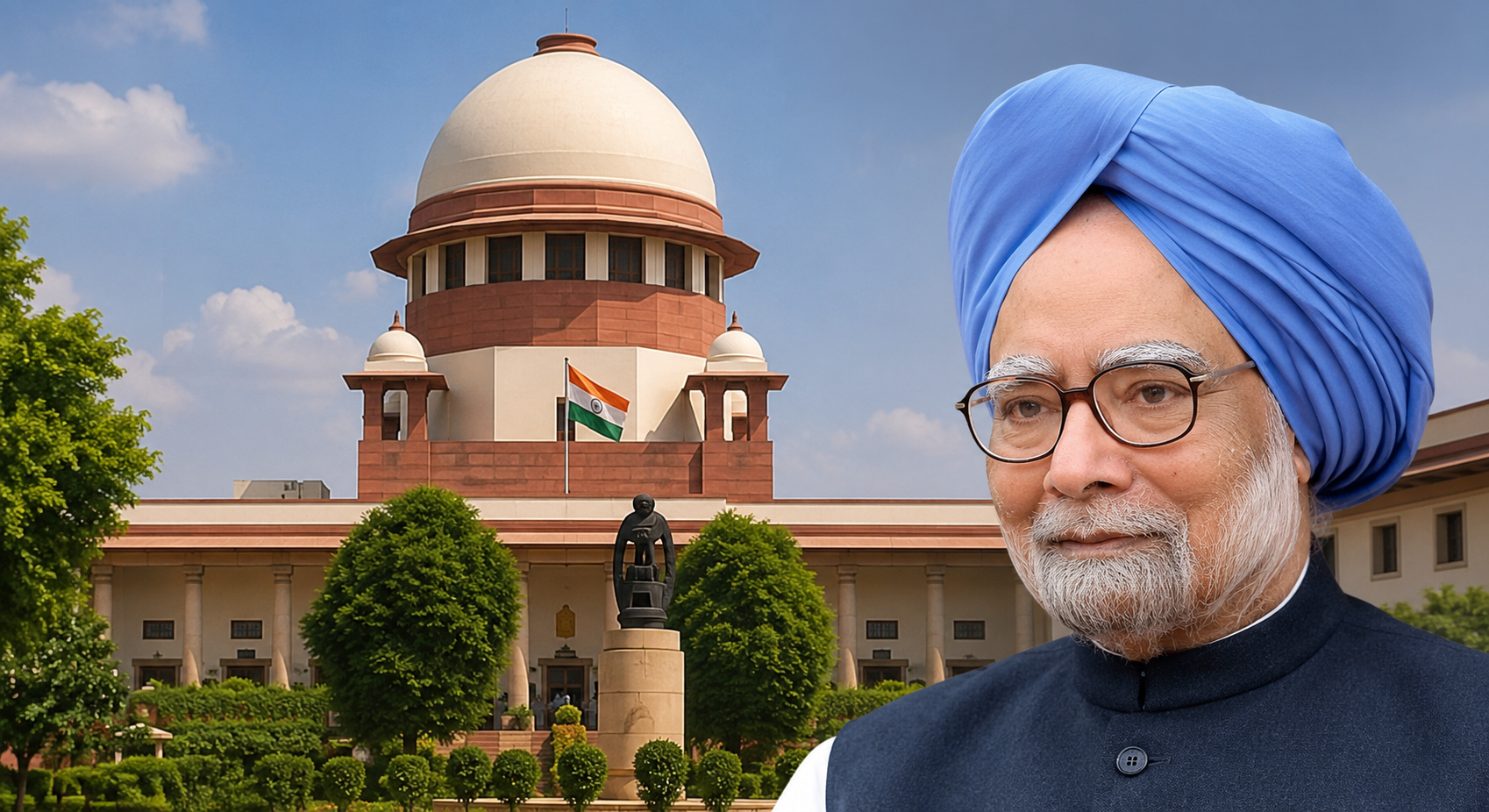
Supreme Court quashes order summoning former PM Manmohan Singh in coal block case

New Delhi: The Supreme Court on Wednesday quashed a 2015 order of a Special CBI Court summoning former Prime Minister Manmohan Singh in a coal block allocation case, holding that there was no justification for rejecting the Central Bureau of Investigation’s (CBI) closure reports that had exonerated him.

A Bench comprising Chief Justice of India Surya Kant and Justices Joymalya Bagchi and V. Mohana allowed Singh’s appeal, accepted the CBI’s closure reports giving him a clean chit and closed the proceedings against him.

As reported by LiveLaw, the Supreme Court examined the legality of the Special Judge’s order despite Singh’s demise in December 2024, observing that the adverse findings recorded against the former Prime Minister warranted judicial scrutiny and could not be allowed to remain on record.

Senior Advocate Kapil Sibal, appearing for Singh, submitted that while the appeal could technically have become infructuous after his death, the adverse observations made by the trial court required to be set aside. The CBI, represented by Senior Advocate R.S. Cheema, informed the Bench that certain legal issues survived in connected matters, while Senior Advocate Abhishek Manu Singhvi argued that the remarks against Singh should be erased.

The Bench noted that the Special CBI Court had taken cognisance under the Prevention of Corruption Act against six persons, including the former Prime Minister, even though the CBI had filed closure reports after its investigation, finding no prosecutable evidence against him.

Observing that it had examined both closure reports, the Supreme Court held that the Special Judge had failed to apply the settled legal principles governing the acceptance of closure reports filed by investigating agencies.

“There was no reason for the learned Judge to turn down the closure reports of the CBI and take cognisance,” the Bench observed, adding that the Special Judge’s decision could not be sustained in law.

“Consequently, we allow the appeal and set aside the impugned judgment dated 11 March 2015 and the consequential order summoning the appellant to face trial,” the court said.

The order was passed during the hearing of a batch of matters relating to the coal block allocation cases, where the Bench also considered whether certain remaining legal issues required adjudication by the Supreme Court or could be dealt with by the respective High Courts.

Manmohan Singh had challenged the trial court’s order after it refused to accept the CBI’s closure reports and summoned him as an accused in connection with the allocation of the Talabira-II coal block. The Supreme Court’s ruling effectively vindicates the former Prime Minister by affirming that the investigating agency’s decision to close the case against him ought to have been accepted.

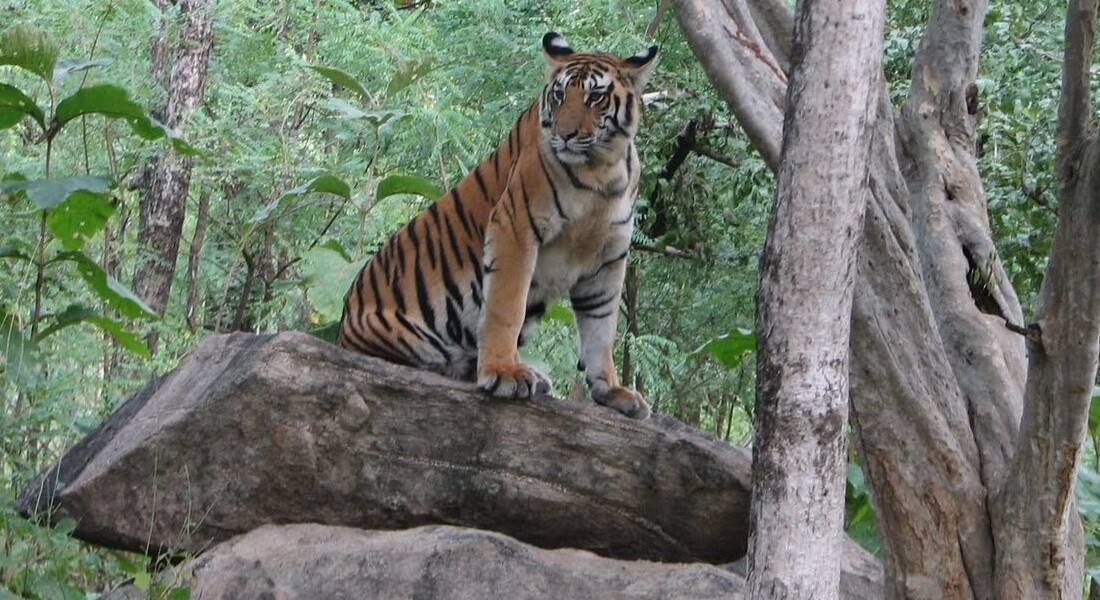
PM Modi celebrates India’s tiger conservation success on Global Tiger Day

New Delhi: Prime Minister Narendra Modi on Wednesday extended greetings to wildlife enthusiasts on Global Tiger Day. He said India takes pride in being home to nearly 70% of the world’s tiger population.

In a post on X, the PM said India’s tiger conservation efforts draw from the country’s long-standing culture of coexisting with nature. He credited the collective will of citizens for the country’s conservation success. He reaffirmed the government’s commitment to science-based conservation, community participation, and sustainable development, according to an official statement.

Modi also praised forest personnel, scientists, and conservationists for their role in protecting tigers. He said India remains focused on empowering local communities and reducing human-wildlife conflict.

Meanwhile, Union Environment Minister Bhupender Yadav addressed the Global Tiger Day 2026 event organised by the National Tiger Conservation Authority (NTCA) in New Delhi.

He called for a stronger societal bond with nature and encouraged people to adopt a conservation-focused lifestyle. Union Minister of State Kirti Vardhan Singh also attended alongside senior officials, wildlife experts, forest staff, and students.

Yadav said conservation goes beyond protecting wildlife – it also means building a respectful relationship with nature. He said nature should not be viewed only as a source of tourism or entertainment, and that people should draw peace and inspiration from it.

The minister highlighted India’s rising tiger numbers, now at 3,682, along with an increase in tiger reserves to 58. He credited the growth to the government’s leadership over the past 12 years. He added that elephant reserves, national parks, wildlife sanctuaries, protected areas, community reserves, and wetlands have all expanded during this period.

Yadav launched NTCA’s new Eco-tourism webpage, which brings information on all tiger reserves onto a single platform. The page links directly to official tiger reserve websites for safari bookings and accommodation, aiming to promote responsible, nature-based tourism.

He also spoke about the value of documenting conservation work, saying forest officers’ experiences carry traditional knowledge and passion beyond raw data. He urged officers to write about their work in ways that can shape practical policy.

He called for capacity building among forest staff using global best practices, pointing to the International Big Cat Alliance as a platform for global knowledge-sharing under the PM’s leadership.

NTCA Awards were presented to wildlife officers and other contributors recognised for their work in tiger conservation and protected area management. The event also honoured frontline forest staff for their contribution to wildlife protection.

Yadav reviewed an exhibition of entries from painting, sketching, slogan-writing, and mask-making competitions held on the theme ‘Save Tiger’ for school students across Delhi-NCR.

A nationwide tiger conservation awareness campaign was also run through Eco-clubs under the ministry’s Environment Education Programme, with special attention to schools near tiger reserves.

Odisha floods: Over 1 lakh affected across four districts

Bhubaneswar: Floodwaters from the Baitarani, Brahmani and Jalaka rivers have disrupted life for more than one lakh people across four Odisha districts.

Jajpur, Bhadrak, Balasore and Mayurbhanj bore the brunt after heavy rain hit the upper catchment areas.

A deep depression over north interior Odisha and neighbouring Gangetic West Bengal triggered the downpour.

Over 23,600 residents had been moved out of low-lying areas to safer locations, according to reports. Nearly 500 villages have reported flood damage, and numerous homes have been destroyed.

A situation report from the Special Relief Commissioner’s office showed Balasore recording the highest rainfall among the affected districts, at 144.3 mm over 24 hours. The district lost 30 roads to flood damage, while 300 houses were destroyed in its Oupada block alone. Local authorities have set up 52 community kitchens to feed 8,646 displaced people.

The state government has assigned senior IAS officers to oversee relief work in the three worst-affected districts. Sudarshan Chakraborty will handle Balasore, Sudhansu Samal takes charge in Bhadrak, and P Anwesha Reddy will supervise operations in Jajpur.

Rescue and drainage efforts are underway with fire services, Odisha Disaster Rapid Action Force teams, and municipal workers deployed to vulnerable pockets, including the Mahanal area. Continuous rainfall continues to slow down relief work, and officials say they are keeping a close watch on the unfolding situation.

On Tuesday, the government said it was fully prepared to tackle the flood situation triggered by continuous rainfall across the state. Revenue and Disaster Management Minister Suresh Pujari chaired a high-level review meeting to assess preparedness among all concerned departments.

The minister said the state government was working closely with district administrations to ensure people’s safety. He urged residents to stay calm, avoid panic, and make use of the assistance being offered by local authorities. He also asked all districts and departments to coordinate closely and stay alert.

Water levels in the Baitarani and Jalaka rivers crossed the danger mark at Anandapur and Akhuapada, the minister noted. Officials are also tracking rising levels in the Brahmani and Subarnarekha rivers at several points. Balasore recorded the highest rainfall in the past 24 hours, while parts of Bhadrak and Jajpur also saw heavy downpours.

Calling the next 12 hours critical, the minister ordered the Special Relief Commissioner’s office to stay operational through the night for round-the-clock monitoring. He directed officials to speed up evacuations from vulnerable and low-lying areas.

NDRF and ODRAF teams are already stationed in Balasore, Bhadrak and Jajpur. Collectors and block-level officers have been told to remain on high alert. Police have stepped up night patrols, with women personnel deployed for the safety of women and children in affected areas.

The government said cooked food, drinking water and other essentials are available at all relief shelters. Police have also been asked to guard evacuated homes and belongings. Health, fisheries and animal resource departments have been placed on full alert, with cattle feed stocked for livestock protection. Anti-snake venom and related medicines have been positioned in flood-hit areas as a precaution against snakebites during the crisis.

The minister reaffirmed the administration’s readiness and asked people to stay vigilant without fear. He instructed officials to assess damages quickly and release compensation to affected families for houses and farmland, following existing norms.

Chief Secretary Anu Garg, DGP Y.B. Khurania, Fire Services Director General Sudhanshu Sarangi, Special Relief Commissioner Rajesh Prabhakar Patil, and Water Resources Principal Secretary Shubha Sharma were among senior officials present at the meeting.

Gulveer Singh wins silver in men’s 10000m at Commonwealth Games 2026

New Delhi: Gulveer Singh made Commonwealth Games history on Tuesday, becoming the first Indian to stand on the podium in the men’s 10000m. He took silver in Glasgow with a time of 27:49.78 at Scotstoun Stadium.

Australia’s Ky Robinson won gold, clocking 27:48.93. The Isle of Man’s David Mullarkey took bronze, finishing in 27:50.28, according to reports.

Rain fell through much of the 25-lap event. Gulveer ran with the leading group from the opening laps. His split at the 3000m mark read 8:39.2. By the 6000m stage, he had slipped to fifth but held his position within striking distance.

He worked his way up to third before the bell lap began.

A powerful surge in the closing stretch carried him past his rivals and into second place.

The result builds on two standout years for the 28-year-old. He won bronze at the 2023 Asian Games and has repeatedly lowered his own national record since 2024, now standing at 27:00.22. He entered the World Athletics top 10 rankings for the event earlier this year. He is expected to line up in the 5000m later in the Glasgow programme.

This was India’s second athletics medal of the Games, following Sarvesh Kushare’s high jump silver on Monday.

In the women’s high jump, teenager Pooja Singh made her Commonwealth debut and placed eighth. The national record holder cleared 1.72m, then 1.77m on her second try, before three unsuccessful attempts at 1.82m ended her competition.

The men’s 400m heats brought mixed fortunes for India. Vishal TK ran 46.49 seconds for second in his heat, enough for 14th place overall and a spot among the 16 semi-finalists; he races again on Thursday. Olympian Rajesh Ramesh could not match that pace, timing 47.43 seconds for fifth in his heat and missing out on the next round.