At IndiaVerve, we go beyond the noise to bring you meaningful stories of change, resilience and progress—from India to the world stage. Our mission is to bring readers credible, wide-ranging coverage across politics, business, sports, culture, society and more.

PM reviews West Asia situation, directs steps to safeguard energy, fertiliser supply

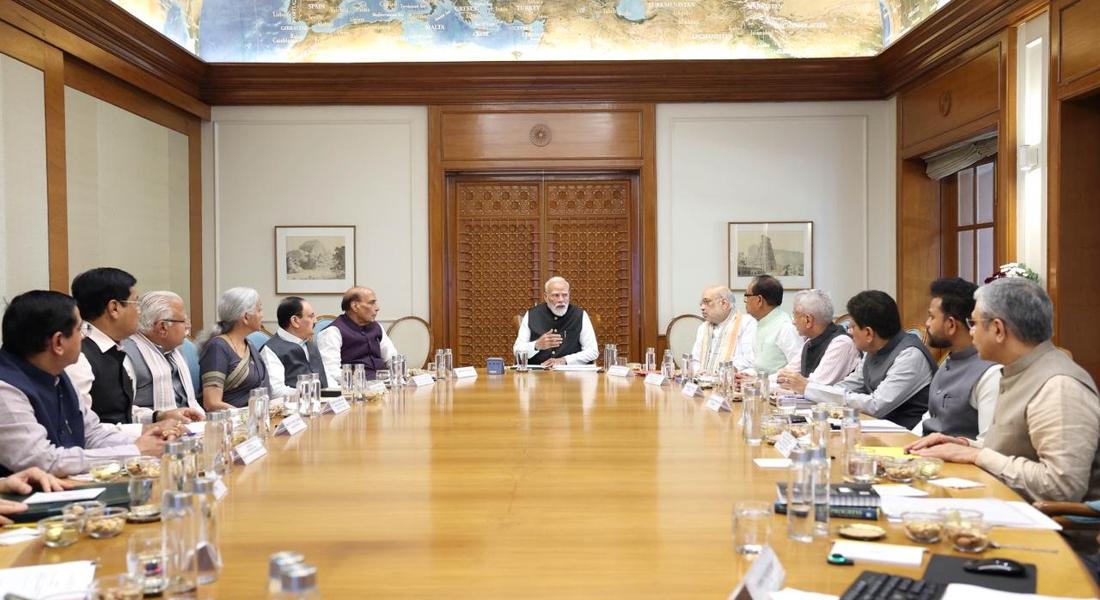
New Delhi: Prime Minister Narendra Modi on Thursday chaired a meeting of the Cabinet Committee on Security (CCS) to review the evolving situation arising from the ongoing West Asia conflict.

The meeting focused on ensuring uninterrupted supplies of petroleum products and fertilisers, protecting Indian citizens and the Indian diaspora, and strengthening the country’s energy security.

The meeting, the fourth special CCS meeting on the issue, was attended by senior officials, with the Cabinet secretary briefing the committee on the prevailing geopolitical situation and measures taken by various ministries and departments to mitigate the impact of the conflict.

According to the government, adequate arrangements have been made to maintain the supply of key petroleum products, including LNG and LPG. The Cabinet secretary informed the committee that India has diversified its LPG procurement sources and that overall stocks and supplies of major petroleum products remain adequate, according to an official statement.

He also said the availability of sufficient crude oil has enabled Central Public Sector Enterprise refineries to operate at utilisation levels exceeding 100%, ensuring continued production of petrol, diesel and other petroleum products.

The committee also reviewed fertiliser requirements for the upcoming Rabi season and discussed alternative sourcing options. The PM directed that all necessary measures be taken to ensure an uninterrupted supply of fertilisers across the country.

The welfare of Indian seafarers serving on domestic and foreign-flagged vessels in conflict-affected regions also came up for discussion. The PM directed the establishment of a mechanism to provide timely information, emergency assistance and counselling to seafarers and their families.

Emphasising the need to protect Indians abroad, Modi said all possible efforts should be made to safeguard Indian citizens and the diaspora from the impact of the conflict.

He also reiterated the importance of achieving long-term energy independence by accelerating the adoption of renewable energy, including solar power and other non-fossil fuel-based sources.

Calling for a whole-of-government approach, Modi directed that a unified and coordinated mechanism be put in place for regular monitoring of developments to ensure the timely implementation of measures aimed at safeguarding the interests of citizens amid the evolving situation.

Govt says E20 petrol safe for vehicles after extensive scientific validation

New Delhi: The Centre on Thursday said its scientific assessment found no verified evidence of widespread engine failure, abnormal wear or reduced vehicle life attributable to E20 (20% ethanol-blended petrol).

It asserted that the fuel was introduced only after extensive scientific validation and consultations with industry stakeholders, according to an official statement.

In a written reply in the Lok Sabha, Minister of State for Petroleum and Natural Gas Suresh Gopi said the Ethanol Blended Petrol Programme was implemented through a phased, scientifically validated and consultative process involving NITI Aayog, automobile manufacturers, Oil Marketing Companies, the Automotive Research Association of India (ARAI), the Society of Indian Automobile Manufacturers (SIAM), the Indian Institute of Petroleum (IIP) and other technical institutions.

The minister said extensive laboratory studies and field trials conducted by ARAI, SIAM, Indian Oil Corporation, IIP and automobile manufacturers assessed engine durability, drivability, startability, corrosion resistance, material compatibility, emissions and fuel efficiency before the nationwide rollout of E20 fuel.

According to the government, these studies confirmed that E20 is safe for use under prescribed standards and found no significant variation in vehicle performance or abnormal wear and tear in legacy vehicles operating under prescribed conditions.

The government said its assessment is also supported by large-scale operational experience following the nationwide implementation of ethanol-blended petrol. It noted that around eight crore vehicles visit fuel retail outlets every day, nearly 80% of them petrol vehicles.

According to the minister, E15+ blended petrol has been in widespread use for more than three-and-a-half years, while E19-E20 fuel has been available for over two-and-a-half years. During this period, more than 20 crore two-wheelers and over three crore petrol cars have operated on these fuel blends without any verified evidence of widespread engine failure or vehicle breakdown attributable to ethanol blending.

The minister further said manufacturer service data have not indicated any abnormal corrosion, excessive wear or reduction in vehicle life linked to E20 fuel, with automobile manufacturers continuing to honour warranty obligations for vehicles using the fuel.

He added that leading automobile manufacturers have reported no E20-related corrosion, abnormal wear or reduction in component life after servicing millions of vehicles, including many that were not originally certified as E20-compatible.

He said automobile manufacturers, component suppliers, SIAM, ARAI, testing agencies and Oil Marketing Companies were involved at every stage of the scientific evaluation and phased rollout of E20. According to the government, manufacturers would not have validated E20 for older vehicles or continued warranty support had they found any significant adverse impact on vehicle performance or durability.

Citing inputs from SIAM and ARAI, the minister said E20 fuel can improve acceleration and ride quality while helping reduce carbon emissions. He added that ethanol’s higher octane rating supports modern high-compression engines and its higher heat of vaporisation contributes to improved combustion efficiency.

Sports Minister Dr. Mandaviya felicitates ISSF gold medallists

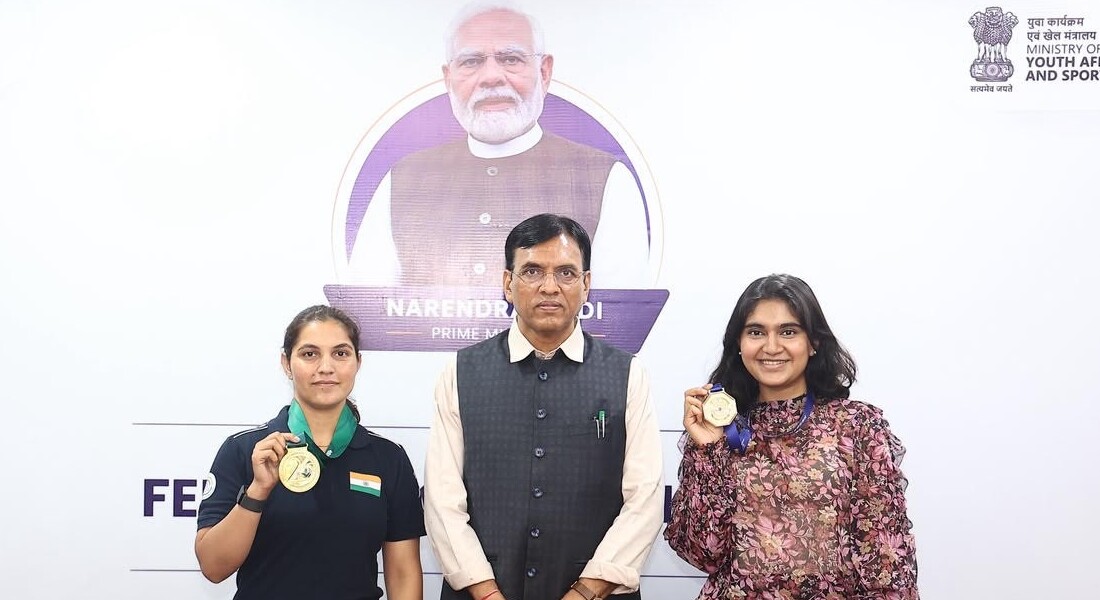
New Delhi: Union Minister for Youth Affairs and Sports and Labour & Employment Dr. Mansukh Mandaviya on Thursday felicitated India’s International Shooting Sport Federation (ISSF) World Cup 2026 gold medallists Esha Singh and Naib Subedar Neeru Dhanda.

During the meeting, Dr. Mandaviya congratulated them on their landmark achievements and reaffirmed the government’s commitment to supporting India’s shooters ahead of major international events.

Interacting with the athletes, the minister said the government is making every effort to provide world-class support through initiatives such as the Target Olympic Podium Scheme (TOPS), National Centres of Excellence, Khelo India, and scientific coaching.

He described shooting as one of India’s priority medal-winning disciplines and expressed confidence in the team’s success at the 2028 Los Angeles Olympics and the 2030 Commonwealth Games, according to an official statement.

Dhanda scripted history at the ISSF World Cup in Lonato, Italy, by becoming the first Indian woman trap shooter to win a gold medal at an ISSF World Cup. The 26-year-old from Haryana’s Jind district also set a new national qualification record with a score of 121 out of 125 before defeating former world champion Carole Cormenier of France in the final.

A Naib Subedar in the Corps of Military Police, Neeru trains at the Army Marksmanship Unit in Mhow. Her World Cup triumph came after winning the gold medal at the 2025 Asian Shooting Championships.

Esha Singh continued her impressive run in international shooting by clinching the women’s 25m pistol gold medal at the ISSF World Cup in Hangzhou, China, marking her second World Cup gold of the year in the event.

The 21-year-old reigning Asian Games double silver medallist overcame a strong Chinese challenge in the Hangzhou final. Last year, she became the first Indian woman to win a World Championship medal in the women’s 25m pistol after securing bronze in Doha. Earlier, she had claimed her maiden ISSF World Cup title in the 10m air pistol before winning the 25m pistol gold at the Munich World Cup with a world-record score of 43.

Both shooters are beneficiaries of the government’s elite athlete development programmes. While Arjuna Awardee Esha Singh is part of the TOPS Core Group, Neeru Dhanda is included in the TOPS Development Group. Both are also Khelo India Athletes and are preparing for the 2026 Asian Games.

Congratulating the shooters, Dr. Mandaviya said their achievements reflect the success of India’s long-term investment in athlete development and expressed confidence that they would continue to bring laurels to the country at future international competitions.

Lok Sabha passes Bill making insult to Vande Mataram a criminal offence

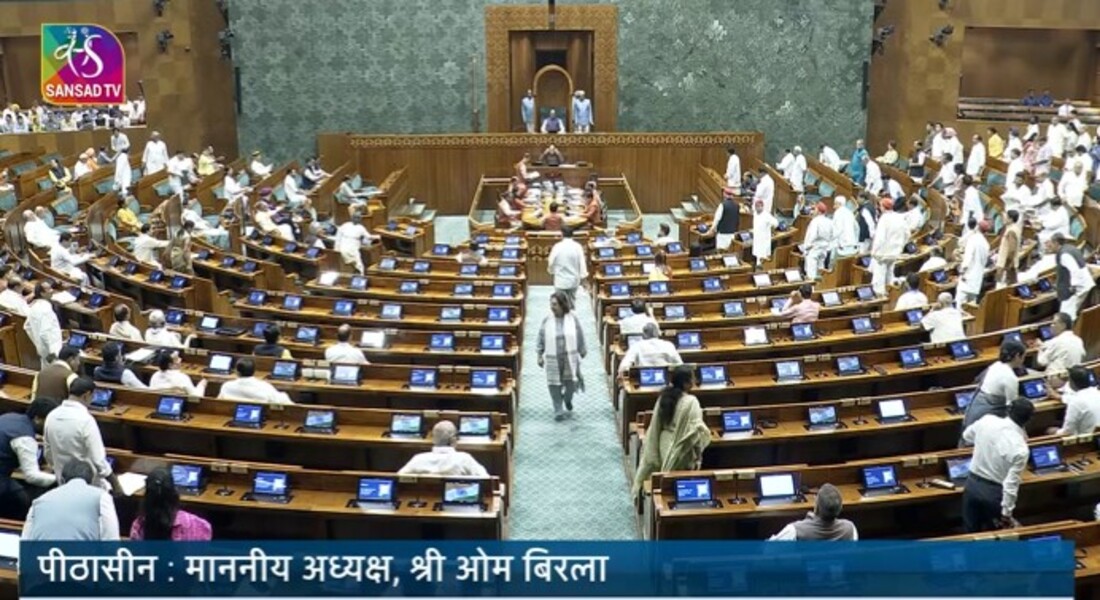
New Delhi: Parliament on Thursday passed the Prevention of Insults to National Honour (Amendment) Bill, 2026, making any insult to the national song Vande Mataram a punishable offence. The Lok Sabha cleared the legislation by voice vote amid protests and sloganeering by Opposition members.

With its passage in the Lok Sabha, the Bill completed the parliamentary approval process after having been passed by the Rajya Sabha earlier. It is the first legislation to be approved by both Houses during the ongoing Monsoon Session, which has otherwise witnessed repeated disruptions.

The amendment extends to Vande Mataram the legal protection currently available to the national anthem, Jana Gana Mana, under the Prevention of Insults to National Honour Act. The existing law prohibits intentionally preventing the singing of the national anthem or causing disturbance to an assembly engaged in its rendition. Such offences are punishable with imprisonment of up to three years, a fine, or both, while each repeat offence will carry a minimum one-year jail term.

Replying to the debate, Minister of State for Home Nityananda Rai said the amendment places the national song on par with the national anthem and gives Vande Mataram the respect it deserves. He accused the Congress of failing to accord due recognition to the national song during its decades in power and alleged that the party had pursued appeasement politics instead.

Rai also said that all six stanzas of Vande Mataram reflected the spirit of “Ek Bharat, Shreshtha Bharat” and concluded his speech by raising the slogan “Vande Mataram.”

The Bill, however, faced strong opposition from the DMK. Participating in the debate, DMK MP K. Kanimozhi described the legislation as a “Hindutva agenda masquerading as nationalism.” She argued that the move was contrary to the principles of secularism and federalism and alleged that it sought to make the singing of all six stanzas compulsory through criminal penalties.

BJP MP Sambit Patra defended the legislation, saying previous Congress governments had failed to accord Vande Mataram the status and respect befitting the national song.

The amendments moved by Opposition members were rejected by the House before the Bill was passed by voice vote. Following its passage, noisy scenes erupted in the Lok Sabha, with members raising slogans. DMK MP A. Raja was seen tearing documents and throwing them towards the Well of the House before proceedings were adjourned for the day.

The passage of the Bill comes amid a stormy Monsoon Session marked by frequent Opposition protests, primarily over the alleged NEET paper leak issue.

29 people rescued as Odisha steps up flood response; minister conducts aerial survey

ODRAF, Fire Services and district administrations carry out multiple rescue operations in Nuapada and Bargarh, while Revenue Minister Suresh Pujari conducts aerial survey of flood-hit districts.

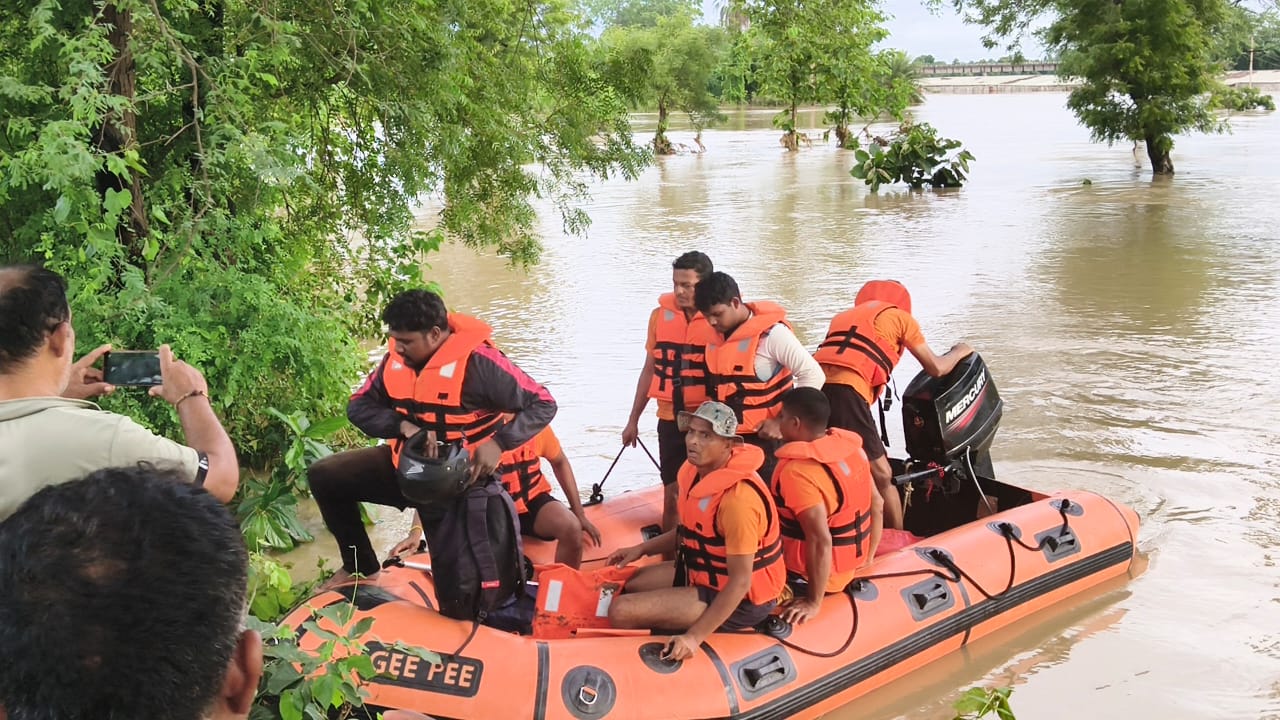
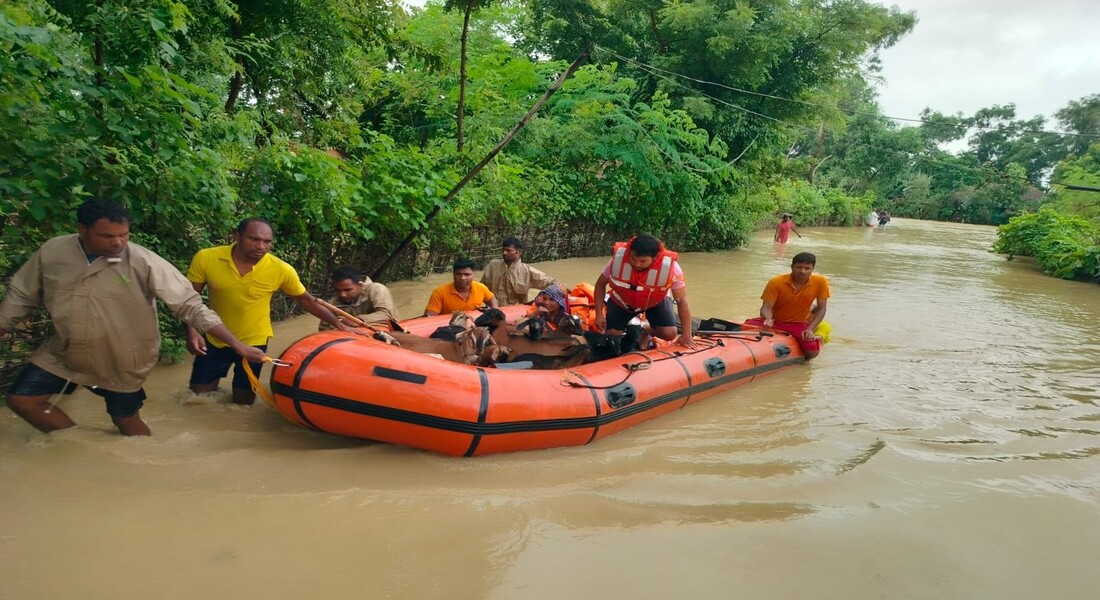
Bhubaneswar: Rescue teams evacuated at least 29 people and a dozen of animals from flood-affected areas in Odisha on Thursday as the state government intensified relief and rescue operations amid heavy rainfall and rising river levels. Revenue and Disaster Management Minister Suresh Pujari also conducted an aerial survey of the worst-affected districts to assess the flood situation and review the response on the ground.

According to an official release, the largest rescue operation was carried out near Birighat in Nuapada district, where 27 people stranded by swollen river waters were brought to safety through a coordinated operation involving the Odisha Fire and Emergency Services and the Odisha Disaster Rapid Action Force (ODRAF).

The rescue operation was launched after reports emerged that several people had been trapped on the roof of a poultry farm building near Birighat under Khariar block as floodwaters continued to rise. Rescue efforts initially faced severe challenges due to the strong current, rising water level and adverse weather conditions.

The district administration immediately initiated rescue measures, while the Office of the Special Relief Commissioner (SRC) coordinated with local authorities to deploy a specialised ODRAF team from Balangir. Senior district officials, including the Additional District Magistrate, Sub-Collector, Khariar Block Development Officer, Additional Tahsildar, Inspector-in-Charge and Sub-Divisional Police Officer, supervised the overnight operation.

Although initial reports indicated that eight people were trapped, rescue personnel continued search operations and eventually evacuated all 27 stranded individuals, including 20 men, four women and three children, without any loss of life.

The state government said the successful operation reflected the close coordination between the SRC, district administration, Fire Services and ODRAF, with rescue teams working through the night despite difficult conditions to reach those stranded by floodwaters.

In another rescue operation, personnel from the Bheden Fire Station in Bargarh district safely rescued two people and 12 sheep from Rugdi Bargaon under Bheden police station. Officials said the timely intervention ensured the safe evacuation of both the residents and their livestock, preventing any casualties.

Meanwhile, Revenue and Disaster Management Minister Suresh Pujari undertook a comprehensive aerial survey of flood-affected and waterlogged areas in Jajpur, Bhadrak, Balasore and Kendujhar districts to assess the extent of flooding and the ongoing relief measures.

The minister was accompanied by Additional Chief Secretary of the Revenue and Disaster Management Department Dr. Arabinda Kumar Padhee and Special Relief Commissioner Rajesh Prabhakar Patil during the helicopter survey.

Earlier in the day, Pujari chaired a review meeting at Lok Seva Bhawan with district collectors and senior officers monitoring the flood situation across Odisha. The meeting assessed preparedness, rescue operations, relief measures and the evolving flood scenario in different parts of the state.

The Odisha government said the Office of the Special Relief Commissioner continues to monitor the situation round the clock and is coordinating with district administrations and emergency response agencies to ensure timely rescue, relief and assistance for affected residents.

Odisha, Chhattisgarh hold talks on Mahanadi water dispute

Bhubaneswar: Odisha Chief Minister Mohan Charan Majhi on Thursday strongly asserted the state’s position on Mahanadi water sharing and management during a high-level meeting in New Delhi.

Odisha and Chhattisgarh reaffirmed their commitment to resolving the issue through dialogue and constructive cooperation, the CMO Odisha said in a post on X.

The meeting was chaired by Union Jal Shakti Minister C. R. Patil and attended by Chhattisgarh Chief Minister Vishnu Deo Sai.

During the discussions, Majhi firmly articulated Odisha’s stand, stating that the rights of the people of the state, the interests of its farmers and the protection of Odisha’s water resources remain the government’s top priorities.

He also reiterated Odisha’s commitment to securing an amicable, equitable and lasting resolution through constructive dialogue, cooperation and goodwill between the two states.

The meeting focused on issues concerning the sharing and management of Mahanadi waters.

According to an official statement, both Odisha and Chhattisgarh reaffirmed their commitment to resolving the matter through dialogue and constructive cooperation to achieve an amicable, mutually beneficial and lasting solution.

Odisha fisheries sector gets Rs 1,086 crore central push

Bhubaneswar: Odisha’s fisheries sector is headed for a major transformation, backed by over Rs 1,086 crore in central funding and a slew of new state initiatives aimed at boosting deep-sea fishing, export competitiveness and fishermen welfare.

This information was given by Fisheries, Animal Husbandry and Dairying Minister Rajiv Ranjan Singh, alias Lalan Singh, in the Rajya Sabha in response to a question.

The Department of Fisheries under the Ministry of Fisheries, Animal Husbandry and Dairying has approved projects worth Rs 1,086.51 crore for Odisha, with a central share of Rs 416.84 crore, under the Pradhan Mantri Matsya Sampada Yojana (PMMSY).

The scheme, running since 2020-21 with a national outlay of Rs 20,750 crore, funds infrastructure such as fishing harbours, fish landing centres and cold chain facilities across states and union territories, according to an official statement.

Among the key approvals is the modernisation of Paradip Fishing Harbour, sanctioned at a cost of Rs 108.91 crore under the Central Sector component of PMMSY.

Separately, under the Fisheries and Aquaculture Infrastructure Development Fund, operational since 2018-19, the Centre has approved 13 infrastructure projects in Odisha, including fishing harbours, landing centres, processing units and fish markets, at a total project cost of Rs 784.32 crore. Of this, Rs 286.39 crore is eligible for interest subvention, with the government offering subsidy support of up to 3% on admissible project costs.

At the state level, Odisha has launched the State Deep Sea Fishing Mission (2026-2036) to promote offshore fishing, modern fishing technologies, tuna fisheries, mariculture and Blue Economy initiatives. The state government said the mission would work alongside PMMSY-backed infrastructure upgrades to reduce post-harvest losses and expand market access, covering ice plants, cold storages, insulated transport vehicles and fish kiosks.

Other measures include capacity-building programmes for fishers on deep-sea techniques, onboard handling, navigation and safety, along with the installation of transponder-based Vessel Monitoring Systems in mechanised vessels to strengthen safety and regulatory compliance. The state has also promoted Turtle Excluder Devices to support sustainable fishing practices.

Beyond infrastructure, PMMSY extends livelihood and nutritional support to socio-economically backward traditional marine fisher families from Below Poverty Line households during the annual fishing ban period. Odisha’s own Mukhyamantri Maschyajibi Kalyan Yojana provides Rs 15,000 to each eligible marine fisherman family during the turtle conservation ban from November 1 to May 31 to offset the loss of livelihood in notified ban areas.

To strengthen seafood processing and exports, the state has introduced a “Promotion of Aquaculture and Shrimp Export Cell” under the MMKY umbrella scheme, offering subsidy support of 30% (up to Rs 3.5 crore) for general category beneficiaries and 35% (up to Rs 4 crore) for SC, ST, women, transgender persons, persons with disabilities and professionally qualified beneficiaries for seafood processing machinery.

The state has also notified a separate regulatory framework for white-leg shrimp culture in inland saline waters to boost shrimp production and improve export competitiveness, in coordination with agencies such as MPEDA and NFDB.

Together, the initiatives signal a coordinated Centre-state push to position Odisha as a stronger player in India’s Blue Economy ambitions.

Rajnath Singh felicitates nine women officers post circumnavigation

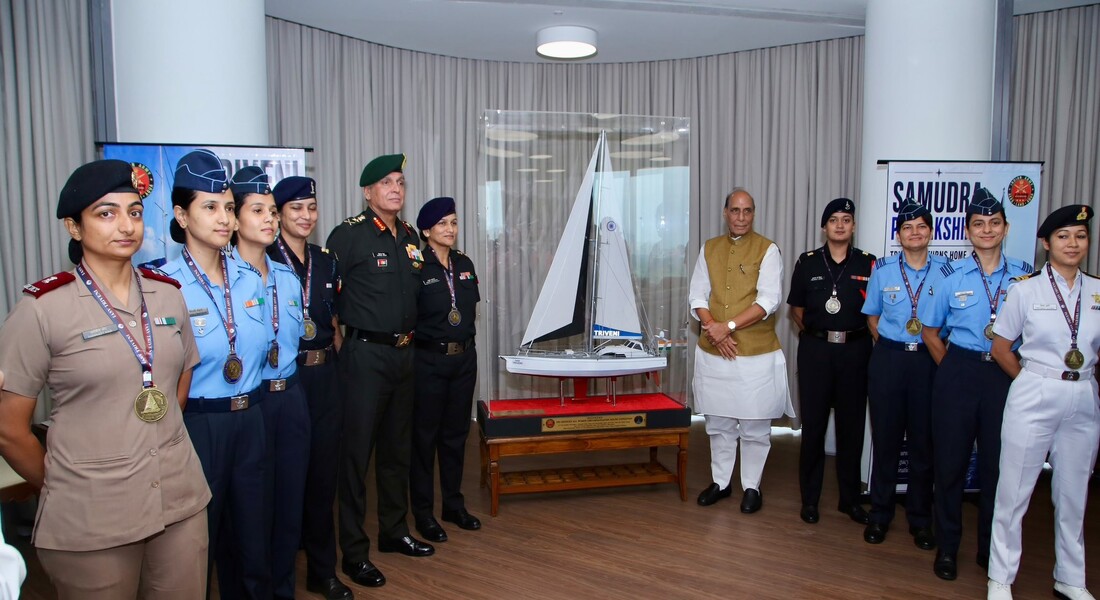
New Delhi: Defence Minister Rajnath Singh on Thursday felicitated nine women officers from the three services who returned home after completing India’s first-ever Tri-service all-women circumnavigation sailing expedition, ‘Samudra Pradakshina’, onboard the Indian Army Sailing Vessel (IASV) Triveni.

Interacting with the officers in New Delhi, Rajnath praised their courage and determination in completing the 314-day voyage, which covered nearly 25,500 nautical miles across four oceans.

He described the expedition as a testament to Nari Shakti and an outstanding example of Tri-service jointness and synergy that would inspire the entire nation.

The women officers shared their experiences with the minister, saying the expedition’s demanding nature made the voyage both memorable and rewarding. They said their commitment to making the nation proud kept them motivated through immense physical and mental challenges.

Rajnath further said their dedication had inspired him and reinforced his own resolve, adding that their achievement showed how firm conviction could help accomplish any goal in life.

Calling the officers’ capability and confidence incredible, Rajnath said the successful completion of ‘Samudra Pradakshina’ had shattered stereotypes claiming women cannot accomplish arduous military missions.

He said the officers had proven that physical capability, mental toughness, and leadership qualities are not bound by gender, and that every daughter in India could now believe she, too, could cross oceans and conquer the world.

He also termed the expedition a shining example of Tri-service jointness, noting that officers from the Army, Navy and Air Force had sailed together on the same vessel under the same flag in pursuit of a shared mission. He said the voyage proved that no horizon was too vast to conquer when the forces moved forward together.

Rajnath further commended the team for showcasing India’s engineering excellence, indigenous capabilities and technological advancements to the countries they visited, saying the mission had conveyed that India is second to none in any field, according to an official statement.

Chief of the Army Staff General Dhiraj Seth, Defence Secretary Rajesh Kumar Singh, Vice Chief of the Air Staff Air Marshal Ashutosh Dixit, Vice Chief of the Naval Staff Vice Admiral Ajay Kochhar and other senior officers of the three services were present during the interaction.

The IASV Triveni crew was virtually flagged in by the defence minister on July 22, in Mumbai. He had earlier graced the flag-off ceremony on September 11, 2025, through video conferencing.

The mission’s success followed nearly two years of intensive training, meticulous planning and round-the-clock shore-based support. The expedition met all internationally recognised criteria for circumnavigation, crossing all meridians of longitude, crossing the Equator twice, crossing the International Date Line, and rounding the Three Great Capes – Cape Leeuwin, Cape Horn and the Cape of Good Hope.

The crew’s successful passage through the Drake Passage and rounding of Cape Horn also earned them membership of the Cape Horners fraternity, an honour reserved for sailors who conquer one of the world’s most demanding maritime passages.

Beyond the maritime achievement, ‘Samudra Pradakshina’ also served as an instrument of military diplomacy, with IASV Triveni showcasing India’s cultural heritage, maritime traditions and military professionalism during port calls across the globe.

Odisha floods: Govt orders 3-day damage assessment

Bhubaneswar: The Odisha government has instructed district collectors in flood-hit areas to submit comprehensive damage assessment reports within three days, paving the way for compensation to affected families.

Revenue and Disaster Management Secretary Arabinda Padhee said the reports must cover crop losses, house damage and other destruction, adding that compensation would be released based on these assessments.

The latest flood status report shows Balasore, Bhadrak, Jajpur, Mayurbhanj and Kendujhar have borne the brunt of the deluge, with 50 blocks, 356 gram panchayats, 1,084 villages, 11 urban local bodies and 169 wards affected.

Official data puts the total number of affected people at 5,87,822, of whom 1,76,073 have been moved to safer locations. Twenty-one villages remain cut off, including 17 in Balasore and four in Kendujhar.

Bhadrak has emerged as the worst-affected district, with over 4.1 lakh people impacted and 99,246 residents shifted from low-lying areas. The district has 228 relief camps in operation.

Balasore follows with more than 1.46 lakh people affected and 28,231 evacuated, while Jajpur has recorded over 25,000 people affected and 20,544 rescued so far.

Agricultural land spanning 16,187 hectares has been submerged, with Jajpur bearing the highest loss at 11,497 hectares, followed by Mayurbhanj (3,754 hectares) and Kendujhar (936 hectares).

As many as 1,020 houses have sustained damage, with the highest number in Balasore at 654, followed by 278 in Mayurbhanj and 88 in Kendujhar. Officials also flagged a 20-metre breach on the left-hand embankment of the Kani river in Jajpur’s Anandpur Ring Road amid the heavy rainfall.

Several rivers in the state are flowing above the danger mark. The Mahanadi has risen at Naraj and Munduli in Cuttack following heavy rain and dam discharges, while the Baitarani is in spate at Bhadrak and Achuapada. The Jalaka river is also flowing above danger levels at Mathani in Balasore.

With the Hirakud reservoir water level touching 619.54 feet, authorities have opened two sluice gates to manage the discharge safely.

The state has set up 464 relief camps, distributing polythene sheets, food and safe drinking water to those displaced. Teams from the NDRF, ODRAF and Fire Services have been deployed for rescue and relief operations.

Around 1,310 livestock deaths have been recorded across the affected districts.

The Office of the Special Relief Commissioner has forecast very heavy rainfall in Nuapada, Kalahandi, Nabarangpur and Koraput, and heavy rainfall in Bargarh, Subarnapur, Boudh, Balangir, Kandhamal, Rayagada and Malkangiri. The state recorded an average rainfall of 58.9 mm in the last 24 hours, with Bijepur block in Bargarh district logging the highest at 315 mm.

Authorities have advised residents to avoid flood-hit roads and follow official advisories as rescue, relief and restoration work continues.

Commonwealth Games: Murali Sreeshankar bags silver

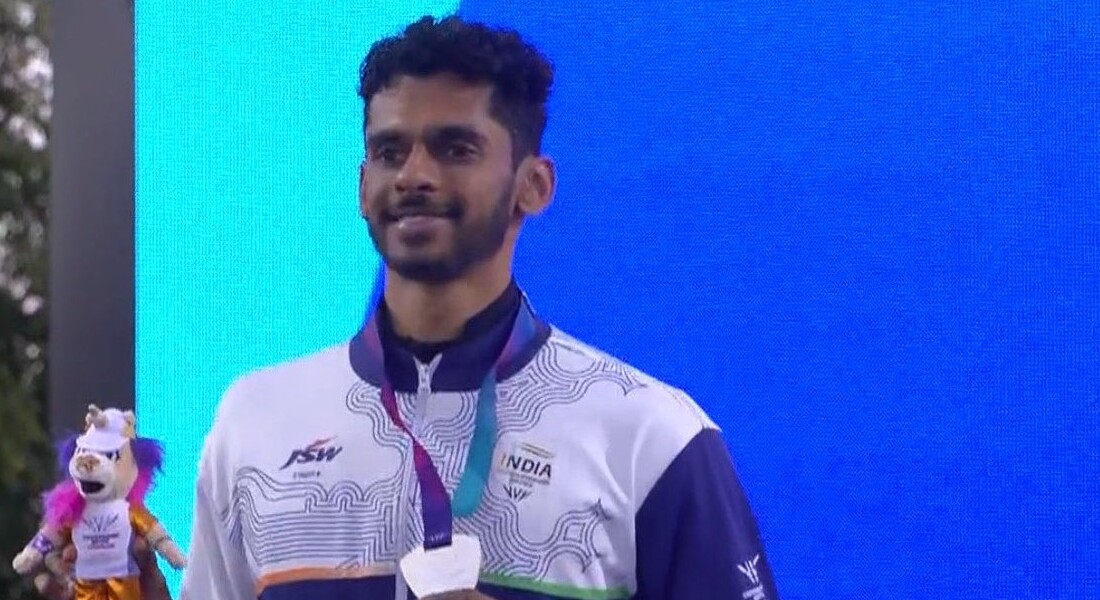
New Delhi: India’s Murali Sreeshankar added another Commonwealth Games medal to his collection on Wednesday, clinching silver in the men’s long jump at Glasgow 2026.

The 27-year-old jumped 8.09m at Scotstoun Stadium, repeating his silver-medal feat from Birmingham 2022 and becoming the first Indian to stand on two CWG long jump podiums.

Jamaica’s Tajay Gayle, a former world champion, took gold with a leap of 8.15m, edging past Sreeshankar in the fourth round after the Indian had led at the halfway stage. Scotland’s Stephen Mackenzie claimed bronze with 8.08m, denying India a shot at gold by the narrowest of margins.

Sreeshankar’s series read 8.03m, 8.09m, two fouls, 7.94m and 7.97m across his six attempts. His teammate Lokesh Sathyanathan, competing at his maiden Commonwealth Games, finished fifth with a best of 7.97m.

India now has five Commonwealth Games medals in the long jump, with Sreeshankar the only athlete to win two. Suresh Babu (bronze, 1978), Anju Bobby George (bronze, 2002) and Prajusha Maliakkal (silver, 2010) hold the other podium finishes in the event.

Sreeshankar’s silver was India’s third athletics medal of the Glasgow Games, coming after Sarvesh Kushare’s silver in the high jump and Gulveer Singh’s silver in the 10,000m.

India’s para-athletes delivered a landmark day as well. Dilip Gavit won gold in the men’s 100m T47 final with a Games record and season-best time of 10.71 seconds, ahead of compatriot Mohammed Basil, who took silver in 10.83 seconds.

The result completed an Indian one-two and made Gavit the first Indian man to win a Commonwealth Games para-athletics gold. He is only the second Indian para-athlete overall to win gold at the Games, after Sharmila Dhankar’s triumph in the women’s shot put F57 earlier in the week.

Elsewhere on the track, national record holder Parul Chaudhary finished fifth in the women’s 3000m steeplechase, clocking 9:26.75. Kenya’s Faith Cherotich, a Paris 2024 bronze medallist, won gold in a Games record 9:01.76, followed by England’s Elise Thorner and Uganda’s Peruth Chemutai. Chaudhary will look to make amends in the 5000m on Thursday.

In the women’s shot put, Manpreet Kaur missed the podium by a narrow margin, placing fourth with a best throw of 17.49m. Canada’s Sarah Mitton won gold with 19.88m, while Nigeria’s Jessica Oji took silver with 17.87m. Jamaica’s Lloydricia Cameron claimed bronze on countback after matching Oji’s mark, having produced a decisive final-round throw that pushed Manpreet off the podium.

India had a strong showing in the men’s shot put as well, with both Tajinderpal Singh Toor and Samardeep Singh Gill reaching the final. Toor finished second overall with a throw of 20.14m, behind New Zealand’s Nick Walsh, who led qualifying with 21.03m. Gill placed fifth with 19.95m.

On the track, national record holder Animesh Kujur advanced to the semi-finals of the men’s 200m with a season-best 20.46s, finishing ahead of Cameroon’s Emmanuel Eseme, Tuesday’s 100m winner, to top Heat 4. Kujur qualified seventh overall for the semis, with the top 16 progressing.

India also secured two spots in the men’s 400m hurdles final, as Santosh Kumar Tamilarasan and Yashas Palaksha advanced as the fastest non-automatic qualifiers, clocking 49.51s and 49.65s respectively.