At IndiaVerve, we go beyond the noise to bring you meaningful stories of change, resilience and progress—from India to the world stage. Our mission is to bring readers credible, wide-ranging coverage across politics, business, sports, culture, society and more.

Governor Kambhampati urges youth to lead climate resilience, green development

Bhubaneswar: Odisha Governor Dr Hari Babu Kambhampati has called upon the state’s youth to take the lead in building climate-resilient communities and advancing green development, urging them to turn environmental challenges into opportunities for sustainable livelihoods, innovation and employment.

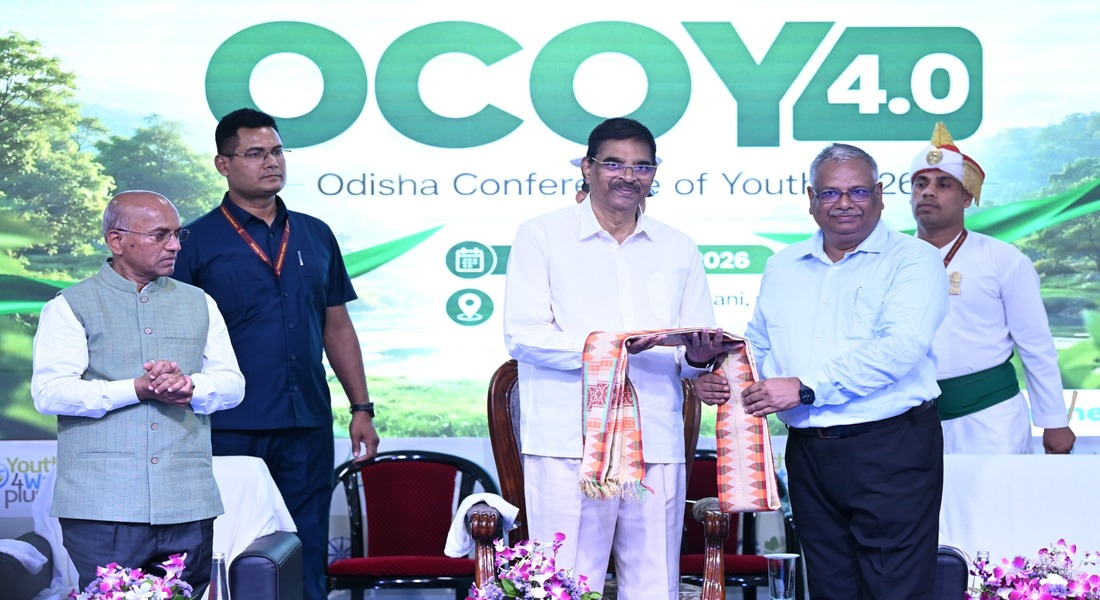
Addressing the Odisha Conference of Youth (OCOY) 4.0 at XIM University in Jatni on Monday, the Governor said young people should not remain passive recipients of policies but emerge as architects of solutions. He stressed the need for youth-led action in areas including waste-to-resource initiatives, renewable energy, sustainable agriculture and employment generation.

The Governor said climate change was no longer a warning about a distant future. Heatwaves, erratic rainfall, floods, cyclones and rising sea levels are already affecting agriculture and livelihoods, he noted, adding that climate resilience is not merely an environmental responsibility but also a matter of human dignity and responsibility towards future generations.

Referring to Odisha’s experience in dealing with cyclones and floods as well as its efforts to protect forests and biodiversity, Kambhampati said the state now needs to move beyond disaster preparedness towards building climate-resilient communities.

He cited youth-led initiatives such as seed-ball activities in Phulbani, plantation drives in Jatni and Khallikote, the Blue Flag Beach initiative in Puri and climate-awareness activities in Similipal as examples of how young people can contribute to wider environmental change. He also urged youth to make the principles of “Reduce, Reuse and Recycle” and Mission LiFE part of their everyday lives.

The Governor called for a “Mission 30 by 30”, under which climate-resilience programmes should be taken forward in every district of Odisha by 2030. He encouraged young people to combine scientific knowledge and technology with local expertise to develop solutions tailored to environmental challenges in individual districts.

He also urged participants in the three-day Youth Parliament and district-level discussions to move beyond identifying problems and work towards developing practical solutions. He expressed hope that the programme would help young people emerge as “ambassadors of sustainability, champions of climate resilience and agents of change”.

Kambhampati also linked sustainable lifestyles with India’s energy security, referring to geopolitical tensions in West Asia and the country’s dependence on imported crude oil. He encouraged young people to adopt sustainable modes of transport and gradually shift towards electric vehicles, saying this could help reduce dependence on imported crude, strengthen energy security and ease pressure on foreign exchange.

The Governor noted that electric vehicles have already been incorporated into his official convoy.

Speaking about the broader role of young people in Odisha’s development, he said the state needs a generation capable of shaping its future rather than simply inheriting it. He added that channelising the energy and creativity of young people into constructive action would help advance the goal of Viksit Bharat @2047.

The OCOY 4.0 programme also featured addresses by XIM University Vice-Chancellor Dr Father K.S. Casimir SJ, Nexus Select Trust General Manager and ESG Ambassador Harsha Bharadwaj, UNICEF Odisha Field Office Chief Prashant Kumar Dash and Sambhav co-founder Sabarmati Apa.

UNICEF Odisha WASH-CCES Specialist Sipra Saxena delivered the welcome address, while Youth4Water Plus Director Blorin Mohanty proposed the vote of thanks.
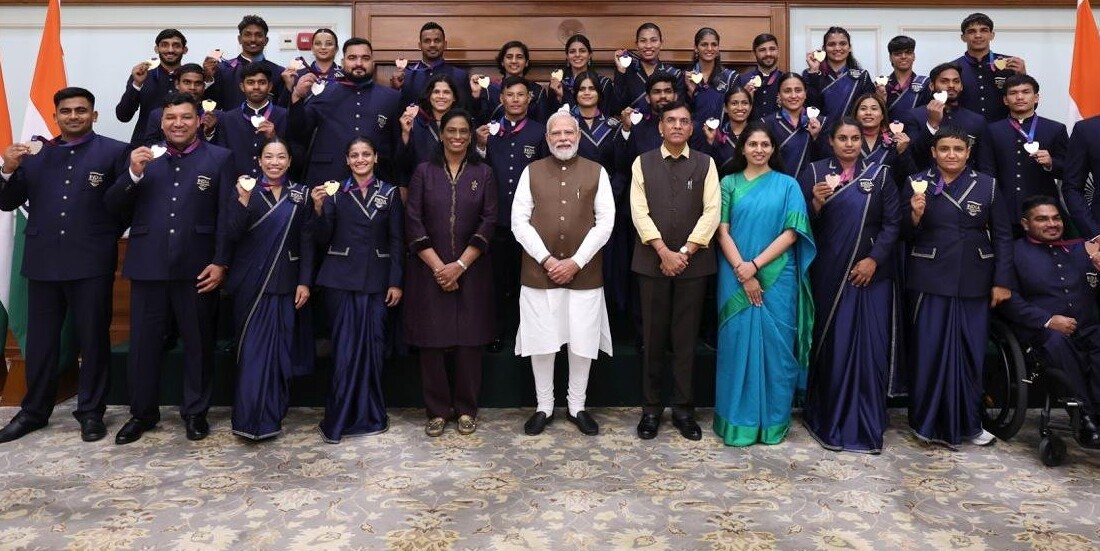
PM interacts with Commonwealth Games champions, praises sporting achievements

New Delhi: Prime Minister Narendra Modi on Monday interacted with India’s Commonwealth Games champions, reflecting on the transformation of Indian sports over the past decade.

He said receiving national sportspersons at his residence had remained a regular and cherished tradition throughout his 12 to 13 years in office. The PM noted that the achievements of Indian athletes inspired young students far more effectively than routine promotional messages, remarking that a medal inspires them more than anything said in a school visit.

During the interaction, an athlete recalled an earlier conversation about her daughters taking up sports and updated the PM on their progress, assuring him that they would bring home three medals at the upcoming Commonwealth Games. Modi welcomed her confidence and encouraged her commitment to excellence, according to an official statement.

Modi also spoke about the emotional journeys behind the athletes’ victories. He referred to a player who dedicated his win on Guru Purnima to his coach, and another athlete who broke down on the podium after overcoming four years of injuries and personal struggles to see the national flag raised.

He said such triumphs went beyond individual success to inspire future generations.

Modi also discussed the growing international standing of Indian athletes, noting that competitors abroad were increasingly wary of facing Indian opponents. He highlighted the rising reputation of Indian boxers and credited grassroots programmes such as the Khelo India Scheme, along with sustained competition support from the government, for the shift.

He said global players had started fearing Indian boxers as well.

The PM said athletes must retain the humility of a young learner even as the Khelo India initiative expanded in scale. He added that national sporting success depended not only on infrastructure but on building a broader sports culture across the country.

He acknowledged an Indian Army athlete who defeated his Pakistani opponent 5-0 on Kargil Vijay Diwas and dedicated the win to Army personnel, calling it a moment of exceptional national pride.

He also shared a lighter exchange with an athlete about his army coach, Narendra Rana, over their shared first name, remarking that the achievement reflected the shaping of an entire generation, not just a rise in medal count.

An athlete thanked the Sports Authority of India (SAI) for the training support that helped her progress from local sports centres to international podiums, a gesture Modi said he found deeply moving.

The PM asked about upgraded sports infrastructure in regional hubs including Varanasi and Bhopal, where athletes had trained and also visited spiritual sites such as Kashi Vishwanath and Mahakaleshwar in Ujjain. He credited SAI and the Khelo India framework, in place since 2018, for helping young talent move smoothly into elite-level competition. He expressed confidence in future victories and said he looked forward to meeting the athletes again.

Modi also extended birthday wishes to a multi-time medalist present at the interaction, personally offering her sweets and encouraging the contingent to sustain its winning momentum following three consecutive medal-winning performances.

Jharkhand student protest: police use lathis, tear gas as ex-JPSC chief arrested

Thousands of students gathered in Ranchi demanding a CBI probe into alleged examination irregularities, while the state CID arrested former JPSC chairperson L Khiangte in connection with the probe.

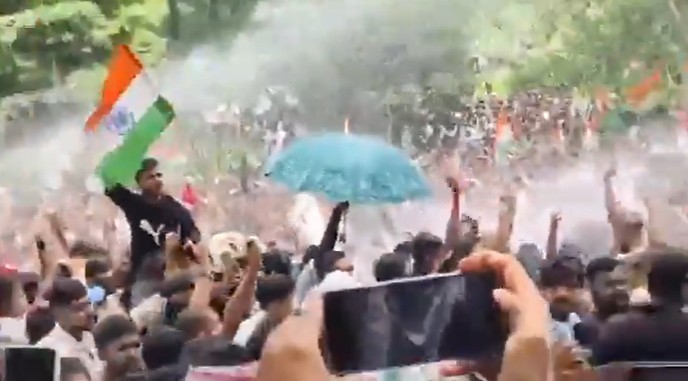
Ranchi: Tensions escalated in Jharkhand on Monday as thousands of students protesting alleged irregularities in government recruitment examinations marched towards the state Assembly in Ranchi, leading to clashes with police. Security personnel used lathi charges, water cannons and tear gas after protesters breached barricades erected to prevent them from reaching the Assembly.

The agitation, which has continued for more than two weeks, is centred on allegations of paper leaks, irregularities in examination processes and the involvement of a company that students allege had previously been blacklisted. The protesters are demanding a Central Bureau of Investigation (CBI) probe into the alleged irregularities and have refused to withdraw their agitation despite several rounds of talks with the state government.

The state CID also arrested former Jharkhand Public Service Commission (JPSC) chairperson L Khiangte on Monday in connection with its investigation into alleged irregularities in recruitment examinations. Khiangte, who was appointed JPSC chairperson in February last year after retiring as Jharkhand’s chief secretary, resigned from the post on July 22.

The protesters, led by student leader Devendra Nath Mahto, who has been on hunger strike, broke through several barricades while attempting to move towards the Assembly. Police subsequently deployed water cannons and used lathi charges and tear gas to disperse the crowd. Several schools in Ranchi remained closed amid the heightened security arrangements.

A key point of contention is the alleged involvement of TSR Data Processing Private Limited (TDPL), a company that reports say had earlier been blacklisted by the JSSC in May 2025 over alleged irregularities but was subsequently selected for examination-related work by the JPSC.

The state government has maintained that it is prepared to address the students’ concerns. During talks held a day before Monday’s march, the government agreed to cancel the 14th JPSC preliminary examination and backlog examinations from 2023 and 2025. The three-member JPSC board also stepped down.

However, the students have rejected the government’s proposed measures as insufficient and continue to demand a CBI investigation. They have also sought cancellation of examinations linked to the allegedly blacklisted agency.

The government has proposed alternative mechanisms, including a judicially monitored committee headed by a retired judge, expert committees and fast-track courts to address examination-related grievances. The protesters, however, have maintained that only a CBI probe can establish accountability for the alleged irregularities.

The government has also said that the CGL examination was conducted under the supervision and directions of the High Court and Supreme Court, and has questioned whether the state has the authority to cancel the examination or transfer the matter to the CBI.

Chief Minister Hemant Soren had earlier assured the protesting students that those found responsible for irregularities in recruitment examinations would face strict action. The government has also argued that it has accepted a substantial portion of the protesters’ demands, but the students maintain that several of their core demands remain unresolved.

The protests have now spread beyond Ranchi, with demonstrations also reported from districts including Bokaro, Dhanbad and Hazaribagh. BJP leaders have separately protested against the state government over the examination issue, while some opposition leaders were detained during demonstrations outside Chief Minister Soren’s residence.

The latest developments come amid an expanding investigation into alleged irregularities in recruitment examinations. The arrest of the former JPSC chairperson and the resignation of members of the commission have added to pressure on the state government, even as negotiations with the protesting students remain unresolved.

Deputy CM Singh Deo reviews paddy procurement for KMS 2026-27

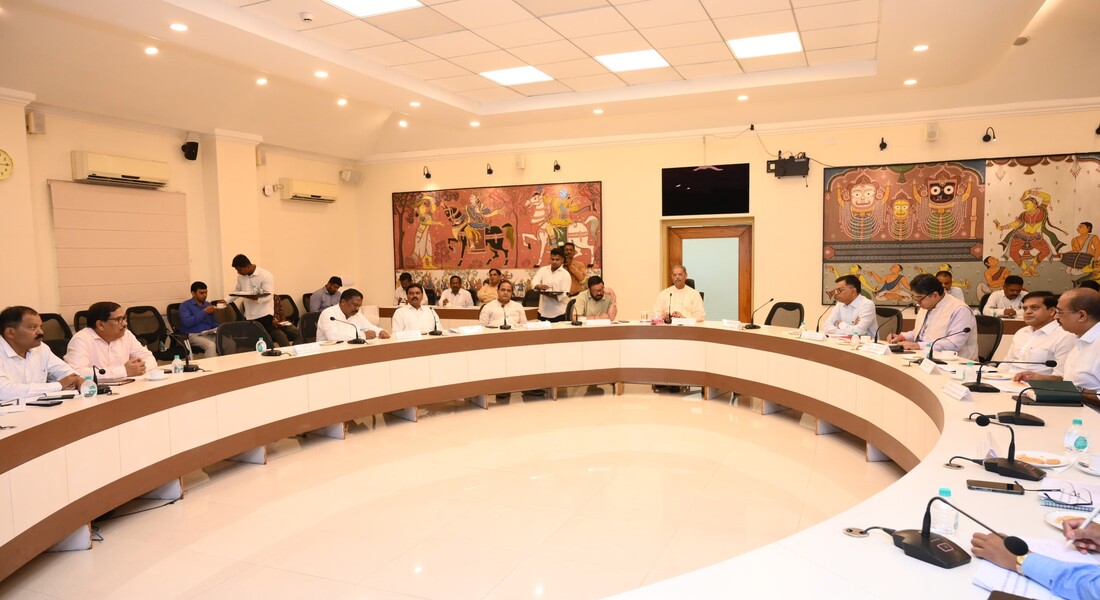
Bhubaneswar: Deputy Chief Minister Kanak Vardhan Singh Deo on Monday chaired a crucial review meeting on paddy procurement and farmer registration for the Kharif Marketing Season (KMS) 2026-27 at the CM’s Conference Hall.

Revenue and Disaster Management Minister Suresh Pujari, Rural Development, Panchayati Raj and Drinking Water Minister Rabi Narayan Naik, Food Supplies and Consumer Welfare Minister Krushna Chandra Patra, and Cooperation Minister Pradeep Balsamanta attended the meeting.

Singh Deo said the government’s collective resolve was to safeguard the interests of farmers by ensuring transparent registration, seamless procurement and timely support.

In a post on X, he said every grain procured represented not just food security but Odisha’s commitment to its farmers. The deputy CM added that the government was determined to make the process simpler, swifter and more accountable, strengthening the state’s agrarian economy.

“Every grain procured is not just food security, but a testament to Odisha’s commitment to its farmers. Together, we are determined to make the process simpler, swifter, and more accountable, strengthening the backbone of our agrarian economy,” he noted.

According to the key decisions and deliberations, AgriStack registration is currently not mandatory for farmers, ensuring that no farmer is deprived of selling their paddy. The registration window remains open until October. AgriStack is an integrated farmer platform that consolidates farmer data, generating a unique Farmer ID upon registration to facilitate seamless access to government benefits. To date, around 6,00,000 farmers have registered on the platform.

Minister Rabi Narayan Naik said Rabi and Kharif paddy procurement had each been conducted twice since the BJP government took charge. He said protecting farmers’ interests while making the procurement and registration process simpler and more transparent remained the government’s topmost priority.

CM Majhi hands over appointment letters to 1,326 candidates

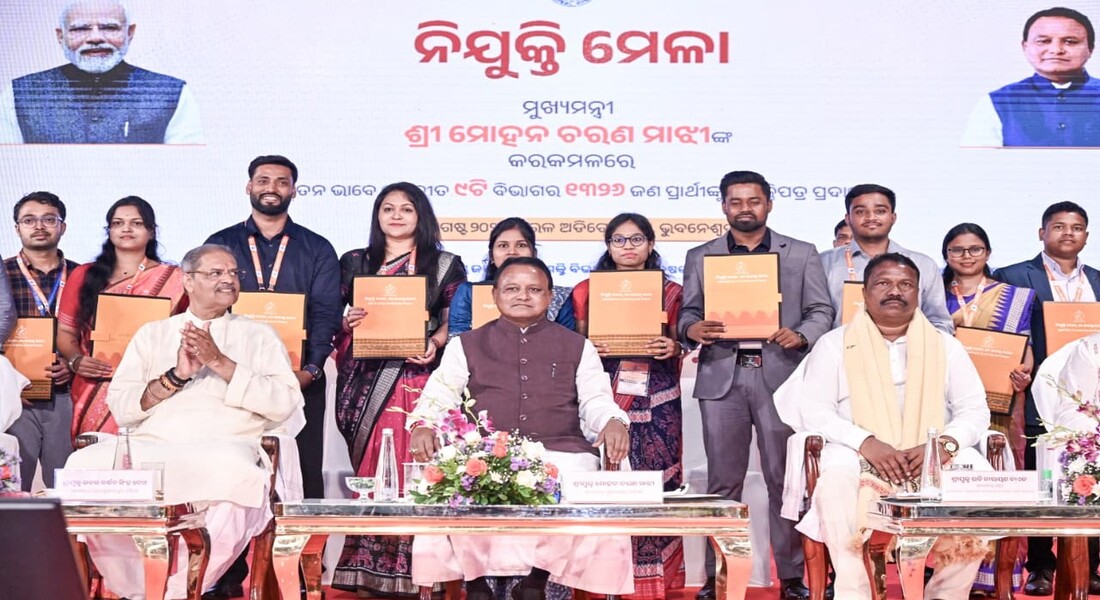
Bhubaneswar: Chief Minister Mohan Charan Majhi on Monday distributed appointment letters to 1,326 newly selected officers and employees across nine government departments at the 16th Nijukti Mela (Recruitment Fair) held at Rail Auditorium, Bhubaneswar.

Addressing a gathering, Majhi said providing transparent, efficient and merit-based employment to the state’s youth remained his government’s topmost priority. He noted that the recruitment drive, launched in June 2024, had inducted over 45,000 young people into government service so far. He congratulated the newly appointed candidates and their families on the occasion.

The CM also said a government job was not merely a position but a responsibility to serve the public with integrity and transparency. He reiterated his government’s “zero tolerance” policy towards injustice and corruption, and called for development to reach every citizen.

He added that the newly appointed youth would help realise Prime Minister Narendra Modi’s vision of a ‘Viksit Bharat’ and contribute to building a prosperous, inclusive and self-reliant Odisha by 2036.

Deputy Chief Minister Kanak Vardhan Singh Deo, who also attended the event, said 118 candidates were appointed to the Agriculture and Farmers’ Empowerment Department and 240 to the Energy Department among the total selections. He congratulated the newly appointed youth for joining the state’s development journey.

Fisheries and Animal Resources Development Minister Gokulananda Mallik, Health Minister Dr Mukesh Mahaling, and Panchayati Raj and Drinking Water Supply Minister Rabi Naik were also present at the event.

India’s Asiatic Lion population rises to 891 in 2025, says Union minister

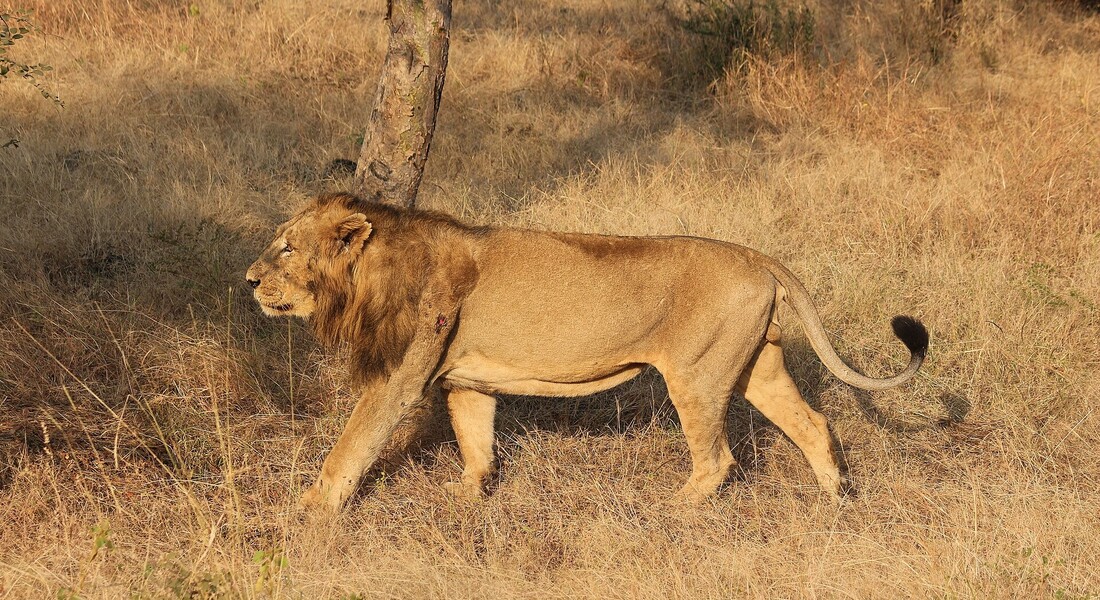
New Delhi: India’s Asiatic Lion population has crossed 891 individuals in 2025, marking a sharp rise from 523 in 2015, Union Environment Minister Bhupender Yadav announced on World Lion Day 2026.

Yadav credited forest officials, conservationists and local communities for the conservation success, according to an official statement.

In a post on X, he said India’s achievement stood as proof of the nation’s commitment to protecting wildlife and biodiversity.

The minister added that the country remained resolved to safeguard its natural heritage for future generations.

“As we mark World Lion Day, let us reaffirm our resolve to safeguard our natural heritage and ensure that the roar of the Asiatic Lion continues to resonate for generations to come,” Yadav noted.

Similarly, Union Minister of State for Environment Kirti Vardhan Singh marked the occasion. He said India had shown the world that development and nature could progress together through protected habitats, stronger conservation programmes and greater coexistence between people and wildlife.

The conservation push traces back to Project Lion, launched by Prime Minister Narendra Modi on August 15, 2020, to secure the long-term survival of the species. Since then, the lions’ range has expanded from about 30,000 square kilometres to nearly 35,000 square kilometres.

The project follows a landscape-level approach that combines habitat improvement, disease surveillance, veterinary care, scientific population monitoring, technology-driven tracking and community participation in conservation efforts.