At IndiaVerve, we go beyond the noise to bring you meaningful stories of change, resilience and progress—from India to the world stage. Our mission is to bring readers credible, wide-ranging coverage across politics, business, sports, culture, society and more.

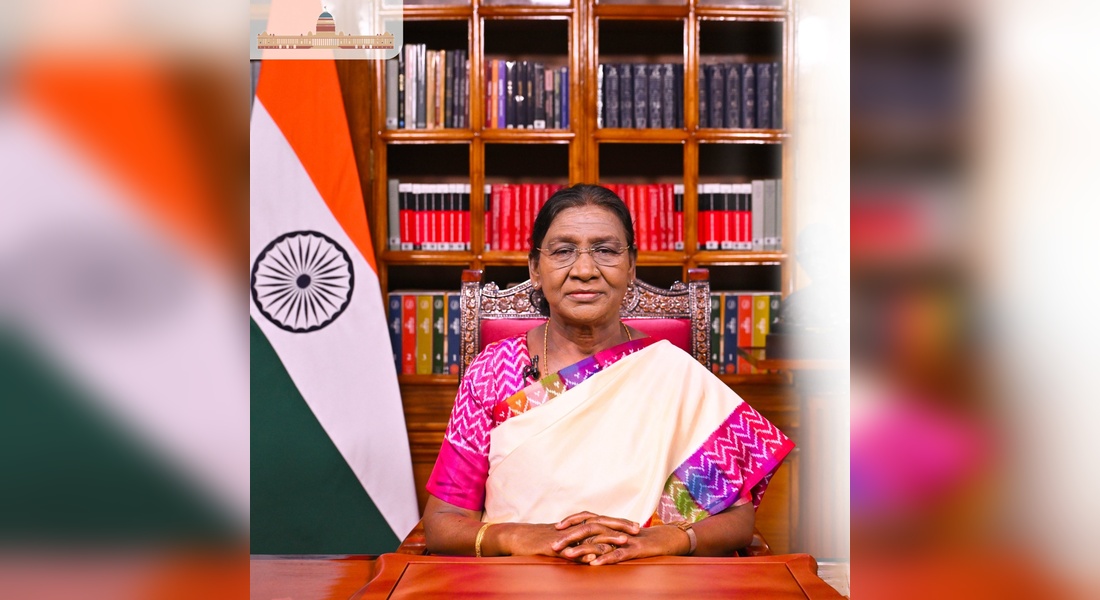
President Droupadi Murmu calls for unity to build “Viksit Bharat”

New Delhi: President Droupadi Murmu, in her address to the nation on the eve of the 80th Independence Day, said the country was moving towards building a “Viksit Bharat” by the centenary year of independence in 2047, guided by the spirit of Antyodaya to ensure development reaches every individual.

The president delivered the address on Friday, a day the nation also observes as Vibhajan Vibheeshika Smriti Divas, remembering the lakhs of Indians who lost their lives or were displaced during the violence of Partition, according to an official website.

Murmu paid tribute to Sardar Vallabhbhai Patel, describing him as the “sculptor of the unity of modern India” for integrating over 550 princely states into independent India. She also invoked Mahatma Gandhi and Dr Bhimrao Ambedkar as guiding figures of the freedom struggle, and noted the country was marking the 200th birth anniversary of Mahatma Jyotiba Phule this year.

Highlighting welfare achievements over the past decade, the president said more than 25 crore people had been lifted out of poverty. She noted that nearly 59 crore account holders had joined the banking system under the Pradhan Mantri Jan Dhan Yojana, of which over 32 crore were women.

She added that food security had been ensured for more than 80 crore people through free rations, while the Ayushman Bharat Pradhan Mantri Jan Arogya Yojana had provided free healthcare coverage of up to Rs 5 lakh annually to 60 crore people.

On women’s empowerment, Murmu said more than 10 crore women were members of Self Help Groups, and the target of creating 3 crore Lakhpati Didis had been achieved, with the government now aiming for 3 crore more.

She noted that women won 8 of India’s 13 gold medals at the recently concluded Commonwealth Games in Glasgow, and that the Nari Shakti Vandan Adhiniyam, enacted in 2023, would reserve 33 percent representation for women in the Lok Sabha and state legislative assemblies.

The president further said India remained the fastest-growing major economy in the world despite global instability, with growth projected at more than twice the average global rate. She credited the Atmanirbhar Bharat Abhiyan with strengthening the country’s economic and security foundations.

On national security, Murmu referred to the first anniversary of Operation Sindoor, calling it a demonstration of the Armed Forces’ precision capability and a firm message to terrorists that they would face consequences “no matter where they hide.”

She also cited the suspension of the Indus Waters Treaty as a decisive step in the interest of the nation and its farmers, and described India’s Naxal-free status as a major achievement following decades of conflict.

The president noted that 12 Maratha military forts were added to the UNESCO World Heritage List last year, and that Sarnath, the site of Buddha’s first sermon, was added this year.

Concluding her address, Murmu quoted Telugu writer Gurajada Apparao’s message that “a nation is not just its land, a nation is all its people,” and called on citizens to devote themselves to transforming “Swatantra Bharat into Viksit Bharat.”
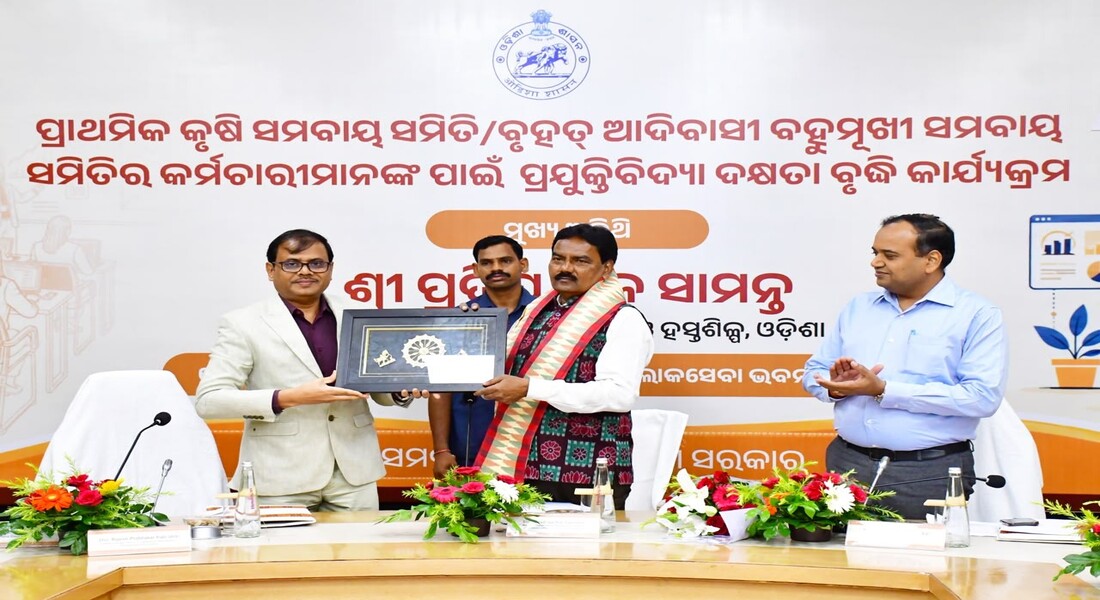
Odisha cooperation minister launches IT skill training for PACS, LAMPCS officials

Bhubaneswar: Odisha’s Minister of Cooperation, Handlooms, Textiles and Handicrafts, Pradeep Bal Samant, on Friday launched the IT Skill Enhancement Training Programme (OS-CIT) for Primary Agricultural Credit Societies (PACS) and Large-sized Agricultural Multi-Purpose Cooperative Societies (LAMPCS) officials across the state.

The programme was formally inaugurated at the State Convention Centre, Lok Seva Bhawan, with PACS/LAMPCS officials joining virtually from their respective Authorized Learning Centres across Odisha.

The training is being implemented by Odisha Knowledge Corporation Limited (OKCL) in collaboration with the state’s Cooperation Department, and aims to make Odisha’s cooperative sector more modern, technology-driven, transparent and self-reliant.

Under the programme, 5,422 officials from 2,711 PACS/LAMPCS across the state will be trained, with two officials enrolled from each institution. Registration has been completed, and formal training commenced the same day, delivered through 540 OKCL-authorized learning centres to ensure officials can train close to their respective areas.

The initiative comes as the Cooperation Department undertakes several digital transformation measures, including the National Level PACS Software (NLPS)/ERP-based digitisation of PACS, computerisation of Registrar of Cooperative Societies offices, and digitisation of cooperative records.

The OS-CIT training is designed to equip officials with basic computer knowledge, digital work processes, and IT skills to make cooperative institutions’ functioning faster and more transparent. The curriculum also includes a dedicated module on NLPS ERP to familiarise officials with the ERP environment they will use going forward.

With 5,422 officials from 2,711 PACS/LAMPCS covered, officials described the programme as the first initiative of its scale undertaken by any state in India, adding that its successful implementation could serve as a replicable model for similar digital skill enhancement programmes in other states.

The launch event was attended by Commissioner-cum-Secretary of the Cooperation Department Rajesh Prabhakar Patil, Registrar of Cooperative Societies Manish Agarwal, Additional Registrar of Cooperative Societies Bhaktabandhu Sahu, and OKCL Managing Director Dr Manoranjan Puthal, along with senior officials from various departments.

Summing up the initiative’s vision, officials said it aims to move “from technology to efficiency, from efficiency to empowerment, and from empowered cooperatives to empowered farmers.”

Odisha orders strict action against ganja cultivation on government land

Bhubaneswar: The Odisha government has ordered intensified and continuous monitoring of government land in six districts to prevent illegal ganja cultivation, while warning of strict action against revenue officials found assisting people involved in the illicit activity.

The Revenue and Disaster Management Department has issued directions to officials in Malkangiri, Koraput, Rayagada, Kandhamal, Boudh and Gajapati districts to remain vigilant and strengthen coordination at the field level.

Revenue and Disaster Management Department Additional Chief Secretary Dr Arabinda Kumar Padhee has directed the concerned district administrations to focus particularly on government revenue land where illegal ganja cultivation was detected and destroyed during the previous crop season.

According to the government, during the 2025-26 crop season, Odisha Police destroyed illegal ganja cultivation spread across 36,508.792 acres in 1,631 GPS-mapped plots under 41 police stations across the six districts. Of this, 6,632.197 acres were identified as government revenue land.

The police department has also shared GPS coordinates of locations where illegal ganja plantations were destroyed between November 2025 and March 2026. The state government plans to use these coordinates for systematic and continuous surveillance of the identified plots.

The government said there was a particular risk of illegal cultivators returning to the same government land every year, especially in remote and inaccessible areas. With the 2026-27 crop season beginning, field-level officials have therefore been instructed to keep special watch on locations where ganja cultivation was previously destroyed.

Tehsildars, additional tehsildars, revenue inspectors and revenue supervisors in the six districts have been directed to take coordinated action. They have also been asked to maintain village- and plot-wise records of vulnerable government land, including GPS coordinates, to facilitate timely detection and action.

If illegal ganja cultivation is found again on government revenue land, officials have been instructed to immediately inform the concerned police station, Special Task Force (STF) or Anti-Narcotics Task Force (ANTF).

The district administrations have also been directed to establish an internal reporting mechanism to ensure that information about illegal cultivation reaches law enforcement agencies without delay. The government has further asked revenue officials to maintain close coordination with the local police administration and ensure strict compliance with the instructions.

The department has also warned of action against official collusion. Dr Padhee said strict action would be taken if any revenue official was found assisting individuals or networks involved in illegal ganja cultivation.

The latest directive comes ahead of the current cultivation season and aims to prevent the reuse of government land previously cleared of illegal ganja plantations.

Odisha personnel honoured with gallantry and service medals

Bhubaneswar: A total of 1,057 personnel from Police, Fire, Home Guard & Civil Defence, and Correctional Services across the country have been awarded Gallantry and Service Medals on the occasion of Independence Day 2026.

Odisha has secured a significant share of these honours across its various service branches.

In the Police Service, five personnel from Odisha have been awarded the Medal for Gallantry (GM), two have received the President’s Medal for Distinguished Service (PSM), and 10 have been conferred the Medal for Meritorious Service (MSM).

In the Fire Service, one Odisha officer has been awarded the PSM, while two have received the MSM.

The Home Guard & Civil Defence wing of Odisha has seen one personnel honoured with the MSM, and the Correctional Service has recorded two MSM awardees from the state.

The Medal for Gallantry has been awarded to five Odisha Police personnel: Sub-Inspector Manmath Kumar Mohapatra, Havildar Nirakar Bhue, and Commandos Santosh Gurung, Suman Pun, and Suresh Chandra Puta.

In the Police Service category, Additional Director General Sanjeeb Panda and Deputy Superintendent of Police Smitarani Mohanty from Odisha have been named recipients of the President’s Medal for Distinguished Service.

From the Fire Service, Assistant Station Officer Malaya Kumar Mohanty of Odisha has also been awarded the PSM.

The DGP, Odisha congratulated the personnel who have been conferred the medals. In a post on X, Odisha Police said: “Congratulations to all the medal recipients and their proud families. Your exemplary service continues to inspire the entire Odisha Police fraternity. Salute to your courage. Salute to your service. Salute to your dedication.”

India pull out of ASEAN Cup 2026 to focus on Brazil friendly

New Delhi: India have withdrawn from the ASEAN Cup 2026 to prioritise their international friendly against Brazil in October. The All India Football Federation (AIFF) confirmed the decision on Thursday.

Announcing this, AIFF Deputy Secretary General M Satyanarayanan said that the federation pulled out of the FIFA ASEAN Cup because the team could not play both the Brazil match and the tournament.

The Blue Tigers were originally set to feature in the FIFA ASEAN Cup, a new international competition launched by FIFA for teams from the ASEAN region, with 2026 marking its inaugural edition. India had been invited as one of the non-ASEAN participants, according to olympics.com.

India were drawn in Division 1, Group A alongside higher-ranked nations Indonesia and Malaysia, as well as Singapore. The tournament was scheduled to run from September 21 to October 6, overlapping with the first FIFA international window of the traditional season.

However, India’s friendly against five-time FIFA World Cup champions Brazil, confirmed last month for October 3 at Kolkata’s Salt Lake Stadium, created a scheduling clash.

The AIFF had earlier considered sending a separate squad to the ASEAN Cup but eventually decided to withdraw from the tournament entirely.

Following the pullout, India are now looking at friendlies against teams that featured at the 2026 FIFA World Cup.

NITI Aayog report names 4 key sectors for India’s manufacturing push

New Delhi: NITI Aayog has released a report titled “Key Sectors to Position India as a Global Manufacturing Hub.” The report identifies major sectors that could drive India’s ambition to become a global manufacturing powerhouse.

The study analysed four sectors in this edition. These include chemicals, textiles, telecom and networking equipment, and solar photovoltaic manufacturing. Reports on eight more sectors will follow in subsequent editions, according to an official statement.

The assessment examined India’s manufacturing landscape against global trends and benchmarks. It looked at market potential, infrastructure readiness, policy support, raw material availability, and technology readiness. Employment potential and India’s current position in the value chain were also considered.

The study was carried out in four phases. The first phase shortlisted sectors based on their growth potential in domestic and global markets. The second phase conducted a detailed assessment of market potential, competitiveness, and strategic relevance. The third phase benchmarked international best practices from top-performing countries. The fourth phase developed actionable, sector-specific recommendations and a roadmap forward.

Chemicals sector: The report noted that India’s chemicals industry is led by three segments: petrochemicals and organic chemicals, specialty chemicals, and inorganic chemicals. Petrochemicals and organic chemicals form the largest segment.

The report also said India has significant scope to boost domestic value addition by expanding downstream production and improving feedstock utilisation. It called for greater investment in competitiveness and strategic use of free trade agreements to cut import dependence.

Textiles sector: The textile and apparel industry contributes nearly 2% to India’s GDP and 11% to manufacturing GVA, the report said. It accounts for 9% of merchandise exports and is the second-largest employer after agriculture, supporting more than 45 million livelihoods.

India exported textile products worth USD 37.7 billion in fiscal 2025. This gave the country a 4.1% share of global textile and apparel exports, making it the sixth-largest textile exporter worldwide.

The report recommended improving raw material availability, scaling manufacturing infrastructure, and deepening trade integration. It also called for a push on technical textiles, man-made fibre products, and premium Indian weaves.

Telecom and networking equipment sector: India is currently the world’s second-largest telecom market, with over 1.2 billion subscribers and around 85% telecom penetration, the report said. Internet usage stands at nearly 75%.

The National Telecom Policy 2025 aims to double the sector’s GDP contribution and export earnings by 2030. It also targets creating one million new jobs and raising investment and R&D spending.

The report called for deeper localisation, stronger domestic component manufacturing, and more joint ventures and technology transfers in the sector.

Solar PV sector: India had installed 106 GW of solar capacity by March 2025, the report noted. The country needs to add about 174 GW more to hit its 2030 target of 280 GW.

The domestic solar PV market, valued at around Rs 32,400 crore, is projected to grow 17-20% annually between fiscal 2023 and fiscal 2030. The report cited technology partnerships, R&D support, and integrated clean-tech clusters as key priorities to reduce import dependence.

The report described itself as a guide for strengthening India’s manufacturing ecosystem over time, calling for coordinated efforts between industry and government.