At IndiaVerve, we go beyond the noise to bring you meaningful stories of change, resilience and progress—from India to the world stage. Our mission is to bring readers credible, wide-ranging coverage across politics, business, sports, culture, society and more.

Odisha steps up fertilizer enforcement, raids 11,684 shops during Kharif season

Bhubaneswar: The Odisha government has intensified enforcement against black marketing, hoarding and diversion of fertilizers during the ongoing Kharif 2026-27 season.

Deputy Chief Minister and Agriculture & Farmers’ Empowerment Minister Kanak Vardhan Singh Deo has adopted a zero-tolerance approach towards unfair practices in fertilizer distribution.

The government has formed district-level and block-level enforcement squads to prevent black marketing, hoarding and the sale of substandard fertilizers.

Inspection teams and flying squads comprising senior officials from the Revenue, Agriculture and Police departments are conducting regular raids at wholesale and retail fertilizer shops across the state.

Action is being taken under the Fertilizer Control Order, 1985 and the Essential Commodities Act, 1955, wherever irregularities are detected.

During the current financial year, enforcement teams have conducted raids at 11,684 fertilizer shops across Odisha.

Show-cause notices have been issued to 2,774 persons, while fertilizer sales by 321 dealers have been temporarily suspended.

The licences of 170 dealers have also been suspended for allegedly resorting to unfair practices. Licences of 96 dealers have been cancelled.

Officials have seized fertilizer stocks belonging to 12 dealers. Criminal cases have also been registered against seven of them.

The government said enforcement action has increased substantially compared with 2025-26.

Last year, officials conducted raids at 9,017 fertilizer shops. Show-cause notices were issued to 2,373 individuals, while sales by 48 dealers were halted.

The licences of 53 dealers were suspended or revoked during 2025-26. Fertilizer stocks from 15 dealers were also seized, while legal cases were filed against nine people.

The government said the increased enforcement has made it easier and more affordable for farmers to purchase chemical fertilizers.

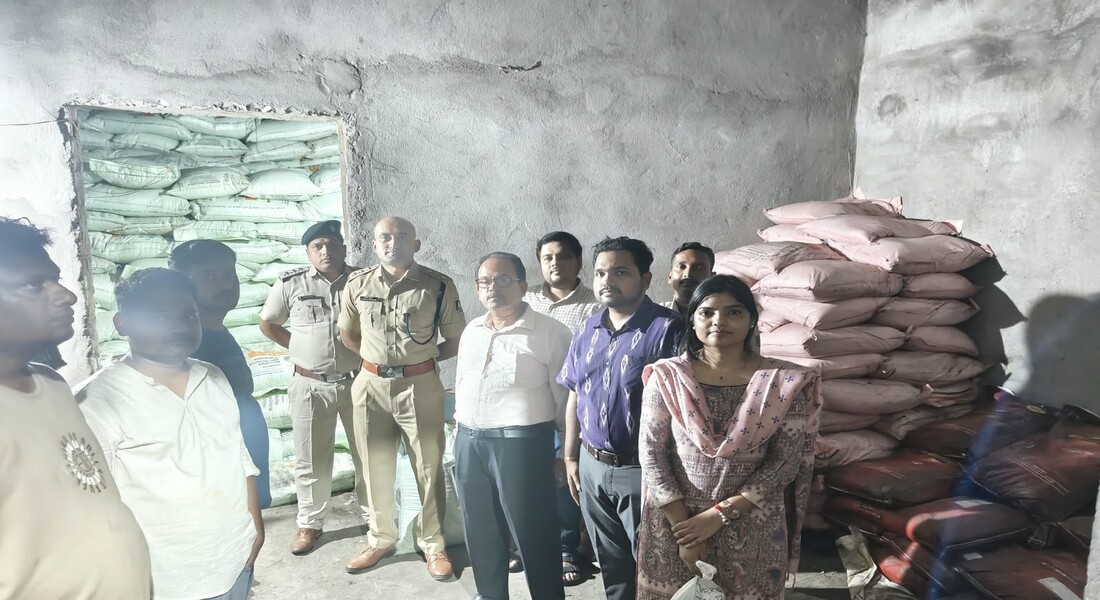
A joint raid was conducted at Maa Sabitri Agro Agency in Baliguda Sub-Division of Kandhamal district on August 29.

The raid involved the Tahasildar, Agriculture Department officials, and Police. Officials seized 700 bags of DAP fertilizer and cancelled the shop’s licence.

A criminal case was also registered, while the investigation is continuing.

Raids have also been underway at fertilizer shops in Manamunda Block of Boudh district for the past two days.

The inspections followed information received from multiple sources. Officials are collecting statements from farmers during the inspections.

The Chief District Agriculture Officer of Boudh said appropriate action would be taken if allegations of black marketing or other irregularities are confirmed.

The Odisha government said adequate quantities of fertilizers are available at selling points across the state and there is no need for panic.

The government is closely monitoring fertilizer supply during the Kharif season and has reiterated its commitment to regulating distribution effectively.

Farmers have been advised not to panic over rumours and to purchase fertilizers only from authorised shops at controlled prices.
Japan rating agency upgrades India’s sovereign rating to ‘A-’ with stable outlook

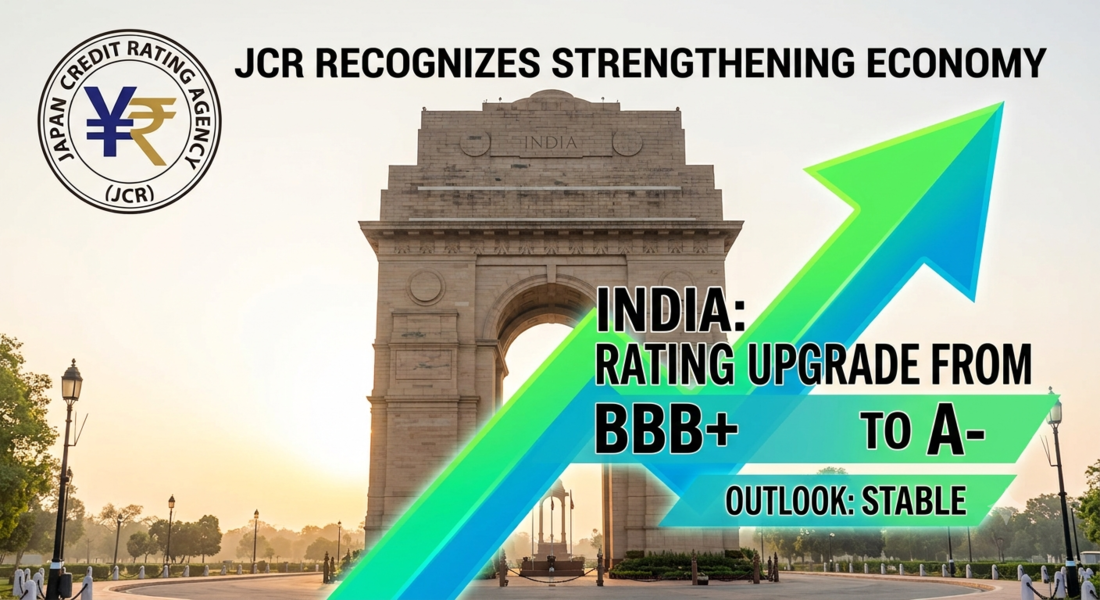
New Delhi: The Japan Credit Rating Agency (JCR) has upgraded India’s Long-Term Foreign Currency and Local Currency Issuer Ratings by one notch from ‘BBB+’ to ‘A-’, while maintaining a Stable Outlook.

JCR has also raised India’s country ceiling by one notch to ‘A’. The Indian government welcomed the rating upgrade, describing it as recognition of the country’s strengthening economic fundamentals, according to an official statement.

The upgrade reflects India’s strong economic growth, effective economic policies and an improving financial system, according to JCR.

The agency noted that India has maintained a high growth rate, supported by robust private consumption and public investment. Real GDP growth stood at 7.8% in FY26, according to the latest estimates released by the Ministry of Statistics and Programme Implementation.

India also maintained a real GDP growth rate of 7.8% in the first quarter of FY27 despite global economic headwinds.

JCR highlighted the government’s policies to support productivity and long-term economic development. These include developing digital public infrastructure and implementing the Goods and Services Tax.

The rating agency also recognised improvements in the quality of government expenditure, particularly the continued focus on capital expenditure and infrastructure investment.

India’s central government fiscal deficit declined from 4.7% of GDP in FY25 to 4.4% in FY26, while capital expenditure remained at a high level.

JCR said these developments have contributed to strengthening the foundations of India’s economic growth.

The agency also pointed to a significant improvement in the overall soundness of India’s financial system.

The asset quality of the banking sector has improved, supported by measures including the Insolvency and Bankruptcy Code, government capital infusion and stronger supervision by the Reserve Bank of India.

Banking sector capital adequacy and profitability have also remained sound. JCR noted that asset quality and capital adequacy in the non-banking financial sector have improved as well.

JCR said India’s current account deficit remains contained, supported by a surplus in the services balance.

The agency also highlighted India’s foreign exchange reserves, which remain significantly higher than short-term external debt. This provides the country with resilience against external economic and financial shocks.

The latest upgrade comes amid a challenging global economic environment. It reflects the continued strengthening of India’s economic fundamentals, supported by sustained growth, fiscal improvements, effective policies and a stronger financial system.

India has also received sovereign rating upgrades from other international agencies in recent years. Morningstar DBRS upgraded India’s sovereign rating in May 2025, followed by S&P Global Ratings in August 2025 and Japan’s Rating and Investment Information, Inc. in September 2025.

Odisha flags off first senior citizen pilgrimage train of 2026-27

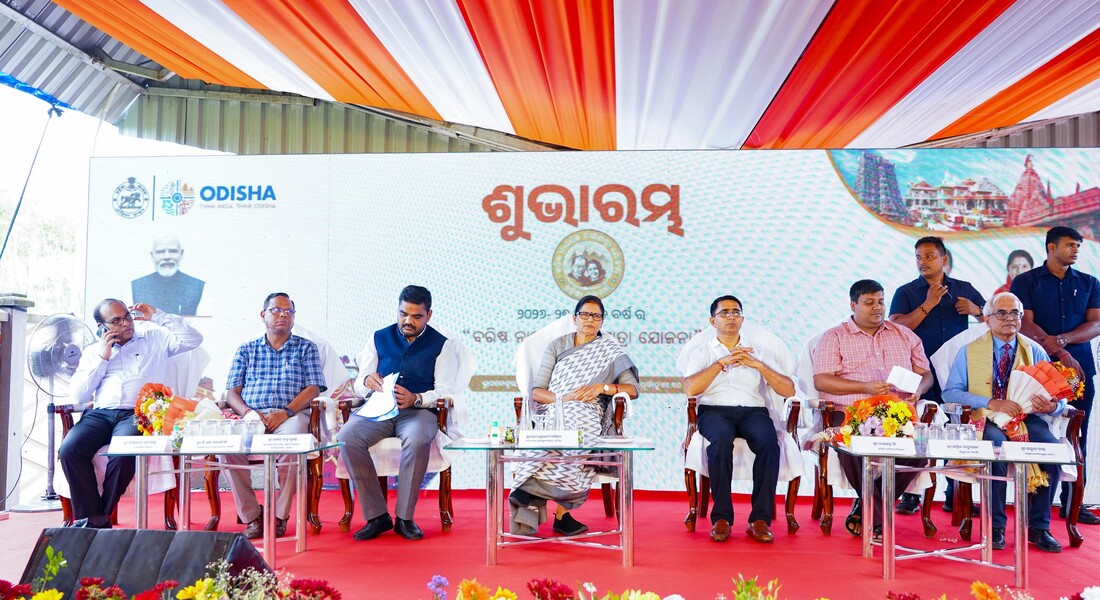
Bhubaneswar: Odisha Deputy Chief Minister Pravati Parida on Wednesday flagged off the first senior citizen pilgrimage train of the financial year 2026-27 from Bhubaneswar New Railway Station.

The special train is carrying 775 eligible pilgrims to Varanasi and Ayodhya under the Mukhyamantri Baristha Nagarik Teertha Yatra Yojana.

The train was flagged off at 11 am. The pilgrims will visit important religious destinations, including Kashi Vishwanath and Ayodhya. The pilgrimage will also provide them with an opportunity to witness the Ganga Aarti and visit the Ram Lalla temple.

Parida extended her wishes to the pilgrims for a safe and spiritually fulfilling journey. She said the pilgrimage from Odisha to Varanasi and Ayodhya would offer senior citizens a memorable religious and cultural experience.

She also highlighted the role of the scheme in enabling senior citizens from different districts to visit major pilgrimage destinations across the country. The initiative also helps them understand the cultural and spiritual significance of these places, she said.

The first phase of the pilgrimage includes senior citizens from six districts of Odisha.

Cuttack has the highest participation with 197 pilgrims, followed by Khordha with 169. Puri has sent 127 pilgrims, while Kendrapara has 108. Jagatsinghpur and Dhenkanal have 85 and 89 pilgrims, respectively.

Of the total 775 pilgrims, 333 are women, and 442 are men.

The government has also deployed 25 escort officers to accompany the pilgrims during the journey. The arrangements are aimed at ensuring their safety, comfort and well-being throughout the pilgrimage.

Industries, Skill Development and Technical Education Minister Sampad Chandra Swain and Kendrapara MLA Ganeshwar Behera also attended the flag-off event.

Both extended their greetings and wished the pilgrims a safe and successful journey. Railway tickets and kit bags were ceremonially distributed to the senior citizens.

Tourism Commissioner-cum-Secretary Balwant Singh, Khordha Collector Amrit Ruturaj, Additional DRM of Khurda Road Division Pradip Kumar Behera, IRCTC Regional Manager Anuj Dutta and Tourism Director Dipankar Mahapatra were among the officials present.

Under the Mukhyamantri Teertha Yatra Yojana, 8,000 senior citizens are scheduled to undertake pilgrimage journeys during 2026-27.

The journeys will be organised in 10 phases and will cover several major religious destinations.

The destinations under the programme include Ayodhya, Varanasi, Haridwar, Rishikesh, Rameswaram and Madurai.

Odisha calls for women-centric urban mobility planning to make cities safer

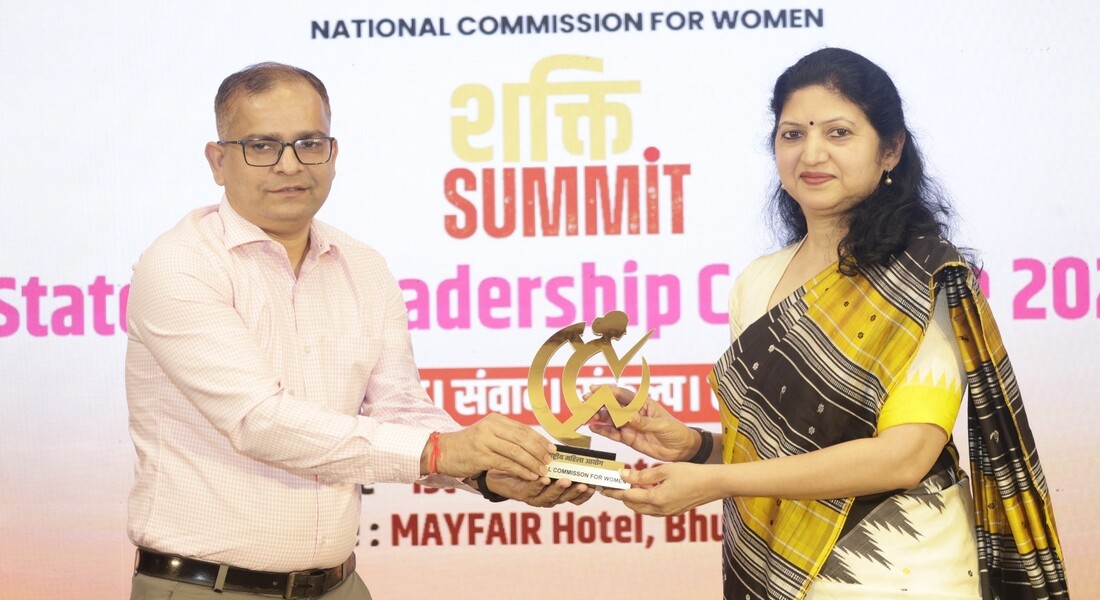
Bhubaneswar: Odisha Additional Chief Secretary, Housing & Urban Development Department, Usha Padhee, has called for placing women’s safety, accessibility and participation at the centre of urban mobility planning.

Padhee made the remarks while addressing the Shakti Summit 2026: State WCD Leadership Conclave at a Bhubaneswar hotel. She spoke on the theme, “Initiatives by Odisha towards Gender Mainstreaming in Urban Mobility.”

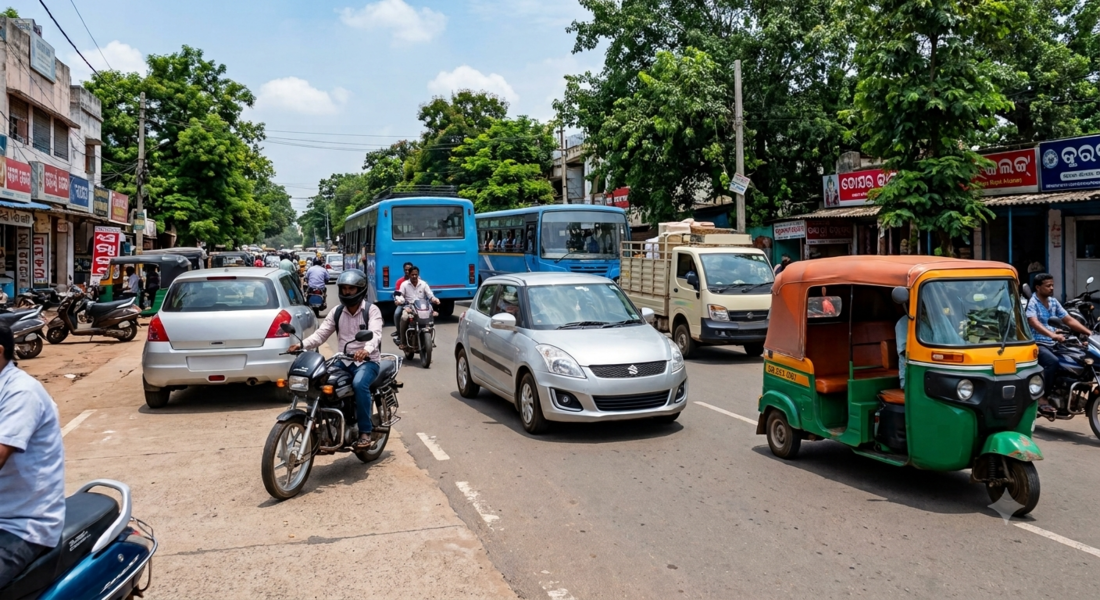
She stressed the need for a comprehensive women-centric approach to planning and delivering urban transport services across Odisha.

According to Padhee, mobility is not limited to travelling from one place to another. Safe and reliable transport plays a key role in enabling women to access education, employment, entrepreneurship, healthcare and social opportunities.

She said a city cannot be considered truly inclusive unless women feel safe and confident while moving around it.

Padhee highlighted several key elements of women-friendly urban mobility. These include safe public transport, accessible infrastructure, pedestrian-friendly roads, adequate street lighting, safer public spaces and convenient last-mile connectivity.

She also emphasised that gender mainstreaming should begin at the planning stage and continue through implementation and service delivery.

During the session, Padhee introduced her female driver to the audience. She presented her as an example of women entering professions traditionally considered male-dominated.

Padhee said gender mainstreaming should extend beyond policies and official documents. She emphasised that it should also be reflected in everyday life and in the people delivering public services.

She highlighted the importance of greater participation of women as drivers, transport personnel, planners, technology professionals and other service providers.

According to her, increasing women’s representation across the mobility workforce can help create more responsive transport services. It can also strengthen the sense of safety and confidence among women passengers.

Padhee also stressed the need to incorporate women’s experiences while designing urban infrastructure.

She said the most effective way to design cities for women is to listen to women themselves. She called for greater consultation, evidence-based planning and continuous feedback from women using public transport and public spaces.

She further said Odisha’s approach to gender-responsive urban mobility should form part of a broader vision for inclusive and people-centric urban development.

Under this approach, infrastructure, technology and governance should work together to make cities safer, more accessible and more liveable.

The address highlighted that gender-responsive urban mobility is not only about helping women travel safely. It is also about enabling them to participate fully in the economic, social and civic life of cities.

Odisha fixes compounding fees for driving without a valid PUCC

Bhubaneswar: The Odisha government has fixed new compounding fees for vehicles found operating in public places without a valid Pollution Under Control Certificate (PUCC).

The Commerce & Transport Department has issued a notification under Section 200(1) of the Motor Vehicles Act, 1988.

The notification applies specifically to offences involving the expiry of a valid PUCC. It covers vehicles driven, or allowed to be driven, in public places without the certificate required under Rule 115(7) of the Central Motor Vehicles Rules, 1989.

Under the new fee structure, motorcycles and three-wheelers will attract a compounding fee of Rs 1,000 for the first offence. The amount will rise to Rs 2,000 for a second or subsequent offence.

For motor cabs and motor cars or jeeps, the fee has been fixed at Rs 2,000 for the first offence and Rs 5,000 for subsequent offences.

The same fee structure will apply to tractors and trailers, with Rs 2,000 for the first offence and Rs 5,000 for a second or subsequent offence.

For all other vehicles, including transport vehicles not covered in the specified categories, the compounding fee will be Rs 3,000 for the first offence. A second or subsequent offence will attract Rs 6,000.

The notification makes clear that the revised fee structure is limited to offences arising from the expiry of a valid PUCC.

Odisha assigns secretaries and senior officers to districts for field visits

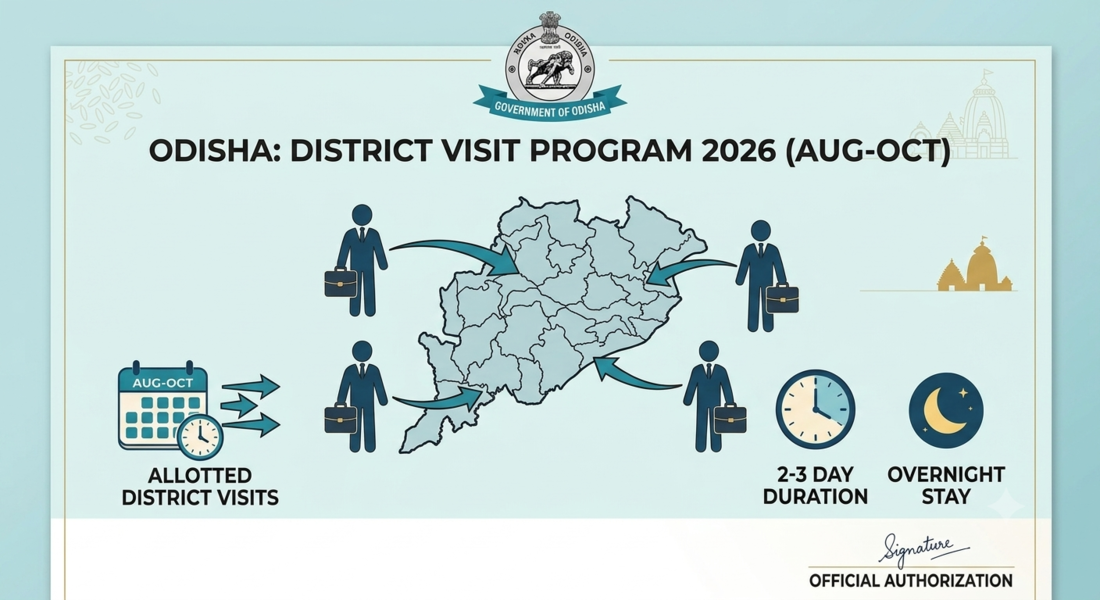
Bhubaneswar: The Odisha government has assigned districts to Secretaries and senior officers for field visits as part of its District Visit Programme for August-October 2026.

The programme has been outlined in a letter issued by Development Commissioner-cum-Additional Chief Secretary Deoranjan Kumar Singh on Tuesday.

Under the programme, Secretaries and senior officers have been allotted districts. They have been encouraged to plan a two- to three-day visit to their allotted district at least once during the period.

The officers have also been advised to spend one night at the district or subdivisional headquarters during their visit.

The visits will focus on reviewing the implementation of various people-oriented schemes and programmes of the state government and Centrally Sponsored Schemes.

Officers will supervise the implementation of important government schemes and programmes. They will also interact with people from different walks of life to assess the effective delivery of public services and implementation of infrastructure projects.

During their district visits, officers will visit District Headquarters Hospitals, PHCs and CHCs. They will interact with patients and attendants and assess the availability of essential services, human resources, and medicines.

Special attention will be given to fire safety compliance, emergency preparedness and the overall quality of healthcare delivery.

The officers have also been directed to randomly select areas for visits, including inaccessible, hard-to-reach and tribal-dominated areas. Where required, they may visit such areas on foot.

They will review schemes relating to Particularly Vulnerable Tribal Groups (PVTGs) and may identify strategic issues in the districts for follow-up at the State level by the concerned officers.

As part of the programme, officers may visit at least one Gram Panchayat in their allotted district. They will assess the level of saturation in the coverage of various development and welfare programmes aimed at providing basic facilities to people in the Gram Panchayat.

The Secretaries will also review the progress of ongoing drinking water supply projects during their district visits.

They have been asked to identify bottlenecks and communicate specific issues causing delays to the Secretary, PR&DW or H&UD, as applicable, for timely resolution.

The programme places emphasis on the early completion of Functional Household Tap Connections to benefit the rural population.

Shakti Sharma becomes first non-medical woman Air Vice Marshal

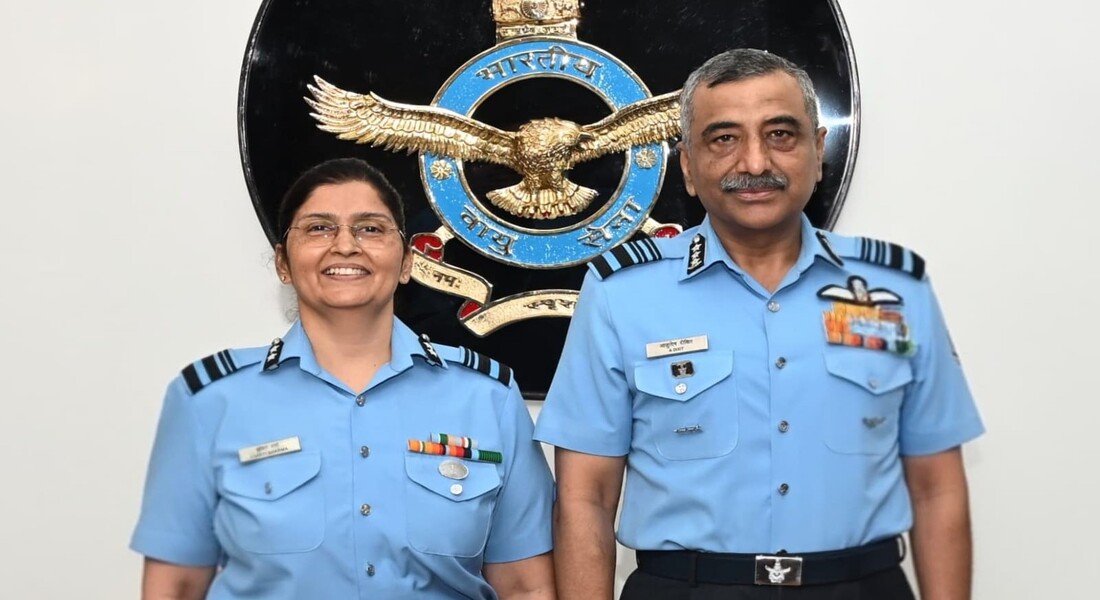
New Delhi: Air Vice Marshal Shakti Sharma has become the first woman officer from the non-medical stream in the Indian Defence Forces to attain the rank of Air Vice Marshal or equivalent.

She assumed the appointment of Assistant Chief of the Air Staff (Education) at Air Headquarters on Tuesday.

Commissioned into the Education Branch of the Indian Air Force on June 18, 1994, Sharma brings more than three decades of experience to her new role, according to an official statement.

During her career, she has served across training establishments, field stations, command headquarters, and Air Headquarters.

She has also led key institutional initiatives, including the establishment of IAF Chairs of Excellence at IIT Kanpur and Pune University. These initiatives aimed to strengthen academic and strategic defence collaboration.

Sharma also became the first woman officer from the Tri-Services to command a Sainik School. She served as the Principal of Sainik School, Kapurthala.

Her elevation to the rank of Air Vice Marshal marks a significant milestone in the journey of women officers in the Indian Defence Forces.

With more than three decades of distinguished service, Sharma continues to inspire generations of women officers to “Touch the Sky with Glory”.

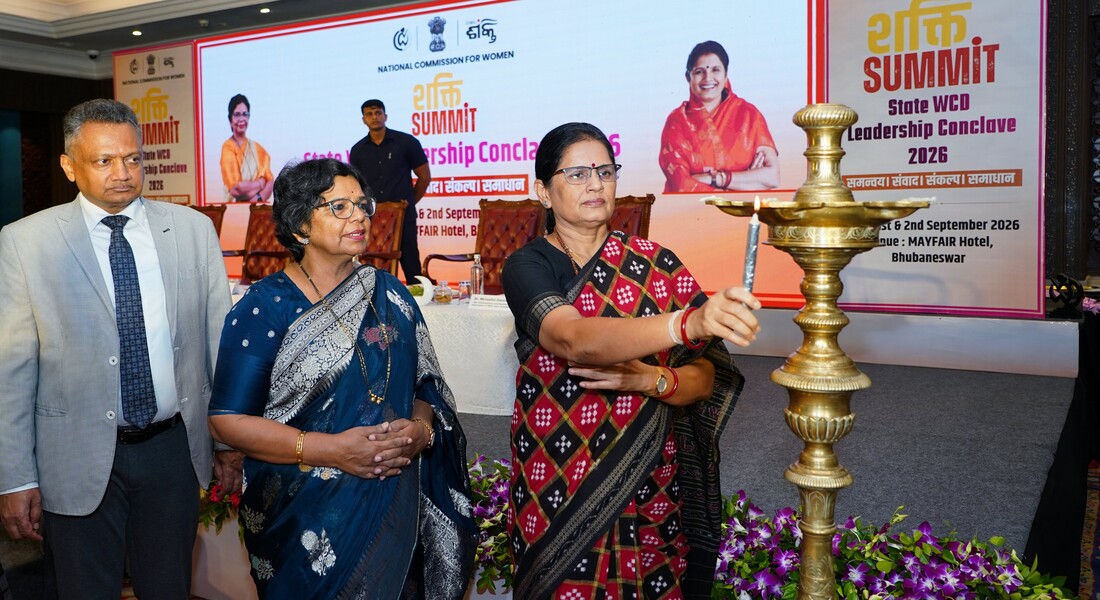
Shakti Summit brings 22 states and UTs together in Bhubaneswar

Bhubaneswar: Odisha Deputy Chief Minister Pravati Parida on Tuesday inaugurated the Shakti Summit in Bhubaneswar, bringing together senior officials from 22 States and Union Territories to strengthen collective action on women’s safety, protection and empowerment.

Addressing the inaugural session as the Chief Guest, Parida said women’s safety and empowerment must be pursued together through strong institutions, effective implementation and collective responsibility.

She said the Shakti Summit provides an important platform for States and the Centre to learn from each other, strengthen convergence and ensure that every woman can live with safety, dignity and opportunity.

The summit has been organised by the National Commission for Women (NCW) in collaboration with the Odisha government.

It brings States and Union Territories together to share effective practices, identify implementation gaps and explore actionable strategies to strengthen institutional mechanisms for women’s safety, protection and empowerment.

NCW Chairperson Vijaya Rahatkar outlined the vision of the summit and emphasised the need for sustained collective action and stronger institutional mechanisms to advance women’s safety and empowerment across the country.

NCW Member Secretary Sudeep Jain, Odisha Women & Child Development Department Commissioner-cum-Secretary Mrinalini Darswal and Mission Shakti Secretary Manasi Nimbhal were also present at the inaugural session.

The summit saw participation from 29 senior officers at the level of Secretary, Commissioner, Director and Joint Director representing 22 States and Union Territories.

The participating States and UTs are Andhra Pradesh, Assam, Bihar, Chhattisgarh, Gujarat, Haryana, Karnataka, Kerala, Madhya Pradesh, Maharashtra, Odisha, Punjab, Sikkim, Tamil Nadu, Tripura, Uttar Pradesh, Uttarakhand, West Bengal, Delhi, Jammu & Kashmir, Chandigarh and Telangana.

The deliberations at the Shakti Summit will focus on strengthening implementation mechanisms, sharing successful state-level interventions and fostering institutional collaboration to address emerging challenges concerning women’s safety and protection.

The summit will also provide an opportunity for States and Union Territories to learn from one another and identify areas for greater convergence in efforts towards women’s empowerment.