At IndiaVerve, we go beyond the noise to bring you meaningful stories of change, resilience and progress—from India to the world stage. Our mission is to bring readers credible, wide-ranging coverage across politics, business, sports, culture, society and more.

BRICS backs UN reform, greater Global South representation in New Delhi Declaration

NEW DELHI: BRICS leaders have reiterated their call for comprehensive reform of the UN, including the Security Council, while backing greater representation of developing countries in global decision-making structures in the New Delhi Declaration adopted at the 18th BRICS Summit.

The leaders, who met in New Delhi from September 12 to 13 under India’s 2026 BRICS Chairship, reaffirmed their commitment to the BRICS spirit of mutual respect, sovereign equality, solidarity, democracy, openness, inclusiveness, collaboration and consensus.

In the declaration, the BRICS countries said global governance should become more just, equitable, representative, democratic, accountable, effective and responsive, while reaffirming their commitment to multilateralism, multipolarity and international law.

The leaders reiterated their support for greater and more meaningful participation and representation of emerging markets and developing countries (EMDCs) and least developed countries, particularly from Africa, Asia and Latin America and the Caribbean, in global decision-making processes and structures, according to an official statement.

They also called for equitable geographical representation in the UN Secretariat and other international organisations, particularly at senior and decision-making levels, and stressed the need to increase the participation of women, especially from EMDCs, in leadership positions.

The declaration noted that no woman has ever been elected as UN Secretary-General. It also pointed out the limited regional representation in the position, noting that only one national from Latin America and the Caribbean, and only two nationals each from Africa and Asia, have occupied the post.

BRICS leaders also reiterated their support for reform of the UN Security Council to make it more democratic, representative, effective and efficient. China and Russia, as permanent members of the Security Council, reiterated their support for the aspirations of Brazil and India to play a greater role in the UN, including its Security Council.

The leaders said Security Council reform should amplify the voice of the Global South and recognised the legitimate aspirations of African countries as reflected in the Ezulwini Consensus and Sirte Declaration.

On sustainable development, the BRICS countries reaffirmed their commitment to implementing the 2030 Agenda for Sustainable Development and described poverty eradication in all its forms and dimensions, including extreme poverty, as the greatest global challenge and an indispensable requirement for sustainable development.

They also recognised inequality within and among countries as a major underlying challenge and took note of a proposal by South Africa and Brazil to establish an international panel on inequality.

The declaration further called for reform of global economic governance and the Bretton Woods Institutions to make them more representative, transparent, accountable, inclusive and reflective of changes in the global economy.

BRICS leaders reaffirmed their commitment to IMF quota and governance reform, including meaningful quota realignment under the 17th General Review of Quotas. They said quota realignment should reflect countries’ relative positions in the global economy and increase the quota and voting shares of emerging markets and developing countries without coming at the expense of developing countries.

The leaders also backed greater voice and representation of developing countries in the World Bank and reaffirmed their support for reform of the World Trade Organization and strengthening of a non-discriminatory, open, equitable, transparent, fair, inclusive, predictable and rules-based multilateral trading system.

They strongly advocated the immediate restoration of an accessible, effective and fully functioning two-tier binding WTO dispute settlement mechanism and called for the appointment of new Appellate Body members without further delay.

BRICS also expressed support for Ethiopia and Iran’s bids for accession to the WTO and acknowledged China’s expansion of zero-tariff treatment to 53 African countries with which it has diplomatic ties.

The declaration recalled the 1955 Asian-African Conference in Bandung and said the Bandung Spirit should serve as a reference in pursuing a fairer, more inclusive and representative multilateral system.

The leaders also reiterated their commitment to combating racism, racial discrimination, xenophobia and related intolerance, as well as discrimination based on religion, faith or belief, while expressing concern over rising hate speech, disinformation and misinformation.

The declaration welcomed the adoption of UN General Assembly Resolution 80/250 on the declaration of the trafficking of enslaved Africans and racialised chattel enslavement of Africans as the gravest crime against humanity. The leaders also called for the prompt and full implementation of UN General Assembly Resolution 79/115 of December 2024 to eradicate colonialism in all its forms and manifestations.

The leaders highlighted the role of BRICS in giving greater voice to the Global South and said multipolarity could create greater opportunities for emerging markets and developing countries to pursue inclusive, sustainable and equitable economic cooperation.

On India’s BRICS Chairship, the leaders welcomed more than 400 meetings and engagements involving ministers, parliamentarians, heads of agencies, officials, experts, businesses and people across 30 cities in India.

They also welcomed the convening of the BRICS Business Forum 2026 and initiatives including the BRICS Solutions Awards 2026 and BRICS Women’s Start-up Awards 2026.

The leaders commended the BRICS Business Council for its efforts to strengthen economic cooperation and welcomed its annual report and policy recommendations on trade, investment and resilient supply chains. They also welcomed the launch of the Sustainable Development Network.

The declaration recognised the role of the BRICS Women’s Business Alliance in promoting women’s entrepreneurship, leadership and economic participation and welcomed recommendations aimed at improving access to finance, markets, technology, skills development and digital opportunities for women-led enterprises.

The leaders also acknowledged the outcomes of the BRICS Think Tank Council, BRICS Civil Council, BRICS Academic Forum and BRICS Civil Forum and welcomed progress in strengthening dialogue among academic communities and civil society organisations.

They noted that BRICS expansion reflected its influence, credibility and appeal as an important platform for inclusive global governance. The leaders welcomed progress on establishing a BRICS Online Archival Database and looked forward to its early operationalisation.

The declaration also welcomed the convening of the XII BRICS Parliamentary Forum in October 2026, including meetings of women parliamentarians and international affairs committee chairpersons, to strengthen exchanges and cooperation among parliaments.

The leaders commended India’s BRICS Chairship in 2026 and expressed gratitude to the government and people of India for hosting the 18th BRICS Summit in New Delhi.

They extended full support to China for its BRICS Chairship in 2027 and for hosting the 19th BRICS Summit in China.


Hockey: India storm into AHF Junior Asia Cup final

Bhubaneswar: The Indian Junior Women’s Team stormed into the final of the AHF Junior Asia Cup 2026 with a commanding 5-1 victory over South Korea in the first semi-final in Moqi, China, on Saturday.

Drag-flick specialist Supriya was the star of India’s emphatic win, completing a hat-trick through three clinical penalty-corner conversions as the defending champions continued their impressive title defence.

India made a cautious start to the knockout contest but gradually found their rhythm and broke the deadlock in the 13th minute. Madhu Sidar finished off a well-constructed attacking move to put India 1-0 ahead.

The goal gave India greater momentum and the defending champions began asserting their control in the second quarter. Their pressure earned a penalty corner in the 17th minute, with Supriya producing a precise drag-flick to double India’s advantage.

India continued to dominate possession and territory, and their pressure produced another goal in the 21st minute. A well-directed aerial ball into the Korean 23-metre area was followed by a timely cross into the circle, which Sukhveer Kaur expertly converted to make it 3-0.

South Korea created a few opportunities before half-time, but India’s defence remained composed to take a three-goal advantage into the interval.

India resumed strongly after the break and extended their lead in the 33rd minute. Another penalty corner gave Supriya the opportunity to showcase her drag-flicking ability, and she made no mistake to score her second goal of the match and put India 4-0 ahead.

South Korea finally found a breakthrough in the 41st minute when Yuri Jeong converted from a set-piece to make it 4-1.

India, however, remained disciplined and denied South Korea any chance of mounting a comeback. The title-holders continued to attack with purpose and earned another penalty corner in the 56th minute.

Supriya once again delivered from the set piece, completing her hat-trick and sealing India’s comprehensive 5-1 victory.

India will now face the winner of the second semi-final between hosts China and Japan in the summit clash as the defending champions look to complete another successful title defence.

Koraput coffee takes Odisha’s local story to global BRICS stage

Bhubaneswar: From the hills and plantations of Koraput to a global gathering of nations, Odisha’s coffee is telling a story that goes beyond a cup.

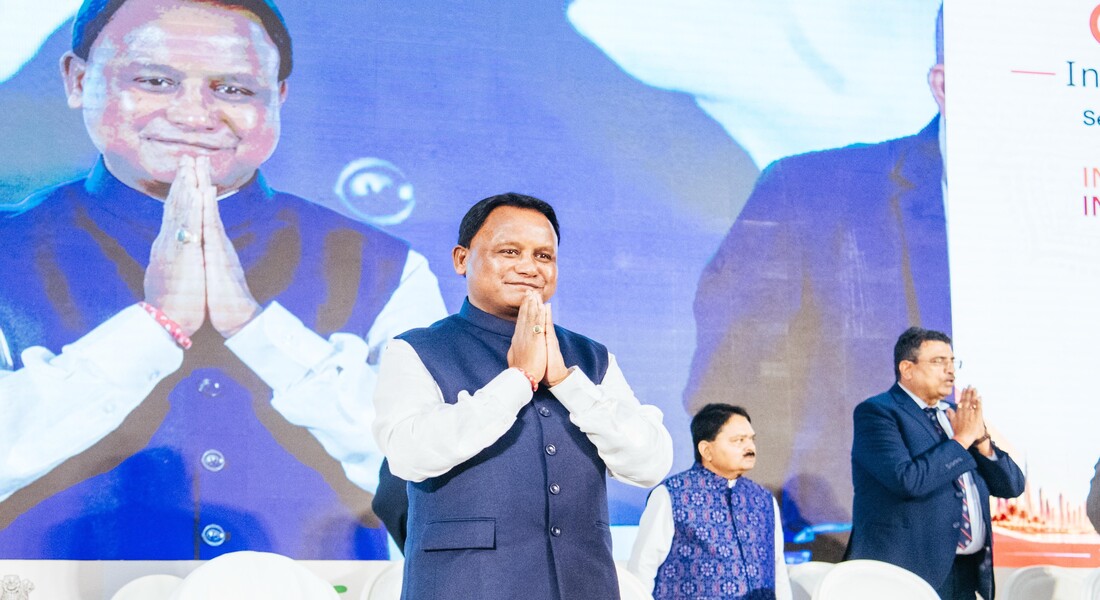
Odisha Chief Minister Mohan Charan Majhi said it was especially heartening to see Koraput Coffee showcasing another side of the State at the BRICS India 2026 Summit, describing the moment as a reflection of the true spirit of ‘Vocal for Local’.

In a lengthy post on X, Majhi said that over the past few days, he had been speaking about Odisha on global platforms, inviting the world to discover the opportunities, strength and potential of the State.

Against that backdrop, the presence of Koraput Coffee at the BRICS India 2026 Summit offered a different but equally powerful way of presenting Odisha to the world – through a product rooted in its soil and shaped by the work of its people.

The CM said the global recognition of Koraput Coffee was a matter of immense pride for him, particularly as it reflected the hard work of the people of Odisha and the richness of the State’s land.

He linked the moment with Prime Minister Narendra Modi’s vision of ‘Vocal for Local’, saying the initiative was about giving the strength of local products a place on the global stage.

For Odisha, the moment carries a simple message: the State’s story is not only about investment, industry and opportunity. It is also about the produce of its soil, the identity of its communities and the quiet work that can travel far beyond its place of origin.

Majhi said this was the Odisha he wanted the world to know – rooted in its soil, proud of its identity and confident in sharing its story with the world.

IHCL expands business in Odisha, signs Gateway hotel in Sambalpur

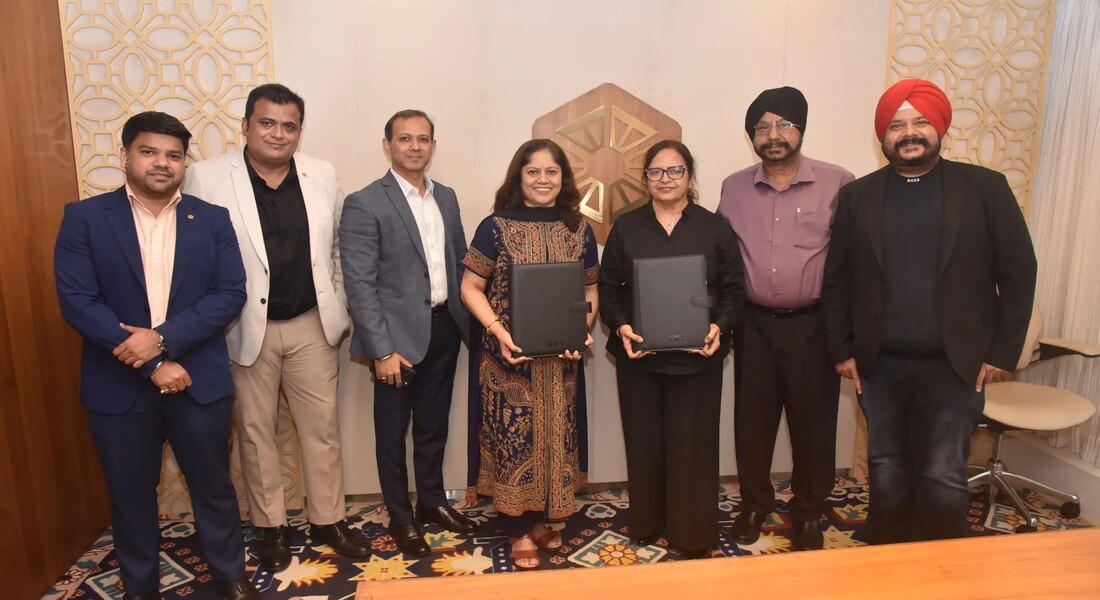
Bhubaneswar: Indian Hotels Company Limited (IHCL), the country’s largest hospitality company, has expanded its footprint in Odisha by signing a Gateway hotel in Sambalpur.

With the addition of the new hotel, IHCL will have eight hotels in Odisha, including three under development. The Sambalpur hotel is a greenfield project, IHCL said in a press release.

The 125-key Gateway Sambalpur will feature an all-day dining restaurant, a speciality restaurant and a bar, along with a fully equipped gym and swimming pool.

For weddings and social events, the hotel will have a banquet space spanning over 10,000 sq.ft, along with multiple meeting rooms for conferences.

Suma Venkatesh, Executive Vice President – Real Estate & Development, IHCL, said the re-imagined Gateway proposition of authentic local experiences and contemporary comfort resonates strongly with travellers in emerging markets.

She said Sambalpur has evolved as a key business and economic hub in Odisha, supported by a growing industrial ecosystem and increasing demand for business travel, conferences, weddings and social events. Venkatesh also said IHCL was pleased to partner with Shamsher Singh Hura for the hotel project.

Shamsher Singh Hura of JAS Group said the company was delighted to partner with IHCL to bring the Gateway brand to Sambalpur.

He said Sambalpur’s growing prominence as a commercial, cultural and tourism destination was driving increasing demand for quality hospitality. Hura said the hotel would set a new benchmark for the region by offering contemporary hospitality while celebrating the rich heritage and distinctive character of Western Odisha.

He added that the company looked forward to creating a landmark destination for both business and leisure travellers.

Sambalpur, located on the banks of the Mahanadi River, is a cultural, educational and industrial centre of Odisha, known for its historic temples and proximity to the iconic Hirakud Dam. The city is home to leading educational institutions and serves as the headquarters of Mahanadi Coalfields Limited.

The IHCL and its subsidiaries bring together a group of brands and businesses offering a combination of warm Indian hospitality and world-class service.

Its portfolio includes Taj, Claridges Collection, Brij, Atmantan, SeleQtions, Gateway, Vivanta, Tree of Life and Ginger.

Taj is the company’s iconic brand for discerning travellers and was ranked World’s Strongest Luxury Hotel Brand 2026 and India’s Strongest Brand 2026 by Brand Finance.

Gateway comprises full-service hotels designed to offer access to exceptional destinations, while Vivanta operates in the upscale hospitality segment. Tree of Life offers private escapes in tranquil settings, while Ginger operates in the mid-scale segment.

Odisha secures Rs 2.42 lakh crore in proposed investments in three-day UAE outreach

Bhubaneswar: Odisha has concluded a three-day investment outreach in the UAE with proposed investments of Rs 2,42,162 crore and employment potential of 6,18,725, as the State stepped up its global efforts to attract capital, technology, manufacturing partnerships and access to international markets.

Led by Chief Minister Mohan Charan Majhi, the three-day programme across Abu Dhabi and Dubai resulted in eight Memoranda of Understanding (MoUs) and 16 Investment Intents, following 26 one-to-one investor meetings and six round-table engagements involving 160 participants.

The outreach brought together UAE-based investors, global business leaders, sovereign and institutional stakeholders, Indian diplomatic representatives and members of the Odia diaspora, creating a platform for direct engagement on investment opportunities and long-term economic partnerships with Odisha.

The concluding day centred on the Odisha Investors’ Meet – UAE 2026 in Dubai, which was attended by around 400 business leaders, investors and members of the UAE business community.

The event provided a direct platform for Odisha to present its investment proposition and for global businesses to explore opportunities to establish or expand their presence in the State.

The day’s investment engagements covered a wide range of sectors, including travel and tourism, logistics, financial investment, LNG storage, green energy, artificial intelligence and data centres, rare earths, ship repair, propellant manufacturing, fertilisers and chemicals, housing, steel and steel downstream industries and other emerging opportunities.

Traditional mining and mineral sectors continued to remain important, while processed food was highlighted as another major opportunity area for investment.

CAZBAA Project Ventures FZCO signed an MoU for LNG storage, while Rana Holdings Limited signed an MoU covering green energy, AI data centres and rare earths.

Sharaf Group entered into an MoU in the housing sector, while PTCL Infrastructure signed an MoU for steel and steel downstream industries.

Investment Intents were received from Dalwin Marine and Turbo Power Engineering for ship repair, Ion Technologies Pvt. Ltd. for a propellant manufacturing plant, and Agrifields FZCO for fertilisers and chemicals.

Alongside the Investors’ Meet, Majhi held one-to-one meetings with leading UAE-based business leaders and investors. The discussions focused on project opportunities, manufacturing footprints, value addition, technology partnerships and long-term investment opportunities in Odisha.

Following the Investors’ Meet, the CM interacted with the Odia diaspora in Dubai, where more than 800 Odias extended a grand welcome to him.

The gathering showcased Odisha’s rich cultural heritage through classical Odissi and traditional folk dances. The interaction also highlighted the strong cultural connection maintained by the Odia community in Dubai.

CM Majhi also appreciated the vibrant cultural connect maintained by the Odia community and highlighted the diaspora’s important role in strengthening Odisha’s global identity and preserving its cultural heritage.

The engagement also sought to strengthen the cultural, social and economic connect between Odisha and Odias living in the UAE, while encouraging the diaspora to contribute to the State’s investment, entrepreneurship, trade and development journey.

Odisha’s One District One Product offerings were also showcased during the programme, adding a distinctive cultural and enterprise dimension to the diaspora engagement. Participants experienced the State’s diverse local products and the entrepreneurial potential emerging from its districts.

The UAE outreach began in Abu Dhabi with high-level engagements involving government, sovereign, institutional and business stakeholders.

A major highlight was the strategic engagement involving International Holding Company and Adani Group, covering opportunities across critical minerals and rare earths, metals and metallurgy, chemicals and petrochemicals, renewable energy equipment, healthcare, industrial infrastructure, tourism, skill development and other strategic sectors.

The first day also featured an engagement with the Indian Business and Professional Group, institutional discussions on investment and infrastructure opportunities, and a focused interaction with Borouge on the potential development of a petrochemical downstream ecosystem in Odisha.

The second day expanded the outreach across several sectors, including IT and ESDM, agro and food processing, steel and downstream manufacturing, logistics, skilling, rare earths, circular economy, chemicals and aluminium.

MoUs and Investment Intents from a diverse group of companies broadened the pipeline of potential projects and partnerships across these sectors.

The CM also held high-level discussions with UAE leadership and industry representatives and visited Emirates Global Aluminium. The visit provided an opportunity to examine advanced aluminium manufacturing, technology and value-addition practices relevant to Odisha’s downstream industrial ecosystem.

Majhi also said Odisha is ready to move into a new phase of industrial growth built around value addition, technology, global partnerships and efficient project execution.

He highlighted the State’s natural resources, competitive energy availability, strategic ports, industrial infrastructure, skilled workforce and established industrial ecosystem as key advantages for investors.

The CM also emphasised that Odisha’s engagement with the UAE is intended to go beyond individual investments and build durable partnerships in manufacturing, trade, technology, exports, innovation, skills and entrepreneurship.

He invited UAE businesses to make Odisha a preferred destination for their next phase of growth in India.

Industries Minister Sampad Chandra Swain reiterated the state government’s commitment to “Speed, Certainty and Execution”. He assured investors of proactive facilitation and institutional support across the project lifecycle, from investment intent and approvals to implementation and expansion.

The three-day outreach brought together senior government officials, Indian diplomatic representatives and prominent business leaders, creating a platform for direct and sustained engagement between Odisha and the UAE business community.

Chief Secretary Anu Garg, ACS Industries, Home & I&PR Hemant Sharma, Ambassador of India to the UAE Dr. Deepak Mittal, Consul General of India in Dubai Dr. E. Bishnu Vardhan Reddy, senior government of Odisha officials and representatives of IPICOL participated in the engagements.