At IndiaVerve, we go beyond the noise to bring you meaningful stories of change, resilience and progress—from India to the world stage. Our mission is to bring readers credible, wide-ranging coverage across politics, business, sports, culture, society and more.

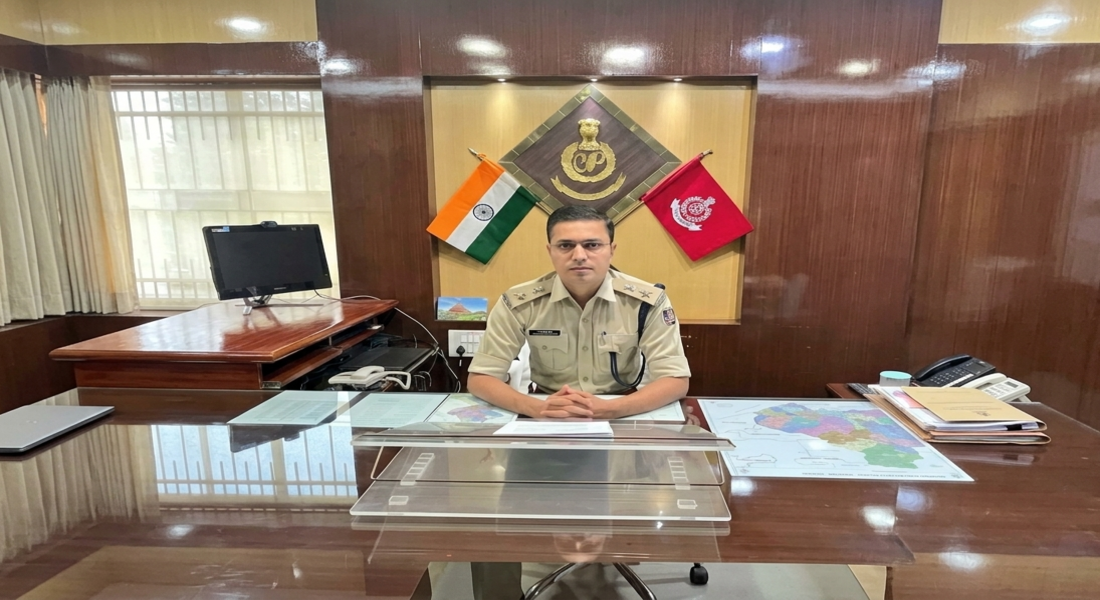
Jagmohan Meena resigns from IPS, president accepts resignation

Bhubaneswar: President Droupadi Murmu has accepted the resignation of Jagmohan Meena, IPS (OD: 2013), from the Indian Police Service with effect from September 11, according to a notification issued by the Ministry of Home Affairs.

The notification stated that the resignation of the 2013-batch Odisha cadre IPS officer had been accepted with effect from September 11.

Meena was serving as the Deputy Commissioner of Police (DCP) of Bhubaneswar. His resignation now formally brings his stint in the IPS service to an end.

The Ministry of Home Affairs issued the notification under No. 24016/73/2026-IPS-II.

The notification was forwarded to the chief secretary of Odisha with reference to a letter dated August 25, 2026. It also directed that the notification be sent to Meena through the chief secretary of Odisha.

Copies of the notification were also forwarded to the Director General of Police, Odisha; the Union Public Service Commission; and concerned sections of the Ministry of Home Affairs.

With Meena’s resignation formally accepted, the Odisha government will now have to decide on his successor as Bhubaneswar DCP. The development comes amid indications of a possible reshuffle involving SPs and other senior police officers in the state.

According to reports, officers from the 2015 and 2016 IPS batches are being considered for the Bhubaneswar DCP post. An interim arrangement could also be made before a regular appointment.

The official notification was issued by Yatender Kumar, Under Secretary to the Central government.

Chief Secy Anu Garg reviews district-level implementation of key govt schemes

Bhubaneswar: Odisha Chief Secretary Anu Garg on Thursday reviewed the implementation and progress of major departmental schemes and projects with all district collectors, directing them to resolve land, approval and execution-related issues within defined timelines.

The meeting was held at Lok Seva Bhavan in Bhubaneswar and attended by Development Commissioner and Additional Chief Secretary Deoranjan Kumar Singh, Additional Chief Secretary of the Housing and Urban Development Department Usha Padhee and senior officials from various departments. District collectors joined the meeting virtually.

The review covered schemes and projects of the Housing and Urban Development, Labour and Employees’ State Insurance, Women and Child Development, Health and Family Welfare, Handlooms, Textiles and Handicrafts, Odia Language, Literature and Culture, School and Mass Education, Agriculture and Farmers’ Empowerment and MSME departments.

Under urban development, the meeting discussed drinking water supply projects and the resolution of land-related issues. Collectors of Khordha, Sambalpur and Cuttack were asked to take immediate steps to resolve land issues affecting five important projects.

The meeting also reviewed opportunities for small urban local bodies to raise market-based finance under the Credit Repayment Guarantee sub-scheme. Compliance with waste management rules at the district level, in line with Supreme Court directions, was also discussed.

The Labour and ESI Department reviewed arrangements for land for a 100-bed ESI hospital, meetings of district-level task forces on child labour elimination and the functioning of labour inspection committees. Regular meetings and mock drills of district and local crisis management groups for chemical emergencies were also discussed.

The Women and Child Development Department reviewed Poshan Maah 2026, the Suposhit Odisha Mission and digital monitoring forms. Officials were asked to focus on identifying and referring malnourished children, registering pregnant women, encouraging fathers’ participation and expanding nutrition services in vulnerable areas.

Healthcare issues discussed included biomedical waste management, land for primary health centres, AYUSH medical colleges, the Ama Hospital programme and progress under the National Tuberculosis Elimination Programme.

The Handlooms, Textiles and Handicrafts Department reviewed the Srujanika craft cluster, major craft clusters and initiatives covering handicrafts, handlooms, silk and textiles.

The Odia Language, Literature and Culture Department reviewed the progress of the Baraputra Heritage Village Scheme, including district-level land allocation, preparation of detailed project reports and removal of implementation bottlenecks.

The Agriculture and Farmers’ Empowerment Department reviewed farmer registration under AgriStack and the progress of the Kharif 2026 Digital Crop Survey.

In education, progress under the Godabarish Mishra Adarsha Prathamik Vidyalaya scheme, residential hostels of Odisha Adarsha Vidyalayas and creation of APAAR IDs for students was reviewed.

The MSME Department discussed district-level Single Window Clearance Authority meetings, MSME parks, the Odisha startup ecosystem and credit facilities. The plan to develop 30 MSME parks across the state, one in each district, was also reviewed.

Garg directed all district collectors to coordinate closely with the concerned departments and ensure time-bound resolution of issues related to land acquisition, project approvals, construction and implementation.

She stressed regular district-level monitoring and inter-departmental coordination so that the benefits of approved schemes and projects reach people without delay.

Tata Sons board backs Chandrasekaran for third term, approves listing plan

The Tata Sons board has backed N Chandrasekaran for another five-year term and agreed to pursue a listing, but Tata Trusts has challenged both moves, setting up a fresh corporate governance dispute.

Mumbai: The Tata Sons board on Thursday backed executive chairman N Chandrasekaran for another five-year term and agreed to initiate the process of listing the Tata group’s holding company, setting up a fresh confrontation with Tata Trusts.

The decisions were taken at a board meeting in Mumbai, weeks after Chandrasekaran had informed directors that he did not intend to seek reappointment when his current term ends on February 20, 2027.

Following the board vote, the Nomination and Remuneration Committee is expected to formally ask Chandrasekaran to reconsider his decision, according to people familiar with the matter.

The board’s decision on listing comes days after the Reserve Bank of India (RBI) rejected Tata Sons’ application to surrender its registration as a core investment company. The move has revived the possibility of a stock-market listing that Tata Sons had sought to avoid.

The RBI had classified Tata Sons as an ‘upper layer’ non-banking financial company in 2022, requiring it to be listed within three years. The deadline expired in September 2025 while the company’s application to surrender its registration remained under consideration.

Tata Sons had earlier repaid more than ₹21,000 crore in outstanding debt in an attempt to qualify for an exemption from the listing requirement.

According to the reports, board members favoured continuity in leadership as the company moves towards a potential listing, with management stability considered important for prospective investors.

The decision, however, has been opposed by Tata Trusts, which collectively control around 66% of Tata Sons. Noel Tata, chairman of Tata Trusts and one of its nominee directors on the Tata Sons board, voted against Chandrasekaran’s reappointment. The resolution was nevertheless approved by a majority of the board, according to people familiar with the meeting.

Tata Trusts subsequently described the resolution as a “legal nullity” under the Articles of Association of Tata Sons. The Trusts said the Articles require a majority of their nominee directors to vote in favour of the appointment or reappointment of the Tata Sons chairman.

Venu Srinivasan is the other Tata Trusts nominee on the Tata Sons board.

The Trusts also maintained that Chandrasekaran’s decision, communicated to the board on August 12, not to seek another term had already been accepted and could not subsequently be reversed. The Trusts said they had advised Tata Sons to begin the process of selecting his successor.

Noel Tata also submitted a legal opinion from former Chief Justice of India D Y Chandrachud supporting the Trusts’ position, according to the Trusts’ statement. The board did not accept the interpretation.

The dispute could also put on hold a succession exercise initiated to identify Chandrasekaran’s replacement. Names reportedly considered in that process included Tata Steel CEO T V Narendran, Tata Sons Group CFO Saurabh Agrawal and National Stock Exchange CEO Ashish Chauhan.

The proposed listing could have major financial implications for shareholders. The Shapoorji Pallonji Group, which owns about 18% of Tata Sons, has been pushing for a listing to unlock the value of its stake and support debt repayment.

Tata Sons controls stakes in more than a dozen listed companies across sectors including automobiles, steel, information technology, hospitality and aviation. Media reports have estimated its potential valuation at nearly ₹20 lakh crore, although the eventual valuation would depend on the structure and terms of any listing.

Odisha launches month-long Seva Sankalp Abhiyan with mega blood donation drive

Bhubaneswar: Odisha Chief Minister Mohan Charan Majhi on Thursday launched the month-long ‘Seva Sankalp Abhiyan’, calling on young people to dedicate time to social service and nation-building.

The campaign began with a mega blood donation camp at the IDCO Exhibition Ground in Unit-III, Bhubaneswar. The Chief Minister also planted an Ashoka sapling at Lok Seva Bhavan before attending the blood donation programme.

Addressing the gathering, Majhi said blood donation was an important humanitarian act and stressed that there was no substitute for human blood despite advances in medical science.

The mega camp has set a target of collecting more than 6,500 units of blood. The Chief Minister said the state government was committed to ensuring that no life was lost because of a shortage of blood.

As part of efforts to strengthen the state’s blood supply infrastructure, the government has launched the Atal Raktadan Abhiyan with an allocation of ₹50.54 crore in the 2026-27 Budget. Under the initiative, blood banks are being established at new medical colleges while existing facilities are being modernised, according to the government.

The Seva Sankalp Abhiyan coincides with Prime Minister Narendra Modi’s 76th birthday on September 17 and is intended to mark his 25 years in public service with programmes planned across Odisha. The campaign was announced by the Odisha BJP earlier this month as a month-long public service and outreach initiative, with activities extending from organisational districts to mandals and booth levels. Activities planned under the campaign include blood donation drives, awareness programmes, competitions, community outreach and other service initiatives.

Majhi extended birthday greetings to Modi on behalf of the people of Odisha and described the Prime Minister as the “architect of a developed India”. He also highlighted what he described as India’s progress in areas including defence, semiconductors and space technology.

Calling on Odisha’s youth to participate in social service, the Chief Minister said dedicating time to community welfare and nation-building would be a meaningful way of contributing to society.

Urban Development and Housing Minister Krushna Chandra Mahapatra said blood donation was essential for saving lives and expressed confidence that the mega camp would set a new record for blood collection in the state.

Rajya Sabha MP Manmohan Samal said the large-scale blood donation drive would help address shortages in blood banks, particularly those that emerged during and after the COVID-19 pandemic.

Rajya Sabha MP Sujit Kumar, Bhubaneswar MP Aparajita Sarangi, Revenue and Disaster Management Minister Suresh Pujari, Ekamra MLA Babu Singh, Khordha MLA Prashant Kumar Jagdev, Bhatli MLA Irashis Acharya, Mahakalapada MLA Durga Prasanna Nayak and other public representatives, party leaders, blood donors, youth volunteers and media representatives attended the programme.

PM Modi inaugurates SEMICON India 2026, highlights India’s growing semiconductor ecosystem

New Delhi: Prime Minister Narendra Modi on Thursday inaugurated the fifth edition of SEMICON India 2026 in New Delhi, highlighting India’s progress from semiconductor policy planning to commercial production and outlining the next phase of the country’s chip ecosystem.

Addressing the gathering, Modi welcomed participants from India and abroad and said the event represented an important stage in India’s semiconductor journey.

He linked the inauguration with Vishwakarma Diwas, describing the combination of India’s traditional culture of creation and craftsmanship with 21st-century technology as an inspiration for a self-reliant and developed India, according to an official statement.

The PM also said India had made significant progress in the semiconductor sector since the launch of SEMICON India in 2022. He recalled the journey from policy discussions and project planning to pilot lines and commercial production, noting that chips produced in India had now started reaching customers in the country and across the world.

He also highlighted the start of commercial production at two new plants in Mohali and Surat, describing the development as a significant achievement in India’s efforts to build a semiconductor ecosystem.

Modi said building such an ecosystem required capabilities across several areas, including chip design, equipment manufacturing and testing. He credited industry leaders and partners for contributing to the rapid development of these capabilities.

Looking ahead, the PM announced the second phase of the Semiconductor Mission with an outlay of USD 13.5 billion. He also highlighted regulatory reforms aimed at facilitating collaboration among international companies, startups and semiconductor design firms.

He stressed that India’s semiconductor ambitions extend beyond manufacturing chips. He called for the development of fabless companies, intellectual property and silicon photonics, particularly in view of the growing requirements of artificial intelligence infrastructure.

He also urged companies involved in equipment, chemicals, gases and materials to make use of the opportunities created by the 12 approved semiconductor projects and the expanding demand pipeline.

Modi emphasised the importance of ensuring that the entire semiconductor ecosystem grows together.

Artificial intelligence is also changing the nature of semiconductor requirements, the PM noted. He further said that the industry was increasingly moving beyond a focus on transistor size towards broader system integration, including memory placement and heat management.

Modi further highlighted the importance of reliable energy supplies for high-performance computing and semiconductor manufacturing. He pointed to India’s expansion in the power sector, including solar capacity of more than 160 GW, the opening of nuclear energy to private players and work on small modular reactors.

According to the PM, uninterrupted power is essential for AI data centres as well as semiconductor manufacturing facilities. He said India’s investments in the power sector were therefore an important part of creating conditions for industrial growth and making the country a preferred destination for semiconductor companies.

Talent development was another key focus of his address. Modi highlighted India’s large pool of engineering talent and said the government was working towards training one lakh engineering students in chip designing. More than 70,000 students had already been trained, he said.

The PM also encouraged young engineers and researchers in India and abroad to participate in the development of advanced technologies within the country. He called on industry leaders to strengthen domestic research and development, saying this would create benefits for both the industry and India’s young talent.

Modi also referred to India’s recent economic and diplomatic developments. He highlighted discussions on inclusive finance at the Global Fintech Fest, the operationalisation of a 3,000-kilometre Dedicated Freight Corridor and quarterly GDP growth of 7.8%.

He also mentioned a recent sovereign rating upgrade by a Japanese credit rating agency, saying India’s economic growth was accompanied by growing international confidence.

Referring to the recently concluded BRICS Summit hosted by India, Modi highlighted the unanimous adoption of the New Delhi Declaration and described it as another indication of international confidence in India.

Nepal glacier collapse exposes climate risks as scientists link warming to disaster

New Delhi: The catastrophic glacier collapse that triggered devastating floods across Nepal and Tibet last month was likely made more dangerous by decades of climate warming, according to the first scientific assessment of the disaster.

The study found that unusually warm conditions preceded the collapse of a massive section of glacier and rock on Langtang Lirung mountain on August 26. The collapse released an estimated 110 million cubic metres of snow and ice into the valley, generating a powerful flash flood that swept through downstream communities with little warning, according to guardian.com.

More than 1,300 people lost their lives in the disaster, while over 5,000 others are still reported missing. A section of the mountain measuring around 200,000 square metres fell approximately 1,400 metres before hitting the valley floor with such force that the impact was recorded as an earthquake.

The resulting surge of ice, water, rock and sediment travelled downstream at speeds exceeding 110 mph, destroying homes, settlements, roads, bridges and other infrastructure and leaving survivors stranded.

Scientists involved in the assessment said the disaster could not be attributed to a single weather event or solely to climate change. Instead, they described it as a compound crisis in which several geological and climatic factors combined, with decades of atmospheric warming contributing to the destabilisation of the high-mountain environment.

Researchers from World Weather Attribution, in collaboration with climate specialists including scientists at Imperial College London, identified long-term changes around the glacier that they said showed clear fingerprints of climate change.

Dr Ben Clarke, who researches extreme weather and climate change at Imperial College London, said the warming climate was transforming the high-mountain environment and affecting several potential drivers of the collapse.

The researchers stressed that their findings did not establish climate breakdown as the fundamental cause of the disaster. Rather, they described climate change as a destabilising factor acting on an already vulnerable geological setting.

The scale of the rock avalanche was also highly unusual. According to the study, events of a similar size are estimated to occur only once every 1,000 to 10,000 years. The researchers said the disaster demonstrated that the limits of adaptation were already being reached in vulnerable mountain communities.

The disaster has also raised concerns about the growing risks faced by communities living downstream of glaciers and unstable mountain slopes. Even where local warning systems and adaptation measures are in place, an event of this magnitude can overwhelm communities within minutes.

Nepal has formally sought financial assistance from the UN loss and damage fund to address the destruction caused by the floods, a process that requires evidence connecting the disaster to the climate crisis.

Nepal’s Foreign Minister Shisir Khanal has called on major emitting countries, including China and India, to recognise shared responsibility for the growing risks faced by climate-vulnerable nations.

Madhab Uprety, senior technical adviser for the Red Cross Red Crescent Climate Centre, said the scale of the human and economic losses highlighted the need for major reductions in global emissions as well as greater support for vulnerable countries dealing with climate-related damage.

The findings therefore shift attention beyond the immediate glacier collapse to a broader concern: how continued warming could alter the stability of the world’s highest mountain regions and increase the risks faced by communities living far downstream.

Sambalpur gets Odisha’s third Doppler Weather Radar

Bhubaneswar: Odisha Chief Minister Mohan Charan Majhi inaugurated the state-of-the-art ‘Make in India’ Doppler Weather Radar (DWR) at Gangadhar Meher University in Sambalpur, marking a major step towards strengthening weather forecasting and disaster preparedness in western Odisha.

The radar was inaugurated at a ceremony held at Gangadhar Meher University in the virtual presence of Union Minister for Earth Sciences Dr Jitendra Singh.

The event also saw the inauguration and foundation-laying of 50 development projects worth a combined Rs 960 crore for Sambalpur and western Odisha.

Of the 50 projects, 15 projects worth Rs 133.47 crore were inaugurated, while foundation stones were laid for 35 new projects involving an investment of Rs 825.83 crore.

The projects cover key sectors including health infrastructure, roads and building construction, mega lift irrigation, minor irrigation, sports infrastructure and rural development in Kuchinda.

The Doppler Weather Radar installed at Sambalpur is Odisha’s third such radar and is expected to provide accurate weather data and improve forecasting of weather movements across a wide area.

The radar will provide weather alerts to residents of Sambalpur, Bargarh, Jharsuguda and Sundargarh districts, as well as neighbouring states. It will also help estimate rainfall and strengthen the management of inflows into the Hirakud reservoir.

The advanced weather monitoring system is also expected to provide early warnings for lightning and hailstorms, helping protect lives, livelihoods and agricultural activities in the region.

The inauguration of the radar, along with the launch of major development projects, marks a significant expansion of weather-monitoring and infrastructure capabilities in western Odisha.