At IndiaVerve, we go beyond the noise to bring you meaningful stories of change, resilience and progress—from India to the world stage. Our mission is to bring readers credible, wide-ranging coverage across politics, business, sports, culture, society and more.

Asian Games 2026: India’s medal tally reaches six

New Delhi: India added four medals on Day 2 of the Aichi-Nagoya Asian Games 2026 on Monday, taking its overall tally to six, with three coming from shooting and one from mixed martial arts.

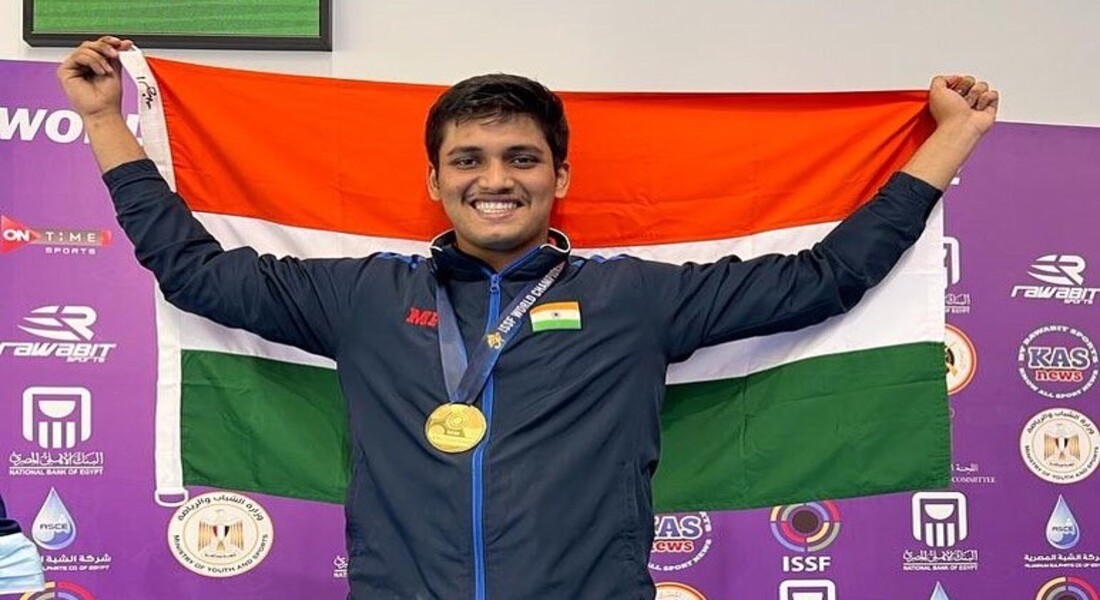
The standout performance came in the men’s 10m air rifle event, where Himanshu Dhillon won the individual silver medal and Rudrankksh Patil secured bronze. Earlier, Dhillon, Patil and Parth Mane had combined to win silver in the men’s 10m air rifle team event. The three shooting medals took India’s tally from the opening two medals to six, according to reports.

Suchika Tariyal added another medal for India by winning bronze in the women’s traditional 60kg mixed martial arts category. She lost her semifinal bout against Singapore’s Hui Hoon Teo, securing India’s first Asian Games medal in mixed martial arts.

India also recorded important victories across team events on Day 2. The women’s table tennis team defeated Pakistan 3-0 in their Group F match, while the men’s team also registered a 3-0 victory over Pakistan. The women’s team’s win was its second victory of the campaign, while the men’s side bounced back after losing to Iran in its opening match.

In hockey, India secured its second consecutive win in Group B by defeating Indonesia 17-1 in the women’s competition. The Indian men’s kabaddi team began its Group A campaign with a 49-24 victory over Japan, while the women’s team defeated Bangladesh 42-21 in their Group A clash.

India also advanced in badminton as the men’s team defeated Bangladesh 3-0 in the Round of 16.

In wushu, Aryan moved closer to a medal in the men’s 56kg event, while Roshibina Devi was also one win away from assuring a medal in the women’s 60kg category.

In swimming, Srihari Nataraj reached the men’s 50m backstroke final, while Rishabh Das was named as a reserve. Nataraj later finished 10th in the final with a time of 25.52 seconds. Akash Mani and Gitesh Shah failed to qualify for the men’s 50m freestyle final, while Dhanush Suresh also missed out on the final of the men’s 100m breaststroke.

In wushu, Nyeman Wangsu finished 15th in the women’s Changquan final.

In soft tennis, Aadhya Tiwari and Jay Meena opened their mixed doubles Group B campaign with a 5-0 victory over Cambodia’s Viva Chao and Chanroseka Khun. They later suffered a 1-5 defeat to South Korea’s Kim Yeon-hwa and Jaekyu Park before losing to the Philippines’ Christy Sanosa and Sherwin Nuguit in the Round of 16.

In sepaktakraw, Japan defeated India 2-1 in the Group B match.

India’s Day 2 campaign therefore featured four medals along with victories in hockey, kabaddi, badminton and table tennis, while athletes in wushu and other disciplines continued their efforts to progress further in the competition.

India-New Zealand FTA to enter into force on October 20

New Delhi: The India-New Zealand Free Trade Agreement (FTA) will enter into force on October 20, 2026, marking a new phase in the trade and economic partnership between the two countries.

The agreement was signed on April 27, 2026, at Bharat Mandapam in New Delhi by Union Commerce and Industry Minister Piyush Goyal and New Zealand’s Minister for Trade and Investment Todd McClay, according to an official statement.

The two ministers announced the implementation date during a virtual conference after both countries completed their respective internal processes. New Zealand’s Parliament passed the legislation giving effect to the agreement on September 16, 2026.

From the date of entry into force, 100% of India’s exports to New Zealand will receive duty-free access, covering every tariff line. The move is expected to benefit sectors including textiles and apparel, leather and footwear, gems and jewellery, engineering goods and processed foods, where New Zealand’s tariffs were as high as 10%.

Indian manufacturers will also get duty-free access to inputs such as wooden logs, coking coal and metal scrap.

At the same time, the agreement excludes sensitive products such as dairy, animal meat except sheep, key agricultural commodities, sugar and edible oils from tariff concessions, according to the Commerce Ministry.

Market access for New Zealand’s apples, kiwifruit and Manuka honey has been structured through tariff-rate quotas, along with minimum import prices and seasonal import windows. The agreement also provides for an Agriculture Productivity Partnership, with action plans for kiwifruit, apples and honey and cooperation through Centres of Excellence covering areas such as orchard management, post-harvest practices, supply chains, food safety and sustainable beekeeping.

The agreement also includes New Zealand’s commitment to facilitate USD 20 billion in investment into India. The investment is expected to support areas including agriculture, manufacturing, infrastructure and start-ups.

For India’s services sector, the FTA provides market access across around 118 sectors, including information technology, professional services, audio-visual services, construction and tourism.

Most-Favoured-Nation treatment has been locked in across about 139 sub-sectors.

The agreement also provides mobility opportunities for Indian professionals and students. These include a dedicated quota of 5,000 Temporary Employment Entry visas for skilled Indians and 1,000 Working Holiday visas annually for young Indians. It also provides post-study work rights of up to three years for STEM graduates and up to four years for doctoral scholars.

Indian pharmaceutical and medical device exporters are also expected to benefit from provisions aimed at facilitating faster market access, including New Zealand’s acceptance of inspection approvals from regulators such as the US FDA, EMA, UK MHRA and Health Canada.

The FTA follows a broader effort by India and New Zealand to deepen their bilateral economic relationship. During Prime Minister Narendra Modi’s visit to New Zealand in July 2026, the two countries announced a Strategic Partnership and endorsed a Strategic Partnership Roadmap to 2030. The roadmap includes an aspirational goal of doubling bilateral two-way trade in goods and services to NZD 7 billion by 2030.

Commenting on the agreement, Goyal said the FTA would provide fresh momentum to the bilateral partnership, create greater synergies between the two economies, enable economies of scale and contribute to overall competitiveness.

McClay said the agreement would provide confidence at a time of uncertainty in global trade and rising tariffs, while creating opportunities for businesses and stakeholders in both countries.

Bilateral merchandise trade between India and New Zealand was around USD 1.1 billion in 2025-26. The entry into force of the FTA is expected by the two governments to provide a framework for expanding trade, investment and economic cooperation between the two countries.

Odisha begins distribution of corrected textbooks

Bhubaneswar: Distribution of corrected textbooks began across Odisha on Monday, with around 45,000 books being supplied on the first day, while a nine-week blended English language training programme for elementary teachers was also launched across all 30 districts.

The first phase of textbook distribution covered areas in Bhubaneswar and Cuttack. The books distributed on the opening day included Odia textbooks for Classes II, III, IV, V and VI, along with Urdu textbooks for Classes VI, VII and VIII.

According to the Department of School and Mass Education, 41,150 Odia textbooks and 3,150 Urdu textbooks have been allocated for distribution in the identified areas.

The first phase covers Bhubaneswar Municipality, Jatani, Bhubaneswar Sadar, Cuttack Municipality, Cuttack Sadar, Salipur and Nischintakoili.

The distribution of the corrected textbooks will be extended to other districts in a phased manner over the coming days.

Meanwhile, the five-day face-to-face first week of the nine-week blended district-level ELEC programme was launched across all 30 districts of Odisha.

The programme is being conducted by the State Institute of Languages and Teacher Training, Bhubaneswar, in collaboration with Azim Premji University, Bengaluru.

The training programme will cover 1,800 elementary teachers, with support from 60 Key Resource Persons and 120 mentors.

The initiative aims to build teachers’ confidence in using English for self-expression and strengthen their use of English in effective teaching-learning practices.

Odisha final electoral roll published with 3.16 crore electors after SIR

Bhubaneswar: The Final Electoral Roll for Odisha was published on Monday with 3,16,32,754 electors, marking the completion of the Special Intensive Revision (SIR) undertaken in accordance with the Election Commission of India’s instructions.

Chief Electoral Officer R S Gopalan, IAS, chaired a meeting with representatives of recognised political parties to mark the completion of SIR-2026 and formally handed over copies of the Final Electoral Roll to the party representatives.

The final roll has been prepared with July 1, 2026, as the qualifying date. It includes 1,61,30,319 male electors, 1,54,99,661 female electors and 2,774 third-gender electors. The gender ratio stands at 961 females per 1,000 males.

The final electorate represents a net increase of 2,45,720 over the draft roll, which contained 3,13,87,034 electors. During the claims and objections process, 2,90,497 electors were added to the draft roll, while 44,777 were deleted following verification and disposal of cases.

The final figure follows an extensive verification exercise after the draft roll was prepared. Before the SIR, Odisha had 3,33,99,591 electors as of May 17, 2026. Enumeration Forms were received from 3,13,87,034 electors, representing 93.97% of the electorate. The remaining 20,12,557 electors whose forms were not received were not included in the draft roll.

The reasons recorded for non-receipt of the forms included death, shifting, absence and duplicate entries. Of the 20,12,557 cases, 8,32,544 were categorised as deceased, 8,08,205 as shifted, 1,99,249 as absent and 1,58,118 as duplicate entries. Another 14,441 cases were placed under other reasons.

The subsequent verification process provided an opportunity to examine entries requiring further scrutiny. Between July 5 and September 17, notices were issued to all 12,98,779 electors whose records remained unmapped. Another 45,37,613 electors were issued notices over logical discrepancies in their entries, taking the total number of notices to 58,36,392.

Electoral Registration Officers and Assistant Electoral Registration Officers conducted hearings and examined documents submitted by electors. Cases involving inadequate documents or electors found to be absent, deceased, shifted or repeated were dealt with through speaking orders, wherever applicable.

The claims and objections window, which ran from July 5 to August 19, saw 2,55,996 claims and objections being received and processed. In addition, 24,070 electors were found ineligible for the final roll after hearings, while 20,707 electors were deleted against Form 7 applications.

Following rationalisation, Odisha now has 45,250 polling stations. The Final Electoral Roll for service voters has also been published, containing 46,816 service electors.

The Chief Electoral Officer’s office has advised electors to verify their names and particulars in the final roll. Applications for inclusion, correction or deletion can be submitted through the prescribed procedures using Forms 6/6A, 8 and 7. The final roll is available for public inspection at polling stations and the offices of Electoral Registration Officers and Assistant Electoral Registration Officers, besides the Election Commission’s voter services portal and the CEO Odisha website.

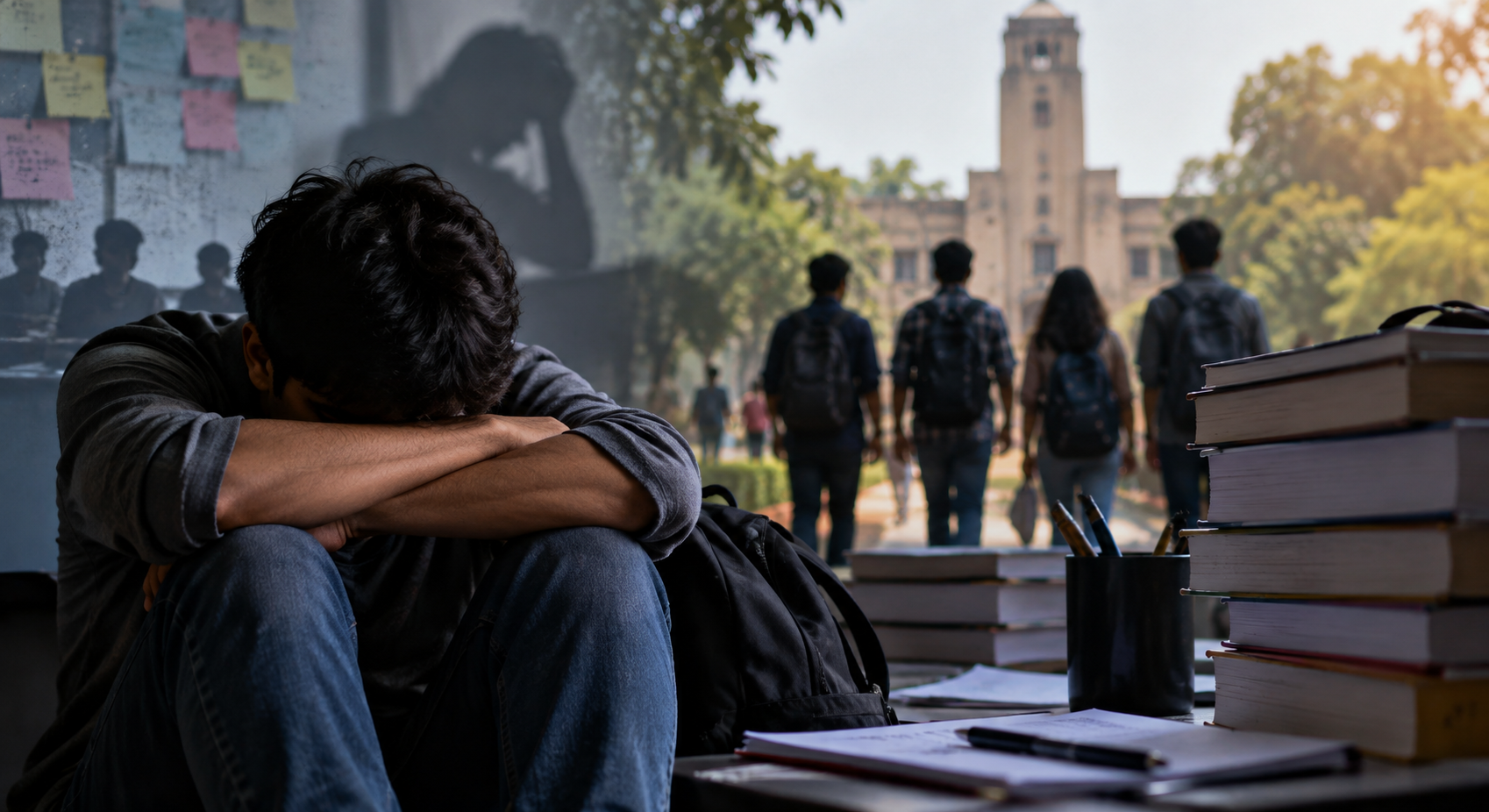
Student Suicides and the Institutional Crisis: Examining the Mental Health Imperative

India’s student-suicide crisis exposes gaps in institutional support, prompting calls to move beyond reactive counselling towards systems that address distress, exclusion, discrimination and belonging.

What if student suicide is not only a mental health crisis, but an institutional crisis?

Behind every suicide is a student navigating pressures that extend beyond the individual, from academic competition and financial insecurity to discrimination, exclusion, and the absence of meaningful support. When institutions respond only after a crisis, they overlook the conditions that produce distress in the first place. Preventing suicide therefore requires more than counselling; it demands institutions that actively address exclusion, build systems of care, and make belonging, dignity, and mental health a collective responsibility.

The Supreme Court itself has recognized this. In 2025, while hearing a case arising from the deaths of two IIT Delhi students, the Court noted the disturbing rise in student suicides and constituted a National Task Force on the mental health of students and prevention of suicides in higher educational institutions, chaired by former Supreme Court judge Justice S. Ravindra Bhat.

The Court emphasised that educational institutions carry a legal and moral responsibility towards the safety and well-being of their students. The Task Force’s findings have made the problem harder to dismiss as a collection of individual tragedies. The Supreme Court has also directed higher educational institutions to report suicides and unnatural deaths, including those occurring outside campus, and has called for round-the-clock access to qualified medical assistance for residential institutions.

Nowhere is the contradiction between institutional excellence and human vulnerability more stark than at the Indian Institutes of Technology. In August 2026, 31-year-old MSc Physics student Rishikesh Kumar died by suicide at IIT Delhi. Rishikesh’s death was not an isolated incident. IIT Delhi has recorded eight student suicides since 2023. Seven students had died before Rishikesh: among them were Ayush Ashna and Anil Kumar in 2023, Kumar Yash in 2024, Ayush Singhal in 2025, and Harshit Swami in March 2026. The cases have involved recurring concerns around academic pressure, examination failures, depression, isolation, and the institutional environment.

In 2023, the deaths of Ayush Ashna and Anil Kumar became the subject of a Supreme Court case. Their families alleged caste-based discrimination and sought proper criminal investigation. The Supreme Court directed the registration of FIRs and used the case to ask what was happening to students across India’s higher education system. What happens in an institution before a student reaches the point of crisis? In 2025, an IIT Delhi committee examining the institutional environment identified post-coaching burnout, a grading system that reinforced toxic competitiveness, relentless academic demands, and concerns relating to caste- and gender-based discrimination. Yet questions remain over the extent to which its recommendations have translated into structural change. It is easier to build a counselling centre than to examine the culture that makes a student afraid to enter it. It is easier to appoint a psychologist than to ask whether a professor knows how to recognise distress.

India’s National Mental Health Policy (NMHP), 2014, already contains the seeds of a broader vision. It does not define mental health merely through the absence of mental illness. Its stated goals include reducing distress, disability, exclusion, and premature mortality; expanding access for vulnerable groups; and addressing the bio-psycho-social determinants of mental health. Despite having frameworks such as the NMHP, the distance between policy and the lived reality of suffering continues to increase. The Mental Healthcare Act (MHCA), 2017, established a right to access mental healthcare and required services to be accessible without discrimination on grounds including gender, sex, sexual orientation, religion, culture, caste, class, and disability. It explicitly provides that mental illness cannot be determined merely on the basis of a person’s political, economic, or social status.

Yet much of statutory mental healthcare still begins when distress has already become legible as clinical illness. There is a vast space between being well and being clinically unwell, a space where students struggle with grief, fear, humiliation, loneliness, financial insecurity, and discrimination. A person can be drowning long before they meet the diagnostic threshold for a disorder, yet our systems routinely wait for the drowning.

The scale of India’s treatment gap makes this especially tragic. The National Mental Health Survey (2015–2016) found an overall treatment gap for mental morbidity of about 84.5%, with higher prevalence among lower-income households and urban metropolitan areas. The Economic Survey has since reiterated that 10.6% of Indian adults live with a mental disorder, alongside growing concerns around adolescent well-being. But these statistics tell only part of the story. They measure what can be quantified; they do not count the student who stops attending class because entering the room has become unbearable, or the student who goes silent after experiencing systemic discrimination.

“India’s student-suicide crisis is not merely a crisis of individual mental illness; it is a crisis of institutions, relationships and belonging,” says Uma Chatterjee, Co-founder and Director of Sanjog, a Kolkata-based, systems-thinking social impact and civil society organisation.

“While the National Mental Health Policy (2014) and Mental Healthcare Act (2017) established important rights and frameworks, India’s response remains largely reactive, too often beginning when distress has already become a clinical crisis.”

“The growing recognition by the Supreme Court and its National Task Force marks an important shift towards institutional accountability, but the deeper challenge is to transform the cultures of competition, exclusion, discrimination and silence that produce distress. India now needs to move from compliance to inclusion, from preventing death to creating educational institutions where dignity, belonging, care and the right to struggle are integral to mental health,” Chatterjee adds.

Taking lived experience seriously requires leveraging opportunities like the forthcoming National Mental Health Survey 2 (NMHS-2). Covering all States and Union Territories and including adolescents, NMHS-2 aims to examine socioeconomic impacts, pathways to care, and vulnerable populations. Its findings must inform the reform of the MHCA 2017 and broader policy, ensuring the institutional imagination extends beyond clinically diagnosed illness to earlier forms of psychological distress.

Urgent policy imperatives include:

  • Early Spectrum Response: NMHS-2 must be used to identify and respond to the full spectrum of distress long before it escalates into a clinical crisis. Early distress must become a legitimate site of institutional attention.
  • Inter-Ministerial Safeguards: Psychosocial safeguards must be integrated into existing welfare schemes across the Ministries of Social Justice, Labour, and Women and Child Development. If poverty, violence, and social exclusion affect mental well-being, mental health policy cannot remain confined to the Ministry of Health.
  • Community Infrastructure: Investment in Community-Based Rehabilitation and local mental health infrastructure must increase. Frontline workers, including ASHA workers and self-help groups, should be resourced to form an early-support ecosystem without being overburdened.

The student suicide crisis sits within a fundamental constitutional question: what does the right to life mean inside an educational institution? Article 21 cannot begin at the hospital door. It must begin much earlier, with the right to learn without humiliation, to fail without being written off, to ask for help without being marked as weak, and to belong without having to erase one’s identity. Ultimately, protecting mental health means making life within our institutions livable.

***
Riddhi Bhattacharya is a lawyer and researcher working on human rights and social inclusion. Her work with Sanjog largely focuses on legal and policy reform relating to various human rights issues, mental health, and the rights of marginalised communities, alongside field-based research and advocacy. Views expressed are personal and do not necessarily reflect those of IndiaVerve.

Odisha, Chhattisgarh seek Mahanadi water-sharing solution

Bhubaneswar: Chhattisgarh Chief Minister Vishnu Deo Sai made it clear that both Chhattisgarh and Odisha are committed to finding an amicable and mutually beneficial solution to the Mahanadi water-sharing issue.

He made the statement during a visit to Puri, where he offered prayers to Lord Jagannath.

“Chhattisgarh and Odisha are not merely neighbouring states; they are deeply intertwined socially, culturally, and historically. For centuries, the people of both states have shared bonds of deep affection. We are committed to finding an amicable and mutually beneficial solution to the Mahanadi water-sharing issue. This will ensure better utilisation of water resources in both states, give a new impetus to development, and pave the way for prosperity alongside public welfare,” he said in a post on X.

Meanwhile, Odisha Governor Dr Hari Babu Kambhampati met the CM at Lok Bhavan on Monday.

“We exchanged views on the rich cultural heritage shared by Odisha and Chhattisgarh, and discussed development and cooperation in various fields. The interaction reflected the strong cultural bonds between the two States and the scope for further strengthening our shared ties,” the governor said in a post on X.

“Discussions were held regarding the social and cultural relations between Odisha and Chhattisgarh, as well as development in various fields and mutual cooperation. Views were also exchanged on further strengthening the relations between the two states, along with new opportunities for cooperation,” he added.

Chess Olympiad Round 5: Praggnanandhaa beats Anish Giri as India men win

New Delhi: R Praggnanandhaa secured his first victory of the 46th Chess Olympiad by defeating Dutch No. 1 Anish Giri, helping India’s men register a 3-1 win over the Netherlands in Round 5 in Samarkand, Uzbekistan.

Playing on Board 1, Praggnanandhaa faced Giri in what was one of the key encounters of India’s match against the Netherlands. The Indian grandmaster, playing with the white pieces, gradually built pressure in a long game that began with a Ruy Lopez.

The victory came after Praggnanandhaa had drawn his first three games on Board 1. His selection for the top board had attracted attention when the line-up was announced, with world champion D Gukesh placed on Board 4.

Gukesh also delivered for India, defeating experienced Dutch player Erwin L’Ami on the fourth board. Arjun Erigaisi and Nihal Sarin completed the team’s 3-1 victory with draws against Jorden van Foreest and Loek van Wely, respectively.

The official Round 5 record confirms India’s 3-1 result over the Netherlands, with wins for Praggnanandhaa and Gukesh and draws for Erigaisi and Nihal.

The result left India among the teams with a perfect score after five rounds.

For the Indian women, however, Round 5 brought their first defeat of the tournament. They went down 1.5-2.5 to Poland, with Vaishali Rameshbabu suffering the only loss for India.

Playing white in a London System, Vaishali was beaten by International Master Aleksandra Maltsevskaya after 57 moves. The other three Indian players, Koneru Humpy, Divya Deshmukh and Vantika Agrawal, drew their respective games.

The defeat was particularly notable because Poland had also beaten India at the 2022 and 2024 Chess Olympiads, making it the third consecutive Olympiad meeting in which Poland defeated the Indian women.

India’s men are scheduled to face hosts Uzbekistan in Round 6, while the women will take on the US.

Odisha T-20 League CM Trophy 2026 launched at Barabati Stadium

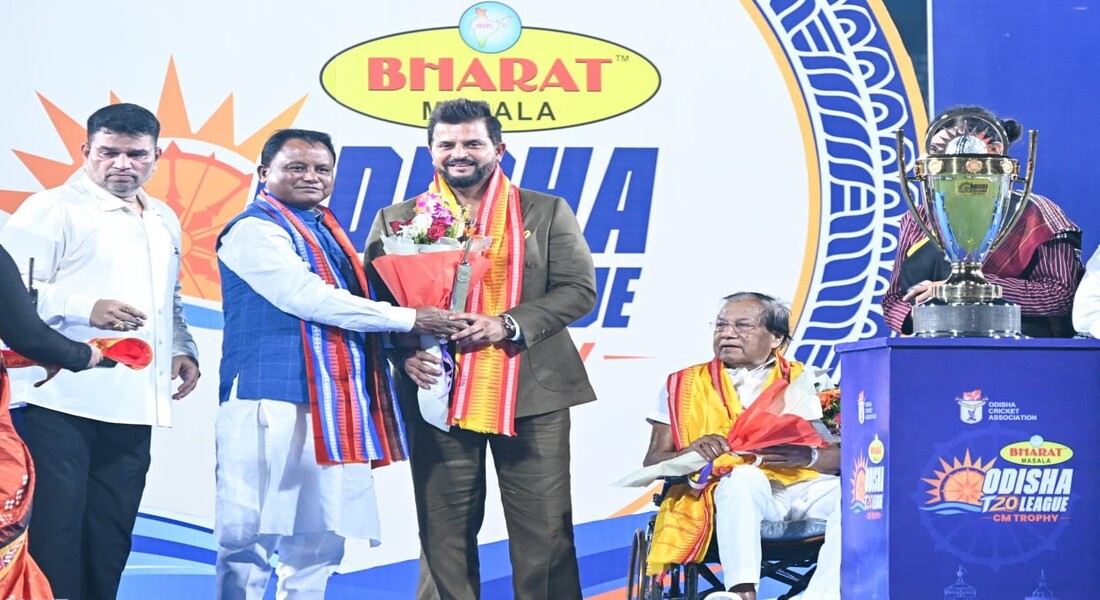
Bhubaneswar: Odisha Chief Minister Mohan Charan Majhi on Sunday inaugurated the Odisha T-20 League CM Trophy 2026 at the historic Barabati Stadium in Cuttack, adding cricket as the fifth sport under the Chief Minister’s Trophy initiative.

The league aims to identify cricketing talent from rural areas across all 30 districts of Odisha and provide young players with a larger platform to showcase their skills.

Speaking at the inauguration, Majhi said cricket has now joined football, kho-kho, kabaddi and volleyball as the fifth sport in the Chief Minister’s Trophy.

He said the initiative would help identify rural cricketing talent across the state and provide them with greater opportunities.

The CM said sport is no longer limited to athletic competition but has emerged as a pathway to a successful career. He noted that India’s sporting landscape has undergone a major transformation over the past decade, while the growth of T-20 and league cricket has created several opportunities for young players.

Majhi said the participation of former Indian cricketer Suresh Raina and Odisha’s former international cricketer Debasish Mohanty as ambassadors of the league would inspire young players.

He expressed confidence that Odisha has both talent and infrastructure and said identifying the right players could help produce more national-level and IPL cricketers from the state in the coming years.

Highlighting the government’s efforts to strengthen sports infrastructure, Majhi said state-of-the-art stadiums are being constructed across all 314 blocks of Odisha at a cost of Rs 4,124 crore. He also announced that a high-tech sports complex would be established at Gothapatna in Bhubaneswar.

The CM also said the government was committed to completely renovating Barabati Stadium and transforming it into one of the country’s best sporting venues.

Majhi also praised the Odisha Cricket Association for its initiative to establish an under-14 cricket academy. He extended his best wishes to all six teams participating in the league, along with their captains, coaches and cricket enthusiasts.

Former India international cricketer Suresh Raina, who attended the inaugural ceremony, recalled his previous visit to Odisha when he represented the Indian team against Sri Lanka at Barabati Stadium in Cuttack.

Raina described the Odisha government’s initiative as commendable and said it would encourage young players to express their love for cricket and embrace the sport.

The inaugural ceremony was attended by ruling party Chief Whip Saroj Kumar Pradhan, Barabati-Cuttack MLA Sofia Firdous, Cuttack Sadar MLA Prakash Chandra Sethy, Cuttack Choudwar MLA Souvic Biswal, Angul MLA and OCA Apex Council member Pratap Chandra Pradhan, Tirtol MLA Ramakanta Bhoi, Secretary of Odisha Football Association and President of Odisha Athletic Association Dr Ashirbad Behera, former cricketer Debasish Mohanty, OCA President Pankaj Lochan Mohanty, Vice-President Jagmohan Pattanayak, Secretary Sanjay Behera, along with other OCA members, coaches, players and distinguished guests.