At IndiaVerve, we go beyond the noise to bring you meaningful stories of change, resilience and progress—from India to the world stage. Our mission is to bring readers credible, wide-ranging coverage across politics, business, sports, culture, society and more.

Historic Kantapidha festival begins in Sorada, celebrating centuries-old cultural and spiritual heritage

The annual Kantapidha Mahotsav in Sorada celebrates Maa Kandhuni Devi while preserving the region’s royal, tribal and religious traditions.

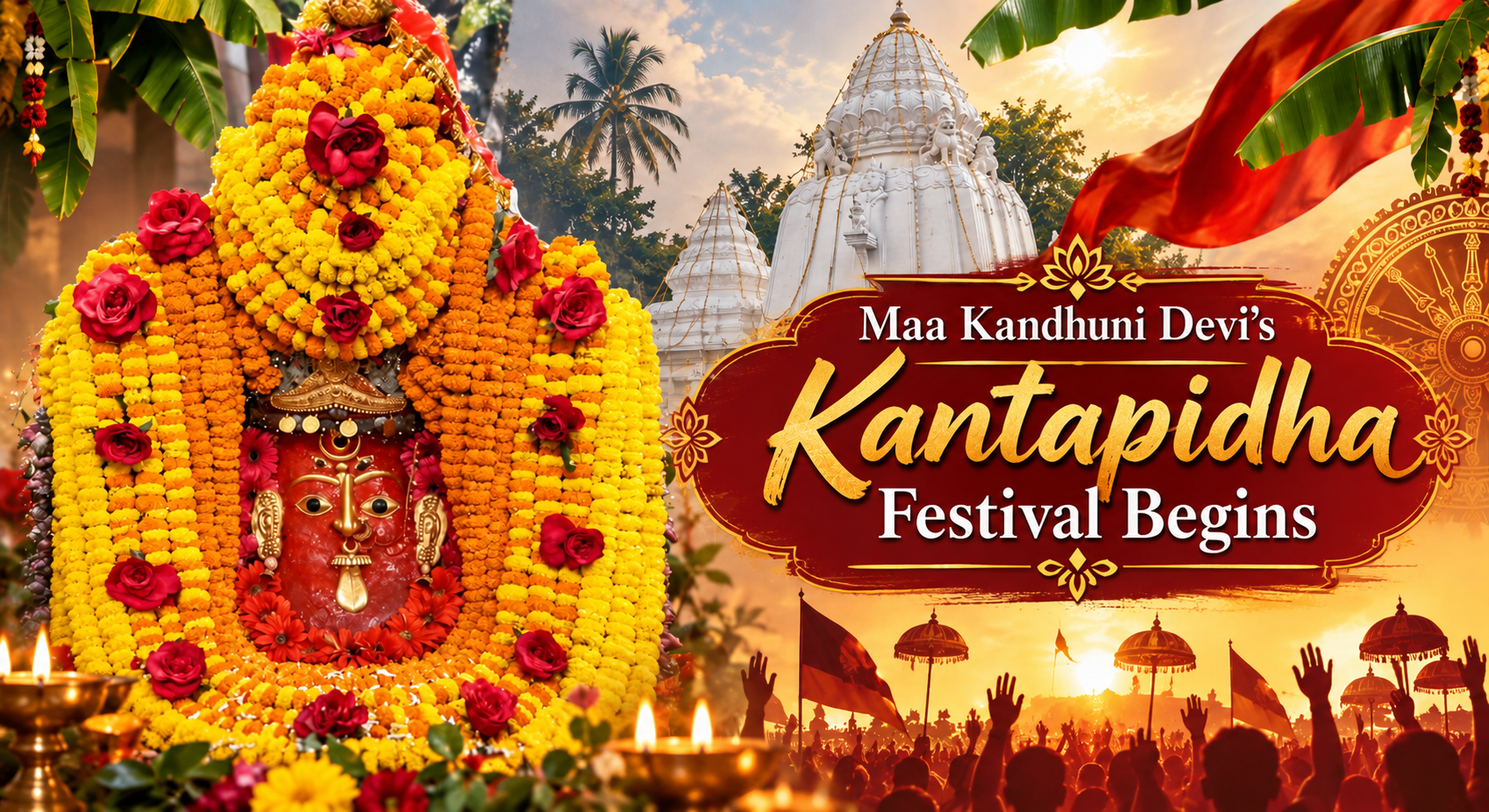
Sorada: A centuries-old tradition of faith, devotion and cultural heritage came alive in Sorada in Odisha’s Ganjam district on Wednesday with the inauguration of the Maa Kandhuni Devi’s  Kantapidha Mahotsav. The celebrations will continue until October 3, bringing together religious rituals, cultural programmes and community participation.

Centred on Maa Kandhuni Devi, the revered deity associated with the Sorada royal dynasty, the festival represents a continuing link between the region’s royal history, tribal traditions and local religious practices. It has evolved over generations into an important expression of Sorada’s collective cultural memory and spiritual identity.

According to historical accounts and local tradition, Raja Abhaya Pratap Singh Deo, also known as Raja Shadadhanu Singh Deo and regarded as the first ruler of the Sorada dynasty, inaugurated the festival in honour of Maa Kandhuni Devi in 1476 AD. Over the centuries, the celebration came to be known as the Kantapidha Yatra, continuing as a living expression of faith and cultural continuity.

The festival programme began with the inauguration ceremony and Bali Yatra, featuring the ceremonial receipt of Angya Maal from Sri Jagannath Temple after Sandhya Alati Niti. The Maa Kandhuni Devi Mahotsav is scheduled for September 29, while the main Kantapidha Yatra will be held on October 3, coinciding with the closing ceremony.

For Nilamani Bishoyi, MLA from the Soroda Assembly Constituency and president of the Maa Kandhunidevi Development Trust, the festival is a celebration of a heritage that has endured across generations.
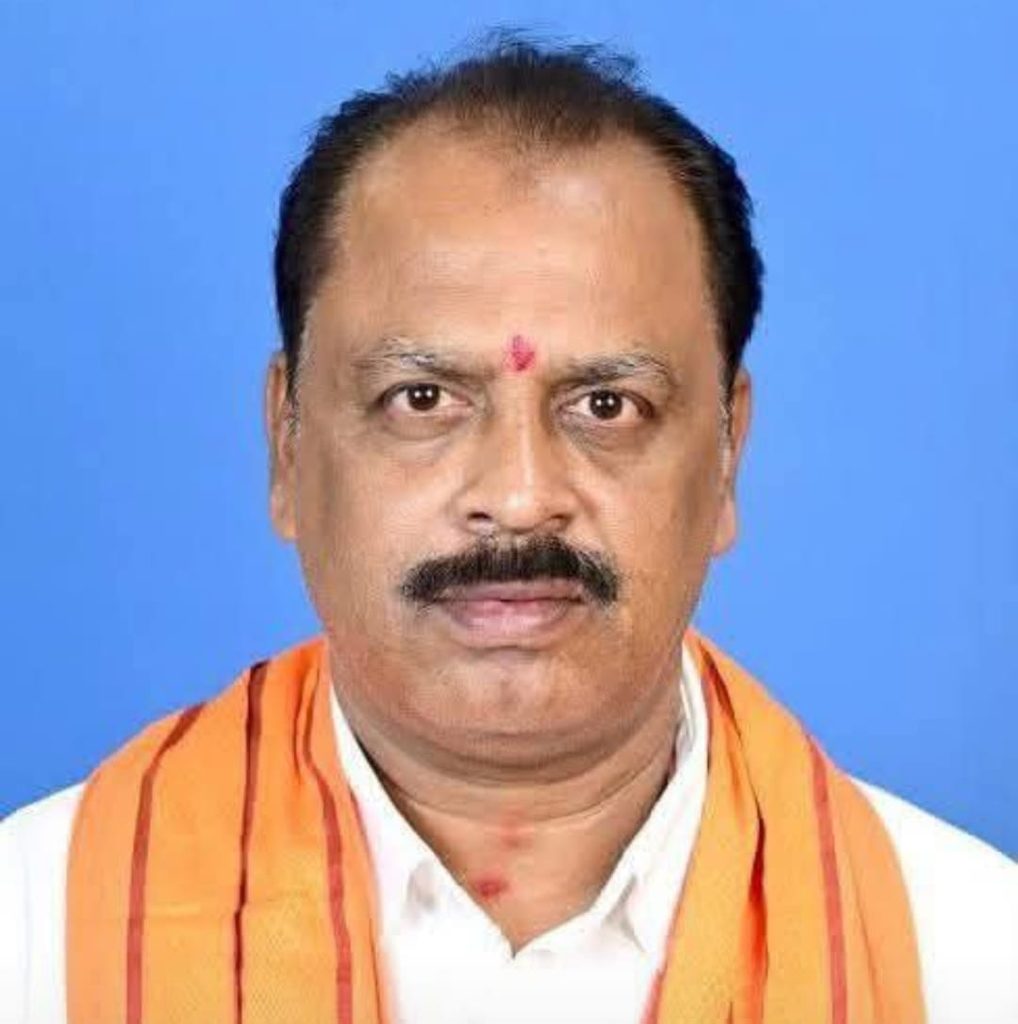
“I feel deeply honoured and privileged to be part of this sacred and culturally significant celebration. The Kantapidha Yatra is a living expression of the enduring legacy, faith and glorious heritage of the Khidisingi Dynasty, and it is a privilege to witness, cherish and carry forward this age-old tradition for generations to come,” Bishoyi said.

Rajanikant Mahapatra, secretary of the Maa Kandhunidevi Development Trust, also emphasised the wider cultural significance of the celebration.

“I extend my heartfelt wishes for the grand success of the Maa Kandhunidevi Kantapidha Yatra and Mahotsav. May this sacred celebration continue to flourish as a living symbol of our rich cultural heritage, devotion and collective spirit, bringing generations together in celebration of Sorada’s enduring traditions,” Mahapatra said.

The traditions surrounding Maa Kandhuni Devi are closely connected with the history of the Sorada royal family and the Kandha community. Maa Khemeswari Devi, also revered as Barahi Devi or Khambeswari Devi, was traditionally regarded as the family deity of King Patta Malik, the Kandha ruler of the region. Over generations, her worship among the Kandha people came to be associated with the name Maa Kandhuni Devi.

The festival carries a distinctive ritual tradition that is closely associated with its name. According to local tradition, the priest, known as the Dehuri, observes rigorous penances during the festival. On the concluding day, Maa Kandhunidevi is traditionally believed to enter the body of the chief priest, who then takes the Goddess around the town to appear before devotees. The ritual culminates in the priest sitting on a bed of thorns, a practice traditionally associated with the name “Kantapidha”.

Beyond its religious rituals, the festival represents the synthesis of royal tradition, tribal belief, local religious practices and the broader spiritual heritage of Odisha. The Kantapidha Yatra has consequently endured as more than an annual religious observance; it is a living cultural institution connecting the people of Sorada with their history, identity and ancestral traditions. As the celebrations continue through October 3, Sorada’s historic festival once again brings its past into the present, keeping alive a tradition that has survived for centuries through faith, community participation and collective memory.
Deep depression to cross Odisha coast tonight; 33 ODRAF teams deployed as heavy rain continues

Bhubaneswar 23: Odisha government stepped up its disaster preparedness on Wednesday as a deep depression over the Bay of Bengal continued to trigger heavy rain, with the system likely to cross the north Andhra Pradesh-south Odisha coast near Kalingapatnam by tonight.

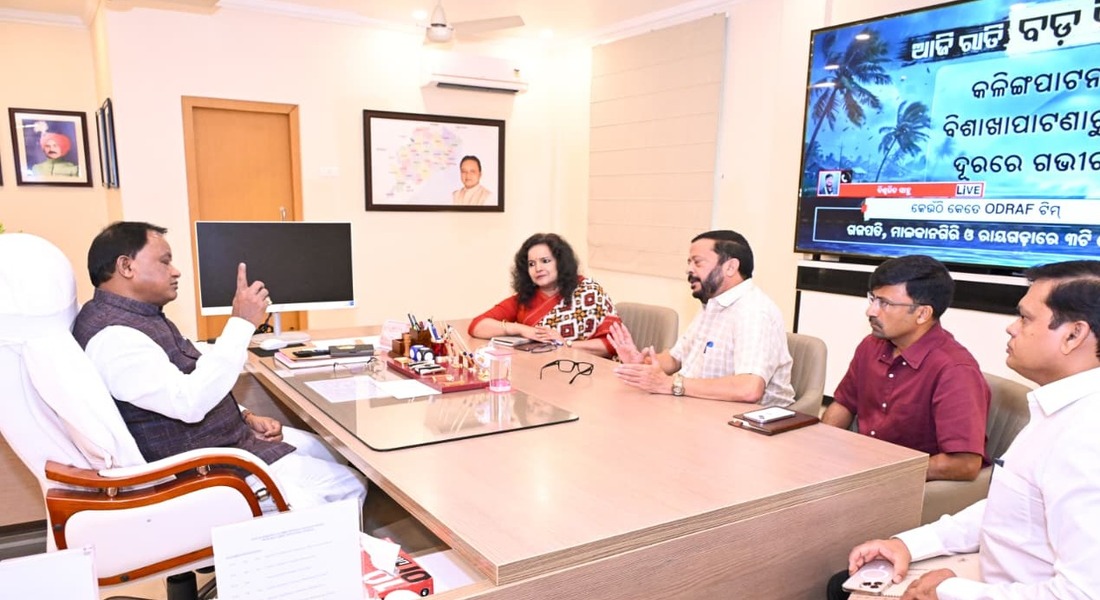
Chief Minister Mohan Charan Majhi reviewed the situation at Lok Seva Bhavan and directed all departments to maintain the highest level of preparedness, with protection of lives and property as the top priority. Revenue and Disaster Management Minister Suresh Pujari also held a high-level review at the State Emergency Operations Centre (SEOC) with district collectors and senior officials.

The Chief Minister reiterated the state’s “zero casualty” approach to natural disasters and directed the administration to evacuate people from waterlogged areas to safer locations and provide necessary relief. He also asked departments to work in close coordination with district administrations and maintain continuous monitoring.

According to the India Meteorological Department (IMD) information, the deep depression over the west-central and adjoining northwest Bay of Bengal moved westwards at about 12 kmph during the preceding six hours. At 5.30 am on Wednesday, it was located near 18.0°N and 84.7°E, about 150 km south of Gopalpur.

The system is expected to move west-northwestwards and cross the coast between Visakhapatnam and Gopalpur, near Kalingapatnam, by Wednesday night. It is expected to cross as a deep depression.

The system is likely to bring heavy to very heavy rainfall to several parts of Odisha. The government has warned of localised waterlogging in urban and low-lying areas, rising water levels in rivers and drainage channels, flash floods in vulnerable hilly areas and landslides and mudslides in southern Odisha.

The government also warned that kutcha houses, standing crops and horticultural crops could be affected, while uprooted trees may disrupt power and telecommunications infrastructure.

In the 24 hours ending at 8.30 am on Wednesday, Odisha recorded an average rainfall of 37.9 mm. Koraput recorded the highest district average at 93.3 mm, followed by Gajapati at 79.2 mm, Balasore at 61.8 mm, Nabarangpur at 59.6 mm and Ganjam at 55.5 mm.

Similiguda in Koraput recorded 230.2 mm of rain, while Jeypore received 161.6 mm, Gunupur in Rayagada 160 mm, Mohana in Gajapati 145 mm, Borigumma in Koraput 138.2 mm and Tentulikhunti in Nabarangpur 138 mm.

A total of 33 ODRAF teams have been deployed, including six each in Ganjam and Koraput, three each in Gajapati, Malkangiri and Rayagada, two in Kalahandi and one in Balangir. Nine additional teams have been kept in reserve at the ODRAF unit in Chhatrapur, Ganjam.

Sea conditions are expected to remain rough to very rough. Winds of 55-65 kmph, gusting up to 75 kmph, are likely over the west-central and adjoining northwest Bay of Bengal on September 23-24. Local warning signal No. 3 has been hoisted at all ports, while fishermen have been prohibited from venturing into the sea off Odisha and north Andhra Pradesh until September 24.

The government has placed Ganjam, Gajapati, Rayagada, Koraput, Malkangiri, Nabarangpur and Kalahandi among the priority districts, with enhanced preparedness also maintained in Nuapada, Balangir, Kandhamal, Puri, Khordha and Nayagarh.

District and block emergency operation centres have been directed to function round the clock. Shelters, dry food, baby food, drinking water and other essential supplies have been kept ready, while ODRAF, NDRF and fire services teams, rescue boats, life jackets and power boats have been readied.

The Water Resources Department is monitoring rivers, reservoirs and vulnerable embankments, while urban authorities have been asked to keep drainage systems under watch and deploy dewatering pumps in vulnerable underpasses.

Opposition calls for CEC Gyanesh Kumar’s removal after report of dissent within Election Commission

New Delhi: A report of repeated objections by two Election Commissioners to decisions taken within the poll panel has triggered a political confrontation, with Opposition leaders calling for the removal of Chief Election Commissioner Gyanesh Kumar and seeking an independent probe into the functioning of the Election Commission of India (ECI).

The controversy follows an investigation by The Indian Express, which reported that Election Commissioners Sukhbir Singh Sandhu and Vivek Joshi formally recorded objections at least 14 times over the past 10 months to decisions and orders they said were taken without their knowledge. The reported objections covered voter registration, deletion and restoration of names, appeals relating to electoral rolls and access to the systems used to maintain voter data.

The report has particular significance amid the nationwide Special Intensive Revision (SIR) of electoral rolls, which began in Bihar in June 2025 and has subsequently been extended to several States and Union Territories.

One reported disagreement concerned Form 6, used for registration of new voters. According to the investigation, Joshi objected to changes requiring applicants to provide information about whether they, their parents or grandparents appeared in the electoral roll of the previous SIR. Sandhu subsequently backed the objection and reportedly described the change as “unauthorised and illegal”.

The two commissioners also reportedly raised concerns about access and control over ERONet, the digital system used for electoral-roll management. The report cited concerns over whether electoral officials had adequate access to the system and whether changes in the IT architecture were affecting the statutory responsibilities of Electoral Registration Officers.

The reported disagreements have now triggered demands for action against CEC Gyanesh Kumar.

Congress general secretary K C Venugopal demanded Kumar’s immediate removal and called for a Supreme Court-monitored impartial investigation. In a post on X, Venugopal alleged that the reported developments showed that fellow constitutional officers had been sidelined and said the functioning of the electoral system required scrutiny. His remarks were political allegations and were not independently established by the report.

The Leader of Opposition (LoP) in the Lok Sabha Rahul Gandhi levelled it as a “crime against the Indian people and a direct attack on our constitution”.

Congress MP Manish Tewari also questioned the validity of decisions if the procedures governing the Commission had not been followed. He argued that if decisions were neither unanimous nor supported by the required majority, their legality would have to be examined.

Other Opposition leaders joined the demand. Trinamool Congress leader Derek O’Brien called for the revival of a motion seeking Kumar’s removal that had earlier been submitted by Opposition MPs in the Rajya Sabha. Samajwadi Party chief Akhilesh Yadav urged the Supreme Court to take suo motu cognisance of the reported objections. CPI(M) MP John Brittas also called for Kumar’s removal and sought judicial intervention in the SIR process.

The Election Commission, however, has rejected the suggestion that the reported objections represent a split in the Commission. According to an ECI response cited by Hindustan Times, “all decisions of the Election Commission of India, including SIR, have been unanimous and with the approval of both the Election Commissioners and the Chief Election Commissioner.”

The contrasting positions have put the functioning and decision-making processes of the three-member poll panel under renewed public scrutiny. While the Indian Express investigation has reported multiple written objections by two Election Commissioners, the ECI maintains that its decisions were ultimately unanimous.

The dispute comes at a politically sensitive time as the Election Commission continues the SIR exercise, which has already generated substantial debate over voter registration, deletion of names and the procedures governing electoral rolls.

Odisha showcases integrated water management model at IIWW-2026

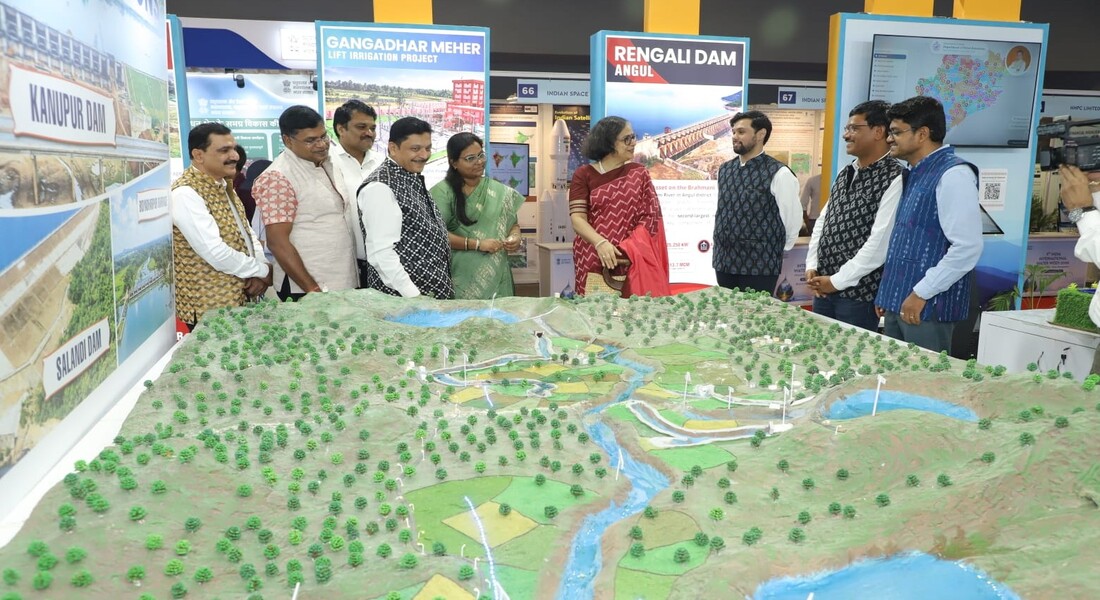
Bhubaneswar: Odisha is showcasing its integrated water management model at the 9th India International Water Week (IIWW)-2026 being held at Bharat Mandapam in New Delhi from September 22 to 26.

Participating as a Partner State, Odisha is presenting its initiatives under this year’s theme, ‘Climate Resilient Water Management’. The Odisha Pavilion was inaugurated by Union Minister of Jal Shakti C. R. Patil.

As part of the deliberations at IIWW-2026, Shubha Sarma, Principal Secretary, Department of Water Resources, Odisha government, co-chaired the special session on “Joint Indo-Danish Solutions for Sustainable Water Management” with Rasmus Abildgaard Kristensen, Ambassador of Denmark to India.

During the session, Sarma highlighted opportunities for Odisha–Denmark collaboration, particularly in addressing coastal erosion, strengthening coastal resilience, and exploring Danish expertise and technologies for sustainable water management.

At the Odisha Pavilion, the State is showcasing its irrigation infrastructure and efficient water use, along with initiatives aimed at improving water security and building climate resilience.

The showcase includes soil moisture sensors, an integrated rice-fish farming model, automatic wetting and drying equipment, and pulse and rice seed varieties aimed at promoting climate-resilient agriculture.

The Odisha Integrated Irrigation Project for Climate Resilient Agriculture (OIIPCRA) is being presented through a dedicated project model in line with the theme of ‘Climate Resilient Water Management’.

The model highlights climate-resilient activities being undertaken by the Department of Water Resources in Odisha.

OIIPCRA covers 538 minor irrigation tanks across 15 districts and brings together water body restoration, improved irrigation, climate-resilient and scientific agriculture, fisheries development, and livelihood support.

Another key feature of the Odisha showcase is the Kanupur Irrigation Project model. It highlights water storage, intra-subbasin water transfer and modern water conveyance systems, while presenting Odisha’s approach towards efficient utilisation of available water resources and strengthening future water security.

A dedicated digital Success Stories platform at the pavilion showcases achievements from different parts of Odisha, highlighting the socio-economic progress of farmers, community members and beneficiaries.

The Community Engagement Corner provides an interactive, community-centric space featuring quizzes, awareness activities and a Water Conservation Pledge Wall. The initiative encourages visitors to participate and reinforce their commitment to conserving water and safeguarding water resources for future generations.

Through its participation in IIWW-2026, Odisha is presenting its experience in integrated water management, climate-resilient agriculture, efficient irrigation, livelihood enhancement, and community-led water governance on a national and international platform.